
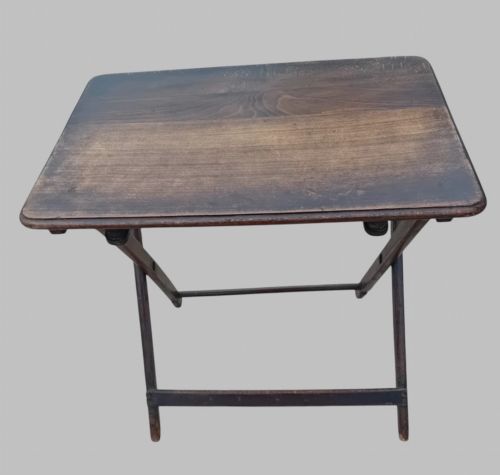
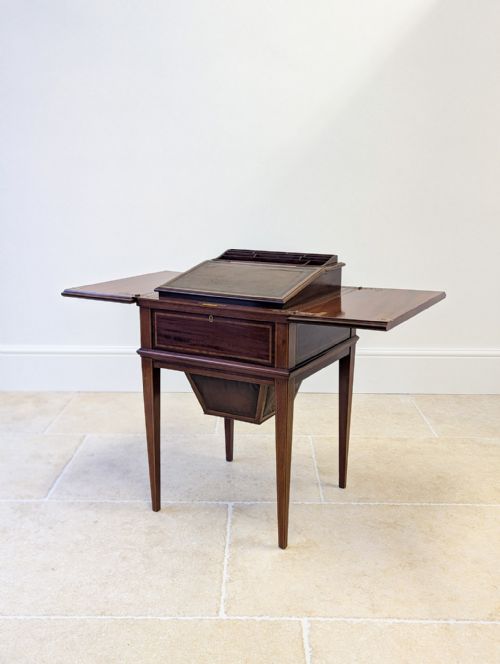
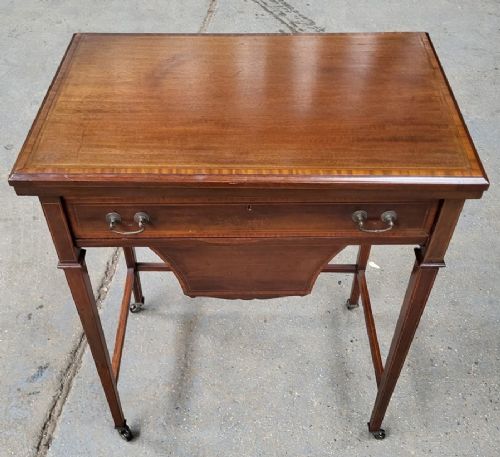

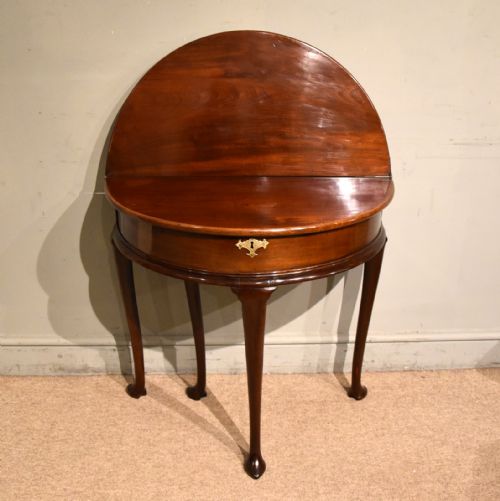
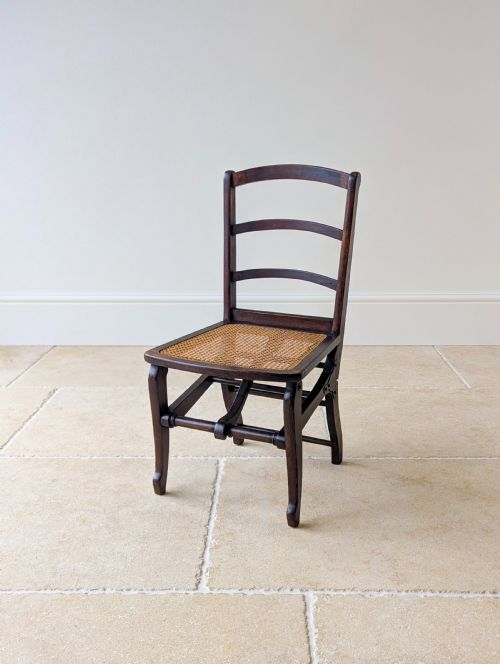


Brown Wood Folding Desk
A brown wood folding desk or table provides adaptable writing and surface space, forged from durable timbers with clever hinges for easy storage.
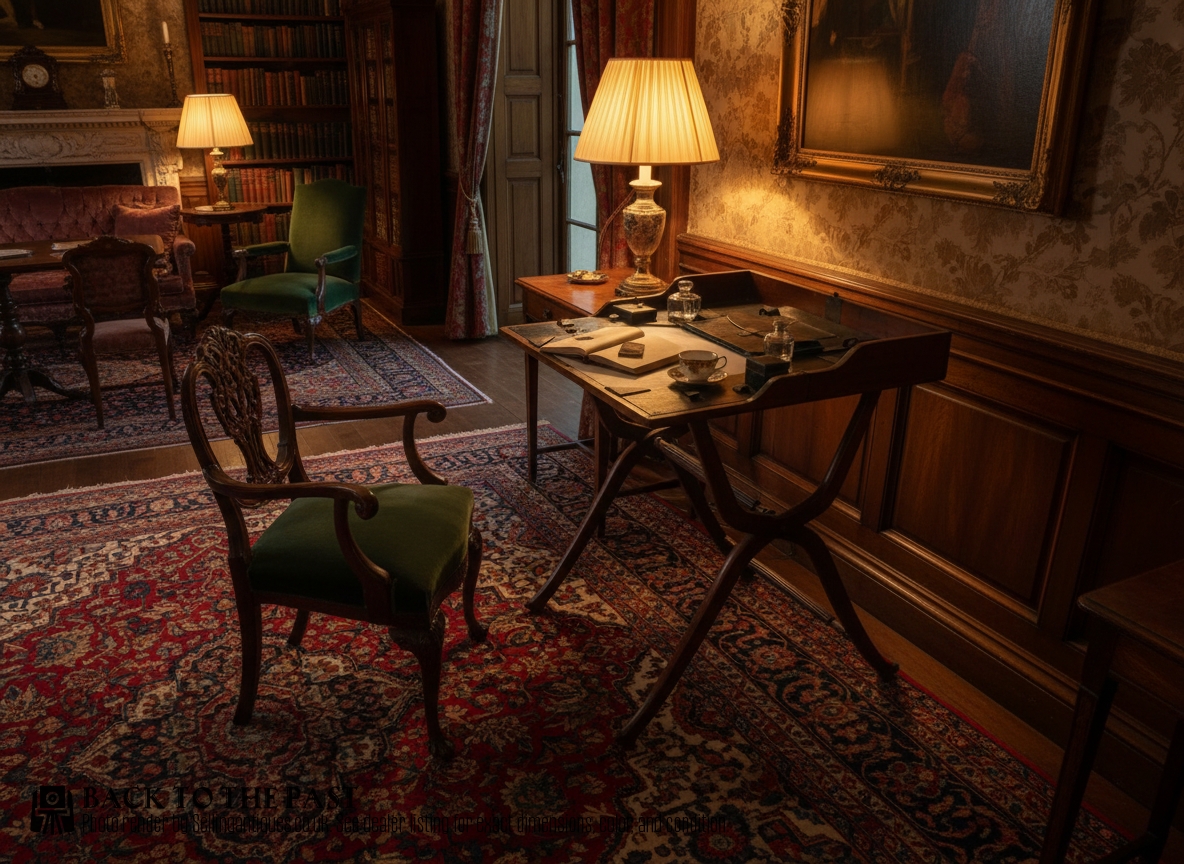
Brown Wood Folding Desk
When you search for a brown wood folding desk, you encounter a variety of multi-functional tables and writing pieces designed to fold, drop, or extend as needed. The selection draws from periods including the Victorian and Edwardian eras, spanning the nineteenth and early twentieth centuries.
The objects listed range from card tables and occasional tables to writing tables, Pembroke tables, and campaign desks. Mahogany, walnut, and oak dominate the timber selection, frequently accompanied by brass hardware and leather inserts.
You are most likely to meet campaign style folding tables and Edwardian writing pieces on this page. These forms reflect a history of portable furniture and domestic ingenuity.
Materials and construction techniques
Construction relies heavily on dense hardwoods such as mahogany, walnut, oak, and burr walnut. These timbers provide the structural integrity required for folding mechanisms, drop leaves, and extending book slides.
Brass hinges, corners, and handles appear frequently, reinforcing joints and allowing campaign pieces to fold compactly. Inlays, marquetry, and cross-banding demonstrate detailed cabinet-making techniques across various styles.
Surfaces often feature fitted leather writing panels or polished timber grains finished with traditional polish. Joinery methods ensure that folding actions remain functional over generations of use.
Book slides and novel rests prove that historical readers appreciated an adjustable shelf just as much as modern bibliophiles do.
Distinguishing quality in timber and mechanics
The quality of a piece rests primarily on the choice of timber and the precision of its construction. Well-figured veneers like burr walnut and carefully matched mahogany set superior examples apart from standard utility items.
Mechanical elements dictate another layer of distinction. Smoothly operating folding brackets, robust brass hinges, and well-aligned drop leaves indicate skilled craftsmanship and careful maintenance.
Decorative embellishments, such as intricate marquetry inlay or specialised Anglo-Indian carving, elevate certain pieces. The overall balance of proportions and stability when deployed define the upper tier of the range.
The Brown Wood Folding Desk Glossary
- Campaign style
- Furniture designed for military officers on campaign, featuring folding frames, recessed brass handles, and robust construction for transport.
- Pembroke table
- A small table with hinged drop leaves on the sides, originating in the eighteenth century and used for various occasional purposes.
- Marquetry
- The art of applying pieces of veneer to a structure to form decorative patterns, often utilising varied woods and botanical motifs.
- Cross banded
- A border technique where veneer is laid so that the grain runs perpendicular to the main surface, creating a framed effect.
- Gate leg table
- A table with hinged legs that swing out to support drop leaves, providing an expanded surface area when open.
Brown Wood Folding Desk: Frequently Asked Questions
How do I identify campaign style furniture?
Campaign style furniture is characterised by portability, rugged construction, and clever folding mechanisms. You will often spot recessed brass handles and corner brackets designed to protect the timber during transport.
These pieces were originally built for military officers on the move. Their sturdy joints and ability to fold flat remain defining traits.
What woods are commonly used?
Mahogany, walnut, and oak form the backbone of these pieces, alongside hardwoods like teak and beech. Finer examples may feature burr walnut veneers or detailed marquetry inlay.
Brass hardware frequently accompanies these timbers to reinforce joints and provide operational strength. The natural grain of the wood is usually highlighted through traditional polishing methods.
How do I care for antique wooden tables?
Maintain antique wooden tables by keeping them away from direct sunlight and sudden temperature shifts. Regular dusting with a soft cloth preserves the polished finish of the timber.
Avoid placing damp items directly onto the wood surface to protect the polish and any leather inserts. Gentle maintenance ensures the folding mechanisms and joints remain stable over time.