
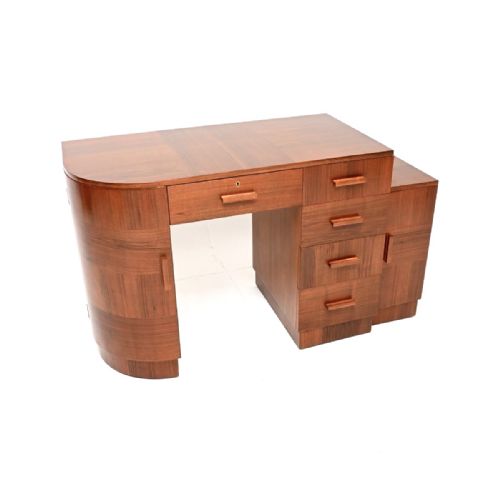
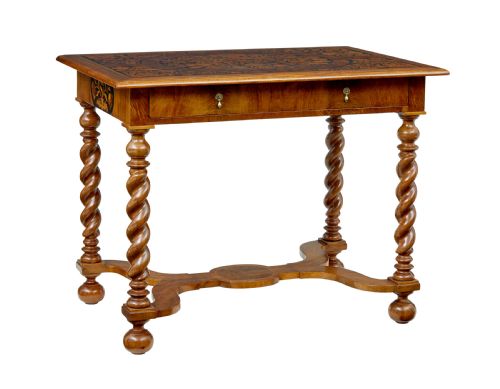
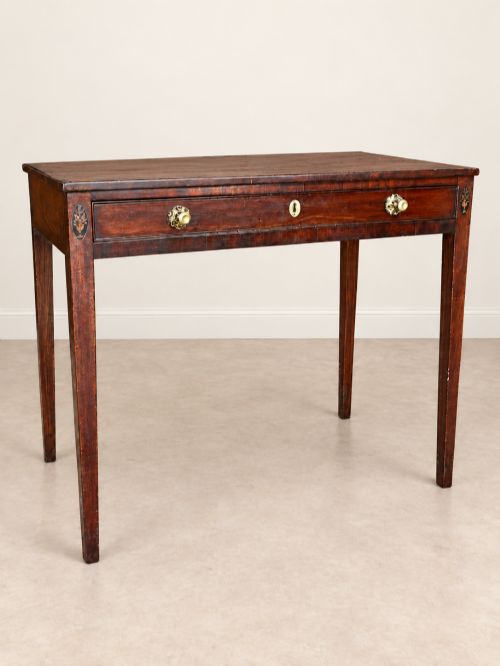
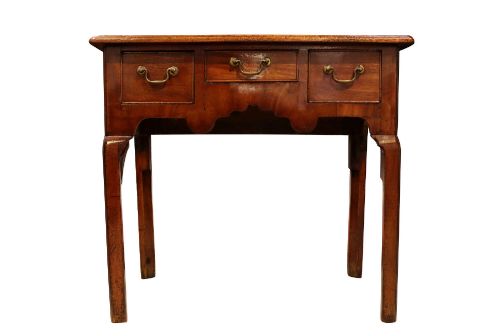
Brown Wood Dressing Desk
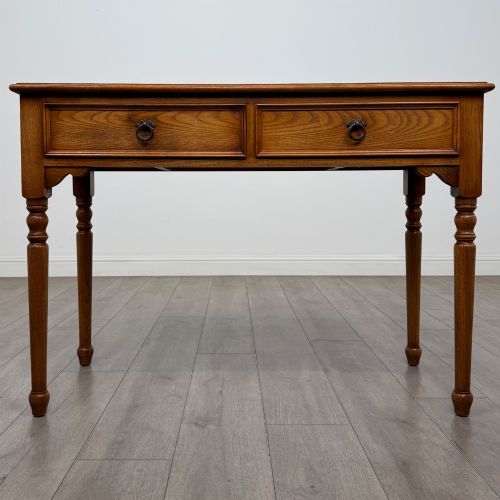
A brown wood dressing desk brings practical surface space and traditional timber grain into a bedroom or study.
Brown Wood Dressing Desk
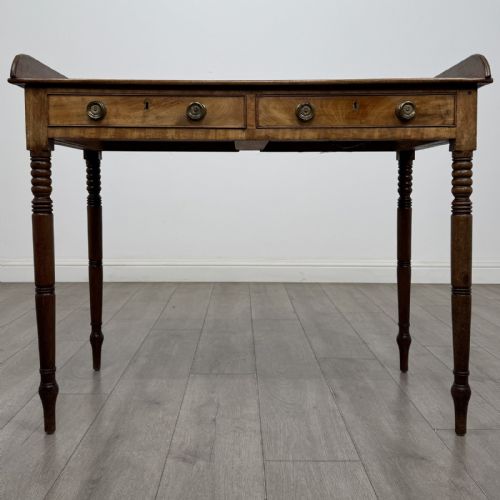
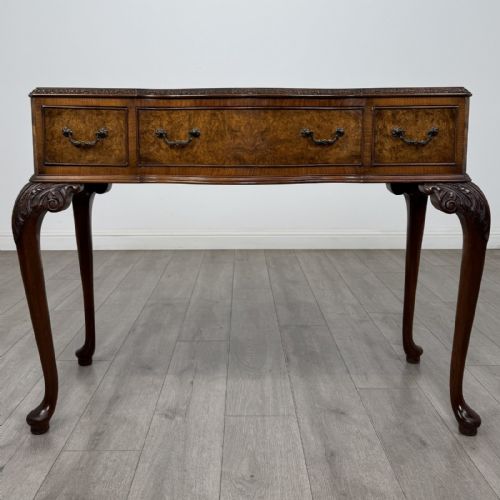
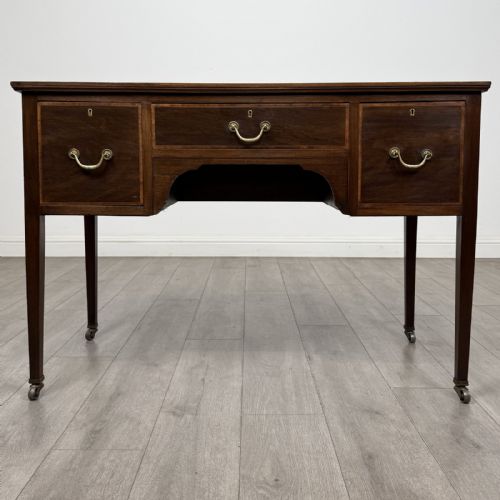
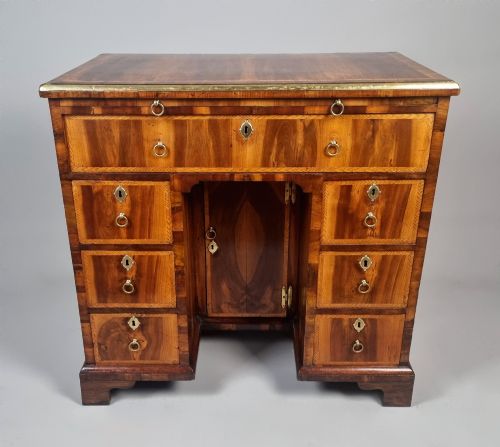
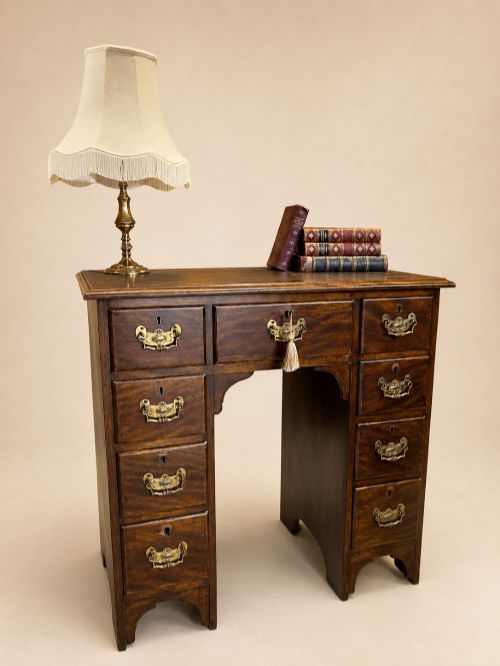
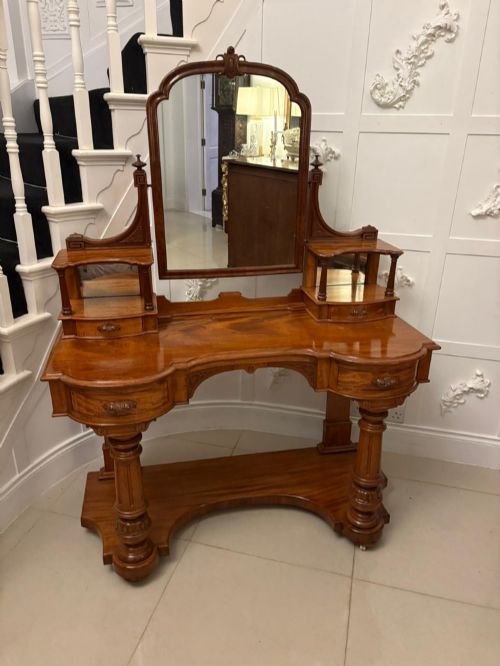
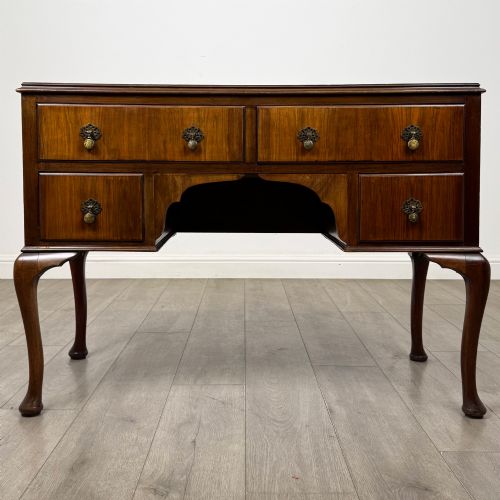
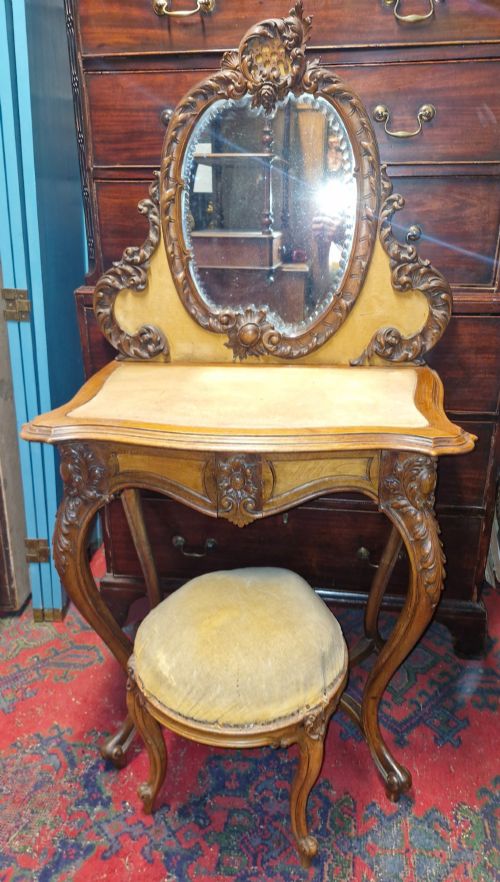
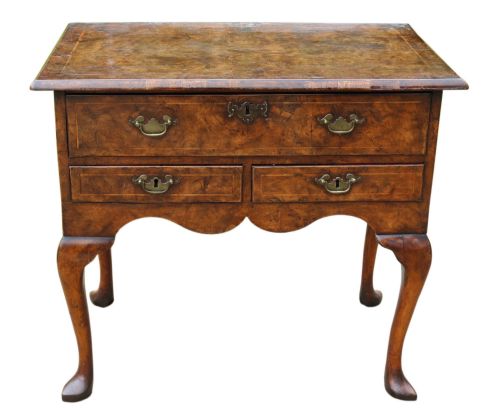
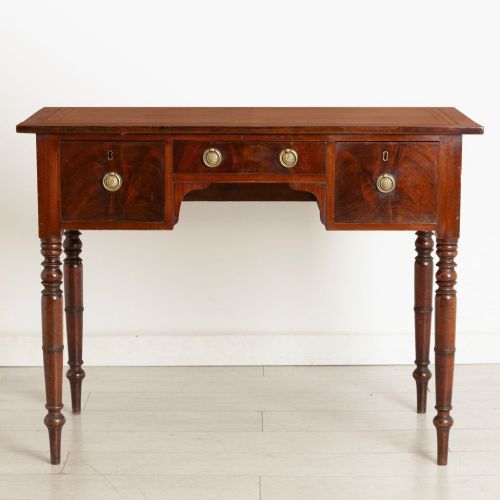
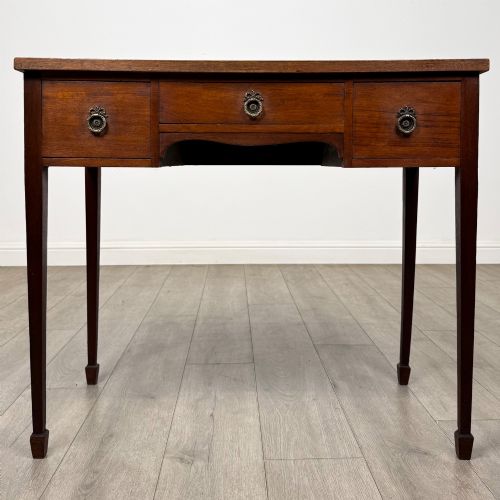
A brown wood dressing desk encompasses several forms connected by timber construction and domestic utility, appearing in the evidence as dressing tables, writing tables, kneehole desks, and lowboys. These pieces span from the 18th century through the Edwardian era, offering storage drawers and flat writing or grooming surfaces.
The selections on this page draw heavily from Georgian and Victorian periods, alongside Edwardian and later revivals. Buyers encounter mahogany, oak, walnut, and elm varieties, often styled in the manner of George II or the Regency period.
Function shifts across the categories, uniting side tables, washstands, and console tables under the broader umbrella of wooden domestic furnishings. Each piece retains a distinct historical footprint recorded in its timber and period details.
Materials and Construction
Cabinet makers utilised dense hardwoods such as mahogany, oak, and walnut, frequently selecting figured veneers like burr walnut or burr elm for primary surfaces. Secondary timbers provided internal framing for drawers, while brass fittings and leather inserts completed the functional design.
Joinery methods combined hand-cut dovetails for drawer construction with turned or carved legs, ranging from barley twists to simple straight supports. Surface decoration relied on timber grain, inlay work, and occasional carved detailing rather than applied paint.
Listings feature timbers including mahogany, oak, walnut, burr walnut, elm, fruit wood, yew wood, and leather.
Distinctions in Quality
The excellence of a piece rests on the selection of timber figure, such as highly patterned burr walnut or flame mahogany, and the preservation of original brass handles and hardware. Superior examples maintain crisp carving on drawer fronts and legs without modern replacement timbers.
Construction integrity defines the upper tier of these desks, evident in the tightness of dovetail joints and smooth drawer movement. Pieces retaining their original finish and unblemished leather top surfaces represent the highest standard of survival from their period.
The Brown Wood Dressing Desk Glossary
- Lowboy
- A small oak, walnut, or mahogany table with drawers, typically used as a dressing or side table during the 18th century.
- Kneehole desk
- A writing desk featuring a central recessed space for the legs, flanked by pedestals of small drawers.
- Burr walnut
- A figured timber taken from the growth excrescences of walnut trees, prized for its swirling, decorative grain patterns.
- Washstand
- A wooden stand designed to hold washing basins and pitchers, often adapted for general bedroom utility.
- Dovetail
- A traditional interlocking woodworking joint used primarily in drawer construction to ensure durable corners.
Brown Wood Dressing Desk: Frequently Asked Questions
What is a lowboy used for?
A lowboy served historically as a compact side table or a dressing table for holding grooming accessories. Its modest footprint allowed it to fit into smaller chambers while providing secure drawer storage.
Today, buyers utilise these low tables as writing surfaces, hallway consoles, or decorative accent pieces in reception rooms.
How do I identify a Georgian desk?
Georgian pieces typically display solid mahogany, oak, or walnut construction with hand-cut dovetails and traditional brass hardware. Proportions remain classical, and decorative elements often include bracket feet or modest carving.
Cabinet work from this era emphasises timber grain over heavy ornamentation, distinguishing it from later revival styles.
Are these desks suitable for daily work?
Many period writing tables and kneehole desks offer sturdy wooden surfaces that accommodate modern writing and laptop use. Their drawer configurations provide practical storage for stationery and small items.
Care should be taken to protect antique leather or polished wooden surfaces with appropriate desk pads.
What timber is most common?
Mahogany appears frequently across Georgian, Victorian, and Edwardian examples due to its durability and rich reddish-brown tone. Oak and walnut also feature prominently in earlier pieces and later revival furniture.
Specialist items occasionally incorporate yew wood, elm, or decorative burr veneers.