

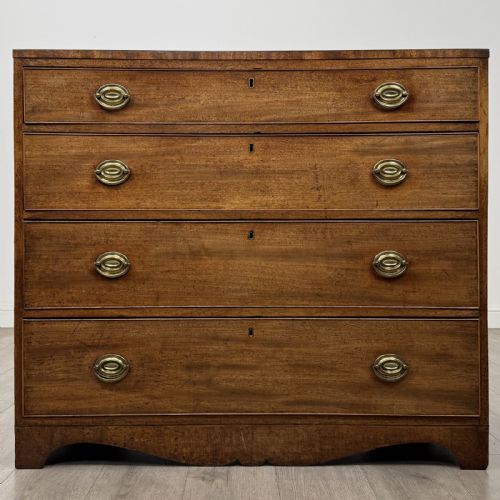
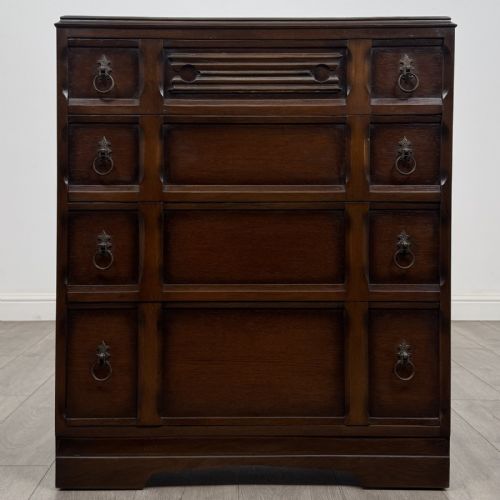
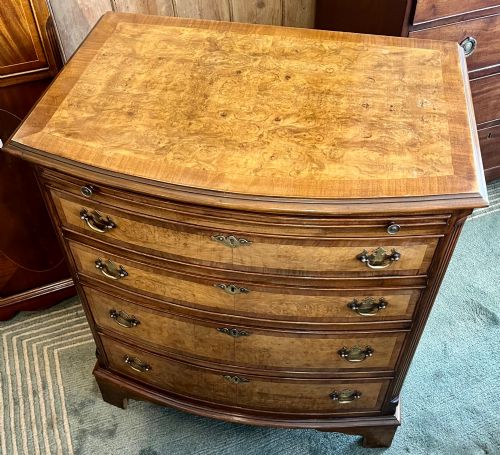
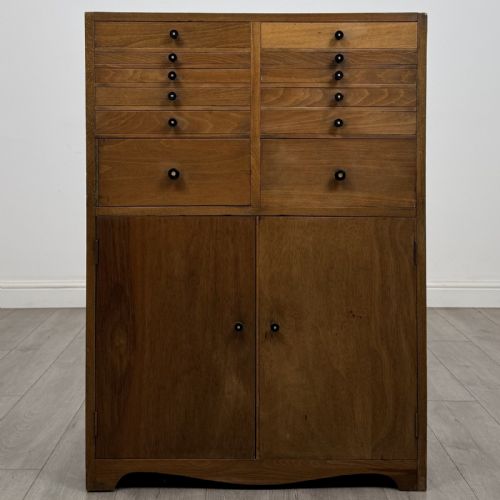
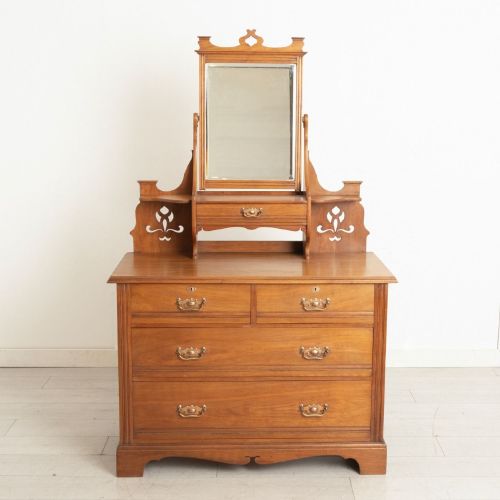

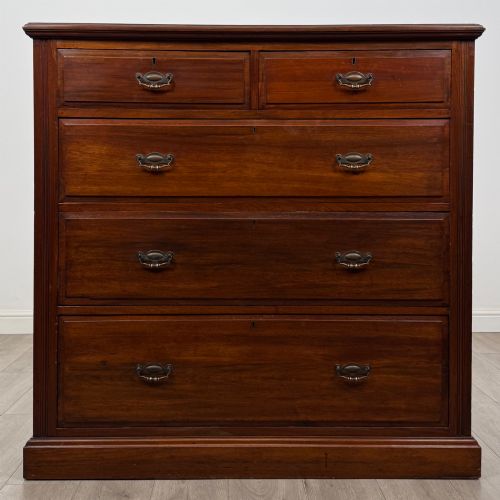

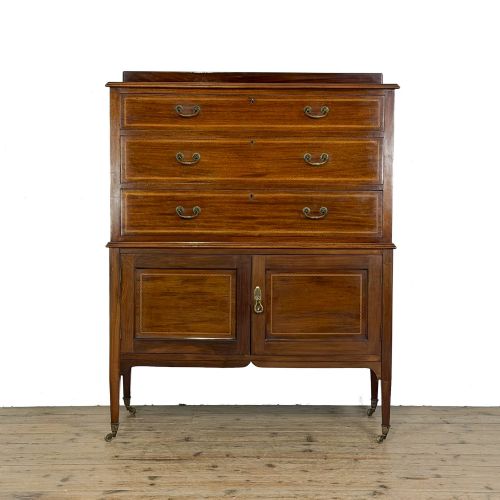
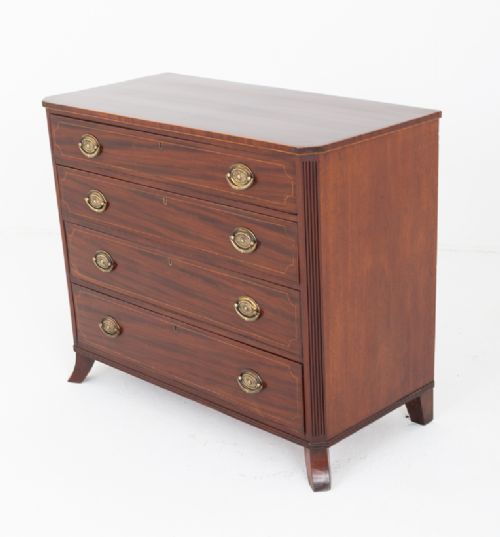
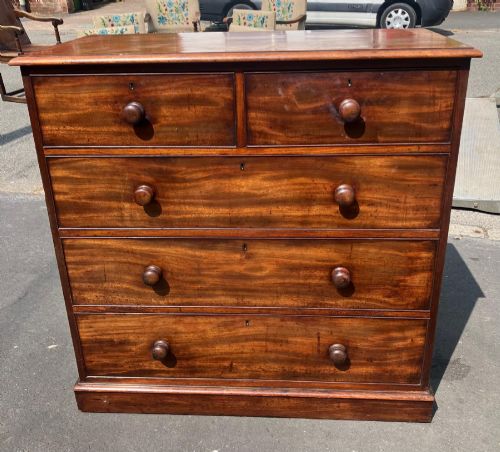
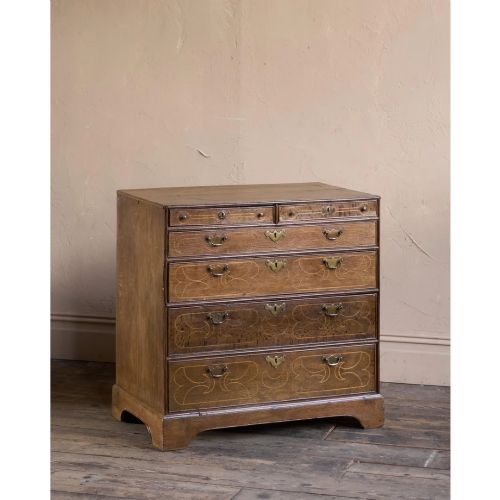
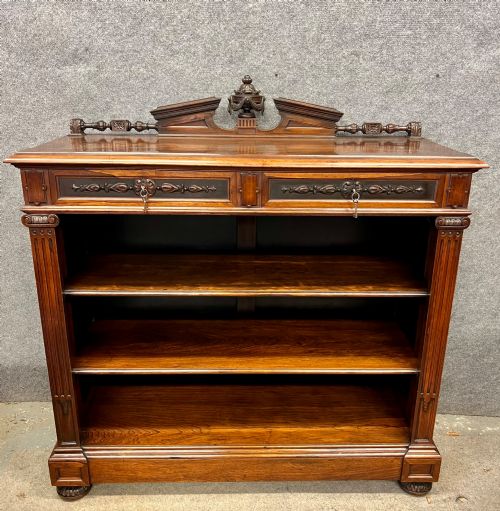
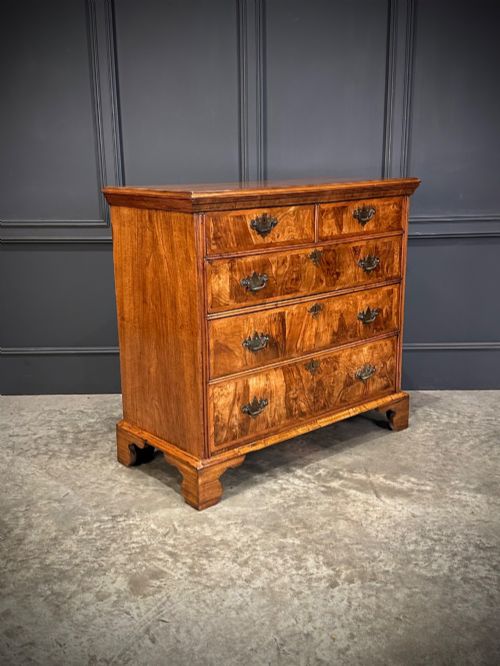
Brown Wood Drawer Unit
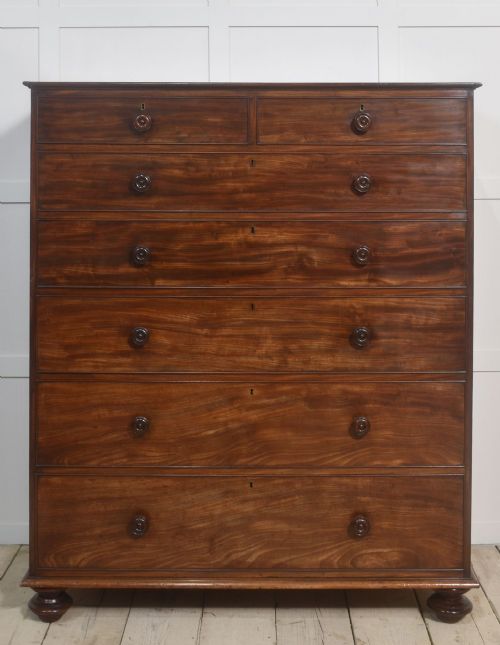
A brown wood drawer unit provides dependable storage, ranging from compact bedside chests to tall Victorian mahogany repositories.
Brown Wood Drawer Unit
A brown wood drawer unit encompasses a diverse array of storage furniture, appearing frequently as chests of drawers, bookcases with lower drawers, and specialised filing cabinets. These pieces date across multiple eras, including the Georgian, Victorian, Edwardian, and Regency periods.
Buyers encounter numerous forms ranging from large bedroom chests to compact collectors cabinets, shop counters, and music cabinets. The selection includes specialist items like apothecary chests, watch repairer storage, and Japanese step chests.
Origins span standard English domestic furniture to Japanese Meiji period examples, reflecting varied regional craftsmanship. Walnut, oak, and mahogany dominate the selection, often finished with polished surfaces or painted scumbled pine.
Materials and construction methods
Cabinet makers utilised dense hardwoods such as mahogany, walnut, and oak to construct durable carcases, frequently embellishing surfaces with decorative burr walnut veneers, flame mahogany figures, and subtle inlay work. Pine and deal served for internal framing or secondary panels.
Hardware additions of cast brass handles, pulls, and occasional bronze animal decorations complemented the timber construction. Joinery techniques varied from traditional drawer dovetailing to specialised mechanisms found in patent letter files and shop storage banks.
Brown Wood Drawer Unit Retail Price Guide 2026
Typical asking prices for brown wood drawer unit among the pieces listed under this phrase on Sellingantiques today, from the lower quarter to the upper quarter. They describe what is for sale here now, not the wider market.
Periods represented stretch from the seventeenth-century William and Mary era through Georgian, Victorian, and Edwardian styles up to the 1930s.
Distinctions in craftsmanship
Quality rests upon the selection of timber, visible in the matching of flame mahogany or burr walnut grain across drawer fronts. Superior examples display precise dovetail joints, smooth-running graduated drawers, and intact original brass hardware.
Construction depth dictates overall value, separating utilitarian shop counters or painted pine storage from finely carved Georgian and Victorian cabinet work. Refined proportions, secondary wood integrity, and specialised internal fittings elevate specific pieces.
Shapland and Petter
The Brown Wood Drawer Unit Glossary
- Graduated drawers
- Drawers that decrease in depth proportionally from bottom to top. This arrangement creates a balanced aesthetic on formal chests.
- Bow-front
- A convex curved front contour typical of select Georgian and later drawer units. This shape softens the profile of the cabinet.
- Scumbled pine
- A painted surface treatment mimicking the grain of more expensive hardwoods. Artisans applied this finish to humble secondary timbers.
- Whatnot
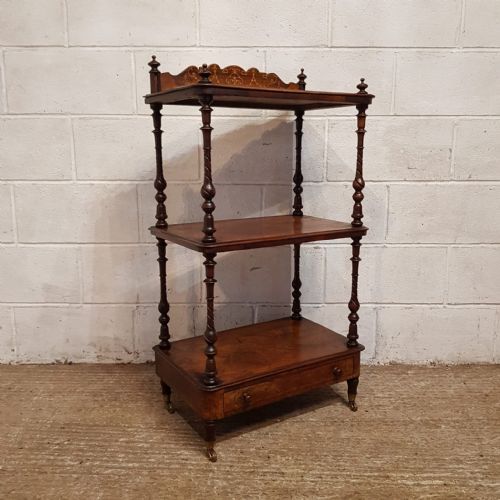
- An open set of multi-tiered shelves often featuring a drawer at the base. These pieces served to display ornaments in nineteenth-century interiors.
- Dovetail
- An interlocking joint formed by interlocking wedge-shaped fingers. This method secures drawer corners with notable tensile strength.
Brown Wood Drawer Unit: Frequently Asked Questions
How do I date a brown wood chest?
Dating relies on examining timber choices, construction techniques, and hardware styles across different eras. Georgian and Victorian pieces exhibit specific mouldings and dovetailing methods distinct from Edwardian or later twentieth-century production.
Secondary woods and backboards offer further clues to the manufacturing decade. Cabinet makers shifted from hand-sawn oak panels to standardised machine-cut boards by the close of the nineteenth century.
What is a two-part chest?
A two-part chest consists of separate upper and lower cabinet sections stacked together. This modular construction aided transportation in military and domestic settings.
Craftsmen often incorporated brass carrying handles on the sides of each individual section. This design feature appears frequently in campaign and tall mahogany furniture.
Where should I place a music cabinet?
Music cabinets suit living rooms or studies as compact storage units for sheet music or stationery. Their shallow internal compartments accommodate slender paper collections.
Their restrained proportions allow them to fit easily beside larger seating arrangements or desks. Edwardian examples often feature decorative mahogany inlay that complements traditional interiors.
Are shop drawer units suitable for homes?
Shop drawer units integrate well into modern domestic spaces as functional storage islands or hallway consoles. Their numerous small drawers organise contemporary accessories effectively.
Original hardware and aged timber patination provide a distinct industrial character. These cabinets bring utilitarian history into residential settings.