



Brown Wood Architectural Carvings
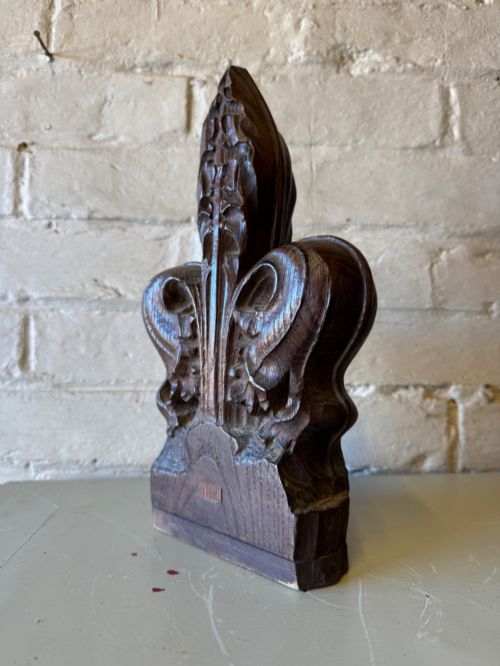
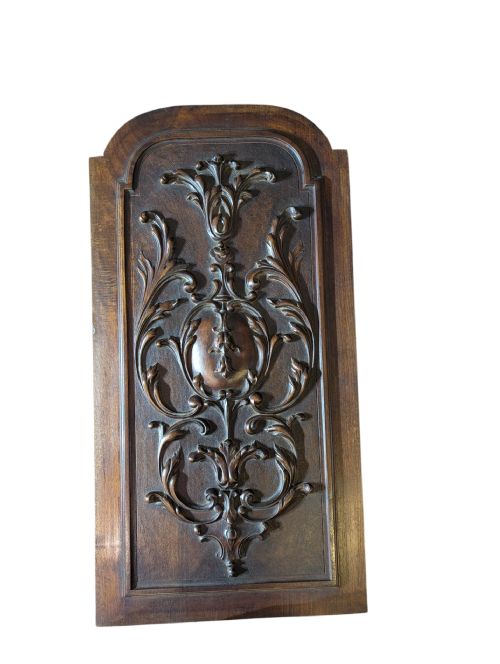
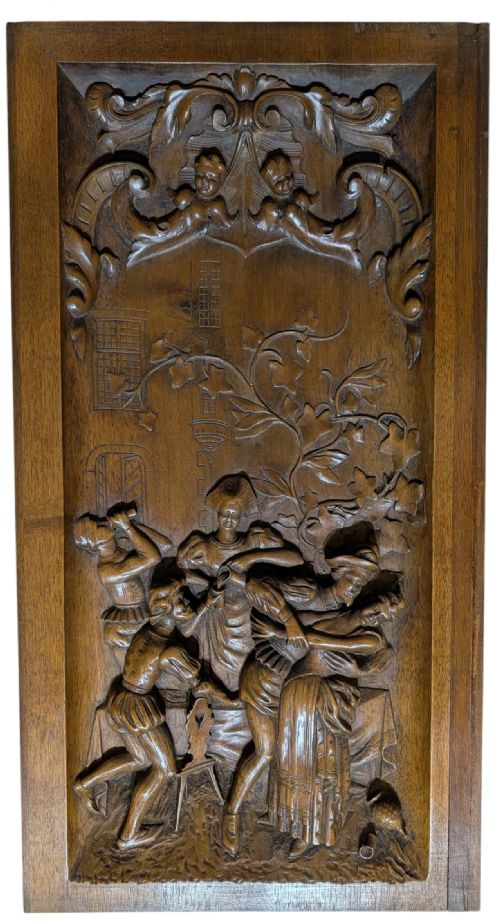
Brown wood architectural carvings are solid timber fragments and panels salvaged from historic buildings, offering immediate texture and history to a modern interior.
Brown Wood Architectural Carvings
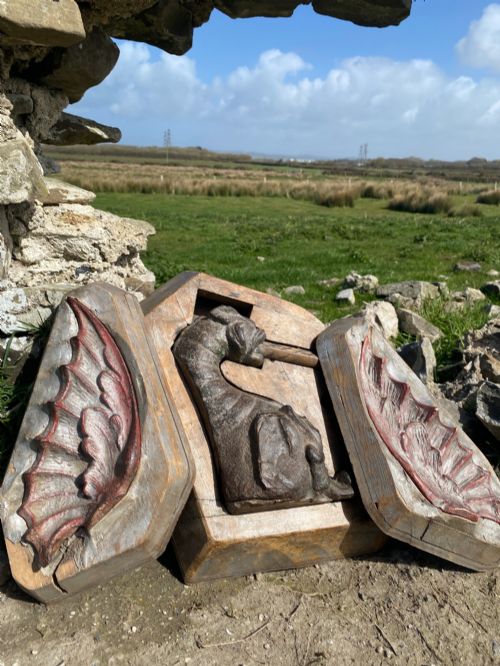
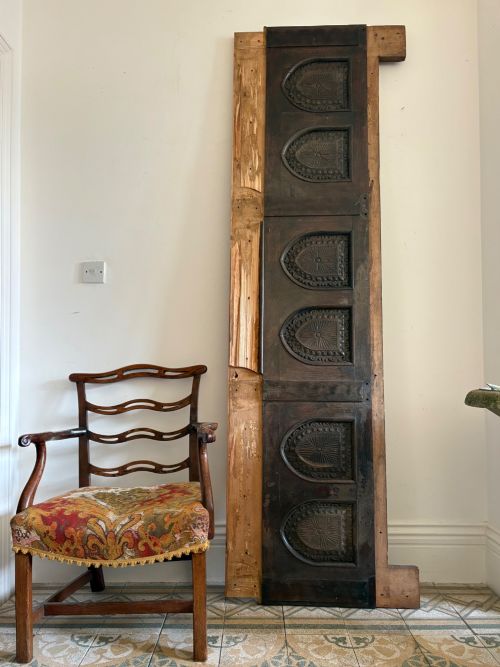
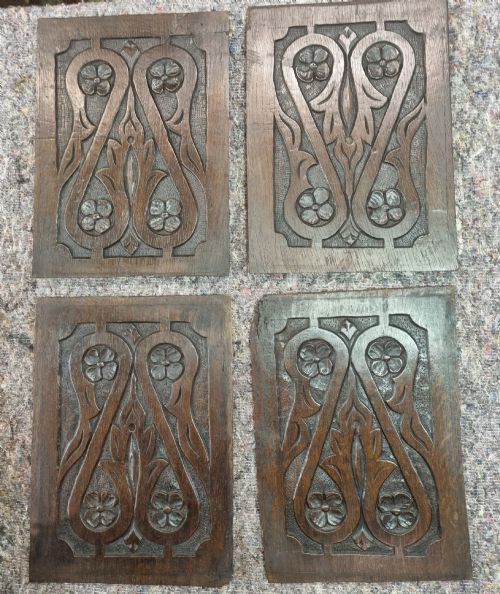
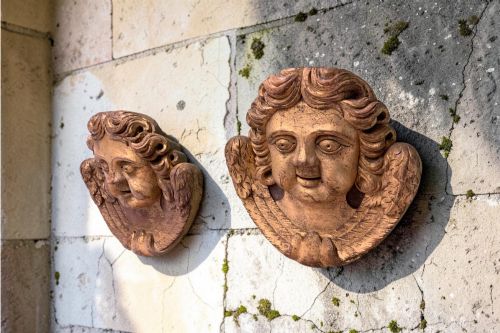
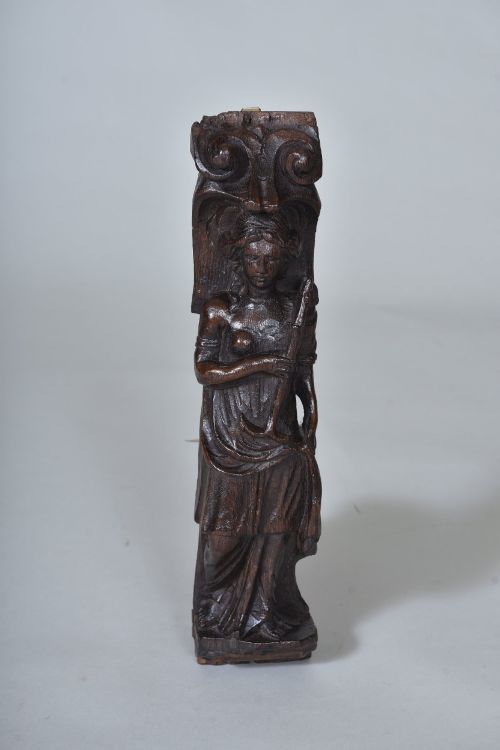
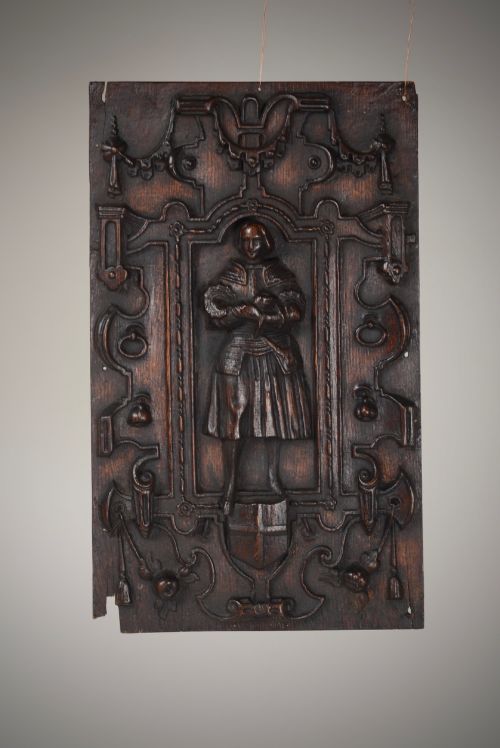
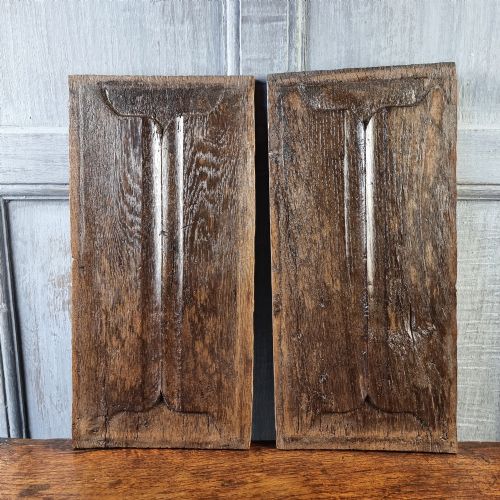
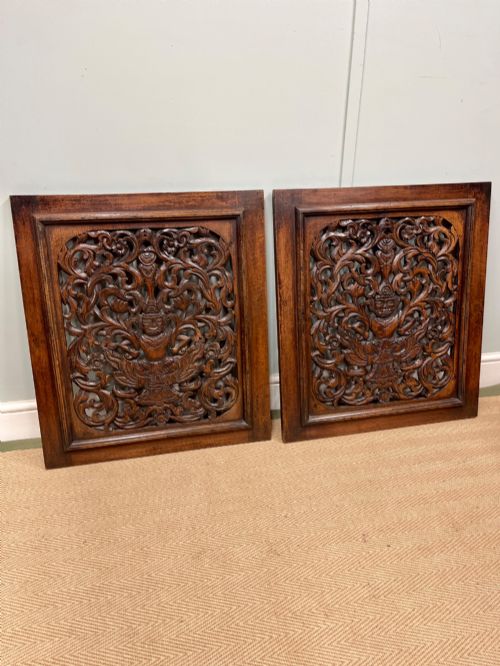
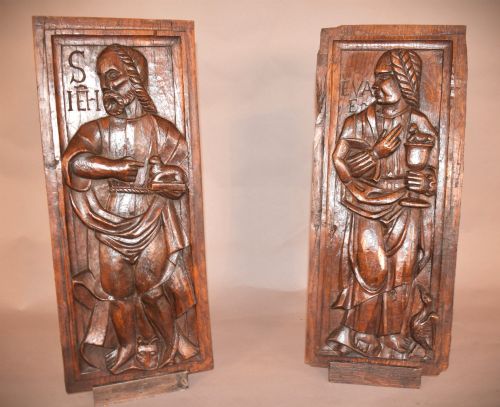
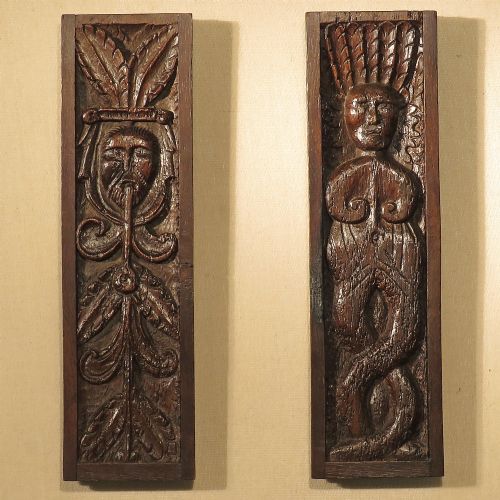
Brown wood architectural carvings encompass a diverse array of salvaged elements, from seventeenth-century oak panels and ceiling bosses to nineteenth-century Burmese and Black Forest wall masks. Buyers exploring brown wood architectural carvings encounter everything from medieval gothic tracery fragments to Baroque acanthus leaves and linenfold panels.
The objects take many functional forms, including wall panels, sculptures, corbels, pediments, and architectural salvage taken from period buildings. Oak and walnut dominate the selection, appearing alongside pine, teak, chestnut, and hard wood.
Originating across England, Europe, and further afield, these pieces range from sixteenth-century linenfold carvings to nineteenth-century decorative panels. The selection bridges formal European Baroque and Gothic traditions with regional folk art and colonial work.
Assessing quality in carved timber
Structural integrity and the survival of the original surface finish dictate the desirability of a piece. Pieces retaining their early or primary patination without excessive later intervention preserve the direct hand of the historical artisan.
Brown Wood Architectural Carvings Retail Price Guide 2026
Typical asking prices for brown wood architectural carvings among the pieces listed under this phrase on Sellingantiques today, from the lower quarter to the upper quarter. They describe what is for sale here now, not the wider market.
A wooden tiger head and a carved green man quietly watch over the centuries from the wall masks.
Edward Pearce·Luigi Frullini
The Brown Wood Architectural Carvings Glossary
- Linenfold
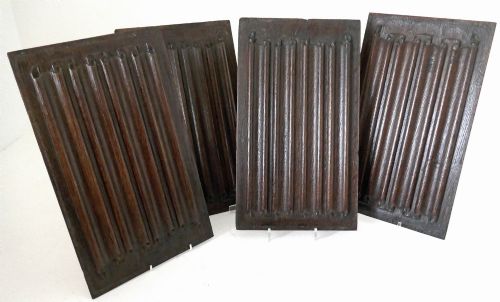
- A style of wooden panel moulding resembling folded cloth or linen. It was widely used by period cabinet makers to decorate flat surfaces on sixteenth-century chests and wall panels.
- Corbel
- A structural piece of stone, wood, or metal projecting from a wall to carry a weight. In timber carvings, these often take ornate figural or scroll forms beneath ceilings and mantelpieces.
- Caryatid
- A sculpted female figure serving as an architectural support taking the place of a column or a pillar. Wooden examples support cornices, architraves, or mantel shelves.
- Pierced carving
- A technique where the background of the timber is cut entirely away to let light and space through the design. This creates deep shadow play in acanthus leaves and ceiling bosses.
- Poppy head
- An ornamental carving forming the top of a bench end or pew, typically shaped like a poppy bud or leaf motif. They frequently appear in medieval and gothic ecclesiastical architecture.
Brown Wood Architectural Carvings: Frequently Asked Questions
How were brown wood architectural carvings originally used?
Makers integrated these carvings directly into the fabric of historic buildings as structural supports, door pediments, ceiling bosses, and decorative wall panels.
They adorned churches, grand staircases, and domestic interiors, serving both a structural role and a display of status.
How do I mount a heavy wooden panel on the wall?
Due to the substantial weight of solid oak and walnut, secure mounting requires fixing directly into wall studs or using heavy-duty masonry anchors.
Many pieces retain their original mounting points or require custom metal brackets fitted discreetly to the rear timber framework.
What is the difference between linenfold and linenfold panels?
Linenfold refers specifically to the carved motif that imitates folded fabric, while linenfold panels are the completed wooden boards bearing this design.
This specific style appears frequently on sixteenth and seventeenth-century English and European woodwork.
How can I tell a sixteenth-century panel from a nineteenth-century copy?
Early pieces display the tool marks of hand-forged irons, traditional joinery methods like pegged mortise and tenon joints, and centuries of oxidation in the oak grain.
Nineteenth-century revival work often utilises machine assistance or shows different timber preparation methods despite adopting earlier Gothic or Renaissance motifs.