

Brown Windsor Dining Chair
These brown windsor dining chair pieces bring vernacular comfort to the table, combining solid timber construction with traditional English country seating forms.
Brown Windsor Dining Chair
A brown windsor dining chair represents a sturdy tradition of domestic seating, originating from regional English workshops during the eighteenth and nineteenth centuries. These items serve daily utility in farmhouse kitchens and dining rooms, prized for their robust timber construction and ergonomic saddled seats.
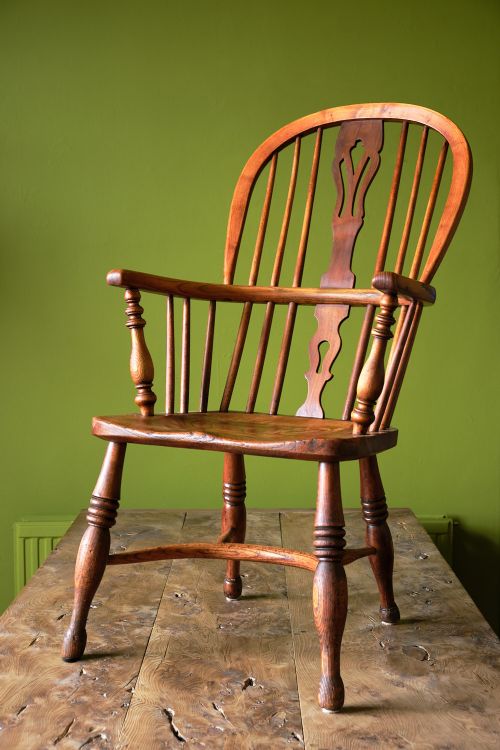
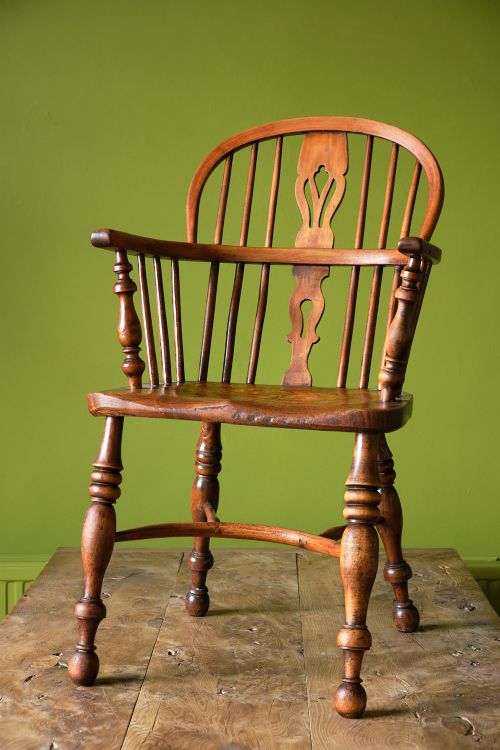
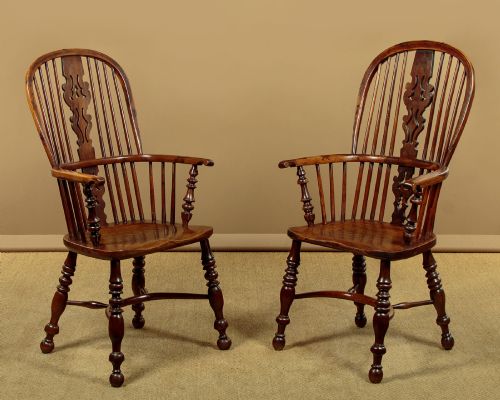
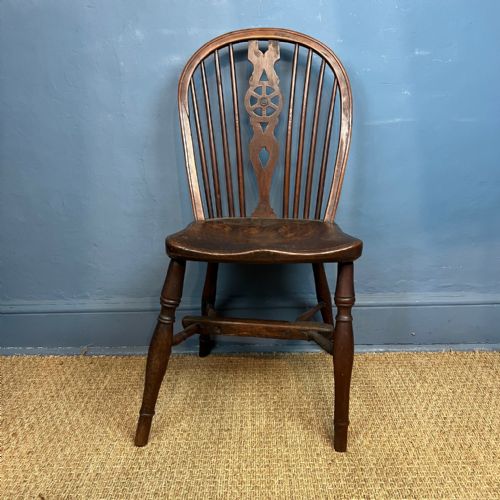
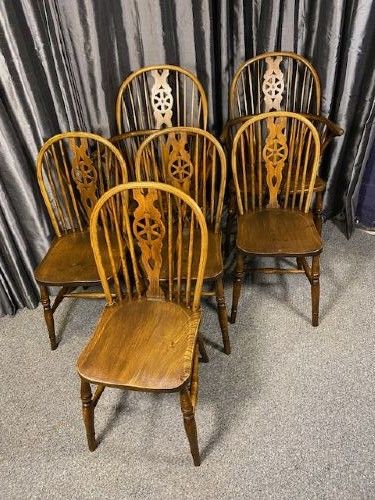
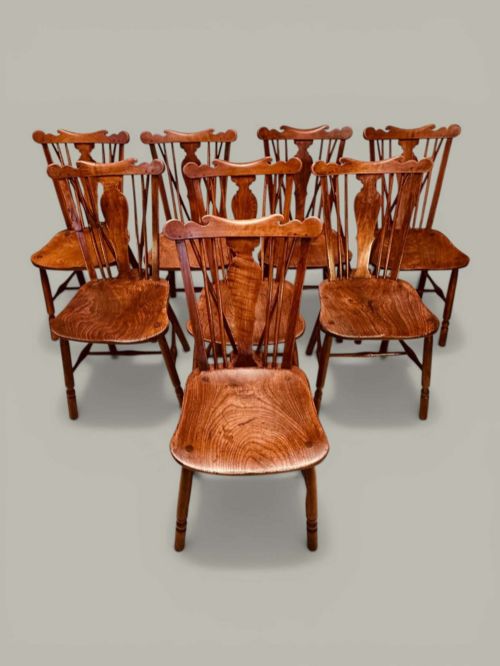
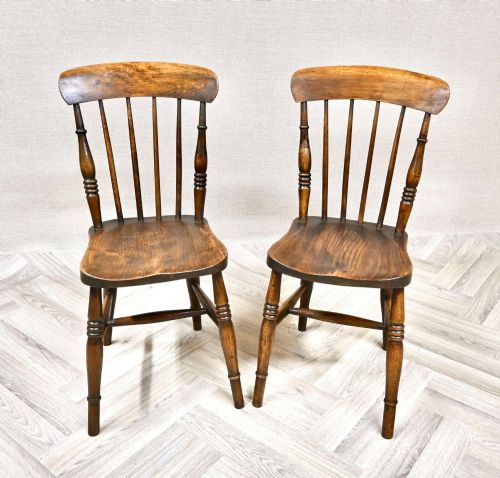
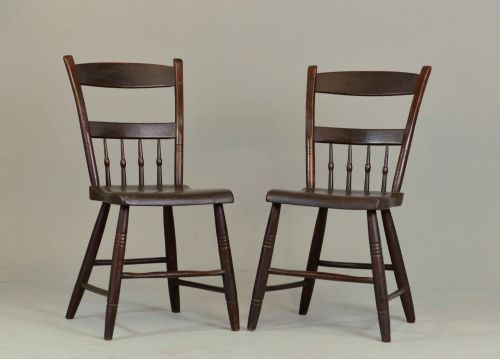
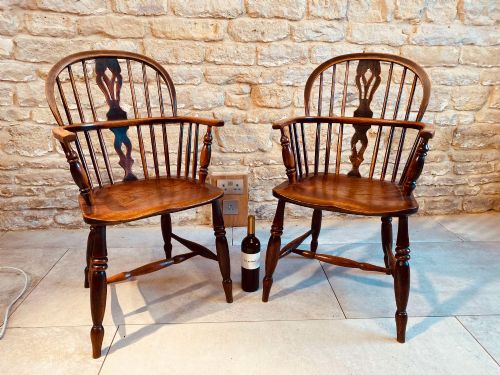
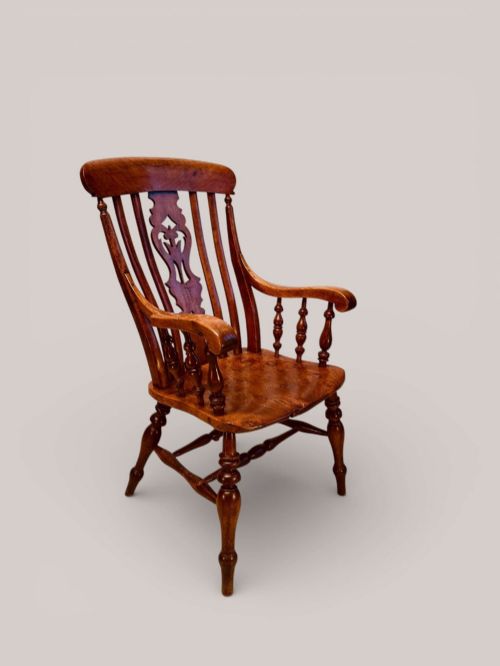
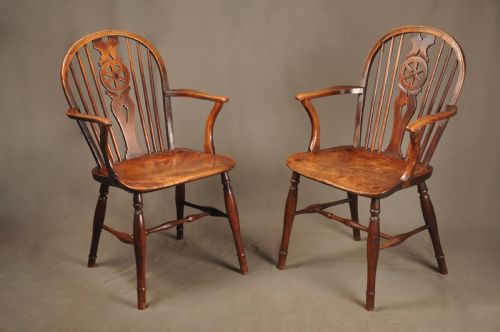
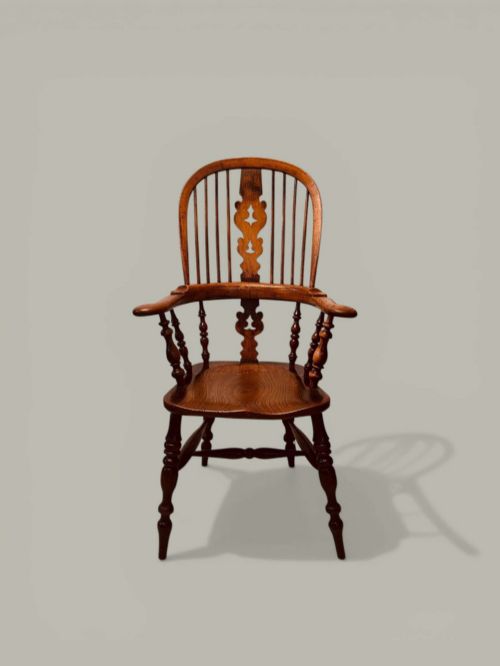
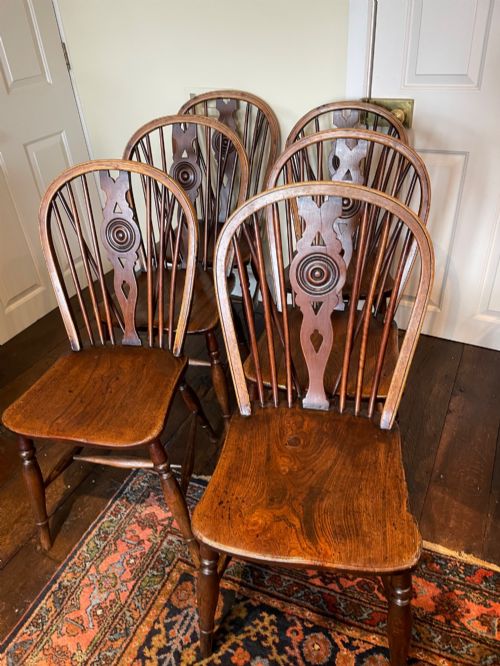
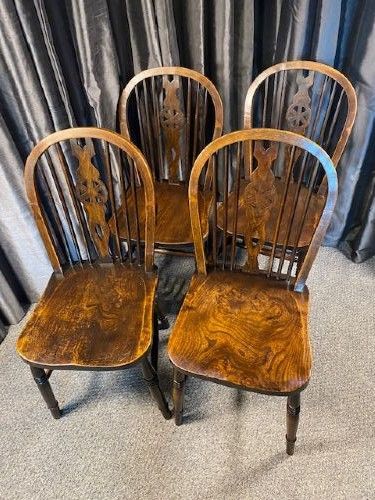
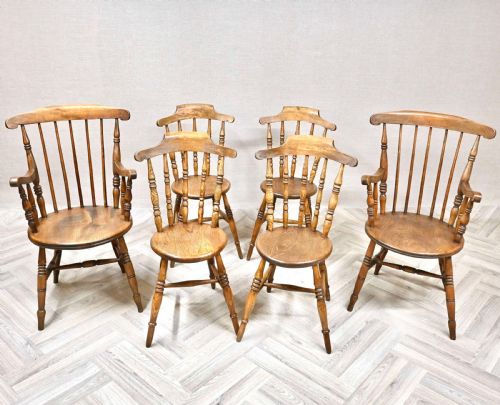
The selections available here range widely in scale, from single armchairs to matched sets of six or twelve seats intended for communal dining tables. Most examples emerge from the nineteenth century and the Victorian era, displaying vernacular forms such as wheel backs, lath backs, bar backs, and hoop and stick designs.
Buyers encounter numerous regional variations, including Thames Valley types and Welsh high-back armchairs alongside simpler farmhouse models. Yew wood, ash, and elm feature predominantly in the construction, often displaying deep patination and rich grain patterns developed through generations of domestic service.
Materials and construction methods
Makers utilised a combination of native British timbers chosen for specific structural properties, pairing dense hardwood seats with resilient bentwood components. Elm typically forms the solid, saddled seat plank, while ash, beech, or yew provide the tensile strength required for steam-bent hoops, spindles, and legs.
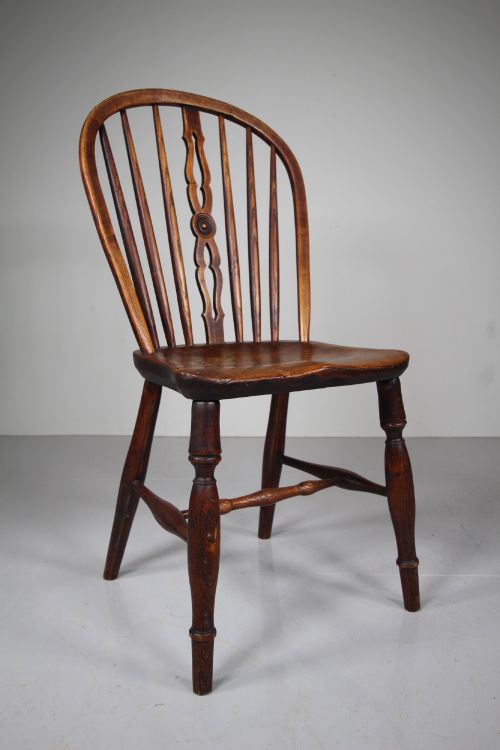
Joinery relies on traditional bodging techniques where turned legs and back spindles fit directly into drilled holes through the thick seat base, secured with wooden wedges. Additional structural integrity comes from turned H-stretchers or crinoline stretchers linking the undercarriage beneath the seat.
Brown Windsor Dining Chair Retail Price Guide 2026
Typical asking prices for brown windsor dining chair among the pieces listed under this phrase on Sellingantiques today, from the lower quarter to the upper quarter. They describe what is for sale here now, not the wider market.
Some nineteenth-century examples retain the original pencil marks of the bodger hidden beneath the seat, recording measurements from a forgotten workshop.
Determinants of quality
The hierarchy of quality rests upon timber selection, timber figuration, and the complexity of the turning work on the legs and spindles. Chairs utilising figured yew wood or carefully matched sets of elm and ash command greater attention than utilitarian beech versions intended solely for basic kitchen service.
Structural harmony also dictates value, particularly the retention of original components, matching stretchers, and balanced proportions across larger matched dining sets. The depth of the sculpted saddle seat and the grace of the steam-bent back rail distinguish superior vernacular workmanship from standard production.
Worksop
The Brown Windsor Dining Chair Glossary
- Crinoline stretcher
- A curved, horse-shoe shaped wooden brace connecting the legs beneath a chair to provide additional structural stability. This specific form frequently appears on earlier yew and ash examples.
- Wheelback
- A style of Windsor chair featuring a pierced wooden splat carved in the shape of a spoked cartwheel. This decorative motif gained widespread popularity during the Victorian period.
- Lathback
- A backrest design constructed from horizontal wooden slats or laths secured between the crest rail and the seat. These variants often appear in nineteenth-century country kitchen settings.
- Smokers bow
- A low-backed Windsor armchair with a continuous curved arm rail and turned spindles, historically used in public houses and smoking rooms. They share the same robust construction methods as standard dining chairs.
- Bodger
- A specialist woodland woodturner who produced chair legs and spindles using green wood on a pole lathe. These turned components were supplied directly to chair makers for final assembly.
Brown Windsor Dining Chair: Frequently Asked Questions
What is a brown windsor dining chair?
A brown windsor dining chair is a traditional wooden seat featuring a solid sculpted plank base with independent legs and back spindles inserted directly into the wood. These items originated in British rural workshops and evolved into standard kitchen and dining furniture throughout the nineteenth century.
They appear in numerous regional styles, utilising native hardwoods like elm, ash, and yew. The distinct brown tone typically develops from decades of natural timber ageing and historical wax finishes.
How do I care for these chairs?
Living with these chairs requires maintaining stable indoor humidity to prevent the native timbers from drying out or splitting. Regular dusting with a soft cloth and occasional applications of quality beeswax will preserve the natural grain and aged surface patina.
Avoid placing timber seating near direct heat sources or in strong sunlight. Checking the undercarriage stretchers periodically ensures the joints remain stable under daily dining use.
How do I date a windsor chair?
Dating relies on observing structural characteristics, timber choices, and tool marks visible on the underside of the seat. Earlier nineteenth-century examples often incorporate yew wood and complex crinoline stretchers, while later Victorian versions frequently feature beech or simpler turned undercarriages.
Matched sets from the late nineteenth and early twentieth centuries show increasing standardisation in turning patterns and component manufacturing. Examining the wear patterns on the seat plank also offers clues regarding the age of continuous domestic use.
Were these chairs used for dining?
These chairs served multiple domestic functions in farmhouse kitchens and cottages, transitioning easily from food preparation to family dining around the hearth. Their robust construction made them ideal for heavy daily use by all members of the household.
Larger matching sets were assembled for formal dining spaces in country homes during the Victorian period. Today, they function primarily as rustic dining seating around both antique and contemporary tables.