



Brown Watercolour Portrait
These brown watercolour portrait pieces capture sitters in monochrome or sepia tones, offering an intimate glimpse into past lives through delicate pigment washes on paper.
Brown Watercolour Portrait
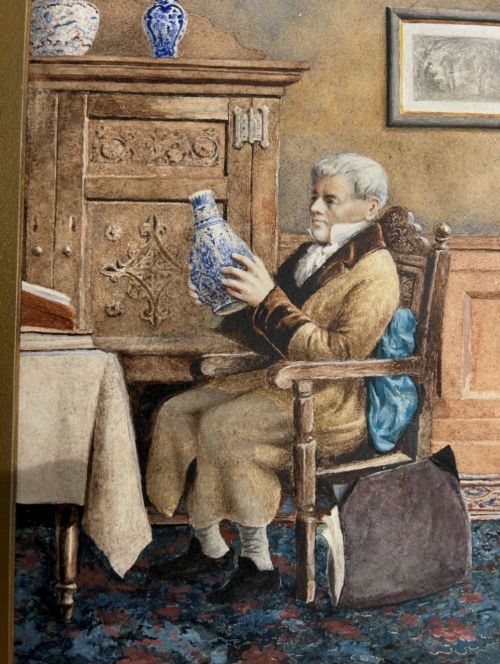
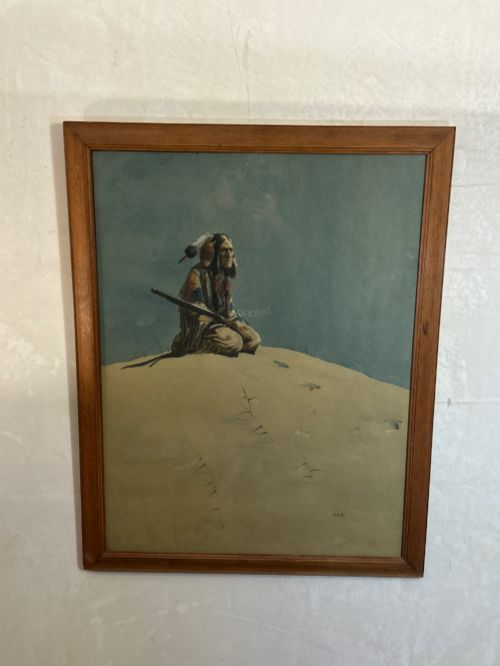
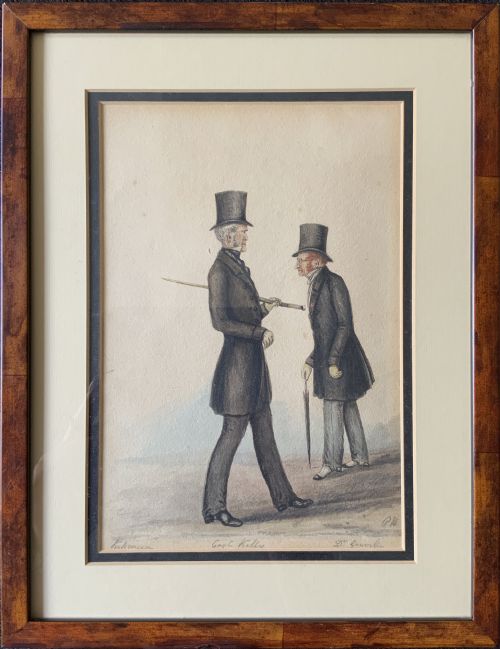
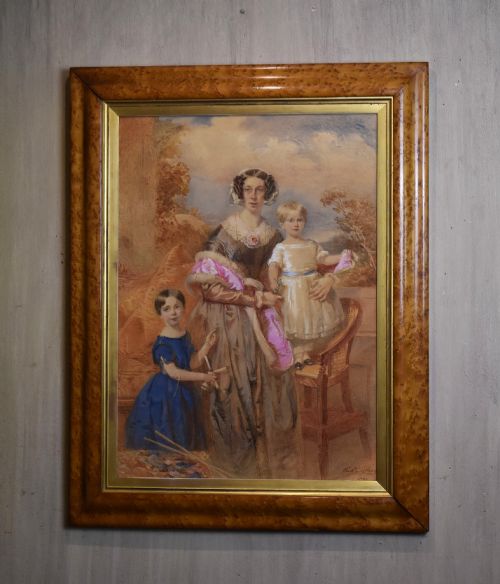
A brown watercolour portrait represents individuals, animals, and social scenes rendered predominantly in earthy or monochromatic washes. These works span the nineteenth century, Victorian era, and early twentieth century, capturing everyone from country gentlemen to soldiers and sailors.
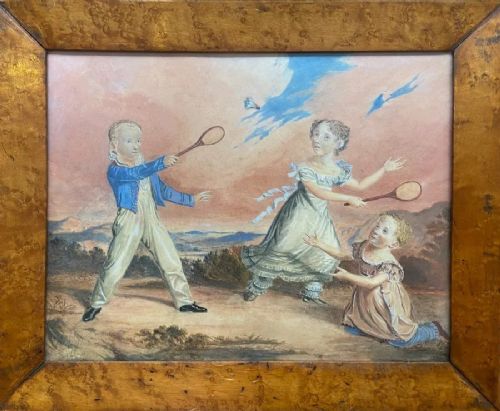
Buyers will encounter framed artworks on paper housed behind glass, frequently preserved in original maple veneer or gilt wood frames. The selection encompasses naive depictions alongside accomplished academic works by named artists.
Materials and technique
Framing typically involves wood, maple veneer, or gilt surrounds protecting the delicate paper underneath glass. Many examples retain contemporary annotations or signatures on the reverse detailing the subjects.
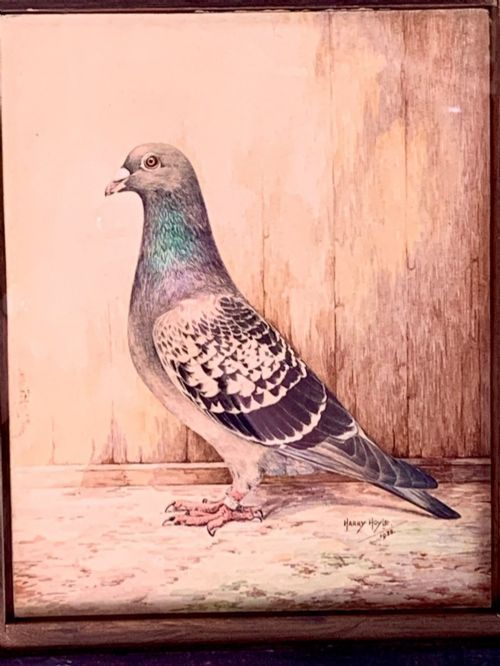
A pigeon named Royal Messenger proudly commemorates a King George V Silver Jubilee win in a remarkably detailed nineteenth-century sepia study.
Distinguishing quality
Quality rests upon the precision of the brushwork and the psychological depth captured in the sitter's expression. Superior examples demonstrate confident handling of monochrome tones that create convincing volume without relying on heavy colour.
The integrity of the paper support and the preservation of the original framing elements influence the overall standard. Works with clear provenance or contemporary annotations offer greater historical interest.
Henry Stacy Marks·John Hassall·Carl Haag·Frederick Tatham·Leonardo Morello·William Henry Hunt·Sir William John Newton
The Brown Watercolour Portrait Glossary
- Watercolour
- A painting method where natural pigments are suspended in a water-soluble binder and applied to paper. This medium allows for transparent washes that reveal the texture of the sheet underneath.
- Gouache
- An opaque water-based paint often combined with watercolour in these portraits to add highlights and solid areas of tone. It provides denser coverage than standard pigment washes.
- Maple veneer
- A thin decorative layer of maple wood applied to a base surface, commonly seen on nineteenth-century picture frames. This finish offers a warm, patterned grain that complements sepia imagery.
- Naive art
- Work created by artists without formal academic training, characterised by direct perspective and charming proportions. These pieces offer an honest record of everyday subjects.
Brown Watercolour Portrait: Frequently Asked Questions
How should I display a paper watercolour safely?
Keep framed works away from direct sunlight to prevent the watercolour pigments from fading over time. Maintaining stable indoor humidity levels also protects the paper support and wooden frames.
Ensure the glazing does not press directly against the painted surface. Professional framing with acid-free backing boards preserves the condition of older pieces.
What periods do these portraits date from?
The selection spans the nineteenth century, including the Georgian and Victorian eras, extending into the early decades of the twentieth century. These periods encompass various British and European stylistic movements.
Dates are often verified through contemporary handwriting on the reverse or the framing style characteristic of the period.
Are these portraits usually signed by the artist?
Some pieces feature artist signatures or monograms, while others remain unsigned or attributed to followers of notable painters. Unsigned works frequently rely on stylistic evidence or period annotations for context.
Documentation on the reverse of the frame often provides helpful clues regarding the sitter and the date of creation.
What subjects appear in these works besides people?
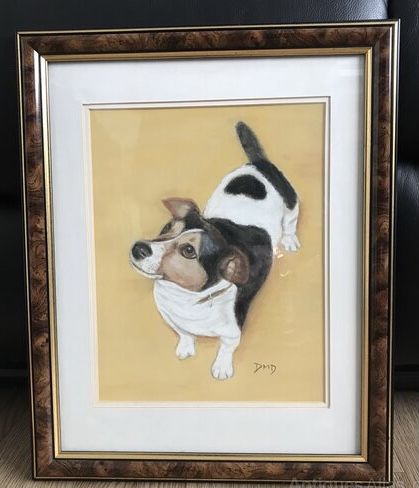
Artists also applied this monochromatic approach to domestic animals, sporting dogs, naval vessels, and figurative interiors. These alternative subjects share the same characteristic brown pigment palette.
Each piece offers a focused study of its subject through expressive tonal washes on paper.