


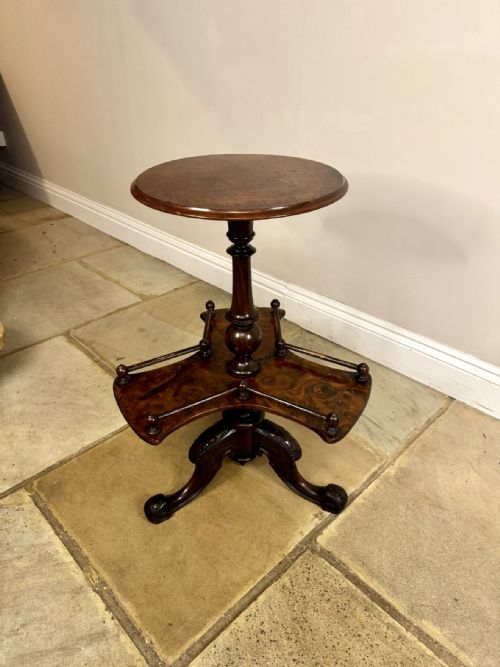


Brown Walnut Whatnot
These brown walnut whatnot pieces are tiered open shelves built to display ornaments and books with elegance in nineteenth-century rooms.
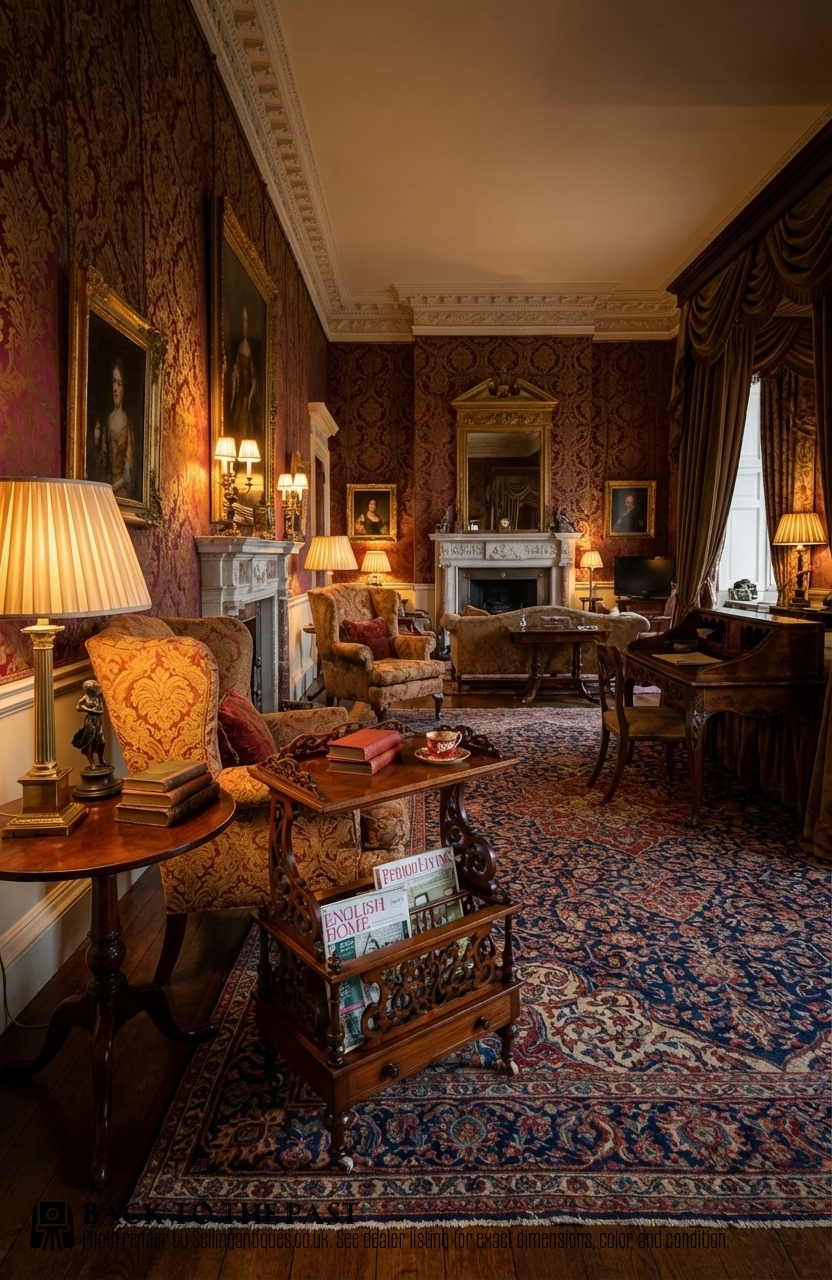
Brown Walnut Whatnot
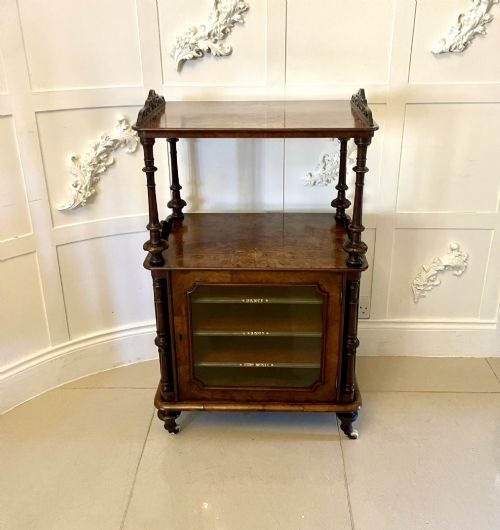
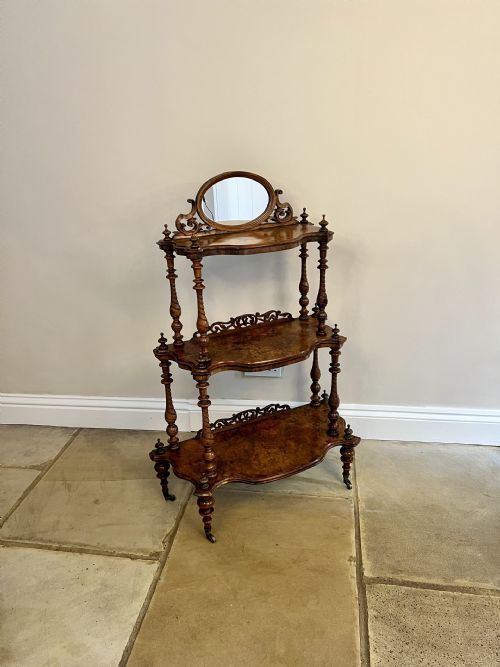
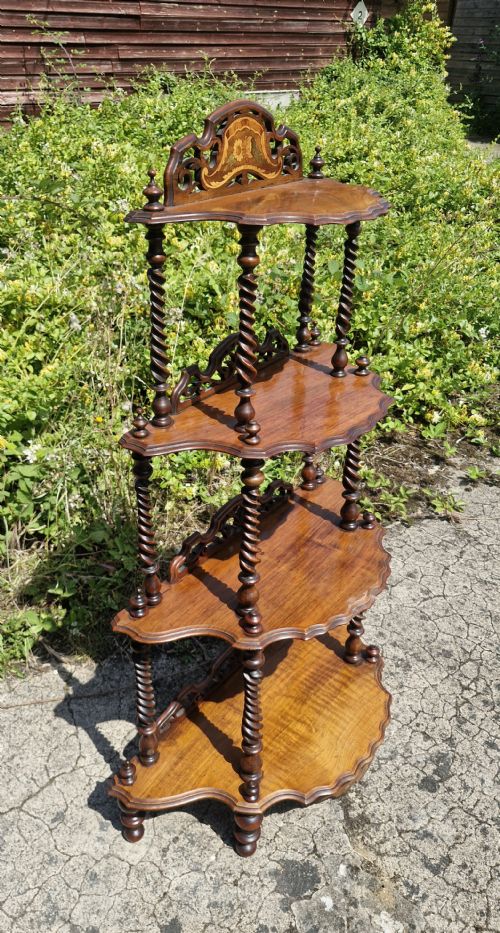
A brown walnut whatnot is a multi-tiered display piece designed to hold ornaments, books, and collections in Victorian interiors. These stands appear across several decades of the nineteenth century, taking the form of freestanding shelves, corner units, and combination tables.
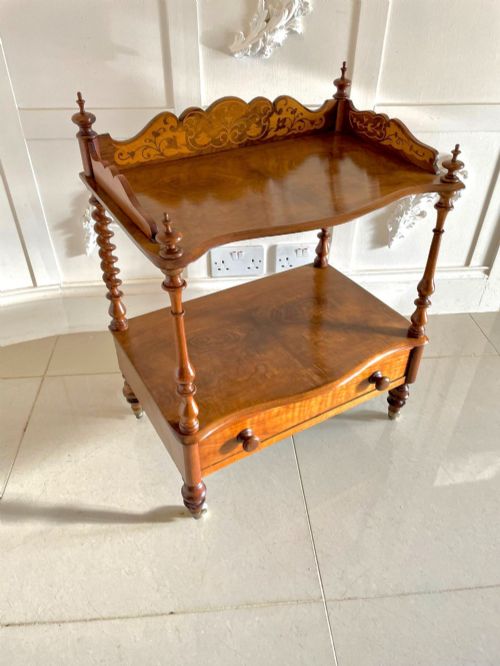
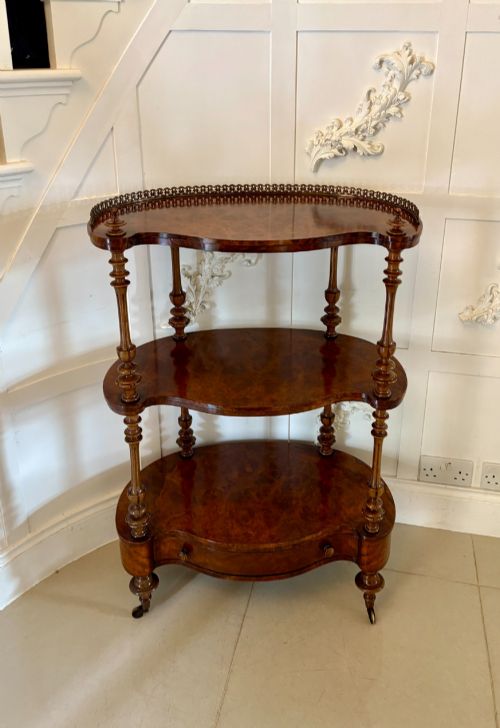
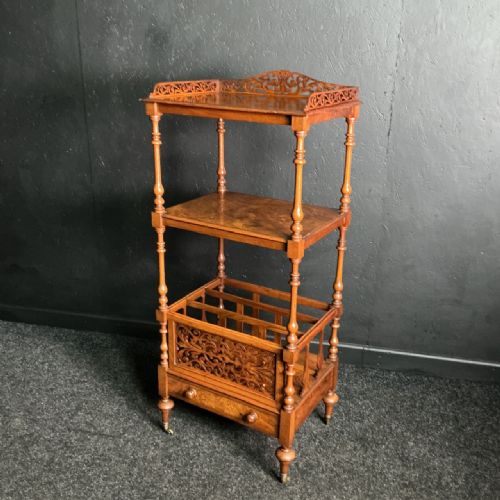
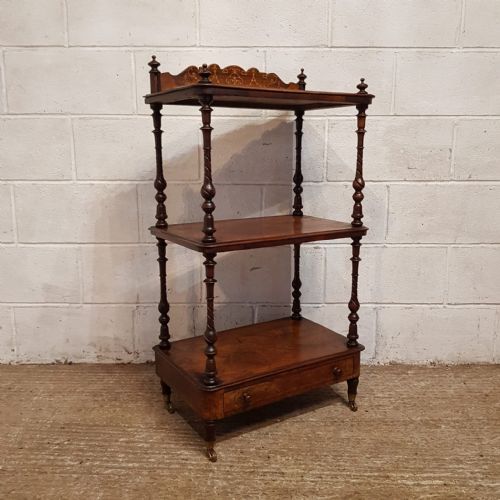
Most examples found here date from the Victorian period, spanning the mid to late nineteenth century, alongside occasional Edwardian pieces. Forms vary from simple three-tier stands and serpentine shapes to complex configurations incorporating canterburys, display cabinets, and lamp tables.
Materials and construction methods
Cabinet makers utilised solid walnut and decorative burr walnut veneers over secondary timbers to construct these tiered stands. The rich grain of the wood provides the primary visual interest across the surfaces.
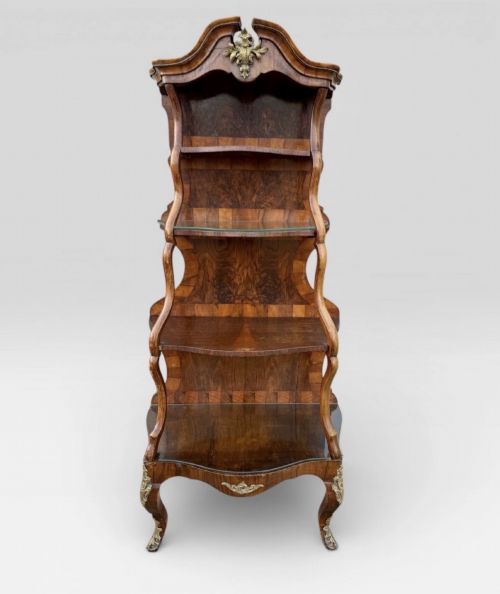
Decoration often includes boxwood inlay, marquetry inlay, and gilt metal mounts, while some examples incorporate mirror glass panels or ceramic elements. Structural supports range from turned columns and hollow barley twist uprights to corner brackets.
Listings span the Victorian and Edwardian periods, utilising walnut, burr walnut, boxwood inlay, marquetry, and mirror glass across multiple tiers.
Judging quality in walnut whatnots
Quality rests heavily on the choice of timber, with highly figured burr walnut veneers commanding greater attention than plain surfaces. The crispness of boxwood and marquetry inlay further separates standard pieces from finer examples.
Construction details such as serpentine shaping, carved uprights, and integrated furniture combinations like a canterburys or display cupboards indicate higher workmanship. The overall proportion and stability of multi-tiered structures define the standard of the piece.
Gillows
The Brown Walnut Whatnot Glossary
- Whatnot
- A piece of furniture consisting of a set of open shelves for displaying small objects. These tiered stands gained popularity during the Victorian era for domestic display.
- Burr Walnut
- A specialised wood veneer taken from the warted growths on walnut trees, showing highly figured swirling patterns. Cabinet makers utilised this timber on prominent surfaces for decorative impact.
- Canterbury
- A low stand fitted with partitions for holding sheet music, books, or portfolios. In these listings, canterburys are frequently combined with whatnot shelving above.
- Marquetry
- Decorative woodwork in which pieces of tinted wood, shell, or ivory are fitted into a veneer to form geometric or floral designs. This technique decorates the shelves and tabletops of finer pieces.
- Serpentine
- A curved line of furniture shaping that undulates outward and inward in a gentle wave. This contour appears on the fronts of higher quality tables and display stands.
Brown Walnut Whatnot: Frequently Asked Questions
What is a brown walnut whatnot used for?
These tiered stands were originally designed to hold books, ornaments, and decorative objects in nineteenth-century drawing rooms.
Today, they serve the same practical purpose in modern homes, offering vertical display space without dominating a room.
How do I identify a Victorian whatnot?
Victorian examples typically feature walnut timbers, turned upright supports, and multi-tiered open shelving built between eighteen fifty and eighteen ninety.
Many incorporate period details such as boxwood inlay, marquetry, or serpentine shaping characteristic of nineteenth-century cabinet making.
What is the difference between a whatnot and an étagère?
While both terms describe tiered furniture used for display, an étagère often emphasises lighter decorative framework and French styling.
In practice, nineteenth-century makers and modern dealers frequently use both terms interchangeably for these multi-shelf units.
Where should I place a corner whatnot?
Corner whatnots fit directly into ninety-degree wall angles, making them practical for smaller rooms or unused corners.
They provide multiple tiers of display capacity while taking up minimal floor space compared to freestanding rectangular units.