



Brown Walnut Double Wardrobe
A brown walnut double wardrobe brings rich grain and practical hanging space to a bedroom, offering a substantial furniture piece built to last.
Brown Walnut Double Wardrobe
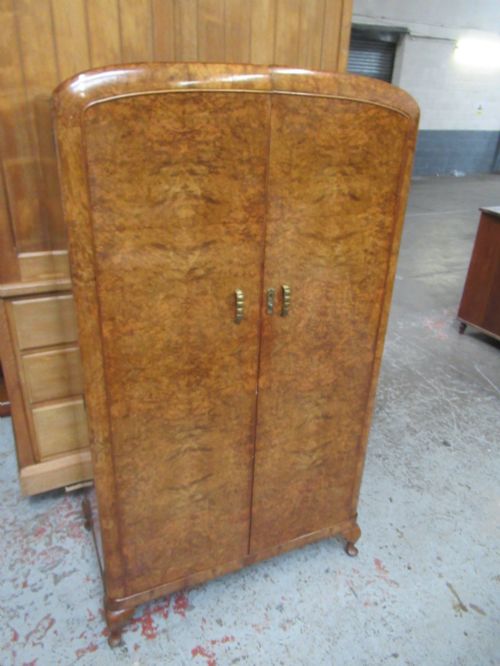
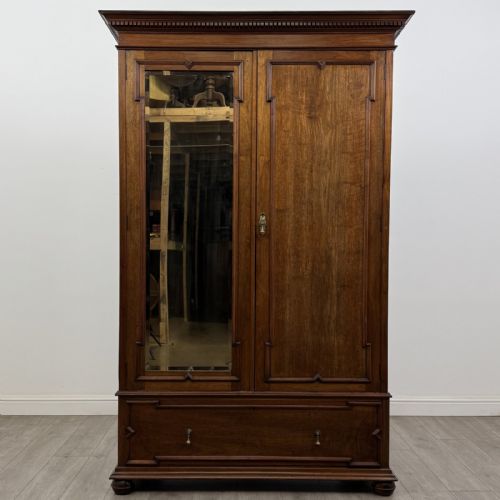
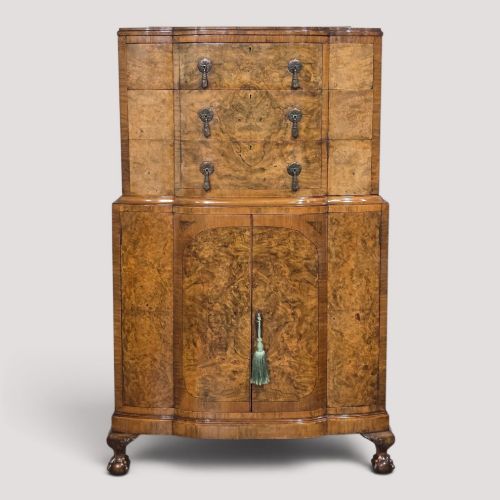
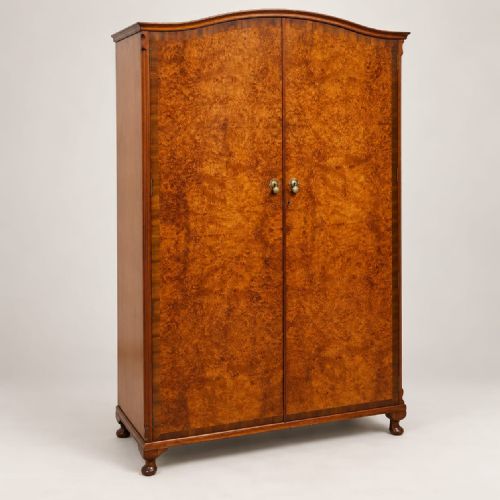
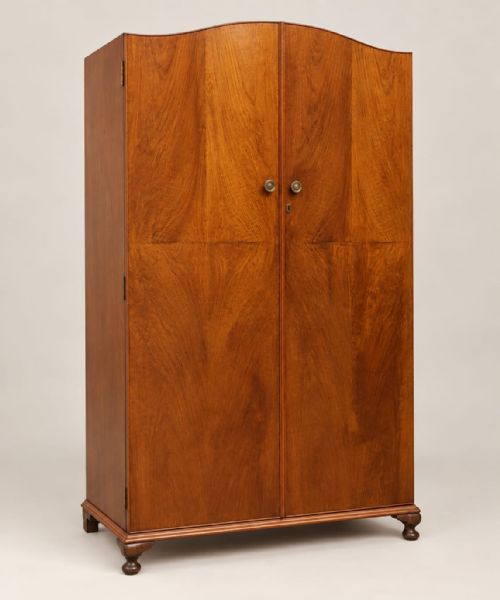
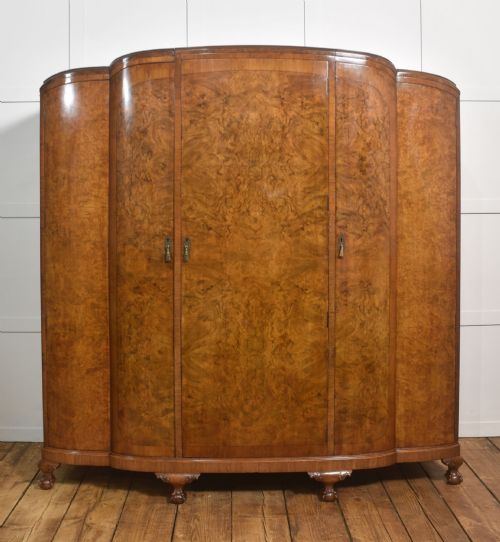
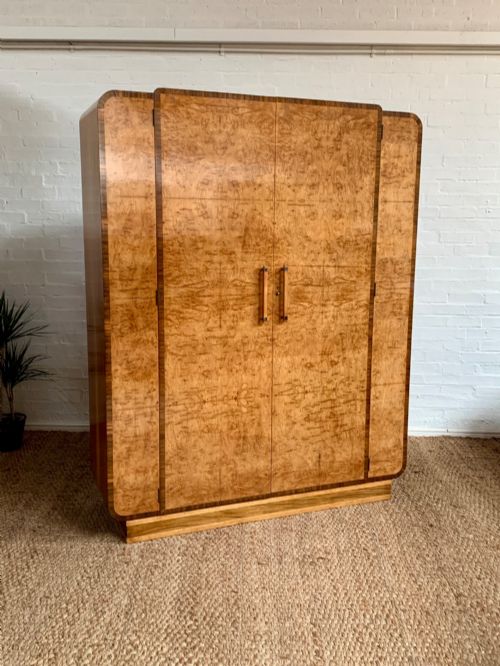
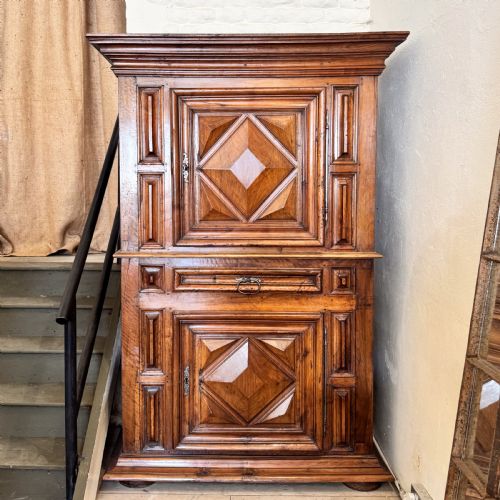
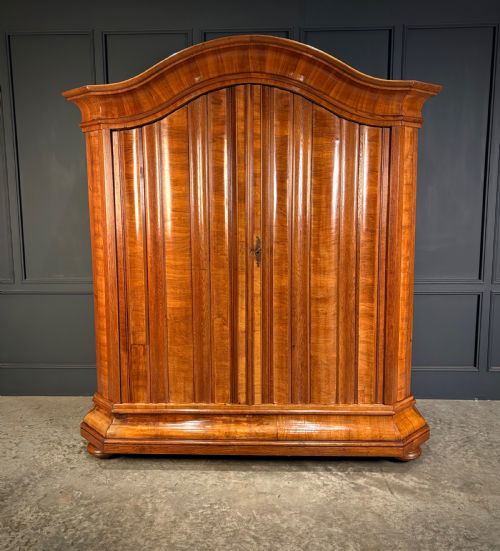
A brown walnut double wardrobe is a large storage piece designed for hanging garments, appearing across several distinct periods from the eighteenth century to the mid-twentieth century. The listings show forms ranging from traditional cupboards and linen presses to Art Deco breakfronts and compactums.
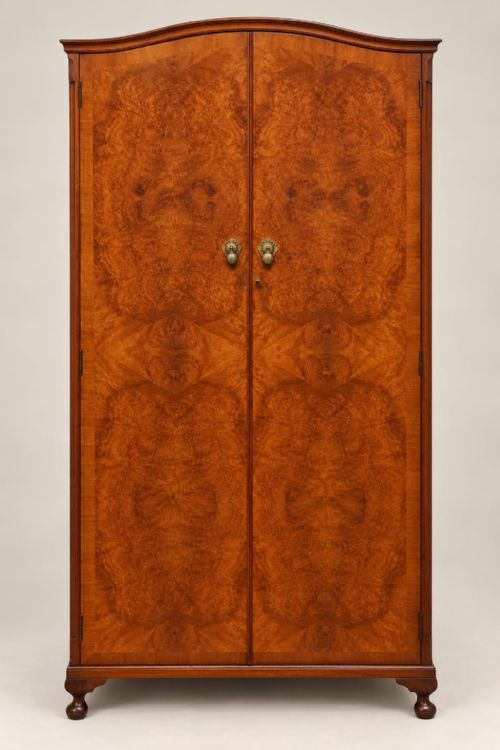
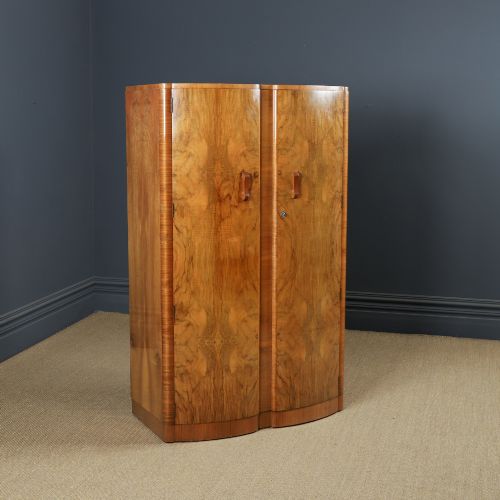
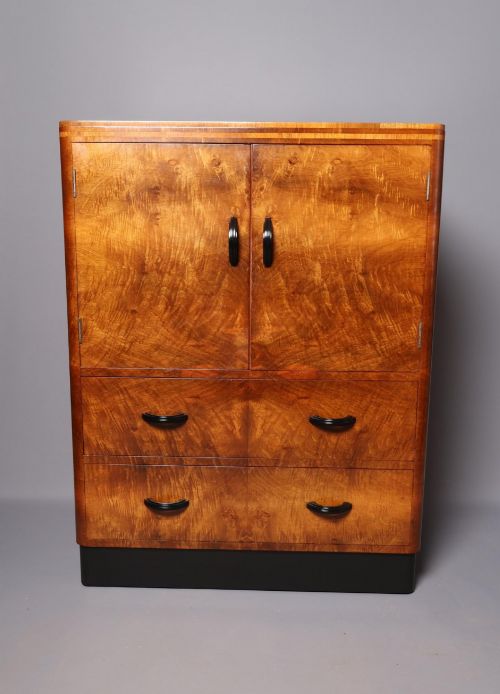
Buyers will most frequently encounter twentieth-century interpretations, particularly Art Deco burr walnut designs and revival pieces from the 1920s and 1930s. These later pieces often feature double doors and fitted interiors designed for modern clothing storage.
How they were made
Construction relies heavily on walnut and burr walnut, frequently applied as veneers over secondary timbers such as oak to showcase striking figured grain patterns. Cabinet makers utilised walnut veneer to create symmetrical patterns across large double doors and bowed fronts.
Metal hardware such as brass handles, iron hinges and occasionally bakelite details complete the structural and decorative assembly. Joinery methods range from pegged traditional framing in eighteenth-century pieces to modern internal fittings in later compactum designs.
Brown Walnut Double Wardrobe Retail Price Guide 2026
Typical asking prices for brown walnut double wardrobe among the pieces listed under this phrase on Sellingantiques today, from the lower quarter to the upper quarter. They describe what is for sale here now, not the wider market.
Some Art Deco wardrobes from 1930 quietly smuggled modern bakelite handles onto traditional burr walnut curves.
What varies in quality
The choice of veneer defines the visual impact, with high-end pieces displaying carefully matched burr walnut figures that create harmonious patterns across the doors. Plain timber surfaces rely instead on the depth of the French polish and the natural warmth of the walnut.
Internal configuration and joinery substance distinguish standard functional storage from finer cabinet work. Pieces that integrate specialised drawers, shelves and hanging space within a compactum format demonstrate greater interior design ambition.
Mercier·King Willem I of the Netherlands·Grunderzeit
The Brown Walnut Double Wardrobe Glossary
- Burr walnut
- A veneer sliced from the knotty growths of a walnut tree, yielding swirling, highly decorative grain patterns. It requires skilled application to cover large wardrobe doors without splitting.
- Compactum
- A multi-functional wardrobe that combines hanging space with internal drawers, shelves and compartments. This form maximises storage efficiency within a single footprint.
- Breakfront
- A cabinet design where the central section projects forward from the flanking outer sections. This architectural arrangement adds depth and shadow lines to large wardrobes.
- Linen press
- A tall piece of furniture featuring upper cupboard doors enclosing sliding trays for textiles, positioned above a base of lower drawers. They predate modern hanging wardrobes and reflect historical garment storage.
- Armoire
- A traditional European large cupboard or wardrobe with doors enclosing shelving or hanging space. Continental examples often display distinct regional carvings and proportions.
Brown Walnut Double Wardrobe: Frequently Asked Questions
How do I date a walnut wardrobe?
Dating relies on observing stylistic markers, construction methods and timber preparation. Eighteenth-century pieces show hand-cut joinery and traditional panel construction, while Art Deco pieces from the 1930s utilise streamlined symmetry and specific veneer layouts.
Hardware and internal fittings also offer clues. Bakelite details and compactum interiors typically point towards the twentieth century, whereas pegged frames and heavy mouldings suggest older continental origins.
Will a double wardrobe fit modern hangers?
Many older wardrobes were built before modern standardised coat hangers existed, meaning internal hanging depths can sometimes prove shallower than contemporary standards demand. Front-to-back measurements vary significantly across different periods.
Checking the internal depth before purchase ensures standard hangers will clear the closed doors. Some pieces feature front-to-back hanging rails while others utilise side-to-side telescopic or fixed rails.
How do I care for walnut veneer?
Walnut veneer responds best to stable indoor environments away from direct sunlight and heat sources, which can cause timber to dry and veneers to lift. Regular dusting with a soft, dry cloth preserves the polished finish.
Applying a traditional beeswax polish occasionally helps nourish the wood and maintain its natural lustre. Avoid using modern silicone-based sprays that can penetrate and damage historic finishes.
What is the difference between an armoire and a wardrobe?
An armoire is traditionally a continental European cupboard used originally for storing arms or garments, often featuring deep proportions and elaborate regional carving. Wardrobe is a broader English term that specifically denotes a piece designed primarily for hanging clothes.
In modern usage, the terms often overlap, particularly when describing large continental furniture pieces. Many armoires have been internally adapted to function as modern wardrobes with hanging rails.