

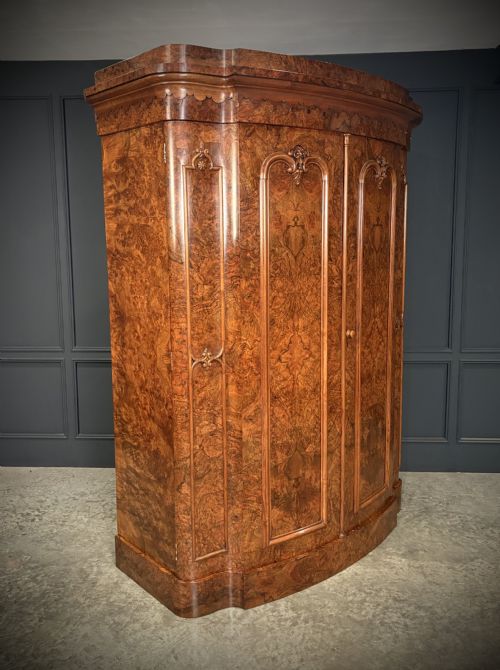


Brown Walnut Clothes Press
These brown walnut clothes press examples combine generous hanging space and fitted shelves in rich timber, offering a practical centrepiece for traditional bedrooms.
Brown Walnut Clothes Press
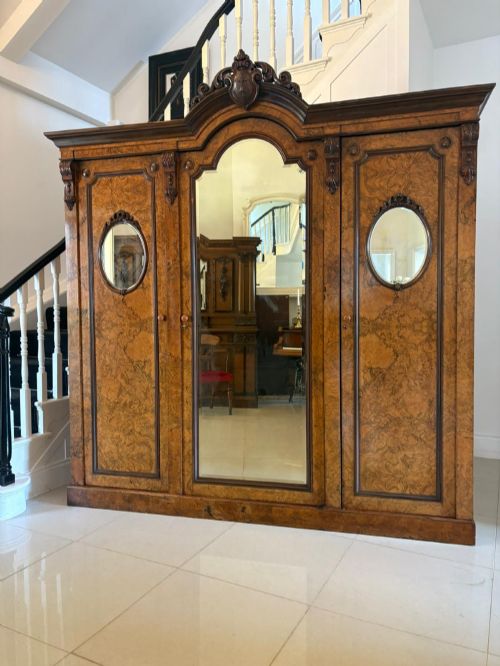
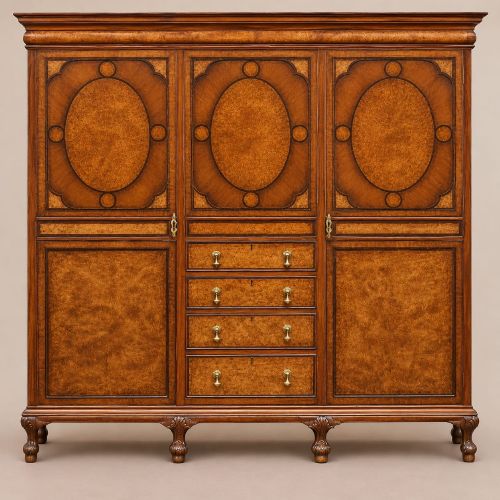
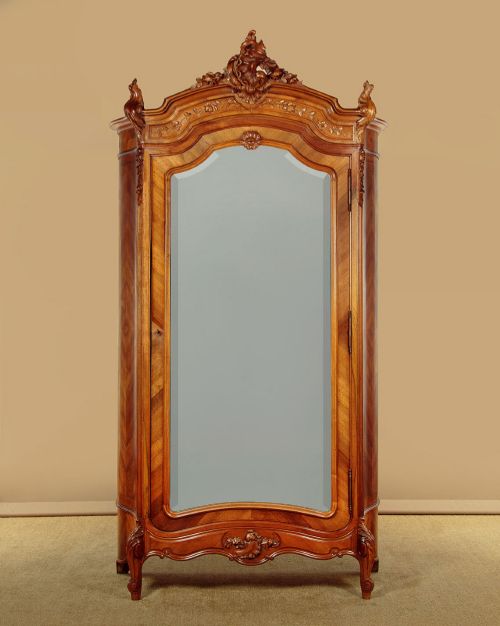
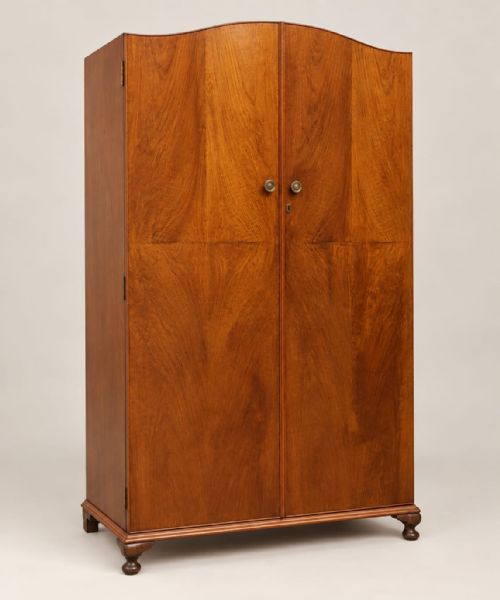
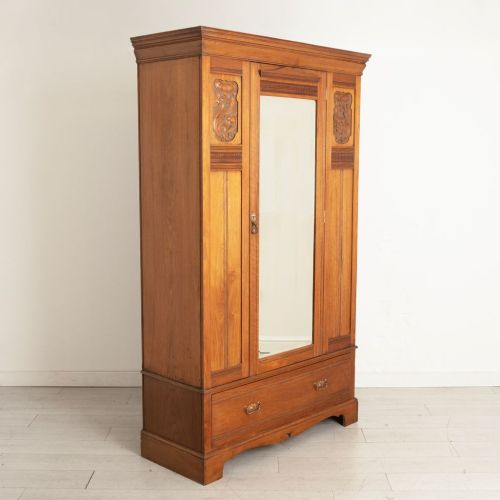
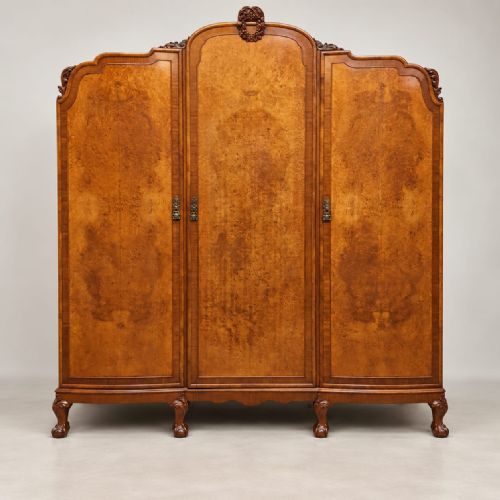
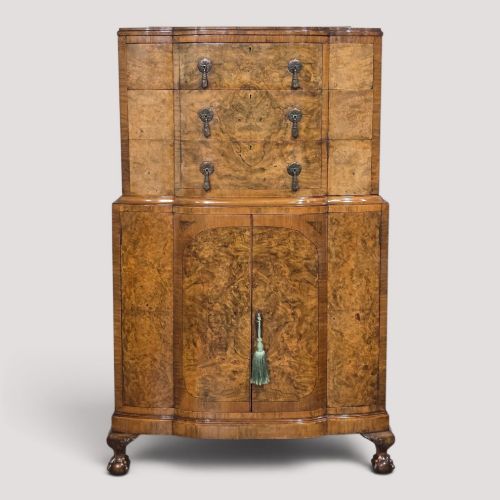
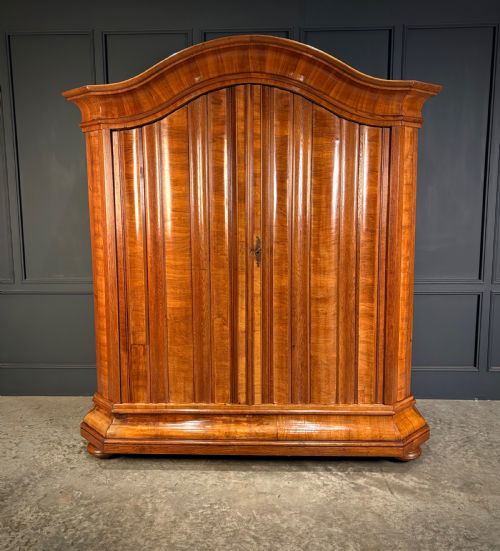
When you search for a brown walnut clothes press, you encounter large storage furniture primarily spanning the Victorian, Edwardian, and Art Deco periods, alongside earlier eighteenth-century examples.
The pieces listed on this page appear predominantly as wardrobes, armoires, and linen presses, offering deep compartments and hanging space behind panelled or mirrored doors.
Victorian and Edwardian iterations dominate the selection, ranging from single door cupboards to large triple compactum wardrobes with substantial internal capacity.
Materials and construction methods
Cabinet makers utilised solid walnut and decorative burr walnut veneers applied over secondary timbers such as oak, creating striking grain patterns across large surfaces.
Construction techniques involve traditional joinery methods, incorporating brass hardware for hinges and locks, and occasionally integrating bevelled glass panels into the doors.
Brown Walnut Clothes Press Retail Price Guide 2026
Typical asking prices for brown walnut clothes press among the pieces listed under this phrase on Sellingantiques today, from the lower quarter to the upper quarter. They describe what is for sale here now, not the wider market.
Listings feature walnut, burr walnut veneer, oak, and brass hardware spanning the eighteenth century through to the Art Deco period.
Distinguishing quality in walnut furniture
The visual appeal depends largely on the choice of timber, where highly figured burr walnut veneer displays complex, swirling grain patterns superior to plain straight-grained surfaces.
Structural refinement shows in the proportion of the mouldings, the integration of carved details, and the precision with which large panelled or mirrored doors align within their frames.
The Brown Walnut Clothes Press Glossary
- Compactum
- A fitted wardrobe containing a combination of hanging space, drawers, and linen slides. This configuration maximises internal storage efficiency.
- Burr walnut
- A veneer taken from the warted growths on walnut trees, prized for its intricate and chaotic grain patterns. It provides a highly decorative surface on formal cabinet furniture.
- Armoire
- A large upright cupboard or wardrobe used for storing clothing. European examples often feature substantial decorative carving and substantial proportions.
- Linen press
- A tall storage piece traditionally used for flat textiles and garments, featuring upper doors enclosing sliding trays and lower drawers. Eighteenth-century versions represent the traditional form.
- Breakfront
- A piece of furniture where the central section projects forward from the flanking cabinets. This architectural device adds depth and shadow to large wardrobes.
Brown Walnut Clothes Press: Frequently Asked Questions
How do I clean walnut furniture?
Dust surfaces regularly with a soft, dry cloth to prevent particle accumulation. Avoid silicone-based polishes that leave residues and instead use traditional beeswax sparingly.
Keep the timber away from direct sunlight and radiators to prevent the wood from drying out and the veneer from lifting over time.
Will a large wardrobe fit my room?
Measure your ceiling height and floor space carefully, accounting for protruding cornices and plinths. Many antique wardrobes dismantle into separate sections to facilitate transport and installation.
Check stairwell clearances and turning angles in your home before arranging delivery of multi-door compactum units or armoires.
What is a compactum wardrobe?
A compactum is an integrated storage unit that combines hanging space, sliding trays, and drawers within a single piece of furniture. Victorian makers designed them to house an entire wardrobe efficiently.
These pieces typically feature internal partitioning with dedicated spaces for shoes, linen, and folded garments alongside full-length hanging compartments.
How do I date a walnut wardrobe?
Examine the construction methods, secondary timbers, and decorative styles visible across the piece. Victorian examples often show heavy cornices and arched panel doors, while Edwardian pieces lean towards lighter proportions.
Art Deco and 1930s variants display geometric symmetry and streamlined burr walnut veneers without traditional revival carving.