


Brown Walnut Carver Chairs
Brown walnut carver chairs bring rich wood tones and sturdy open arms to dining tables and libraries, offering solid timber frames built to endure.
Brown Walnut Carver Chairs
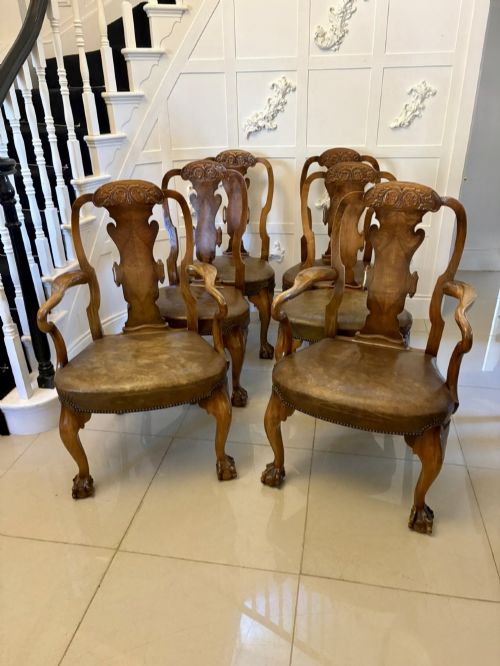
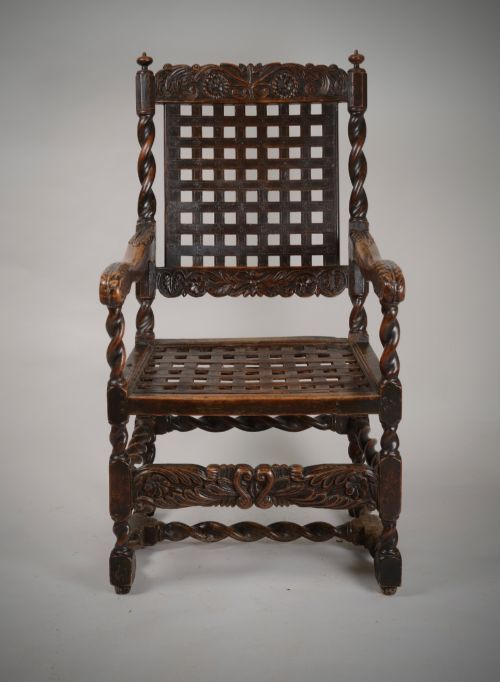
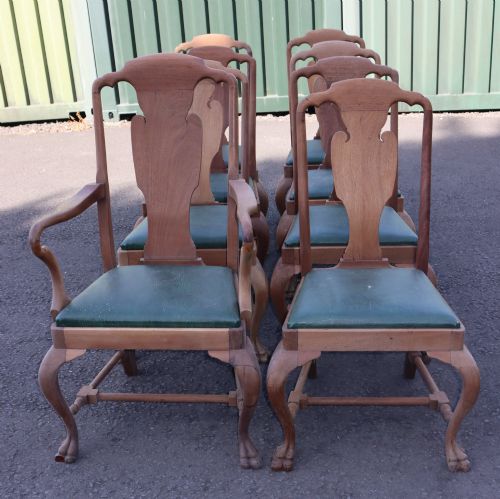
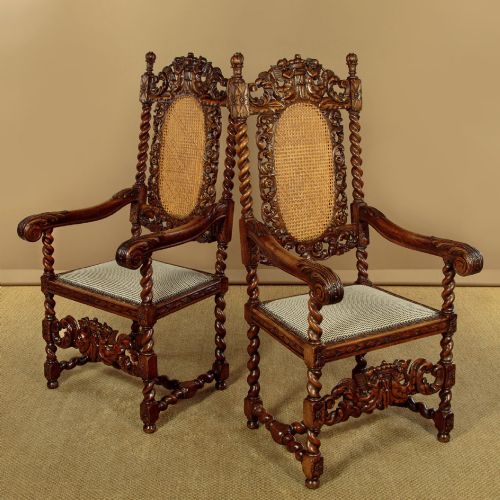
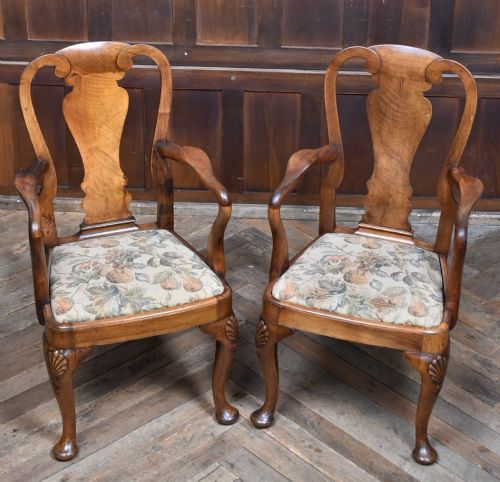
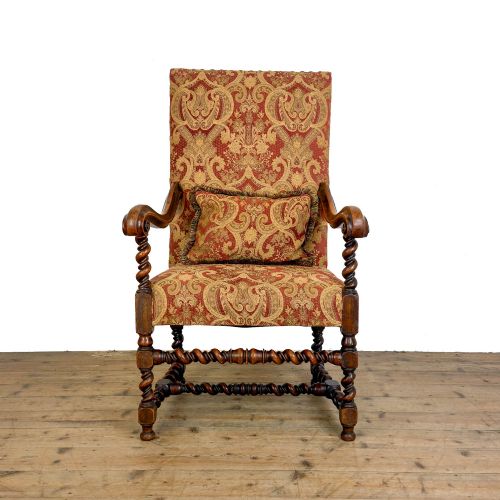
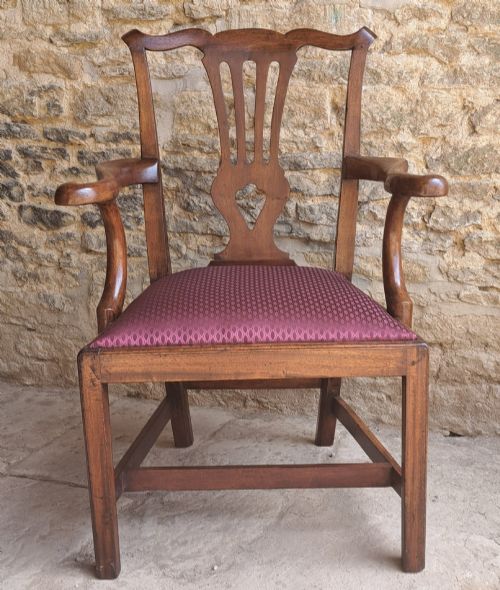
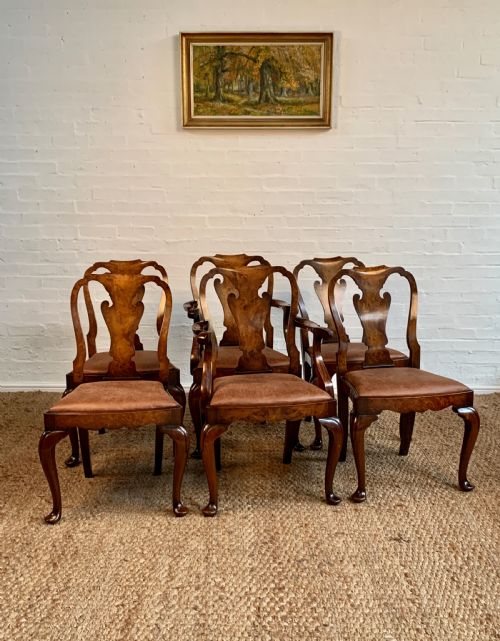
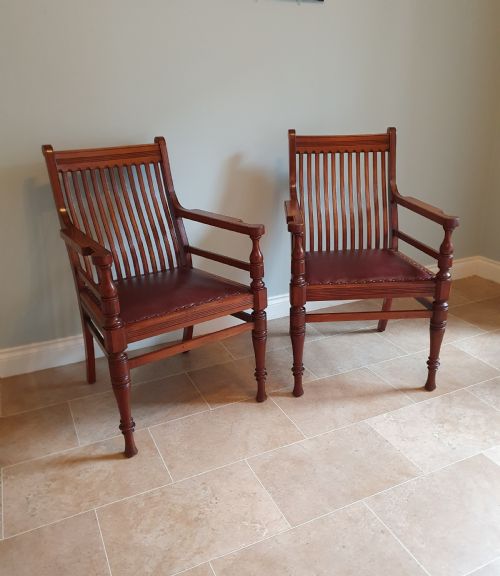
Brown walnut carver chairs are seated furniture featuring open armrests alongside timber frames rendered in walnut, burr walnut, and hard wood. These items appear across multiple eras, ranging from 17th-century forms and 18th-century George II designs to Victorian, Edwardian, and 20th-century revivals.
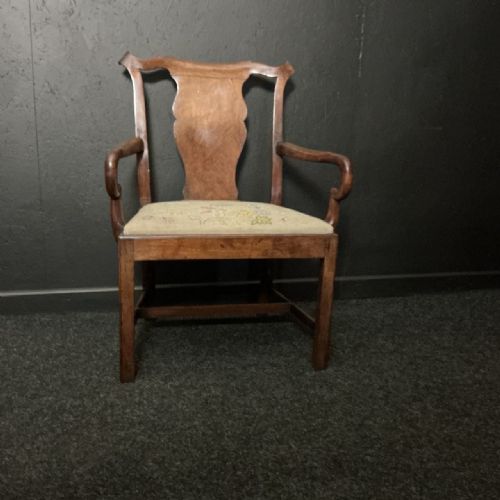
Buyers browsing this selection most frequently encounter Victorian, Edwardian, and 1930s examples influenced by Queen Anne and George II styles. These pieces often serve as host chairs at the head of a dining table or stand independently as library and desk chairs.
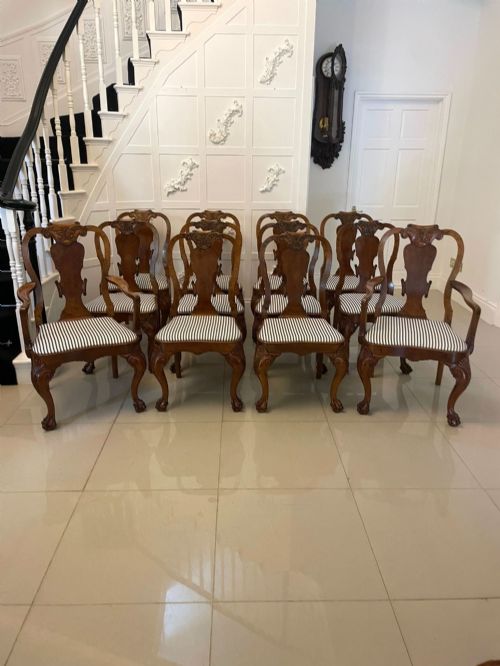
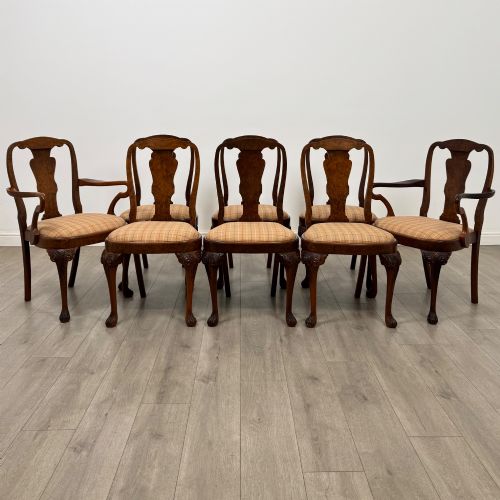
The assortment includes single armchairs, pairs, and larger sets of matching dining chairs featuring carvers alongside side chairs. Makers and retailers such as Shoolbred, Spillman & Co, and Howard & Son's also appear among the documented items.
How they were made
Cabinet makers constructed the primary frames of these chairs using solid walnut, often selecting burr walnut veneers to achieve highly figured, swirling grain patterns on splats and back panels. Timber selection dictated both the visual weight and the structural integrity of the arm supports and cabriole legs.
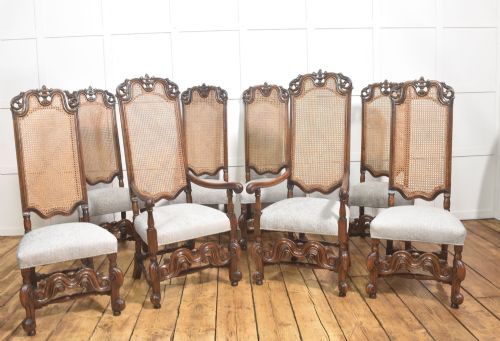
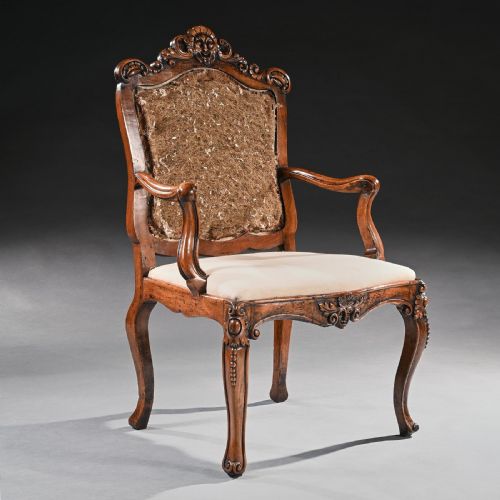
Upholstered elements rely on traditional textiles, leather, fabric, and cane inserts secured to seat frames. Detailed embellishments such as hand-carved decoration, marquetry, and painted highlights finish the timber surfaces.
Listings span from the 17th century through the Victorian era and into the 1930s, incorporating Queen Anne, George II, and Renaissance Revival styles.
What varies in quality
The standard of carving and the selection of timber grain set individual examples apart, where deeply articulated ornament and rich burr walnut veneer indicate superior workshop output. Greater ambition in the scrollwork, splat design, and arm terminal shaping separates standard utility seating from high-end cabinet work.
The original integrity of the timber frame and the precision of revival styling influence the overall character of each chair. Pieces retaining authentic period construction details and refined proportions demonstrate the highest standard of craftsmanship.
Shoolbred·Spillman & Co·Howard & Son's
The Brown Walnut Carver Chairs Glossary
- Carver chair
- An armchair, typically designed to match a set of dining chairs and featuring supportive armrests for the person seated at the head of the table.
- Burr walnut
- A highly prized wood cut from walnut tree growths, displaying intricate, swirling grain patterns used for decorative veneer on prominent surfaces.
- Splats
- The central vertical slat of wood positioned in the middle of a chair back, frequently shaped, carved, or painted.
- Marquetry
- The art of applying pieces of veneer to a structure to form decorative patterns, visible on select continental examples.
- Cabriole leg
- A furniture leg that curves out and then in, commonly ending in a pad or claw foot on 18th-century and revival seating.
Brown Walnut Carver Chairs: Frequently Asked Questions
What is a carver chair?
A carver chair is an armchair built with integrated armrests designed to match a set of dining chairs. These pieces traditionally sit at the head of a dining table for the host.
They offer additional upper body support compared to standard side chairs while maintaining a uniform appearance with the rest of the dining set.
How do I style a walnut carver?
Walnut carver chairs function effectively as single accent pieces in a hallway or bedroom, or paired at opposite ends of a dining table. Their rich brown timber tones complement both traditional wooden tables and contemporary settings.
Using them as desk or library chairs brings practical seating into domestic workspaces while highlighting the carved wooden armrests.
What is Queen Anne style?
Queen Anne style furniture emerged during the early 18th century and experienced several revivals in the Victorian and 20th-century periods. It is defined by smooth curves, cabriole legs, and solid splat backs.
Chairs from this design tradition prioritise comfort through shaped seats and ergonomic backrests without heavy surface carving.
Can I mix different chair periods?
Mixing period carver chairs with later dining furniture is a common practice that adds depth to an interior. Pairing an 18th-century walnut armchair with 20th-century dining chairs creates a curated look.
Matching the wood tone, such as brown walnut, helps unify disparate eras and styles around a single table.