

Brown Wall Console
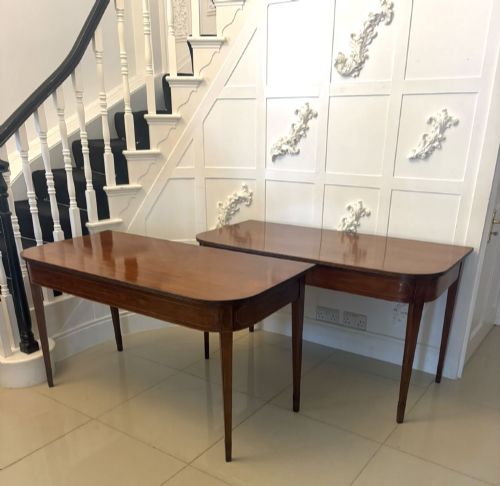
These brown wall console pieces bring rich timber surfaces and architectural form to an interior, built for practical placement against panelled rooms or hallways.
Brown Wall Console
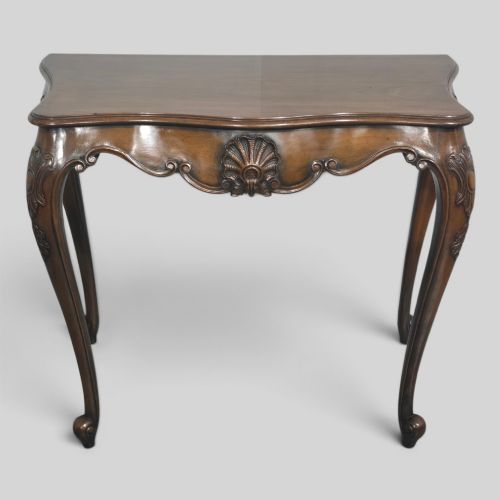
When searching for a brown wall console, buyers encounter a diverse mix of console tables, wall brackets, and serving tables designed to sit flush against vertical surfaces. These items bridge the gap between architectural fittings and freestanding furniture, offering a flat top for display while anchoring tightly to the room.
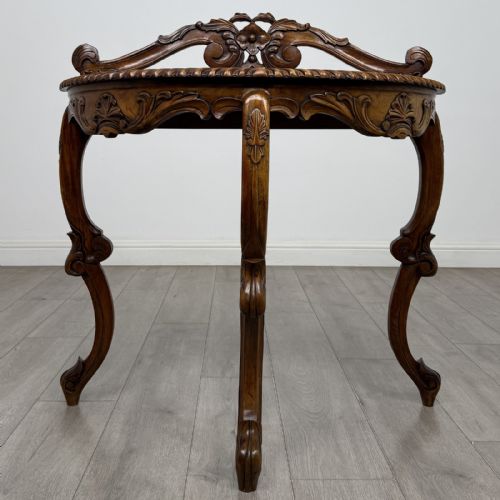
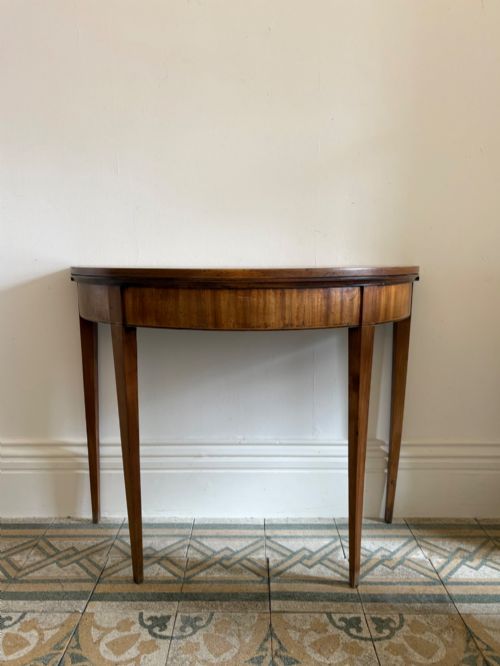
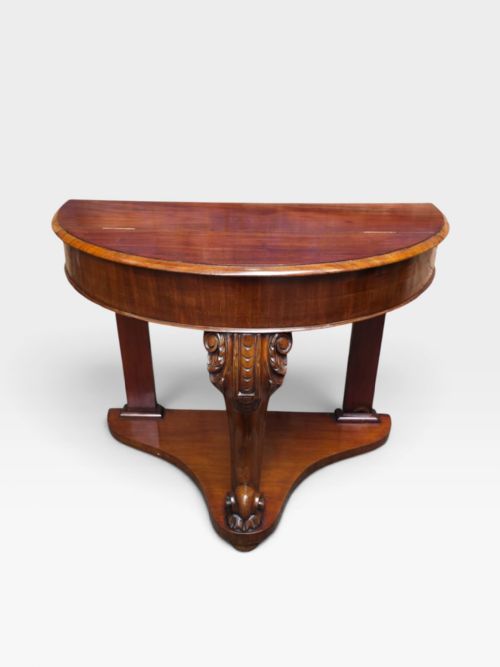
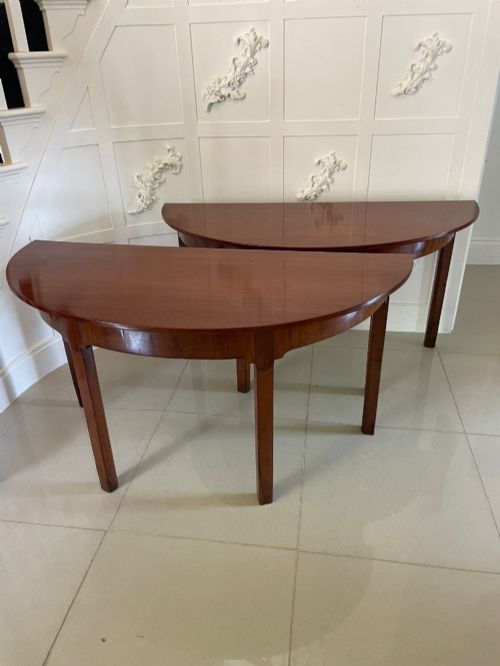
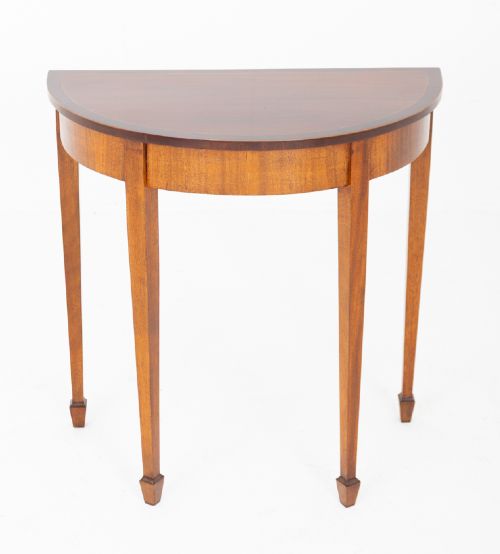
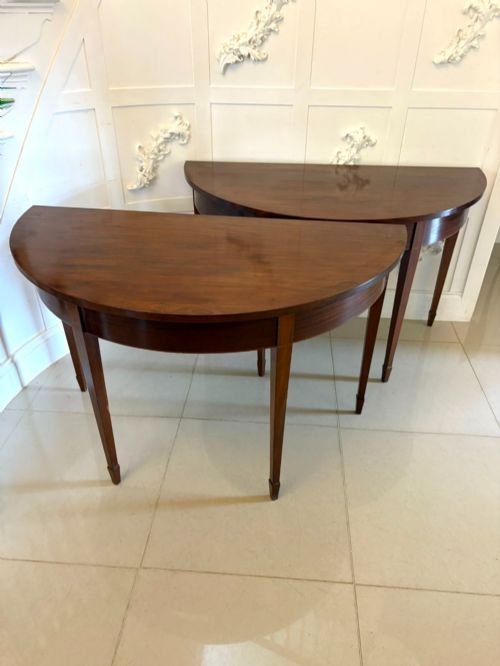
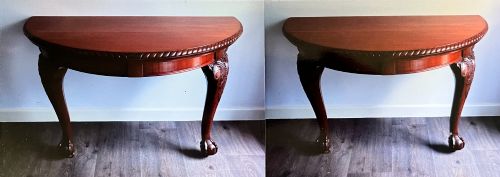
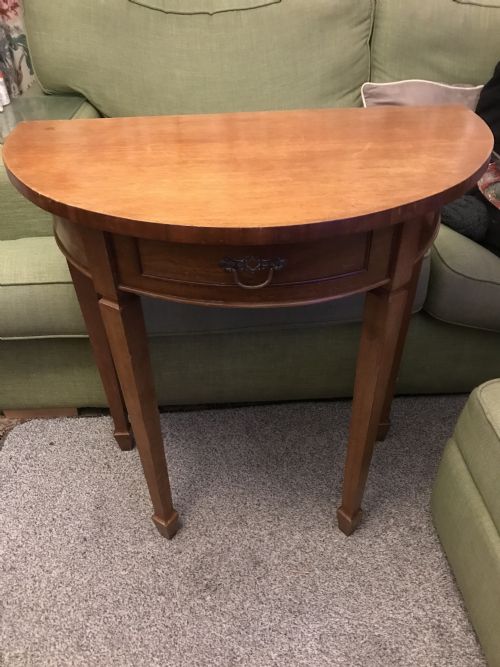
The versions most commonly met on this page span the eighteenth, nineteenth, and early twentieth centuries, drawing heavily on Georgian, Regency, and Victorian design traditions. Many appear in demi-lune or semicircular formats, specifically engineered to project minimally into narrow hallways or reception spaces.
Beyond tables, the selection includes smaller wall shelves, mirrors, and carved wooden brackets that share the same warm timber palette. These smaller iterations provide vertical interest and surface area without claiming valuable floor space in compact rooms.
Materials and construction methods
Makers relied heavily on dense hardwoods like mahogany and walnut, frequently selecting figured veneers and burr cuts to create lively grain patterns across top surfaces. Oak and padauk appear across specific periods, providing rigid structural integrity for both heavy console tables and load-bearing wall brackets.
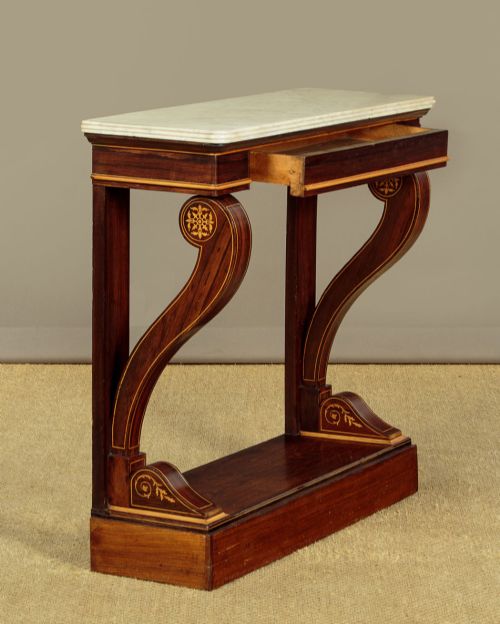
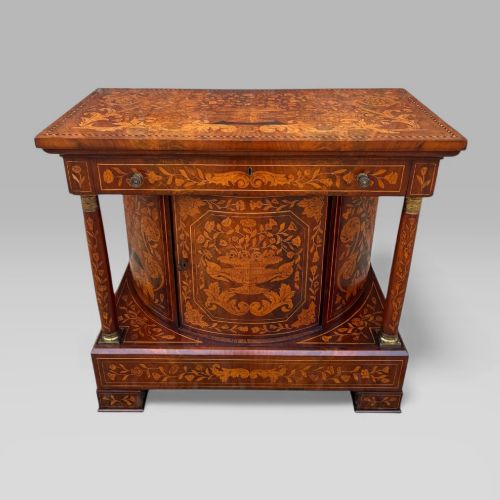
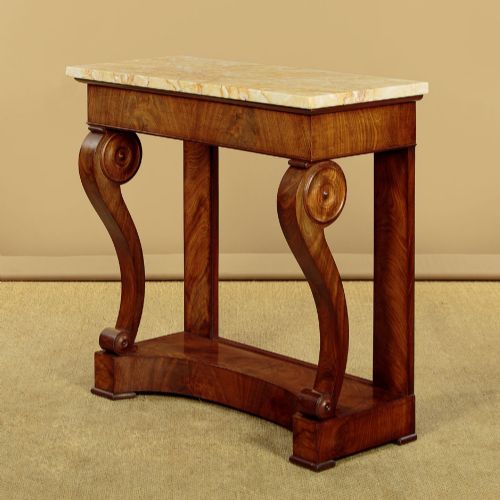
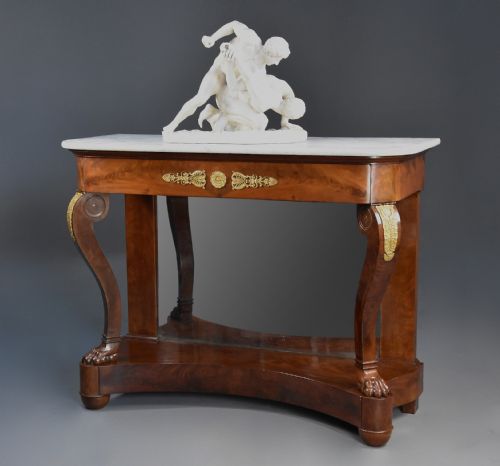
Surface enhancement involved intricate techniques such as marquetry inlay, satinwood stringing, and painted decoration to enrich the timber base. Heavier console tables frequently paired wooden frames with inset marble slabs, creating a durable and cool surface resistant to daily wear.
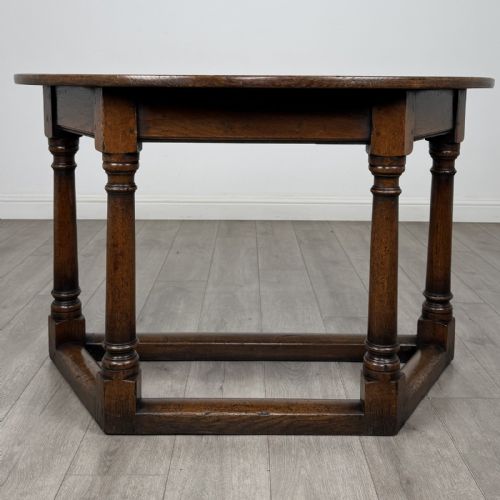
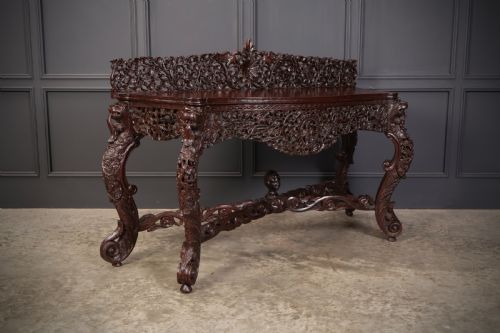
Joinery techniques ranged from straightforward pegged framing in oak pieces to sophisticated curved drawer construction in demi-lune tables. Carved elements on brackets and friezes were executed by hand, utilising deep relief work to catch the light in domestic interiors.
Brown Wall Console Retail Price Guide 2026
Typical asking prices for brown wall console among the pieces listed under this phrase on Sellingantiques today, from the lower quarter to the upper quarter. They describe what is for sale here now, not the wider market.
A charming pair of Baroque-style carved wood cherub wall brackets waits patiently to hold your candles in the dark.
Distinguishing quality in construction and design
Superior pieces display a high degree of select figure in the mahogany or walnut veneer, where grain patterns mirror each other symmetrically across a central axis. Lesser examples rely on plain timber or thick, uniform planks that lack the depth and tonal variation found in premier workshops.
The finesse of the carving on brackets, legs, and friezes separates standard production items from exceptional commissions. Crisp, deeply undercut foliage and figures indicate a confident hand, whereas soft, shallow moulding suggests rushed workshop output.
Structural integration also defines the upper tier, seen in how seamlessly a demi-lune top meets its apron and how solidly wall-mounted brackets anchor their weight. The best examples maintain tight joints and balanced proportions without relying on heavy modern reinforcement.
Epstein and Co
The Brown Wall Console Glossary
- Demi-lune
- A half-moon shape used frequently for console tables designed to fit flat against a wall. This specific footprint allowed furniture makers to provide a useful surface while minimising floor obstruction in corridors.
- Marquetry
- The art of applying decorative veneer pieces of different woods to a structure to form intricate patterns or pictures. It adds distinct visual texture to table tops and cabinet fronts.
- Wall bracket
- A projecting architectural support fixed to a wall to hold ornaments, clocks, or smaller busts. They are frequently carved from walnut or oak and finished with detailed scrolling.
- Serving table
- A large rectangular or demi-lune table used in dining rooms for holding food or silver. Many examples share dimensions and profiles with standard console tables of the period.
- Satinwood
- A durable, yellowish timber native to India and Ceylon, used extensively for contrasting inlay work and banding on darker mahogany surfaces.
Brown Wall Console: Frequently Asked Questions
Where should I place a console table?
These tables find their natural home in hallways, entrance passages, and reception rooms where floor space is at a premium. Because their backs sit flat against the wall, they offer a convenient landing spot for keys and post without obstructing walkways.
In larger spaces, they work effectively beneath large wall mirrors or paintings to create a balanced focal point. Dining rooms also accommodate them well as serving surfaces during meals.
How do I secure a wall console or bracket?
Wall-mounted brackets and console units require robust fixings directly into solid masonry or through plaster into wooden wall studs. Because many pieces carry heavy marble tops or dense hardwood structures, relying solely on plasterboard anchors is insufficient.
Professional installation is recommended to ensure the weight distributes safely into the wall fabric. This prevents any tipping risk when objects are placed on the surface.
What is the difference between a side table and a console table?
Traditional side tables are fully freestanding items finished on all four sides, allowing them to float anywhere in a room. Console tables, by contrast, are specifically designed to rely on a wall for stability, often featuring flat backs or specialised wall-mounting brackets.
Many demi-lune consoles on this page were built explicitly to anchor against vertical surfaces. Their rear legs may be simpler in finish or design than the prominent front supports.
How do I clean antique mahogany furniture?
Maintenance requires gentle dusting with a soft, dry cloth to prevent micro-abrasions on the polished timber surface. Avoid modern silicone-based sprays, which build up over time and attract dust.
Applying a traditional beeswax polish periodically helps nourish the dry wood and maintain a soft, natural sheen. Keep such furniture away from direct heat sources and strong sunlight to prevent the timber from splitting or fading.