

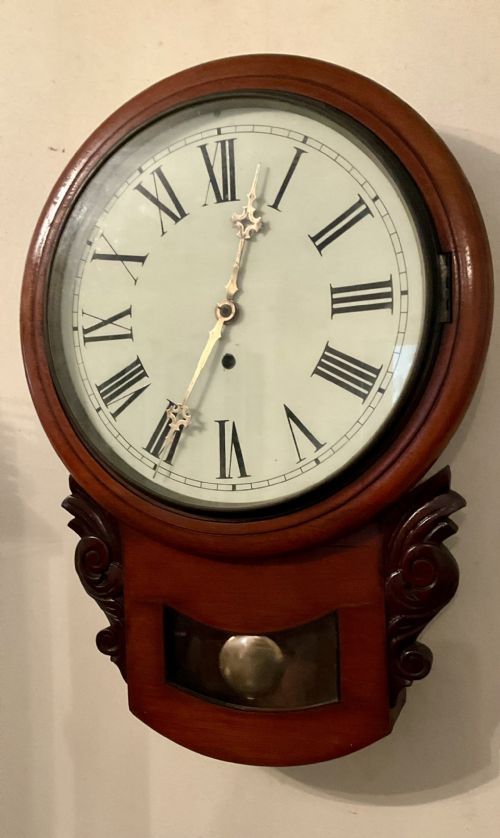
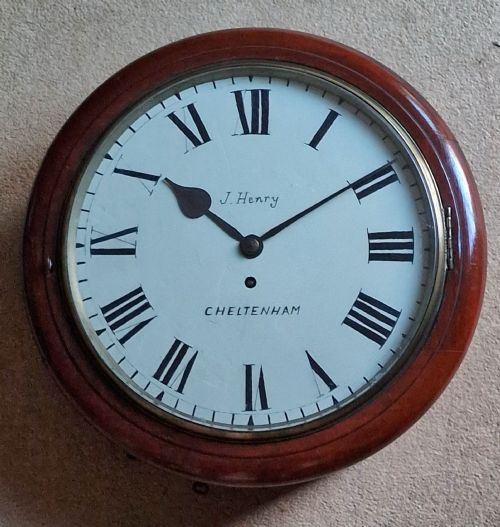
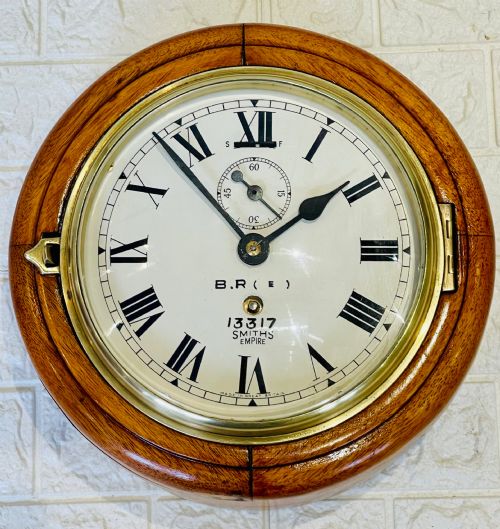
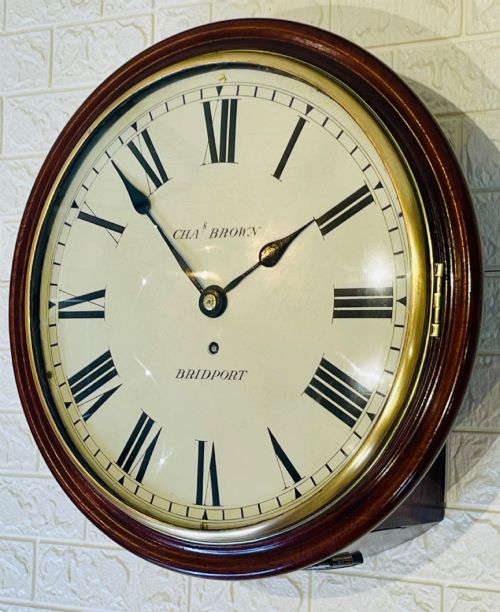

Brown Wall Clock
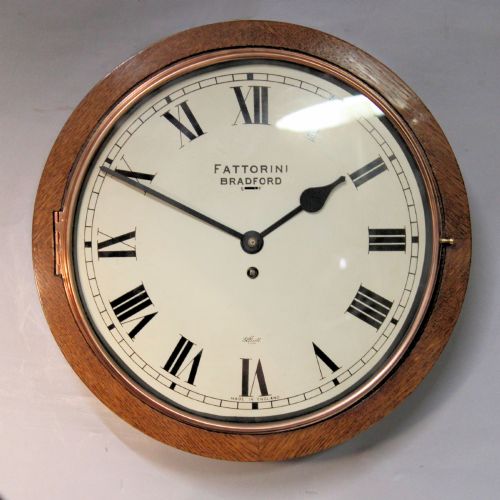
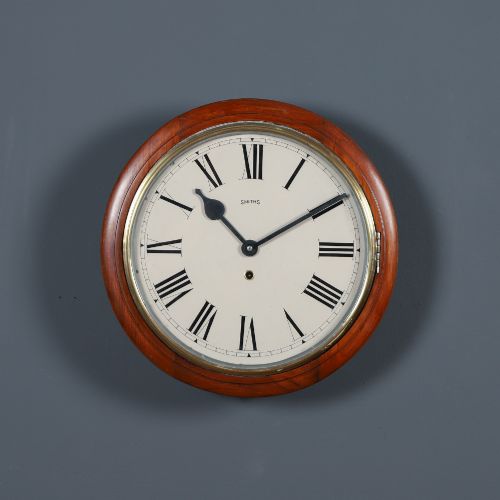
A brown wall clock brings mechanical purpose to a room, ranging from mahogany railway dials to oak Art Deco carillon timepieces.
Brown Wall Clock
When buyers search for a brown wall clock, they encounter heavy timber timepieces designed for domestic, commercial, or institutional spaces. These pieces span the Victorian and Georgian eras through to the Art Deco period, utilising timber frames built to house mechanical movements.
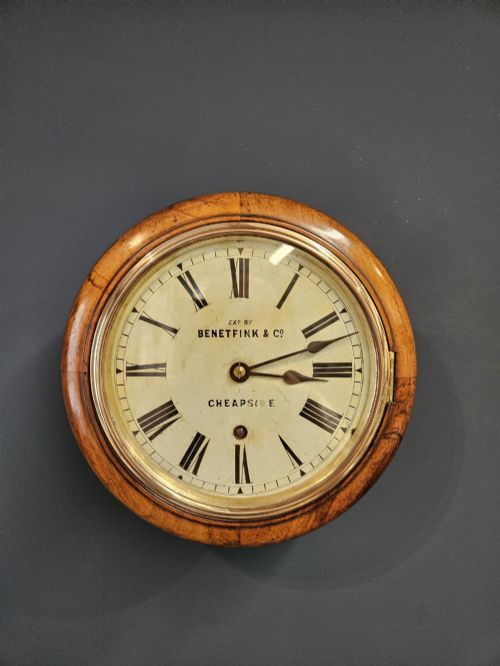
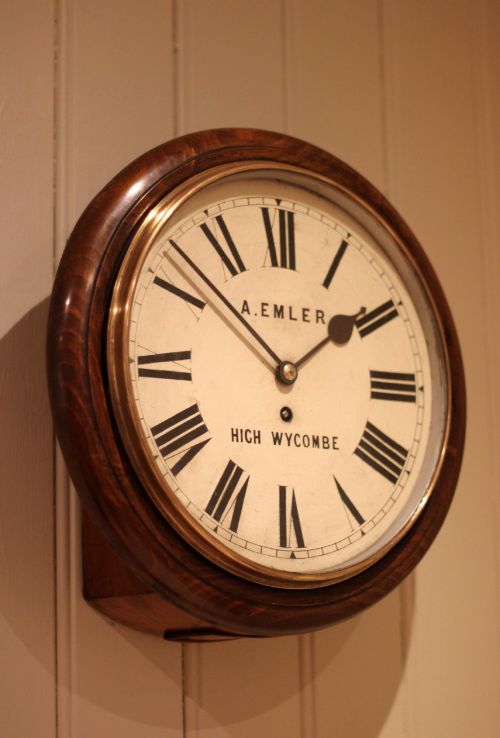
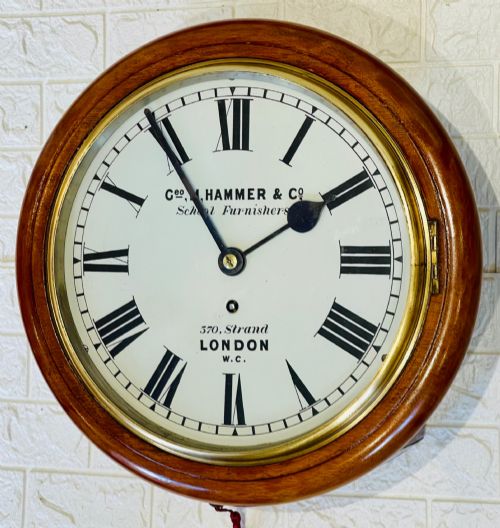
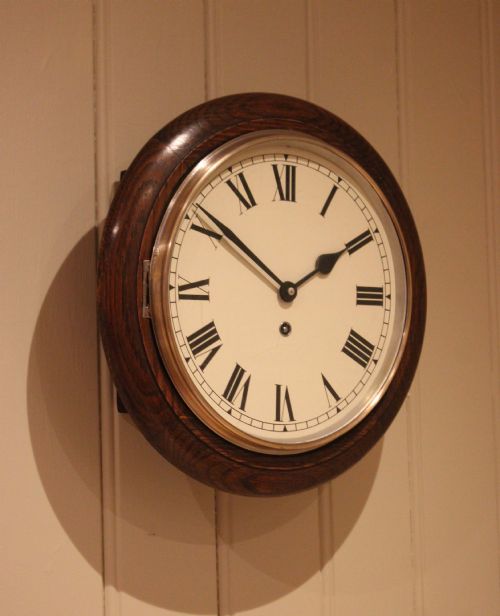
The most common form met on this page is the circular dial clock, frequently mounted in mahogany, oak, or walnut. These utilitarian pieces originated on railway platforms, in schools, and in offices before entering private homes.
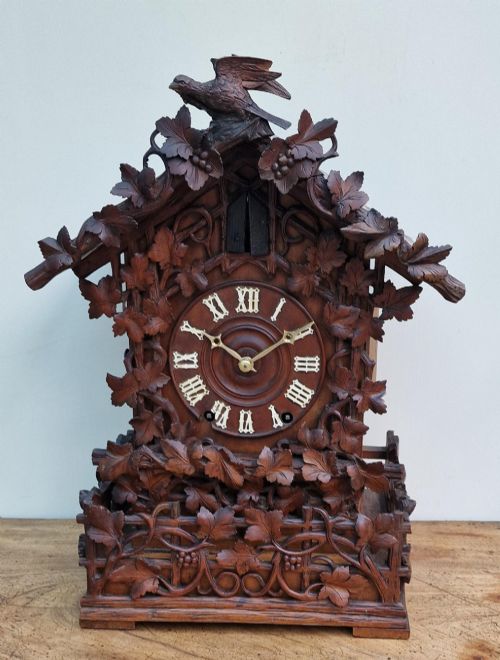
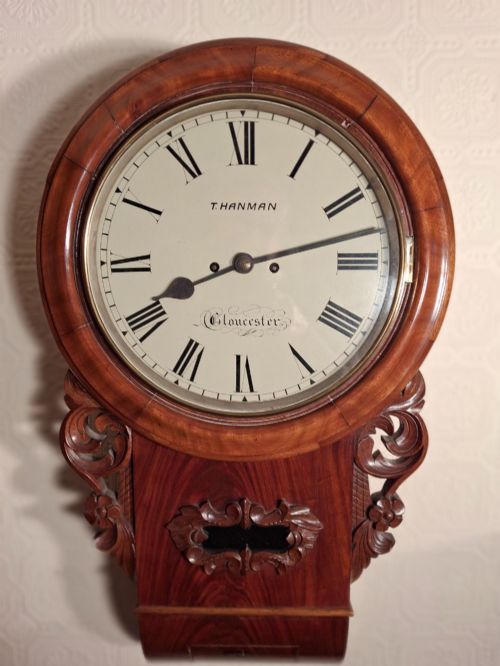
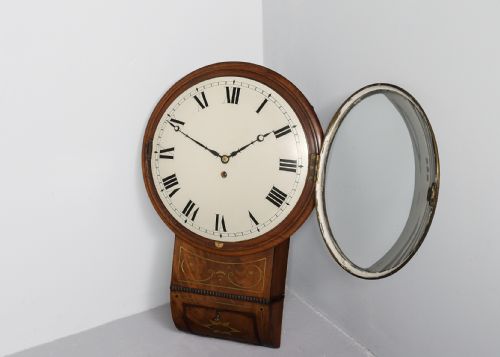
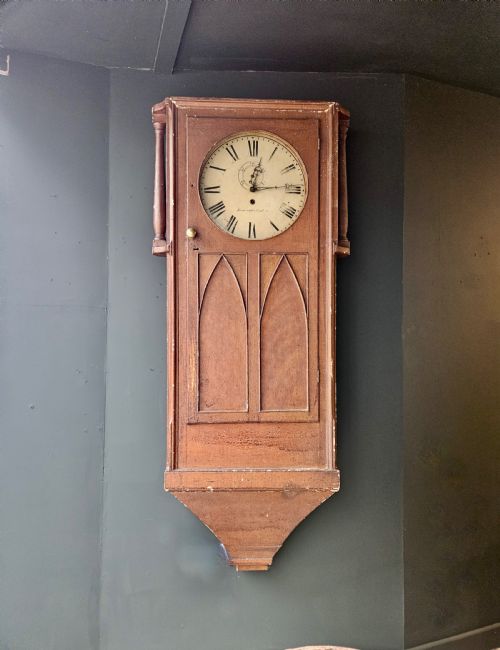
Alongside plain dial clocks, the selection includes drop-dial variants, cuckoo clocks from the Black Forest, and striking architectural wall clocks. They date primarily from the nineteenth and early twentieth centuries, retaining their original timber patination.
Materials and construction
Cases rely on sturdy hardwoods such as mahogany, oak, walnut, and beech, chosen for structural stability and warm natural tones. Dial surrounds often feature brass bezels, while glass protects the paper, painted, or metal clockfaces.
Movements span mechanical fusee systems, chain-driven mechanisms, and later electrical or lever escapements. Joinery in the timber cases typically involves tightly fitted joints designed to support the weight of swinging pendulums and heavy brass gears.
Several clocks bear stamps from railway networks and government ministries, having once kept workers across Britain strictly on schedule.
Judging quality
Quality rests in the precision of the movement and the integrity of the timber case. Twin fusee mechanisms and heavy brass plates indicate higher workshop standards than standard mass-produced timepieces.
The distinction between ordinary utility clocks and superior examples appears in the timber selection and dial retention. Original painted dials, crisp maker signatures, and unblemished mahogany or walnut veneers elevate a piece significantly.
Elliott·Smiths·John Walker·Vedette·Zenith
The Brown Wall Clock Glossary
- Fusee
- A conical pulley used in mechanical clocks to maintain even force on the gear train as the mainspring unwinds. This mechanism ensures consistent timekeeping.
- Drop-dial
- A clock case featuring a circular dial at the top and an extended wooden trunk below to accommodate the pendulum. This form was widely utilised in nineteenth-century public spaces.
- Escapement
- The mechanical linkage that regulates the speed of the clock by converting rotary motion into impulses. It produces the characteristic ticking sound of the movement.
- Dial
- The face of the clock where hours and minutes are displayed. These were painted, enamelled, or engraved on wood, metal, or paper.
- Carillon
- A set of bells tuned to play a musical melody on the hour. These systems appear in twentieth-century striking wall clocks.
Brown Wall Clock: Frequently Asked Questions
How do I wind a fusee wall clock?
Insert the winding key into the aperture on the dial and turn it gently clockwise until resistance is felt. Care must be taken not to overwind the chain or spring.
Most chain or wire fusee movements require weekly winding to maintain accurate time. Regular servicing by a horologist keeps the mechanical parts functioning smoothly.
Where were dial clocks originally used?
Dial clocks served as reliable timekeepers in railway stations, schools, military offices, and public buildings throughout Britain. Their clear numerals allowed large rooms to read the time at a glance.
Eventually, surplus railway and institutional clocks transitioned into domestic hallways and kitchens. Their robust timber construction ensured they survived decades of continuous daily use.
How do I date a wooden wall clock?
Dating relies on examining the timber species, case design, fastener types, and the maker's signature on the dial or movement. Georgian and early Victorian pieces often feature solid mahogany cases with heavy brass bezels.
Later models from the nineteen-twenties and nineteen-thirties display Art Deco geometric styling or oak frames. Railway and government clocks frequently bear stamped service marks or initials.
Are these clocks suitable for modern homes?
Their neutral wood tones and classic circular faces allow these timepieces to complement both traditional and contemporary interiors. They mount securely onto structural walls using sturdy fixings.
While some models feature striking mechanisms or chimes, many operate as silent timepieces. Proper wall placement ensures the pendulum swings freely without obstruction.