
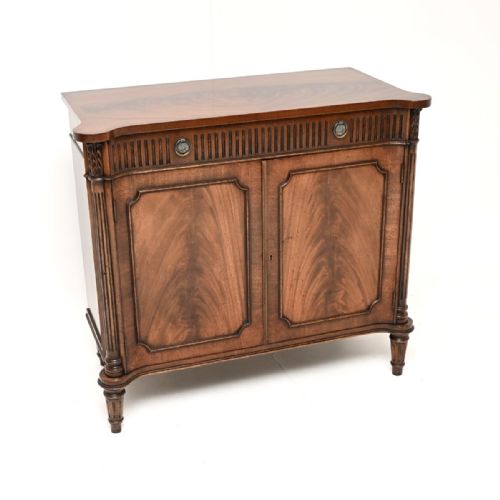
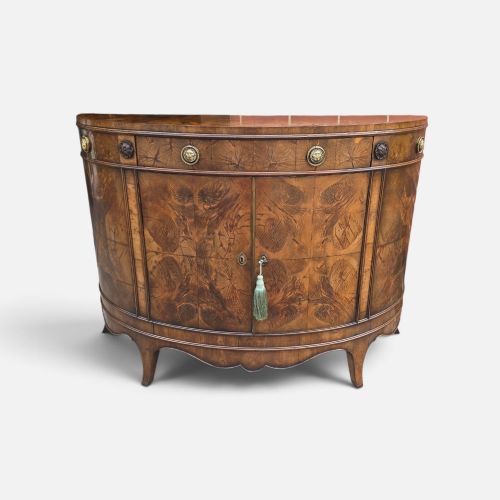


Brown Veneer Credenza
These brown veneer credenza pieces deliver rich figured surfaces and substantial storage, bringing enduring warmth to a room.
Brown Veneer Credenza
When you search for a brown veneer credenza, you encounter a variety of timber-faced storage pieces spanning multiple centuries and aesthetic movements. These items range from formal Regency designs to streamlined Art Deco forms, uniting rich wood grain with practical interior space.
The most common examples on this page utilise mahogany or walnut foundations decorated with figured veneers, often standing on short legs or enclosed bases. They function as striking sideboards, cabinets, or low presses within dining rooms and hallways.
Pieces from the nineteenth century sit alongside twentieth-century iterations, offering a broad spectrum of brown woods including flame mahogany and amboyna. Each iteration displays the specific proportions and decorative motifs favoured by its period of origin.
How they were made
Cabinetmakers applied thin slices of decorative timber such as flame mahogany, walnut, or amboyna over secondary carcase woods to create striking grain patterns across the front doors and top surfaces. This technique allowed workshops to display expensive and highly figured veneers without building the entire structure from solid exotic timber.
Details such as brass mounts, ormolu accents, and marble tops were integrated to elevate the status of the furniture, while glass panels appeared on vitrine sections. Joinery methods relied on traditional cabinet construction to support the heavy timber frames and veneered panels.
Listings feature periods from Regency up to nineteen thirty, utilising materials like brass, glass, mahogany, and flame mahogany veneer.
What varies in quality
The skill of the cabinetmaker dictates the visual harmony of the wood grain, particularly how veneer sheets match across double doors and drawer fronts. Superior pieces exhibit symmetrical figures and meticulous timber selection that catches the light evenly across the facade.
Subtlety in mounts and structural integrity separate standard utility pieces from high-end commissions. Heavier carcases, crisp brass or ormolu detailing, and intact marble tops distinguish the finer examples within this range.
Bowman Brothers
The Brown Veneer Credenza Glossary
- Veneer
- A thin layer of figured wood applied to a secondary timber base. This method displays expensive grain patterns efficiently.
- Vitrine
- A glass-fronted display cabinet intended for porcelain and ornaments. It allows light to illuminate items stored inside.
- Ormolu
- Gilt bronze mounts applied for decorative effect on furniture. It adds metallic contrast to dark timber surfaces.
Brown Veneer Credenza: Frequently Asked Questions
What is a brown veneer credenza used for?
These cabinets provide enclosed storage for tableware, linens, and household items while offering a flat top surface for serving or display.
They sit comfortably in dining rooms, living spaces, and wide hallways as functional focal points.
How do I identify a Regency credenza?
Regency pieces often display classical proportions, dark mahogany or exotic wood veneers, and restrained brass detailing.
They reflect early nineteenth-century design tastes influenced by ancient Roman and Greek aesthetics.
Are Art Deco credenzas different?
Art Deco examples from the nineteen thirties lean towards geometric forms and streamlined silhouettes.
They utilise dramatic veneers and occasionally incorporate contrasting materials like marble tops.
How do I care for veneer surfaces?
Keep veneered furniture away from direct sunlight and excessive heat sources to prevent the timber from drying and warping.
Dust regularly with a dry cloth and avoid harsh chemical polishes that can damage the polish.