
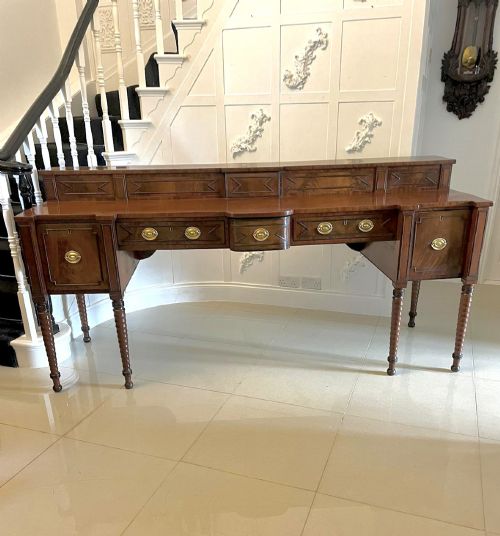
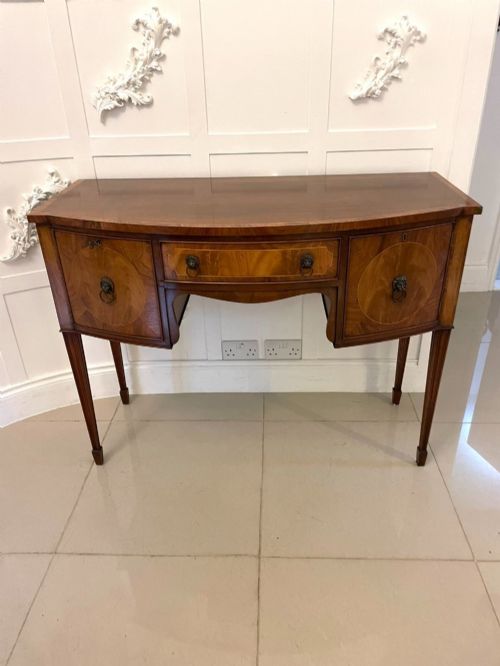
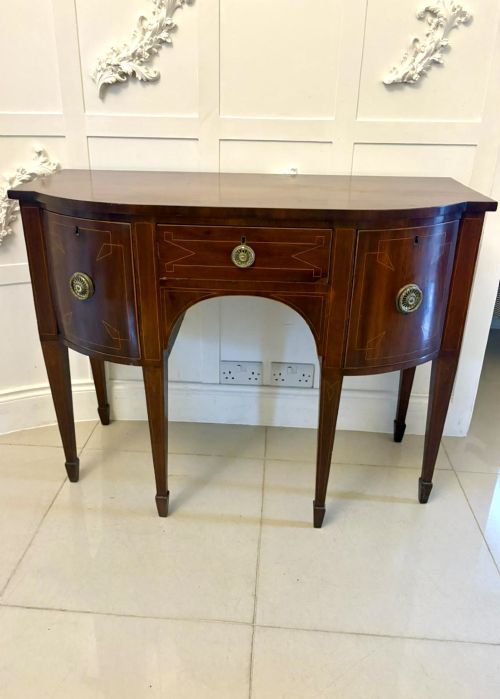
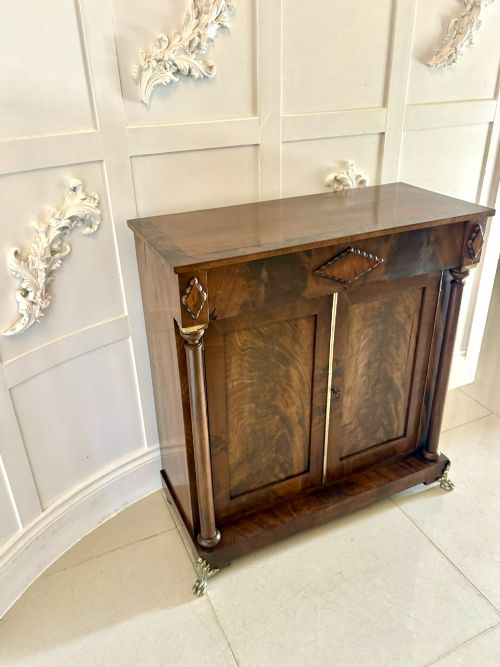


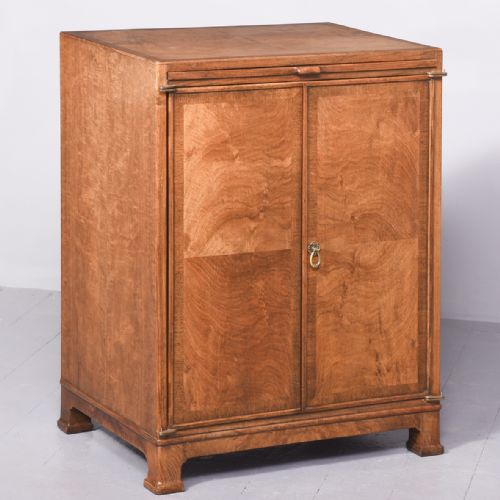


Figured Wood Sideboard
A figured wood sideboard brings striking natural grain patterns into a room, offering substantial storage alongside period character.
Figured Wood Sideboard
A figured wood sideboard provides surface display space and concealed storage, taking forms such as breakfront carcasses, bow fronts, and chiffonier cabinets. These items originate across the nineteenth and twentieth centuries, spanning George III, Regency, William IV, Victorian, and Art Deco styles.
The version most commonly encountered on this page is the nineteenth-century mahogany sideboard, often displaying rich figuring across its doors and drawers. Pieces range from large breakfront examples to smaller inlaid formats and related serving tables or display cabinets.
How they were made
Makers utilised solid timbers alongside specialised veneers, applying flame mahogany, figured mahogany, and burr walnut over stable secondary woods. Boxwood stringing, brass mounts, and marquetry inlays were integrated to define drawer edges and cabinet doors.
Joinery techniques combined traditional cabinet-making construction with decorative carving, particularly on Victorian and William IV iterations. Selected sections of timber were deliberately cut to reveal swirling grain patterns before being hand-polished.
Listings feature items spanning the nineteenth century up to nineteen-thirty, incorporating mahogany, walnut, oak, and ash.
What varies in quality
Quality rests primarily on the visual strength and symmetry of the timber figuring, where carefully matched veneers create a balanced surface pattern. Superior examples display thoughtful timber selection across every visible door and drawer front rather than isolated decorative patches.
The refinement of secondary details distinguishes finer pieces, including precise boxwood inlays, crisp carved mouldings, and original brass hardware. Construction integrity, such as tight drawer dovetails and stable carcase joints, separates standard workshop production from higher-tier cabinet work.
Bowman Brothers·Whytock and Reid
The Figured Wood Sideboard Glossary
- Figured wood
- Timber with an attractive, non-uniform grain pattern resulting from irregular growth formations. This grain is prized for its decorative appearance on furniture surfaces.
- Veneer
- A thin layer of superior timber applied over a base wood to provide a decorative exterior. Flame mahogany and burr walnut are frequently utilised in this manner.
- Breakfront
- A cabinet design where the central section projects forward from the flanking outer sections. This architectural arrangement creates depth and visual interest.
- Marquetry
- The art of applying pieces of veneer to a structure to form decorative patterns and pictures. It often incorporates contrasting timbers like boxwood.
- Chiffonier
- A compact sideboard or low cabinet typically fitted with drawers and enclosed lower shelves. Nineteenth-century examples often include a raised back shelf.
Figured Wood Sideboard: Frequently Asked Questions
What periods do these sideboards come from?
The pieces span from the George III and Regency eras through the Victorian and William IV periods, extending into Art Deco designs of the nineteen-thirties.
Most examples date across the nineteenth century, reflecting shifting stylistic preferences from formal classical lines to heavier revivalism and later modernist work.
What is burr walnut?
Burr walnut is a specialised wood veneer taken from a tree growth deformity where hundreds of tiny branch knots clustered together. This creates a dense, swirling pattern full of movement.
Victorian cabinet-makers utilised burr walnut on high-status display cabinets and credenzas to achieve maximum visual impact.
Where were these cabinets used?
These items were primarily designed for dining rooms and reception spaces to store glassware, cutlery, and serving dishes. The top surface served as a station for serving food or displaying decorative objects.
Smaller formats and chiffoniers also functioned in sitting rooms and parlours for general household storage and display.