

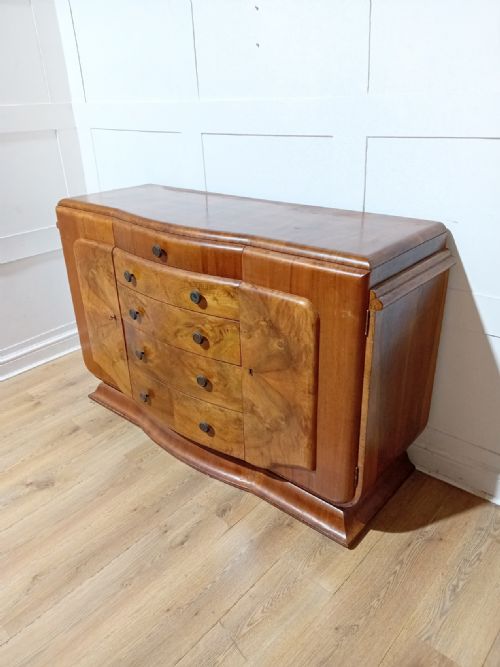


1930s Wooden Credenza
These pieces of 1930s wooden credenza bring clean lines and striking grain to a room, offering practical storage through distinctive period design.
1930s Wooden Credenza
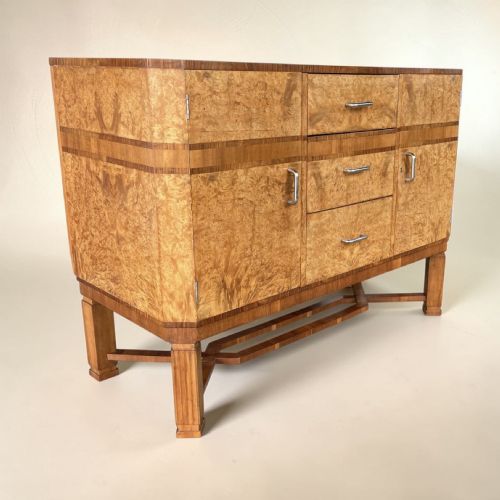
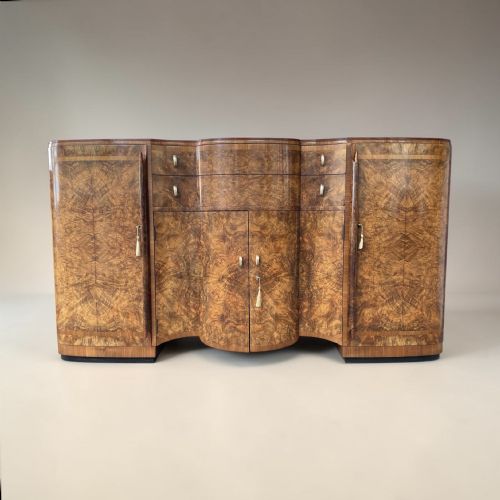
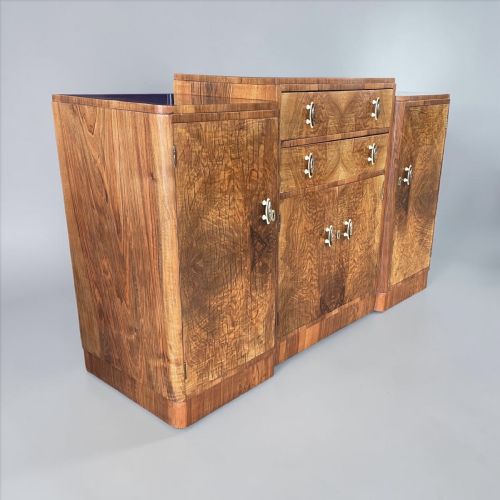
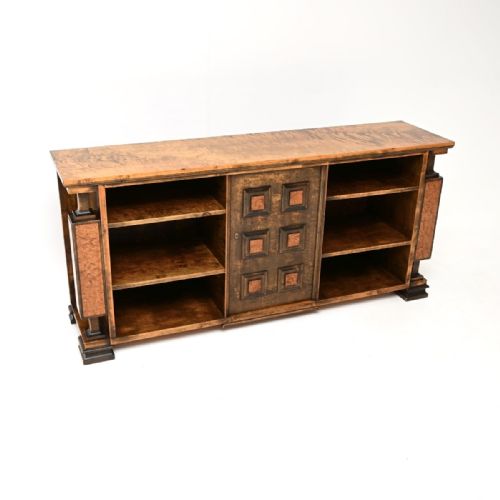
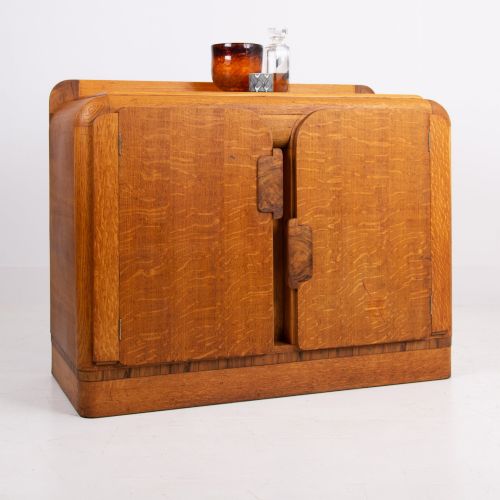
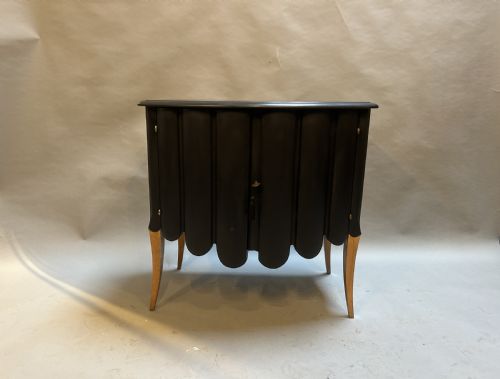
When you search for a 1930s wooden credenza, you are looking at substantial storage furniture built primarily during the Art Deco era. The examples you meet on this page cross several functional forms, appearing frequently as sideboards, side cabinets, and combined cabinet bookcases.
The dominant style defining these pieces is Art Deco, spanning items made around 1930 alongside broader examples dated between 1925 and 1939. Geographical origins range locally and internationally, with specific pieces attributed to makers working in Sweden, France, and Britain.
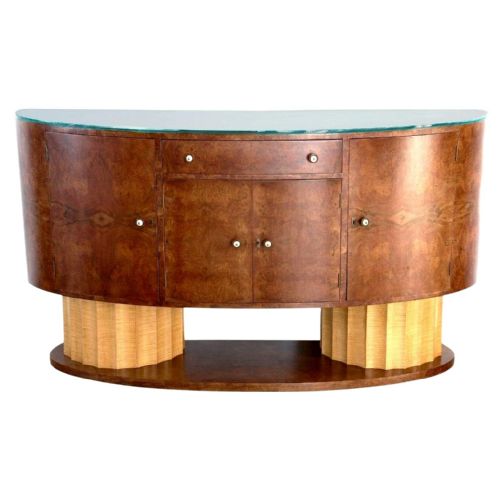
Forms vary from long dining room sideboards to smaller drinks cabinets and cocktail units. They serve as focal points in modern interiors, combining decorative surface patterns with deep internal shelving and drawers.
Materials and construction
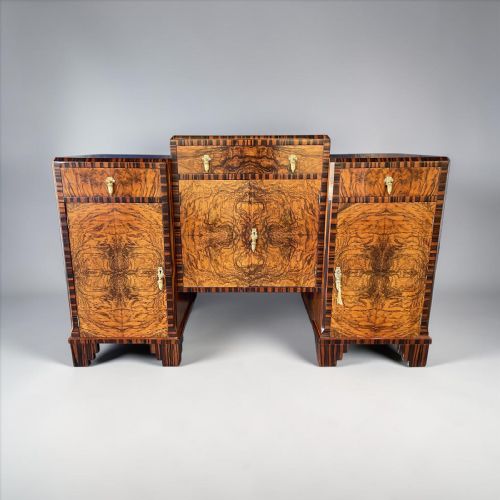
Cabinet makers of the period relied heavily on rich primary hardwoods such as oak, satin birch, and various cuts of walnut, often enhanced by intricate wood veneer patterns. Burr walnut and contrasting sycamore were utilised to create dramatic geometric door fronts and top panels.
Metal elements provide sharp industrial contrast to the warm timber surfaces. Details in polished chrome and brass appear on handles, hinges, and structural trims, anchoring the distinct aesthetic of the decade.
Several cabinets double as cocktail stations, ensuring your gin is housed with proper interwar theatricality.
Judging quality and execution
The distinction between standard production and the top of the range rests on the ambition of the design and the precision of the cabinet work. Pieces bearing known maker attributions demonstrate superior control over timber selection and veneer matching across large cabinet doors.
The integration of secondary materials like glass panels and decorative metal mounts separates simpler utility items from high-end commissions. Superior examples display seamless joins, balanced proportions, and careful preservation of natural wood figures.
Maurice Adams·Gomme·Hille·Bowman Brothers
The 1930s Wooden Credenza Glossary
- Credenza
- A cabinet or sideboard used for storage and serving. Originally a low Italian side table, the term applies broadly here to horizontal storage cabinets.
- Veneer
- A thin layer of choice wood glued to a base panel. This technique allowed cabinet makers to display symmetrical grain patterns across large flat doors.
- Burr walnut
- A prized timber growth featuring swirling, knotty grain patterns. It provides intense decorative movement on cabinet fronts.
- Art Deco
- A design style characterised by sleek geometric shapes and stylised motifs. It dominated architecture and furniture production through the interwar period.
1930s Wooden Credenza: Frequently Asked Questions
What is a 1930s wooden credenza?
A 1930s wooden credenza is a storage unit or sideboard built during the interwar period, typically defined by Art Deco styling and rich timber veneers.
These pieces function primarily as sideboards, cocktail cabinets, or display bookcases in contemporary living spaces.
How do I identify Art Deco furniture?
Art Deco furniture is recognised by its clean geometric lines, symmetrical wood veneers, and contrasting metal details like brass and chrome.
Maker attributions and specific timber combinations such as walnut and sycamore further confirm the period origin.
Where were these cabinets made?
The listings show production from British workshops alongside pieces originating in France and Sweden.
Design characteristics often reflect the regional preferences of these European cabinet makers during the 1930s.
How do I style a credenza?
A credenza works well as a focal point in a dining room, hallway, or living space to anchor lamps, art, or ceramics.
Its interior shelving provides concealed storage for tableware, books, or drinks.