

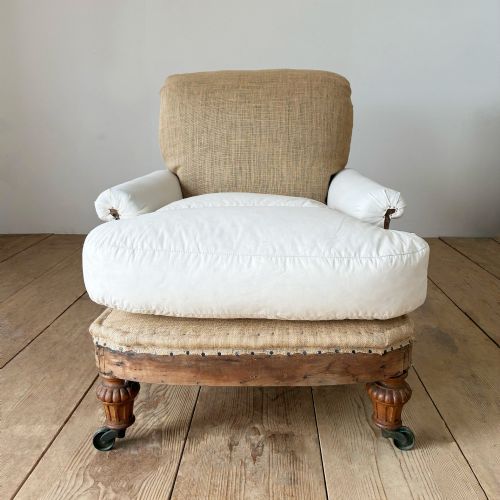
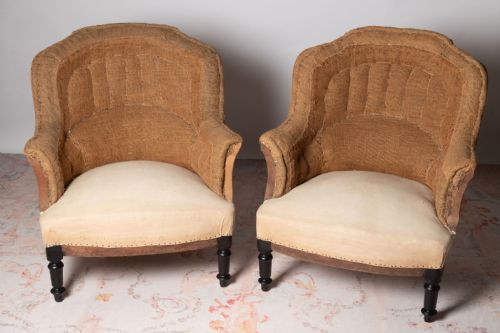
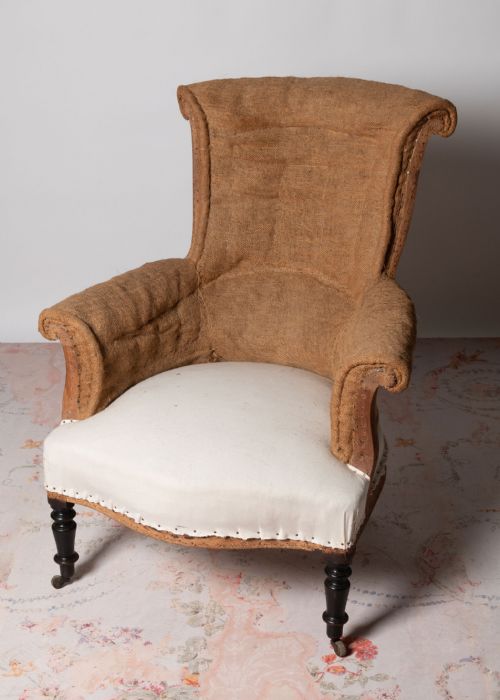
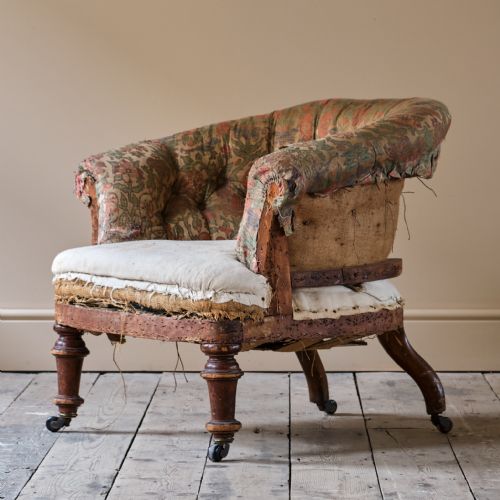


Brown Upholstery Chair
These brown upholstery chair selections span centuries of woodworking and textile craft, offering practical comfort and period character for any interior.
Brown Upholstery Chair
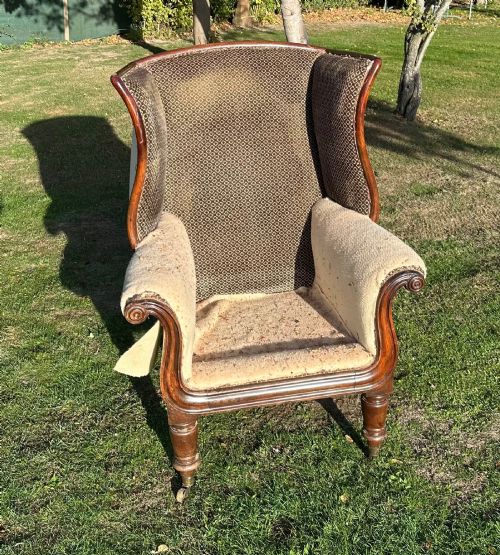
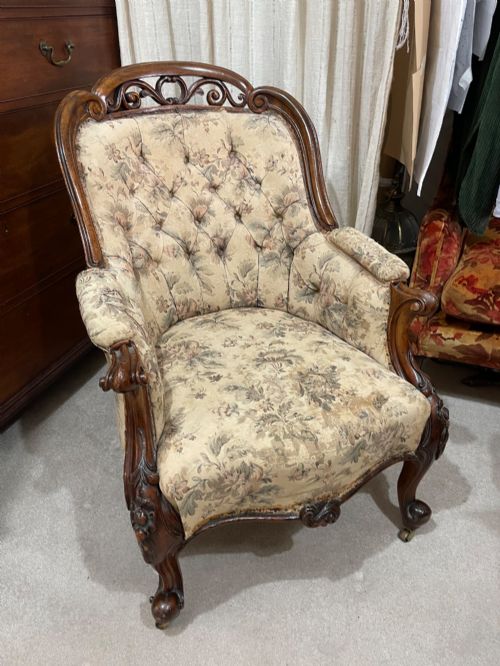
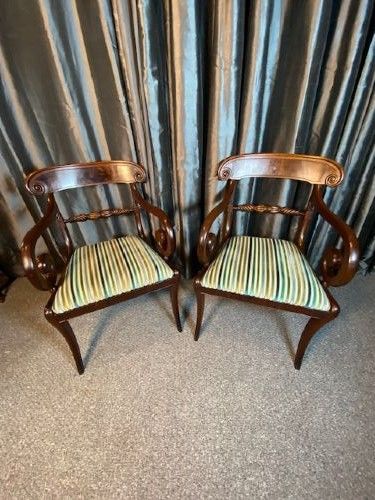
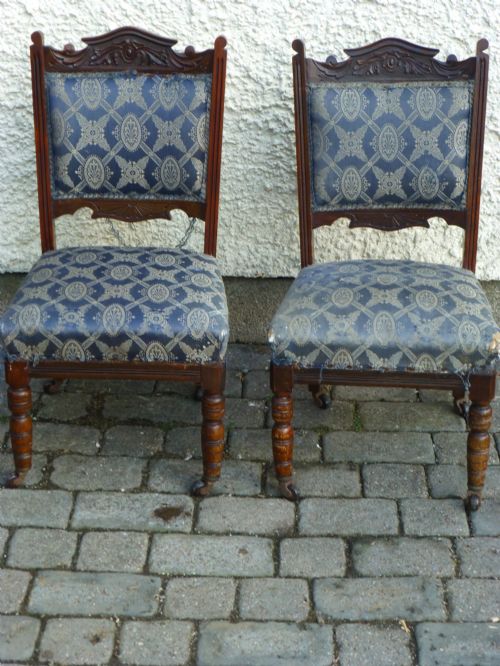
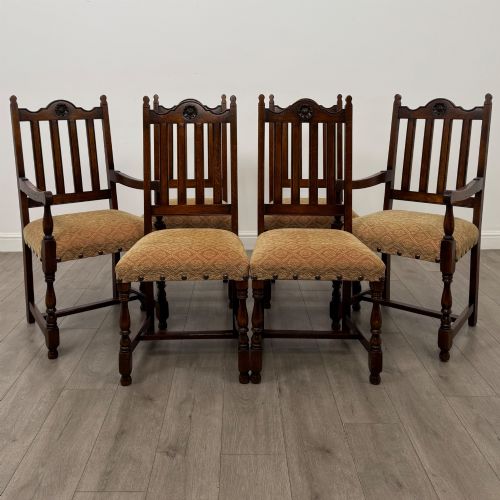
When you search for a brown upholstery chair, you encounter a diverse array of seating forms originating from the eighteenth, nineteenth, and early twentieth centuries. The selection encompasses dining chairs, library armchairs, nursing chairs, and wingbacks spanning periods from Georgian and Regency to Victorian and Edwardian.
The most common iterations on this page are nineteenth-century Victorian armchairs and library chairs framed in walnut or mahogany. These often feature substantive padding paired with supportive wooden frames designed for functional daily use.
Beyond standard armchairs, the inventory includes specialised forms such as corner chairs, slipper chairs, and desk chairs. Each piece reflects the domestic seating requirements and aesthetic preferences of its specific period of manufacture.
How they were made
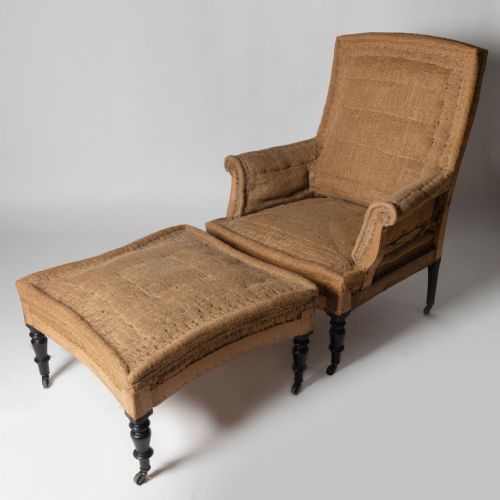
The structural frames of these pieces rely primarily on dense hardwoods such as mahogany, walnut, oak, and fruitwood, shaped through traditional joinery and turning techniques. Structural stability is frequently enhanced with brass castors on legs and internal webbing or hessian support foundations.
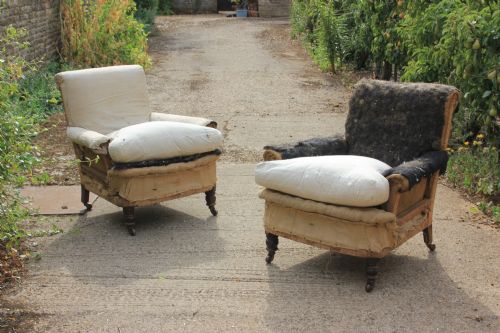
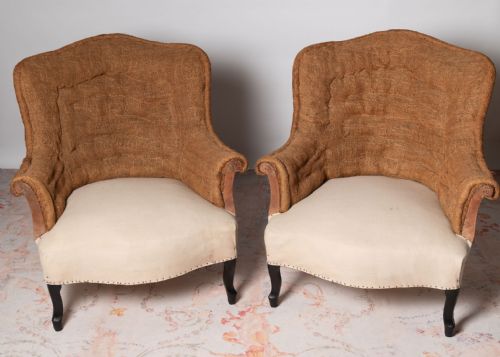
Upholstery methods span from traditional horsehair and calico stuffing to button-backed springing and later leather applications. Artisans combined exposed timber frames with durable fabric or leather coverings fastened securely to the underlying wooden structure.
Brown Upholstery Chair Retail Price Guide 2026
Typical asking prices for brown upholstery chair among the pieces listed under this phrase on Sellingantiques today, from the lower quarter to the upper quarter. They describe what is for sale here now, not the wider market.
Listings feature eighteenth, nineteenth, and twentieth-century pieces constructed from mahogany, walnut, oak, leather, and hessian.
What varies in quality
Quality in these chairs rests upon the integrity of the timber frame and the precision of its initial construction. Pieces produced by established workshops exhibit superior joinery, balanced proportions, and carefully selected grain patterns in woods like walnut and mahogany.
The standard of upholstery work and the authenticity of materials also define the hierarchy of pieces. Chairs retaining original leather or period-appropriate textile coverings demonstrate higher craftsmanship levels than later modifications.
Gillows·Robert Strahan
The Brown Upholstery Chair Glossary
- Wingback
- An armchair with side panels designed to shield the sitter from drafts. These panels extend upward from the arms to the back of the chair.
- Nursing chair
- A low-seated chair traditionally utilised for infant feeding. They often feature sprung padding and compact wooden frames.
- Library chair
- A robust armchair designed for reading rooms and studies. These typically incorporate substantial timber construction and comfortable upholstered arms.
- Castor
- A small wheel mounted on a swivel attached to the bottom of chair legs. They facilitate movement across carpets and flooring.
- Hessian
- A woven coarse fabric utilised historically as a foundation material for upholstery stuffing. It provides a stable base beneath outer coverings.
Brown Upholstery Chair: Frequently Asked Questions
How do I identify a Victorian armchair?
Victorian armchairs often display dark hardwoods like walnut or mahogany, frequently accompanied by turned front legs and castors. Button-backed upholstery and sprung padding also characterise seating from this era.
Compare the timber finish and leg turning against dated examples to confirm the nineteenth-century origin.
What is a library chair used for?
Library chairs served as sturdy, comfortable seating for reading and writing in domestic studies or institutional libraries. Their generous proportions accommodated prolonged periods of sitting.
These pieces typically feature wide wooden frames and supportive upholstered arms.
Are these chairs suitable for daily use?
Many of these pieces were built for functional domestic environments using durable hardwoods and solid joinery. Their robust construction suits them for regular placement in modern living spaces.
Checking the internal webbing and frame stability ensures lasting comfort.
How do I distinguish Georgian from Edwardian chairs?
Georgian seating relies on earlier timber traditions like mahogany and fruitwood, displaying restrained proportions and classic lines. Edwardian pieces often incorporate lighter inlay work and revival styles.
Examining the wood species and decorative detailing clarifies the manufacturing period.