
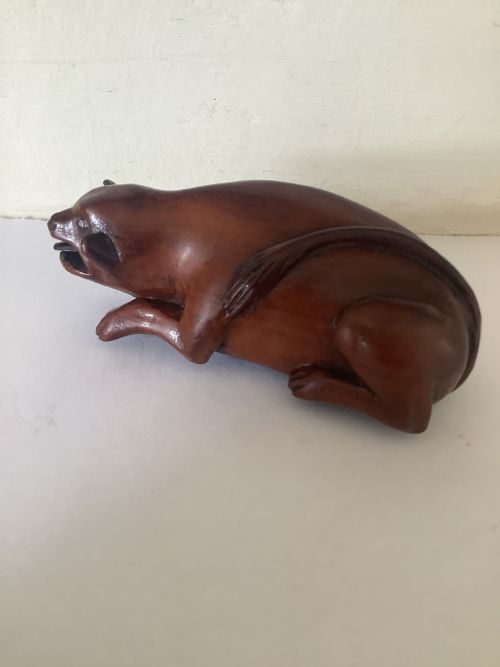
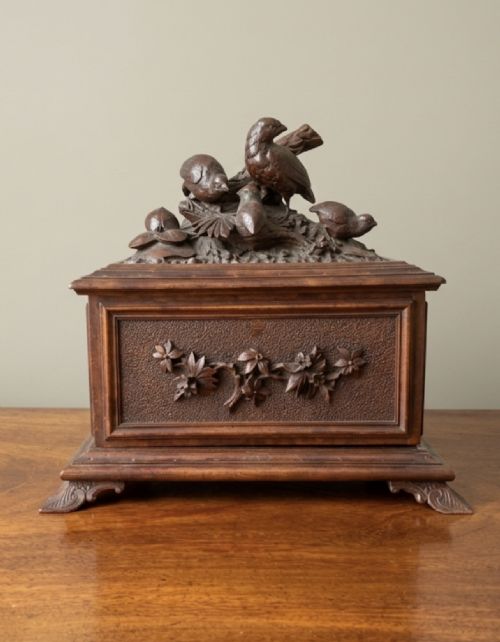
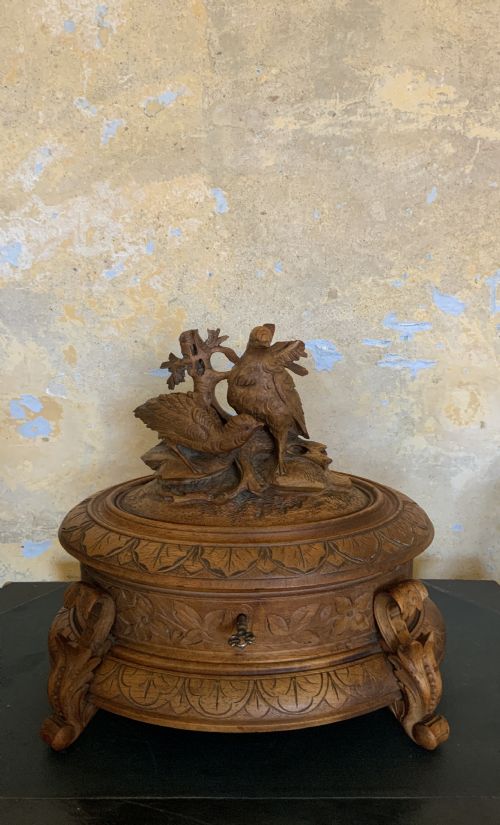


Brown Timber Trinket Box
A brown timber trinket box holds small personal valuables in solid wood, offering both domestic utility and tactile warmth.
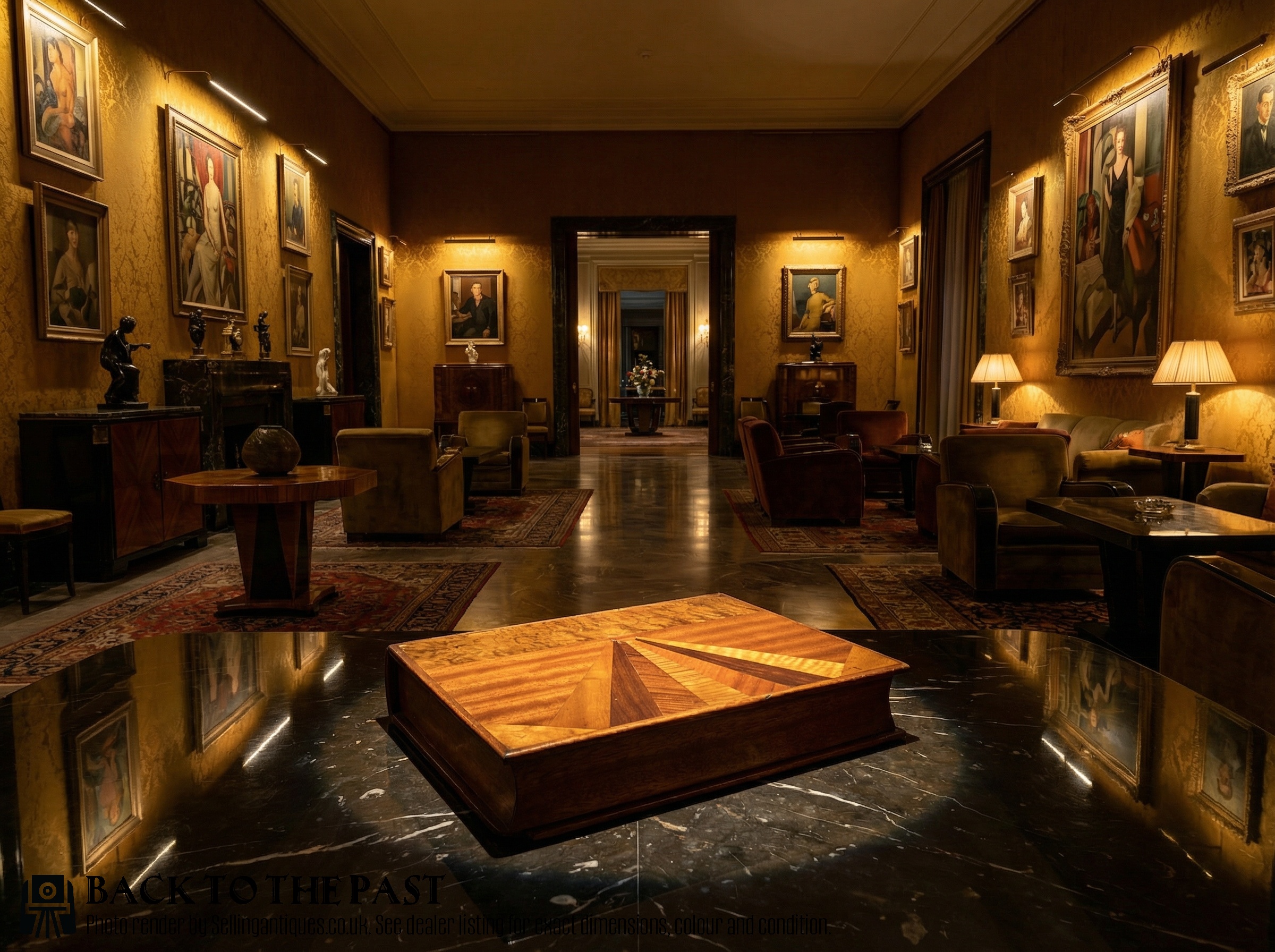
Brown Timber Trinket Box
A brown timber trinket box spans diverse functional forms, including jewellery boxes, snuff boxes, humidors, and tea caddies designed to store small valuables. These items emerge from various periods such as the seventeenth, eighteenth, and nineteenth centuries, alongside Edwardian and 1930s examples.
The objects on this page originate from British, European, Indian, and Middle Eastern workshops, reflecting broad geographic origins. Forms range from simple turned circular containers to complex inlaid caskets, sarcophagus-shaped boxes, and novelty carvings modelled as footballs.
Buyers encounter distinct regional styles like Black Forest carvings, Tunbridge Ware mosaics, and Anglo-Indian sandalwood constructions. The selection balances small pocket snuff boxes with larger desktop presentation chests and secret safes.
How they were made
Makers utilised a wide array of dense timbers and decorative woods, including walnut, oak, mahogany, rosewood, amboyna, boxwood, laburnum, and sandalwood. Certain pieces incorporate marquetry patterns, specimen wood mosaics, or intricate hand-carving directly into the solid material.
Structural reinforcement and surface ornamentation frequently involve brass banding, silver mounts, and inlay work. Lids and compartments often feature precise joinery, turned sections, or hinged double-sided construction designed for daily handling.
Listings feature timber boxes spanning from the 17th century through the 1930s, constructed in oak, walnut, rosewood, and exotic hardwoods.
What varies in quality
Quality separates through the precision of the carving and the choice of timber figure, such as burr wood or oyster veneers. Superior execution shows in crisp relief work on Black Forest caskets or tight geometric precision in Tunbridge Ware.
The integrity of the internal fittings, hinges, and original lining influences the overall standard of each container. Finer examples maintain structural balance across complex forms like sarcophagus boxes and secret safes without warping the timber.
The Brown Timber Trinket Box Glossary
- Snuff box
- A small container specifically designed to hold powdered tobacco. These pocket-sized pieces often feature hinged lids and detailed carvings.
- Humidor
- A moisture-controlled box built to store cigars or tobacco. These receptacles frequently combine heavy timber construction with internal compartments.
- Tea caddy
- A lidded chest originally created to store loose tea leaves securely. Eighteenth-century examples often display fine inlay and burr veneers.
- Tunbridge Ware
- A type of decorative woodwork characterised by tiny mosaic tiles formed from differently coloured natural timbers. These tessellated patterns create detailed pictorial scenes or geometric borders.
- Black Forest carving
- Deeply undercut wooden sculpture originating from Switzerland and Germany. These pieces typically depict natural subjects, foliage, or animals with realistic texture.
Brown Timber Trinket Box: Frequently Asked Questions
What were these wooden boxes used for originally?
These receptacles held valuable personal items, dry goods, or social accessories. Smaller formats carried tobacco or snuff, while larger chests secured jewellery, letters, or loose tea.
Over time, owners adapted them to store keepsakes, coins, and daily pocket contents. Their durable timber construction protected delicate items from light and handling.
How do I identify different periods of timber boxes?
Dating relies on observing construction methods, timber choices, and decorative motifs characteristic of specific eras. Georgian and Victorian pieces often employ distinct veneers, brass mounts, and specific joinery techniques.
Matching the object type to documented regional workshops helps narrow the timeline. Examining interior linings and hardware provides further clues to the manufacturing date.
How should I care for an antique wooden box?
Keep wooden containers away from direct sunlight and extreme humidity fluctuations to prevent timber cracking or veneer lifting. Maintain stable indoor conditions and handle hinges and locks with care.
Apply suitable waxes sparingly if the surface requires nourishment, avoiding modern synthetic polishes. Gentle dusting with a dry cloth preserves the original finish.
Can I use these boxes for modern jewellery?
These compartments suit modern rings, cufflinks, and small chains perfectly. Lined interiors and divided spaces protect contemporary valuables just as they did historical items.
Larger caskets and desktop chests accommodate everyday accessories while adding tactile character to a dressing table or desk.