


Brown Terracotta Relief
Brown terracotta relief plaques and vessels bring rich sculptural depth to interiors, offering tactile modelling and warm earthy tones.
Brown Terracotta Relief
When you search for brown terracotta relief, you encounter sculptural plaques, architectural ornaments, and vessels modelled with raised figures or motifs. These pieces date principally from the nineteenth century into the early twentieth century, spanning Victorian, Art Nouveau, and classical revival tastes.
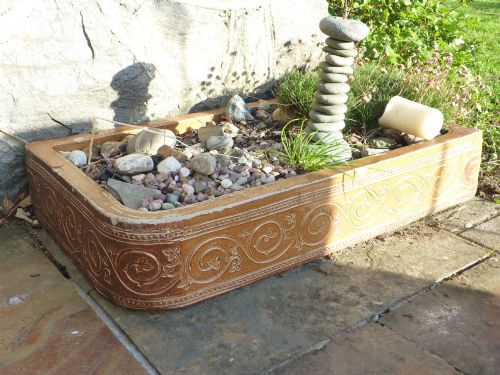
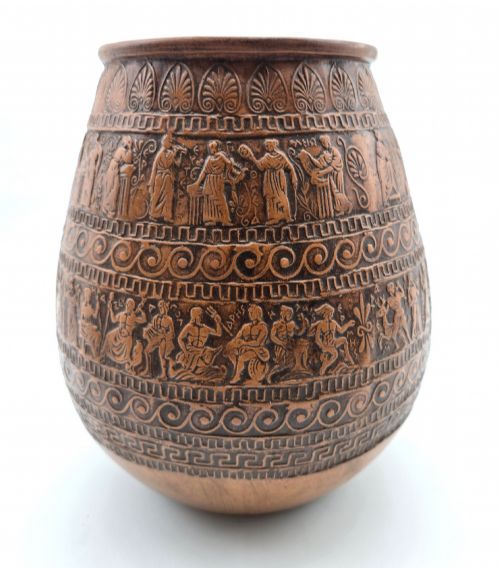
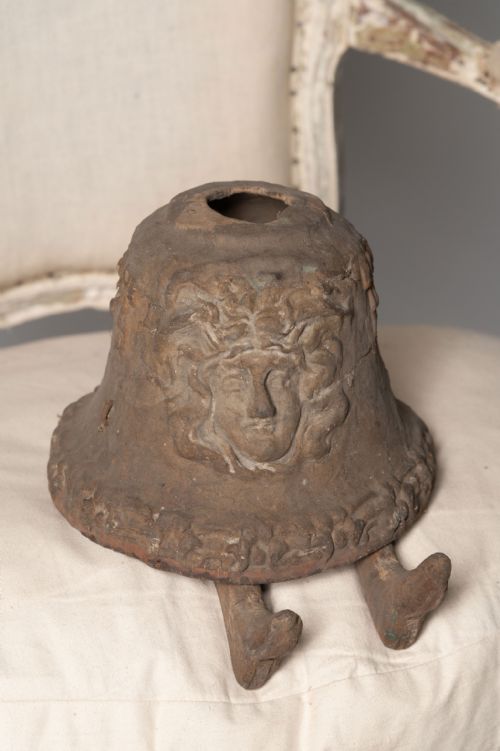
The objects on this page range from French wall panels and Austrian satirical plaques to Italian Grand Tour vases and Scottish garden jardinières. Figures and botanical motifs emerge directly from the clay ground, creating strong shadows and a distinct sense of three-dimensional form.
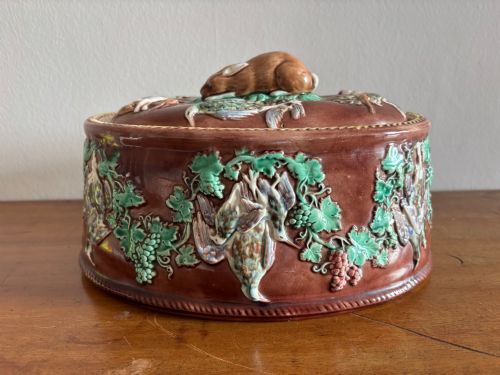
Victorian examples often draw on classical antiquity or majolica traditions, whilst later French and Austrian pieces lean towards expressive Art Nouveau styling. Each piece demonstrates how makers utilised the plasticity of fired earth to capture intricate detail across plaques and vessels.
Materials and construction
These pieces rely on refined terracotta, earthenware, and salt-glazed stoneware, shaped either by pressing clay into moulds or by hand-modelling the relief elements. Workshops sometimes applied coloured glazes or painted finishes to accentuate the raised design, whilst salt-glazing created a durable, vitreous surface on functional vessels.
Backings and supports occasionally incorporated secondary materials such as plaster and gesso, particularly in wall plaques and theatrical props. Firing temperatures determined the final hardness and hue of the body, ranging from pale reddish-browns to deep chocolate tones.
The listings on this page span the nineteenth century, the Victorian era, and the 1930s, utilising terracotta, salt-glazed stoneware, and papier-mâché.
Evaluating quality and execution
The distinction between standard commercial output and superior work lies in the crispness of the modelling and the depth of the undercut relief. Finer pieces retain sharp facial expressions and clean botanical lines without the softening often seen in worn moulds.
Surface finishing also dictates quality, where master modellers ensured smooth transitions between the background and the raised subject. The presence of a named maker or a distinct studio mark elevates the standing of a plaque or vessel significantly.
Guichard Carriés·Wedgwood·Ernst Wahliss·Gilbert Privat·Doulton Lambeth
The Brown Terracotta Relief Glossary
- Terracotta
- A porous, fired clay body ranging in colour from orange-red to deep brown. It serves as the primary medium for unglazed sculptural reliefs and garden wares.
- Relief
- Sculptural work where the figures project from a flat background. High relief elements emerge far from the surface, creating pronounced shadow and depth.
- Salt-Glazed Stoneware
- Ceramics fired at high temperatures with common salt thrown into the kiln, producing a dense, pebbled glaze. This technique provides a tough, vitreous finish resistant to moisture.
- Majolica Taste
- A Victorian style emulating brightly glazed Italian Renaissance tin-glazed earthenware. Pieces in this taste feature rich, colourful glazes over moulded earthenware bodies.
Brown Terracotta Relief: Frequently Asked Questions
What is brown terracotta relief?
Brown terracotta relief describes sculptural plaques, tiles, and vessels made from fired clay where the decorative motifs project outward from the background. These pieces typically display natural earth tones and were produced in various European centres during the nineteenth and early twentieth centuries.
They encompass architectural ornaments, decorative wall plaques, and sculptural portraits created to adorn domestic and public interiors.
How do I distinguish Victorian from Art Nouveau pieces?
Victorian pieces often favour strict classical revival themes, symmetry, and formal botanical arrangements derived from historical precedents. They frequently reflect Italian or Greek design influences.
Art Nouveau examples introduce asymmetrical floral whiplash lines, stylised figures, and organic forms that eschew rigid historical geometry in favour of fluid movement.
Are these pieces suitable for outdoor use?
While raw terracotta garden planters and troughs are frost-resistant if properly maintained, many interior relief plaques and glazed decorative wares are vulnerable to moisture and freezing temperatures. Porous earthenware bodies can crack when exposed to severe winter frost.
It is safest to keep antique relief plaques and fine sculptural vessels inside controlled home environments.