





Brown Tapestry Panels
Brown tapestry panels bring historical warmth and rich texture into a room, spanning centuries of textile artistry from framed needlework to folding screens.
Brown Tapestry Panels
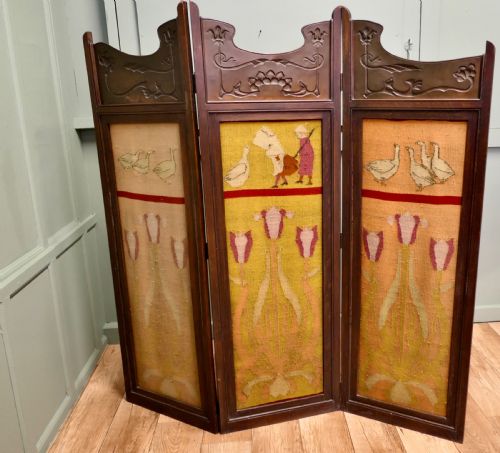
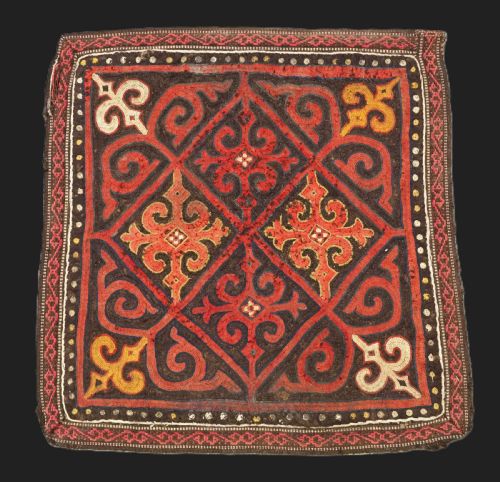
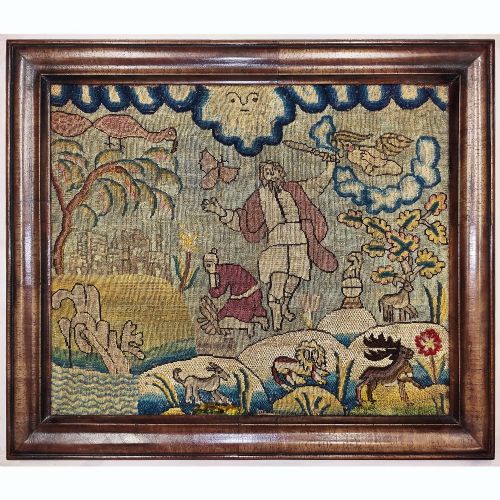
When seeking brown tapestry panels, buyers encounter a diverse selection of historical textiles, ranging from framed needlework pictures and cushion covers to large room dividers and fire screens. These pieces incorporate materials like wool, silk, and linen, often mounted in wood frames made of mahogany, walnut, or oak.
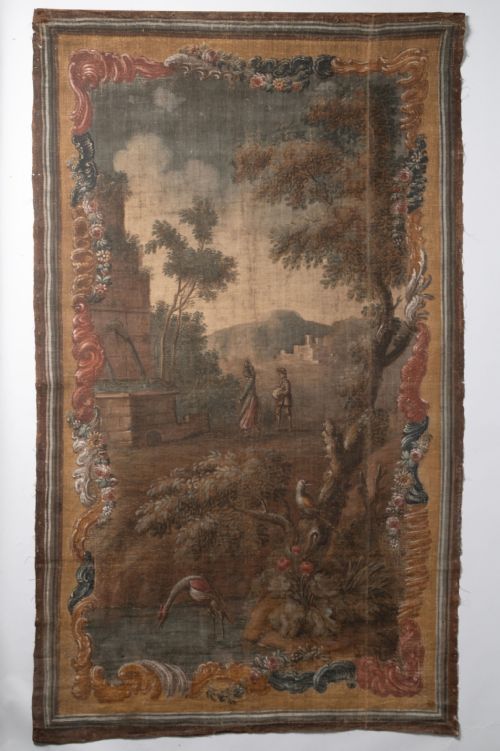
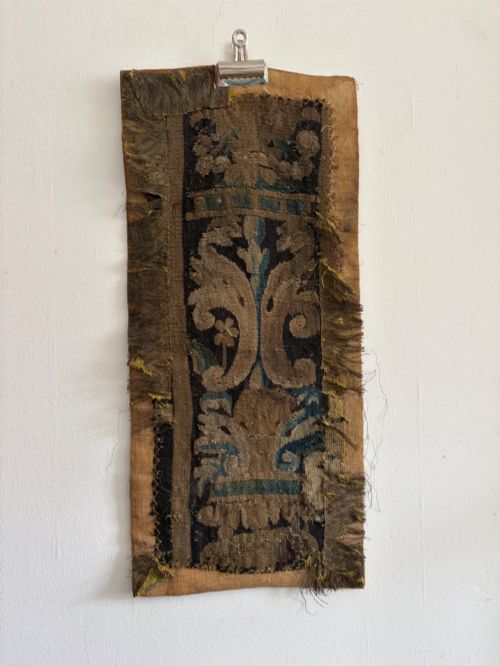
The objects originate across various periods, prominently featuring 17th-century fragments, 18th-century verdure designs, and 19th-century Victorian woolwork. Buyers are most likely to find nineteenth-century fire screens, framed needlepoint panels, and wall hangings dominated by earthy tones and botanical or pastoral imagery.
Materials and Techniques
The construction of these panels relies on textile techniques such as needlework, needlepoint, and hand-woven tapestry, utilising wool, silk, and canvas threads. Artisans stitched intricate pictorial scenes, floral motifs, and geometric patterns onto linen or canvas backings.
Wooden elements play a structural role, providing frames made from rosewood, burr maple, oak, and mahogany. Many textile panels are mounted onto secondary supports like linen, board, or wood to preserve and display the fragile fabric.
Brown Tapestry Panels Retail Price Guide 2026
Typical asking prices for brown tapestry panels among the pieces listed under this phrase on Sellingantiques today, from the lower quarter to the upper quarter. They describe what is for sale here now, not the wider market.
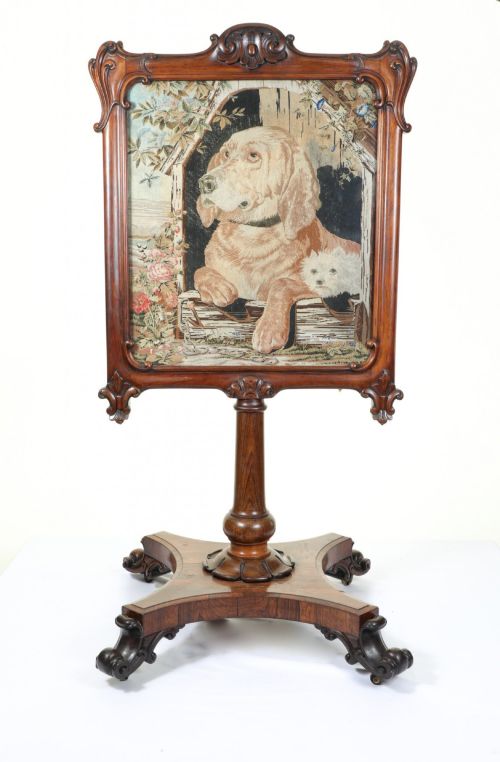
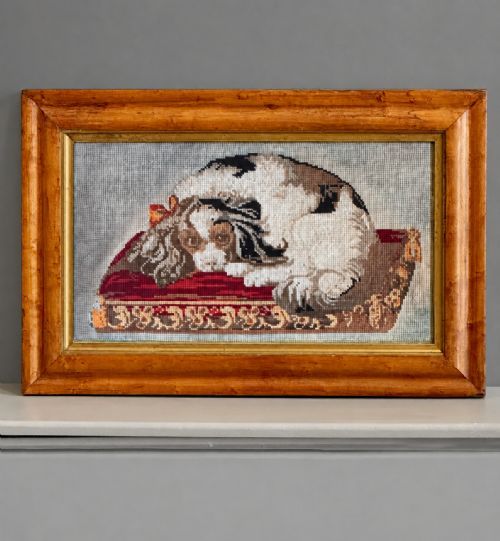
A King Charles spaniel immortalised in needlework stares out from a burr maple frame across the centuries.
Distinguishing Quality
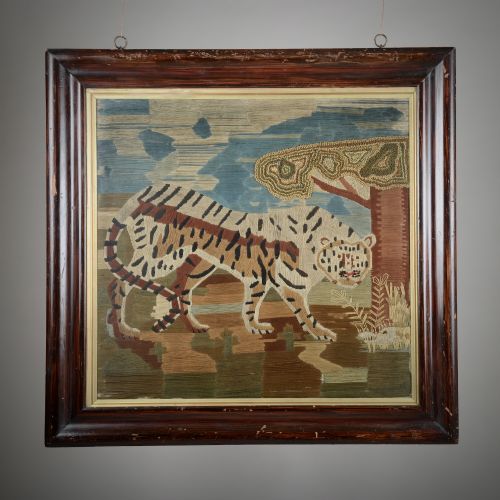
Quality in these textile works is determined by the fineness of the stitchwork and the complexity of the design, where denser needlework creates sharper detail in pictorial subjects like animals, figures, and foliage. The condition of the fibres, stability of the weave, and originality of mounting also separate superior items from standard examples.
The craftsmanship of the accompanying woodwork influences overall merit, with carved rosewood, burr maple, and mahogany frames demonstrating higher artisanal investment than plain or later replacements. Preservation of early textile fragments without extensive modern restoration maintains historical integrity.
The Brown Tapestry Panels Glossary
- Needlework
- The craft of decorating fabric or other materials using a needle and thread. This broad category encompasses various forms of embroidery and canvas work found in historical panels.
- Verdure Tapestry
- A type of woven wall hanging or panel featuring landscape motifs dominated by foliage, trees, and plants. These pieces typically display muted green and brown colour palettes.
- Fire Screen
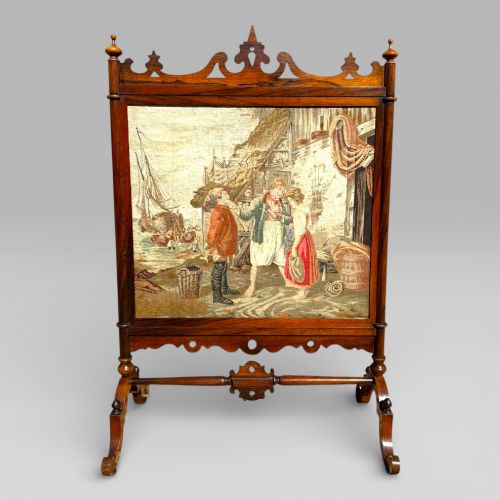
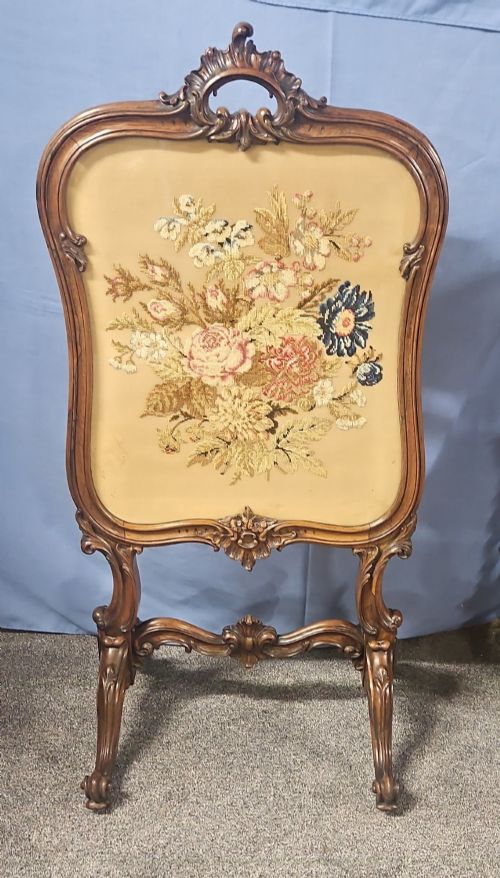
- A movable piece of furniture designed to shield a person from the direct heat of a fireplace. Many examples incorporate framed tapestry, needlepoint, or embroidered panels.
- Sampler
- A piece of embroidery or needlework produced as a demonstration or test of skill. Early examples often record the maker's name, age, and date.
- Flatweave
- A textile produced by weaving warp and weft threads without creating a piled surface. This technique appears in various traditional nomadic and regional wall panels.
Brown Tapestry Panels: Frequently Asked Questions
How were fire screens used?
Fire screens served a practical purpose in historical homes by protecting inhabitants from the intense radiant heat of open hearths when sitting nearby.
They were repositioned around the room as needed and often doubled as decorative furnishings when the fireplace was unlit.
What periods do these panels come from?
The pieces span several centuries, with items originating from the 17th, 18th, and 19th centuries, alongside pieces from the Victorian and Edwardian eras.
Earlier items often feature fragment-based verdure scenes or cushion covers, while 19th-century examples frequently take the form of framed pictures and needlework fire screens.
How should I care for antique textiles?
Antique textile panels require protection from direct sunlight to prevent the fading of wool, silk, and cotton threads. Keeping them away from excessive moisture and fluctuating temperatures preserves the integrity of the fabric and wooden mounts.
How do I identify a needlework panel?
Needlework panels are identified by visible thread stitches applied to a supporting canvas or linen ground. They often depict pictorial subjects, floral arrangements, or pastoral scenes created by individual makers.