



Brown Swivel Chair
A brown swivel chair brings functional rotation to period study furniture, offering sturdy desk seating in rich mahogany, oak or walnut.
Brown Swivel Chair
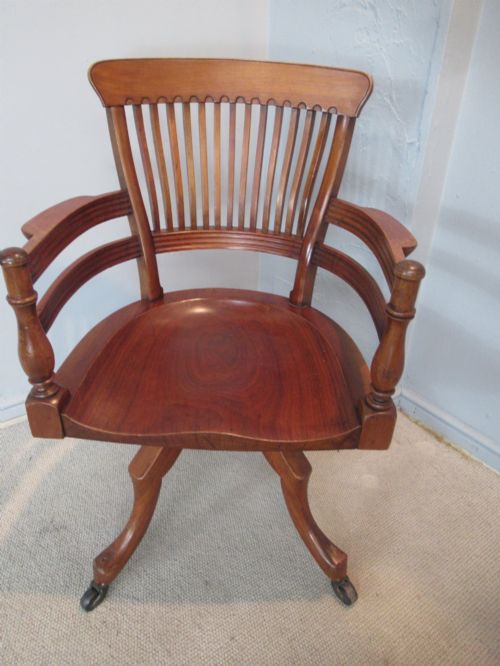
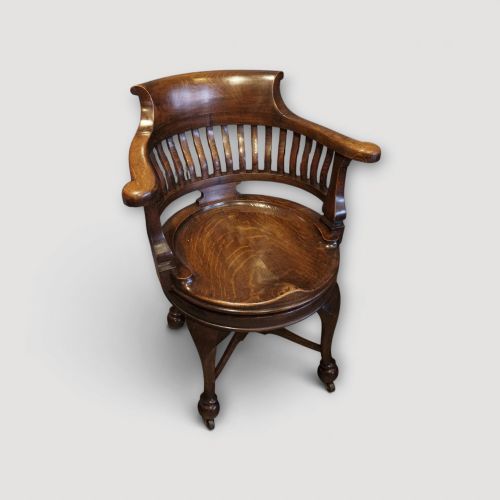
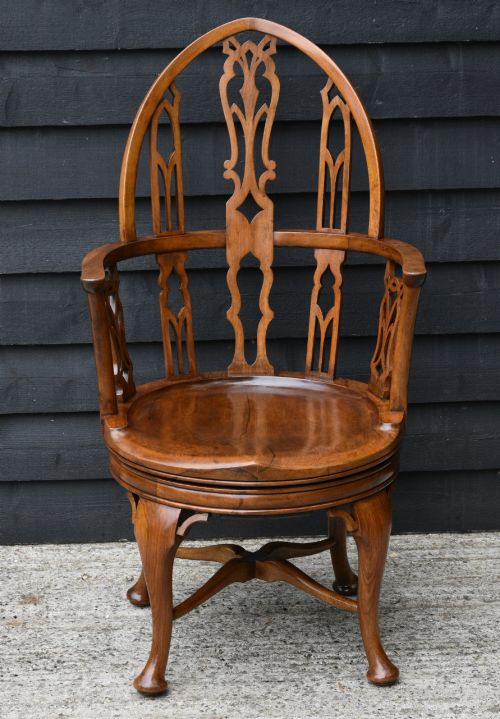
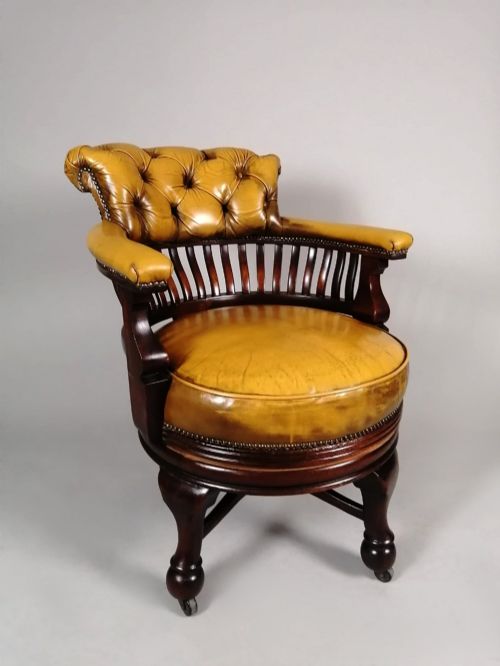
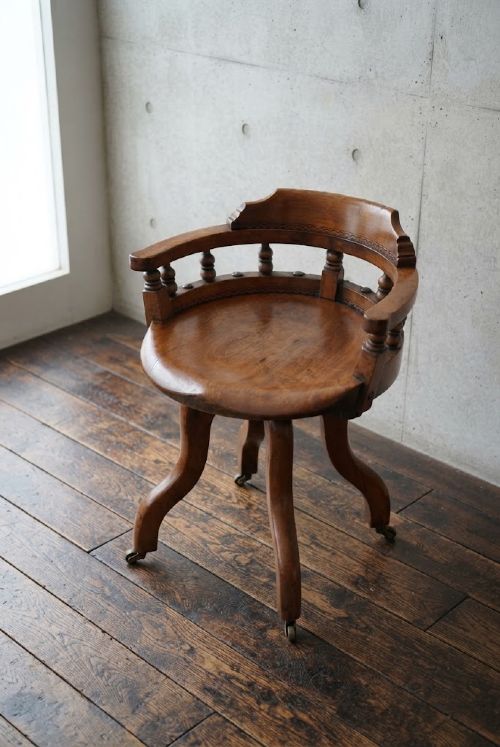
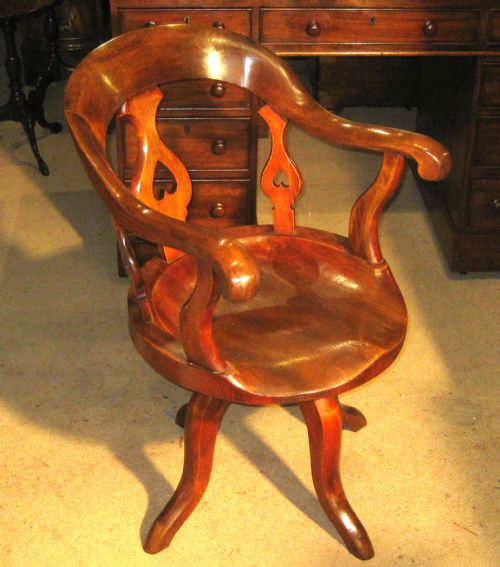
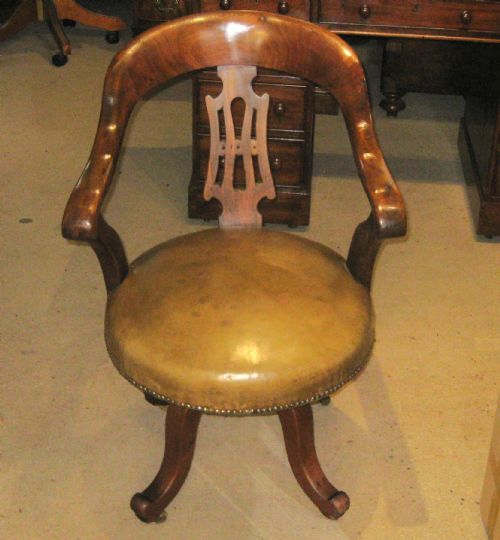
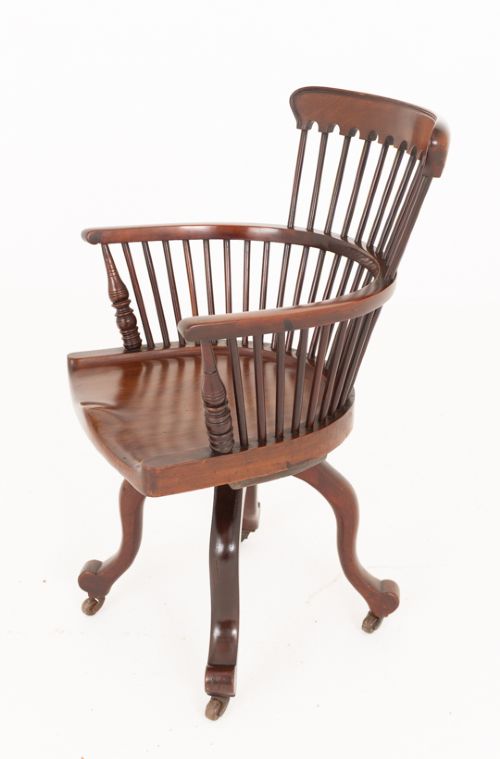
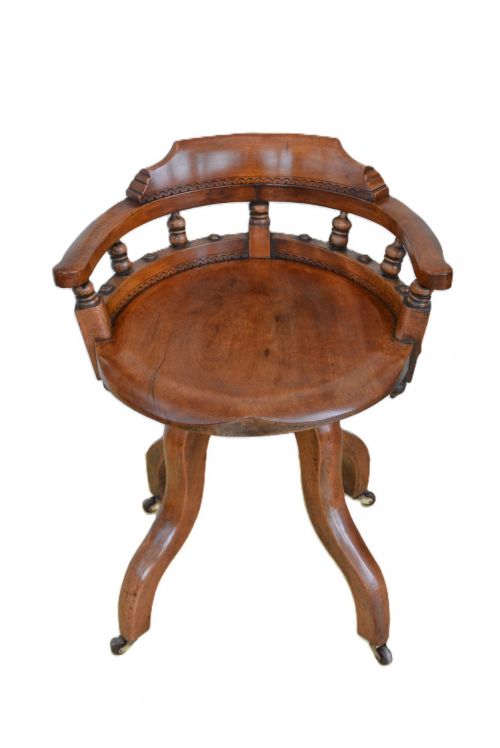
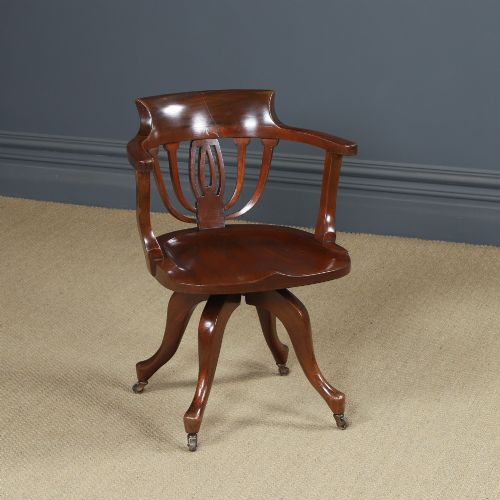
A brown swivel chair is fundamentally a piece of desk or office furniture designed for rotation and task work. The examples seen here span the Victorian, Edwardian, and Regency periods, utilising timber frames and leather upholstery.
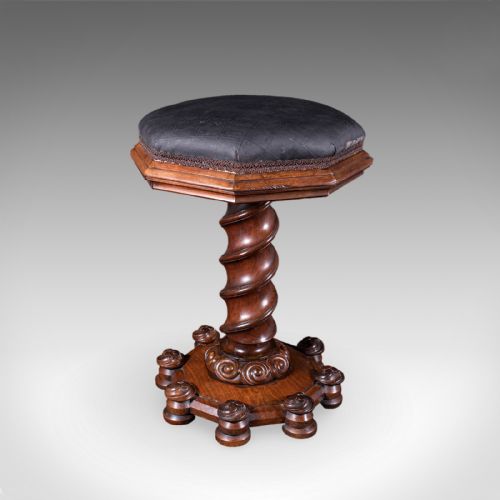
Most pieces encountered on this page take the form of revolving desk chairs, office armchairs, or piano stools. These items serve working spaces, libraries, and studies where mobility and adjustability are required.
Materials and construction methods
Timbers such as mahogany, oak, and walnut form the primary structural frames for these rotating seats. Craftsmen frequently combined these hardwoods with cast iron and brass for the revolving mechanisms and adjustable height screws.
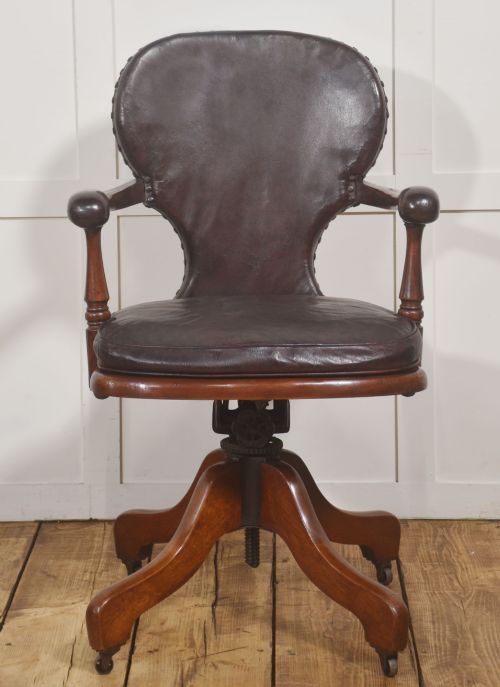
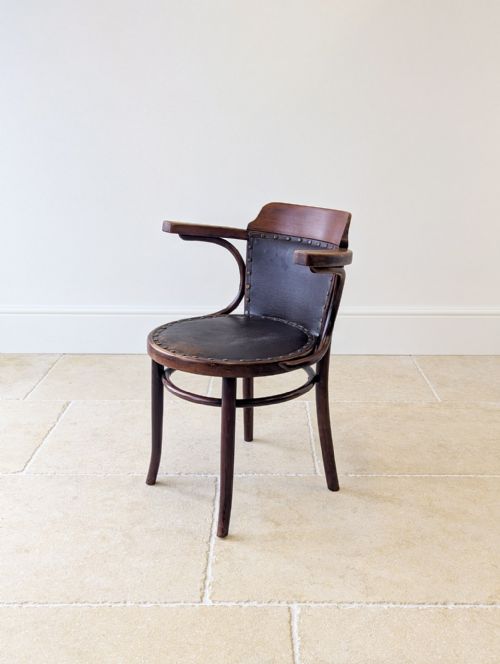
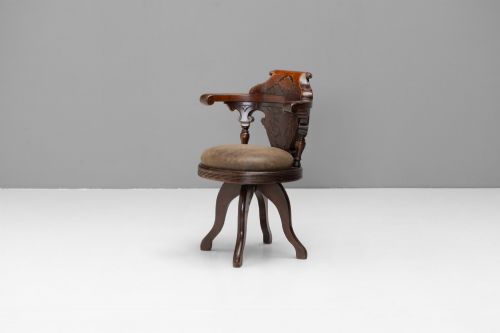
Upholstered surfaces typically employ leather inserts or panels secured with brass tacks. Bentwood techniques also appear in specific Edwardian variants alongside carved wooden seats.
Brown Swivel Chair Retail Price Guide 2026
Typical asking prices for brown swivel chair among the pieces listed under this phrase on Sellingantiques today, from the lower quarter to the upper quarter. They describe what is for sale here now, not the wider market.
Listings feature oak, mahogany, walnut, and cast iron across Victorian, Edwardian, and Regency eras.
Assessing quality in rotating seating
The sophistication of the swivel mechanism dictates much of the functional standard. Smooth rotation and reliable height adjustment separate simple fixed-height stools from complex rise-and-fall office armchairs.
Timber selection and carving detail also differentiate standard utility seating from finer library and salon pieces. Solid mahogany and figured walnut frames with substantial joinery command greater appreciation than plain softwood-backed alternatives.
Kendrick & Jefferson·Shoolbred
The Brown Swivel Chair Glossary
- Revolving mechanism
- The internal iron or brass hardware that allows the seat to turn through three hundred and sixty degrees. Early versions rely on threaded spindles and central iron screw columns.
- Rise and fall
- An adjustment mechanism allowing the seat height to increase or decrease. This function is typically operated by winding the seat upward on a central wooden or metal screw.
- Bentwood
- A technique where strips of timber are moistened with steam and bent into curved shapes. This method appears in particular Edwardian and Victorian desk chair designs.
- Piano stool
- An adjustable seat designed for keyboard players, often featuring a revolving top. Many early examples share mechanical similarities with desk swivel chairs.
- Cast iron
- A strong, heavy alloy used for the structural base and pedestal supports of industrial and office stools. It provides the necessary weight distribution for safe rotation.
Brown Swivel Chair: Frequently Asked Questions
How do I adjust the height on these chairs?
Many period swivel chairs adjust via a central wooden or iron screw mechanism hidden beneath the seat. Turning the seat clockwise or anticlockwise raises or lowers the platform along the threaded spindle.
Other designs utilise lever or collar releases depending on the specific patent of the period. Users should rotate the seat gently while supporting the weight to test the mechanism.
Are these chairs suitable for daily computer use?
These historical desk chairs provide sturdy lumbar support and practical rotation for modern workspaces. Their solid timber construction handles regular sitting quite well when maintained properly.
However, they lack modern pneumatic gas lifts and tilt locks. Buyers should check the seat height against their modern desk before daily use.
What is the difference between an office chair and a piano stool?
Office chairs generally feature supportive backrests and armrests designed for extended hours of writing or reading at a desk. Piano stools focus on compact, armless seating with adjustable revolving tops for musicians.
Both items share similar mechanical turning actions and period timber frames. Piano stools tend to have smaller footprints and round upholstered pads.
How do I care for the leather upholstery?
Period leather requires occasional conditioning with appropriate balms to prevent drying and cracking. Keeping the material away from direct heat sources preserves the natural hide.
Dusting the wooden frames and checking the central swivel screw for tightness helps maintain structural integrity over time.