



Brown Stoneware Planter
A brown stoneware planter brings rugged utility and rich salt-glazed texture into a room or garden.
Brown Stoneware Planter
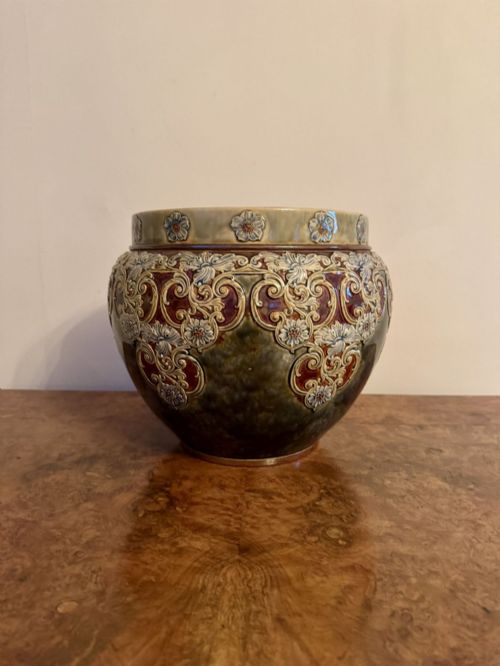
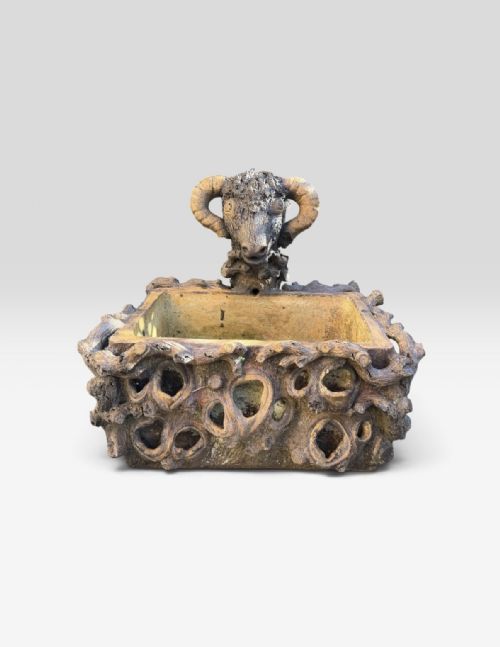
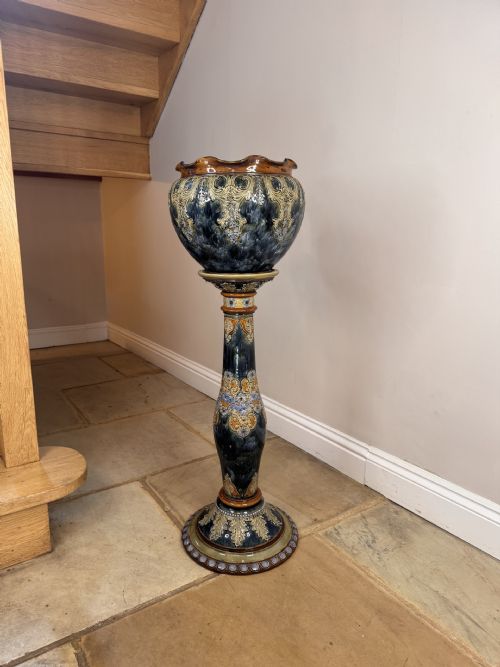
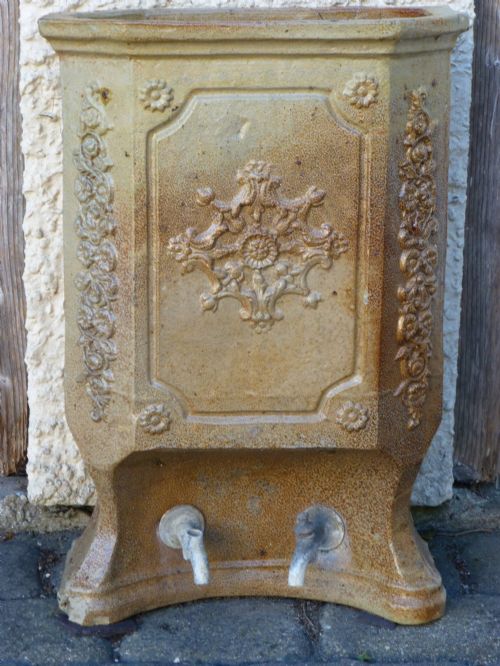
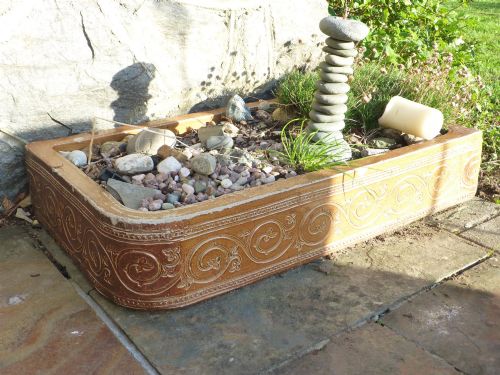
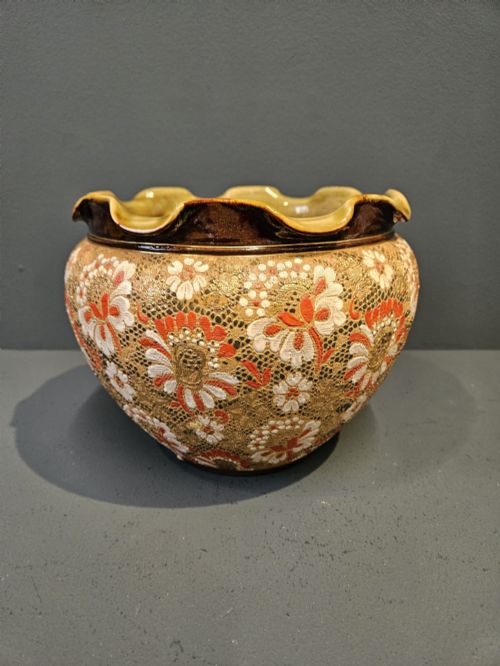
A brown stoneware planter takes the form of heavy troughs, jardiniere vessels, log bins and water filtration fountains designed for robust utility. You will most frequently meet 19th-century examples shaped as salt-glazed troughs or footed jardinieres.
The objects span periods from the Georgian era through the Victorian years into the early 20th century, drawing on styles such as Victorian Rustic, French Art Nouveau, and Arts and Crafts. Makers ranging from Doulton Lambeth to French potteries like Guichard Carriès produced these durable pieces for both interior display and garden cultivation.
How they were made
Potters shaped dense clay bodies into thick-walled troughs and vessels, often applying salt during the kiln firing to produce a distinctive pitted, glossy glaze. Some pieces utilised a faux bois technique, moulding the stoneware to closely mimic natural tree bark and timber.
Decoration on these heavy ceramics ranges from simple utilitarian salt glazing to hand-painted botanical motifs and impressed patterns. Structural hardware such as brass elements occasionally complemented the dense ceramic bodies on specific jardiniere forms.
Brown Stoneware Planter Retail Price Guide 2026
Typical asking prices for brown stoneware planter among the pieces listed under this phrase on Sellingantiques today, from the lower quarter to the upper quarter. They describe what is for sale here now, not the wider market.
Some 19th-century gardeners grew their strawberries in ceramic logs.
What varies in quality
The standard of a brown stoneware planter rests on the crispness of its moulded details and the depth of its salt glaze. Pieces with sharp faux bois bark textures or hand-painted artistic enrichment stand well apart from plain utilitarian vessels.
Attribution heavily influences standing, with named factory marks from prominent potteries or individual artists elevating a piece above anonymous workshop production. The balance of proportions between the heavy ceramic body and any decorative mounts dictates the visual success of the vessel.
Doulton Lambeth·Doulton Burslem·Guichard Carriès·Ethel Beard·Royal Doulton
The Brown Stoneware Planter Glossary
- Salt glaze
- A vitreous coating formed by throwing common salt into the kiln during high-temperature firing, creating an orange-peel texture on the stoneware surface. This finish made the vessels watertight and highly durable.
- Faux bois
- A decorative style mimicking wood or timber, frequently moulded into the stoneware body of 19th-century planters and troughs. It translates natural forest elements into permanent ceramic form.
- Jardiniere
- An ornamental ceramic pot or stand designed to hold growing plants indoors. These vessels usually sit on a flat base rather than hanging.
- Stoneware
- A robust pottery fired at high temperatures until vitrified, rendering the ceramic non-porous and extremely hard. It resists frost and heavy wear.
- Trough
- A long, rectangular vessel used for planting bulbs, strawberries, or floral displays. They provide generous root space for garden settings.
Brown Stoneware Planter: Frequently Asked Questions
What is a brown stoneware planter used for?
These heavy vessels served primarily as robust containers for indoor plants, garden flowers, and specialised crops like strawberries. Historic examples also functioned as water filtration fountains or domestic log bins.
Today, they adapt readily to contemporary interiors as large planters or decorative storage containers. Their durable ceramic construction suits both sheltered indoor rooms and open garden environments.
How do I date a brown stoneware planter?
Dating relies heavily on factory stamps, impressed makers' marks, and stylistic indicators such as Victorian rustic moulding or Art Nouveau motifs. Pieces span from the Georgian period through the 19th century and into the early 20th century.
Examining the manufacturing technique and glaze characteristics provides further clues to age. Salt glazing and specific faux bois textures align closely with Victorian production methods.
Are these planters frost resistant?
Dense stoneware fired at high temperatures is inherently vitreous and non-porous, making most traditional examples well suited for outdoor use. However, severe winter freezes can still impact antique ceramic bodies.
Protecting delicate salt-glazed troughs during extreme cold prevents potential cracking of the historical material. Many collectors prefer to house finer artistic jardinieres indoors to preserve their surface decoration.
What styles do these planters come in?
The inventory encompasses Victorian rustic designs, Arts and Crafts pieces, French Art Nouveau, and French country forms. Styles range from plain utilitarian salt-glazed troughs to highly ornate moulded jardinieres.
Faux bois bark textures and botanical motifs dominate the decorative vocabulary of the period. This variety allows the pieces to anchor both formal rooms and rustic garden schemes.