



Brown Screen Divider
These brown screen divider pieces shape space and catch the eye, bringing historic craftsmanship and rich materials directly into a room.
Brown Screen Divider
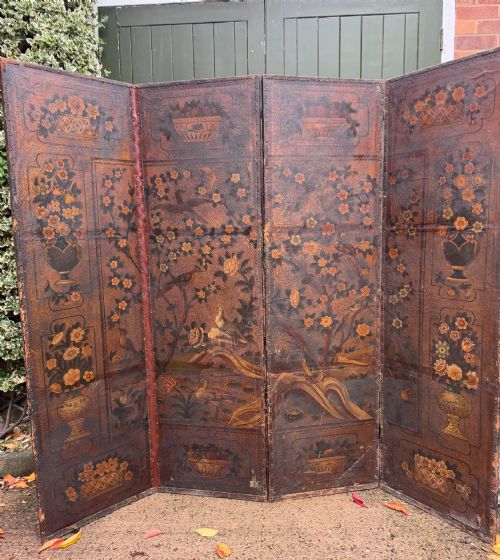
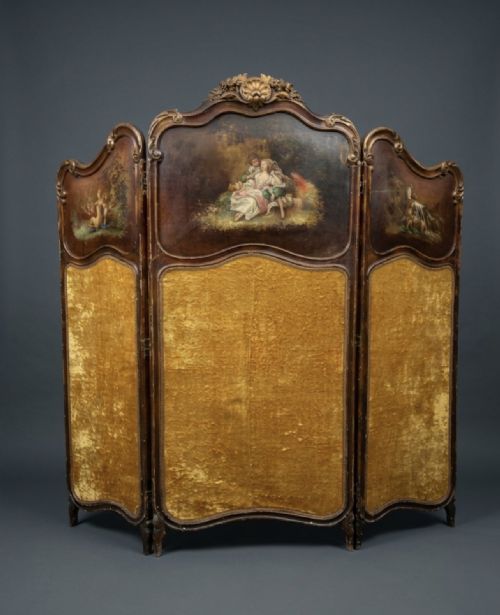
Most examples span the eighteenth, nineteenth, and early twentieth centuries, encompassing Victorian, Edwardian, Art Nouveau, and various Asian traditional styles. Buyers encounter everything from tall four-fold canvas and leather partitions to smaller table screens and modesty panels.
Materials and Construction
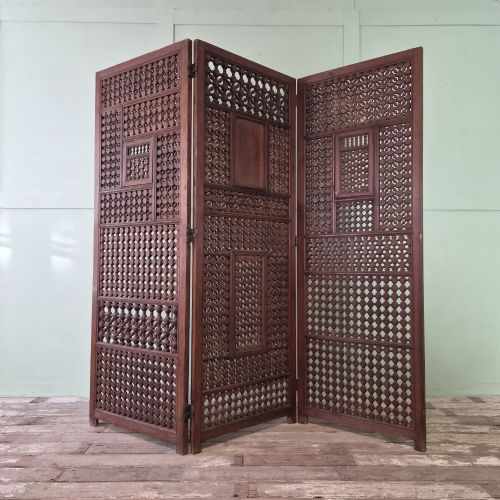
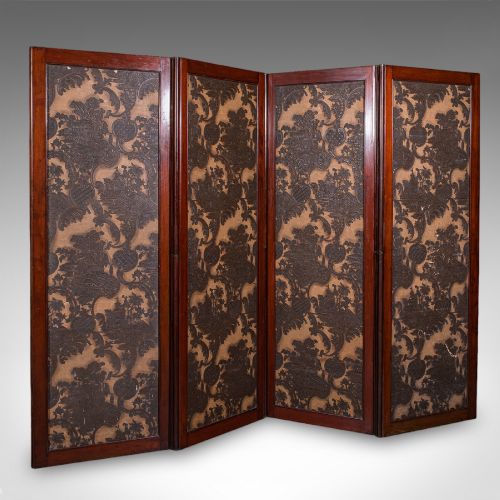
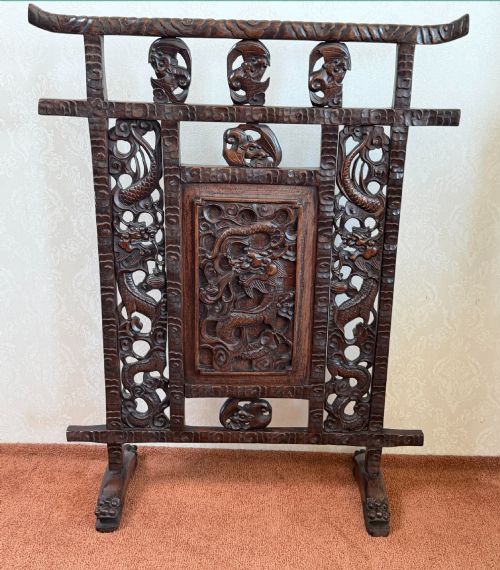
Construction relies heavily on solid timbers and joined frames supporting panels of canvas, leather, paper, silk, or wood. Artisans employed traditional joinery to build multi-fold hinges that allow the panels to articulate smoothly.
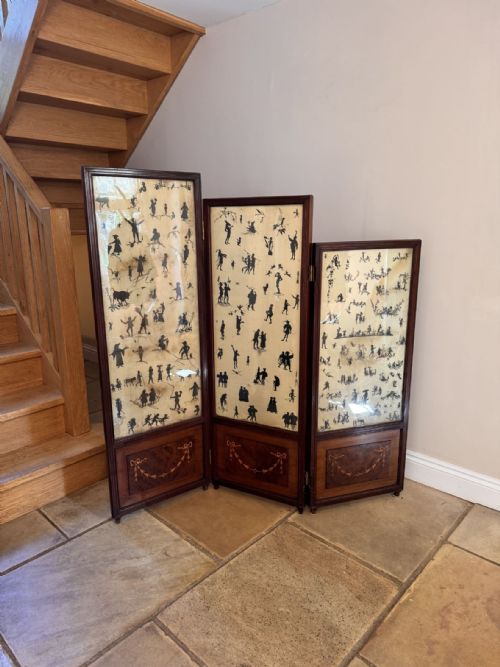
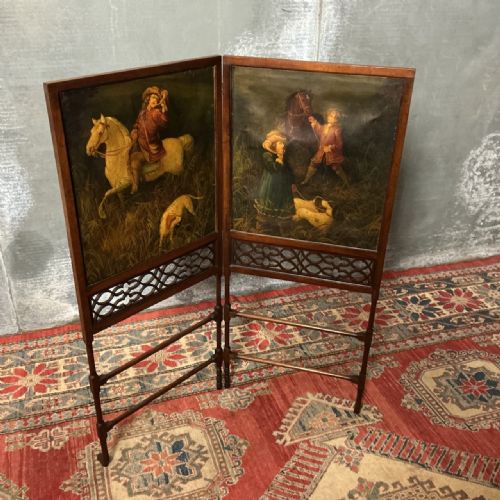
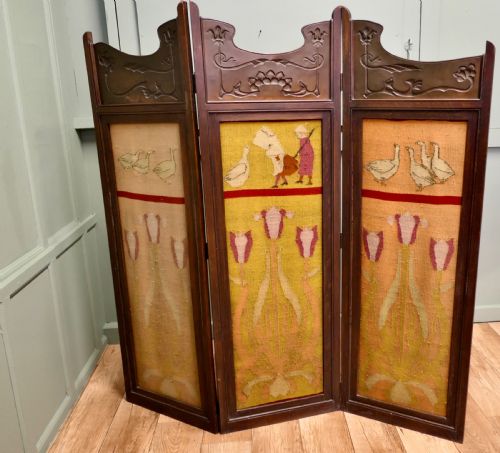
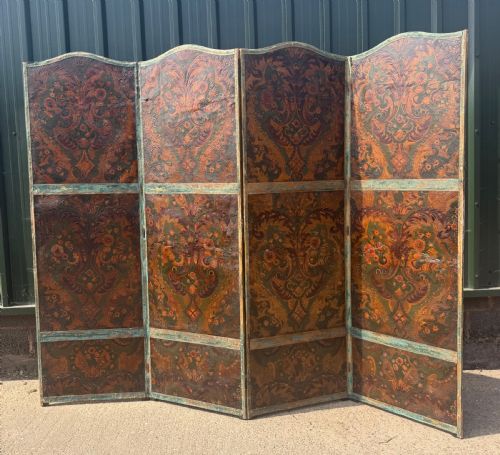
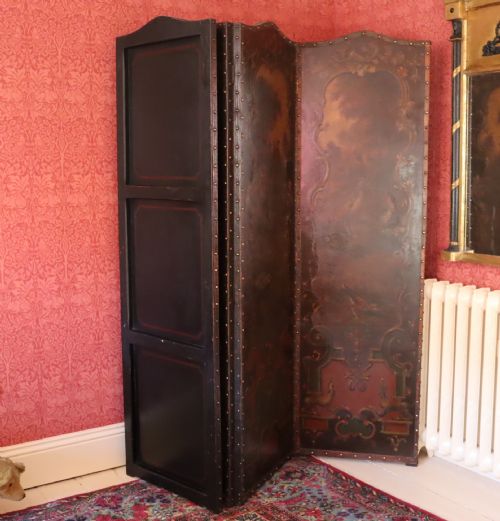
Surface decoration ranges from hand-painted pastoral scenes and oil paintings to tooled leather, decoupage, scrap work, and intricate wood carving. Gilt embossing and polychrome finishes appear frequently on leather and canvas panels.
Brown Screen Divider Retail Price Guide 2026
Typical asking prices for brown screen divider among the pieces listed under this phrase on Sellingantiques today, from the lower quarter to the upper quarter. They describe what is for sale here now, not the wider market.
Periods represented span from the eighteenth century through the Victorian and Edwardian eras into the early twentieth century.
Assessing Quality
Quality rests upon the integrity of the timber frame, the complexity of the joinery, and the execution of the surface artwork. Superior pieces demonstrate crisp carving, stable hinges, and finely detailed hand-painted or embossed panels.
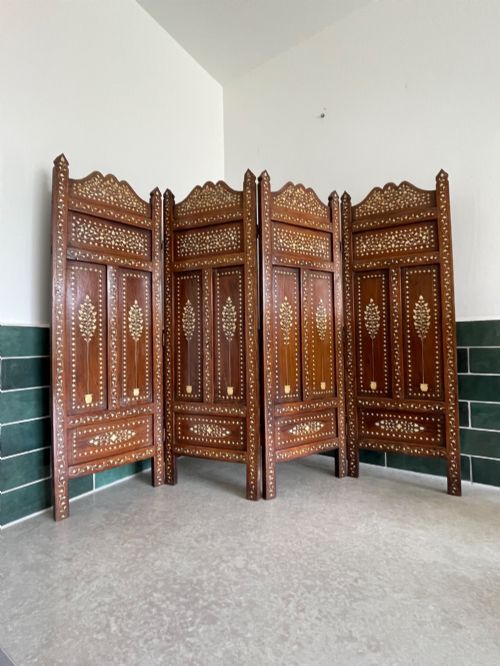
The sophistication of the decorative medium distinguishes finer examples, whether through masterly oil paintings, detailed needlepoint, or deeply carved hardwood panels. Greater depth in materials and execution elevates an item well above simpler utility partitions.
The Brown Screen Divider Glossary
- Folding screen
- A piece of furniture consisting of two or more panels that are connected by hinges. They adjust to divide a room or block a draught.
- Modesty screen
- A low decorative panel traditionally used in domestic interiors to shield a person from view or heat. They often feature painted or fabric panels.
- Coromandel lacquer
- A type of Chinese incised lacquerware where designs are carved into a dark ground and filled with colours. These form striking panels on antique screens.
- Mashrabiya
- An architectural element adapted into screens, featuring intricate wooden latticework. This technique creates geometric patterns that filter light and air.
Brown Screen Divider: Frequently Asked Questions
How do I use a room divider at home?
These pieces function well to partition large rooms, create private corners, or mask utilitarian spaces. They also act as striking decorative backdrops against plain walls.
Position them carefully to catch natural light without obstructing main pathways through the room.
What woods are common in these screens?
Makers utilised timbers such as mahogany, walnut, oak, and dense oriental hardwoods. Padauk also appears in specific regional pieces.
These durable woods provide the structural strength needed to support multiple folding panels over decades of use.
How do I care for painted leather panels?
Painted and gilt embossed leather surfaces require stable humidity and protection from direct sunlight to prevent cracking. Dust them gently with a soft, dry cloth.
Avoid liquid cleaners entirely, as moisture can damage the historical paint layers and metallic leaf.
How can I tell the period of a screen?
Dating relies on stylistic clues like Art Nouveau curves, Victorian scrap work, or eighteenth-century chinoiserie motifs. The construction methods and types of hinges also offer reliable hints.
Comparing the timber preparation and secondary woods helps confirm the era of manufacture.