

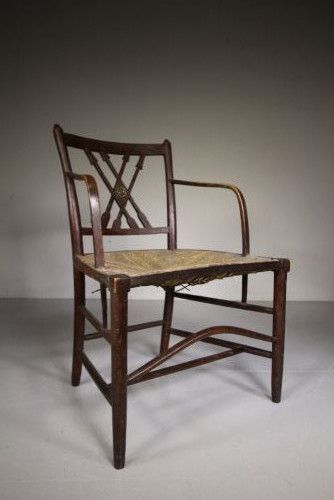
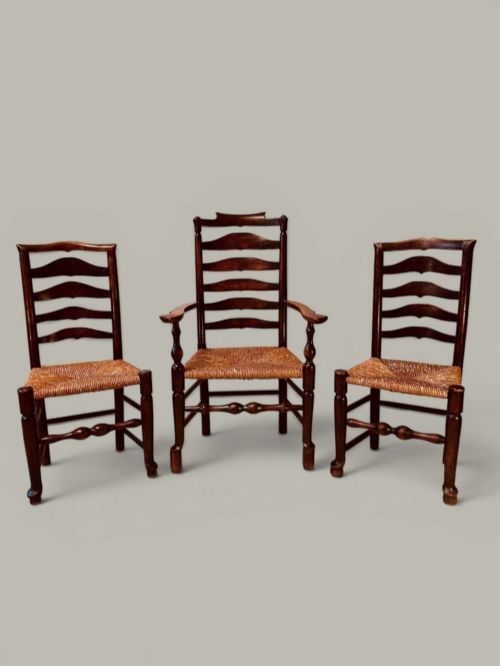
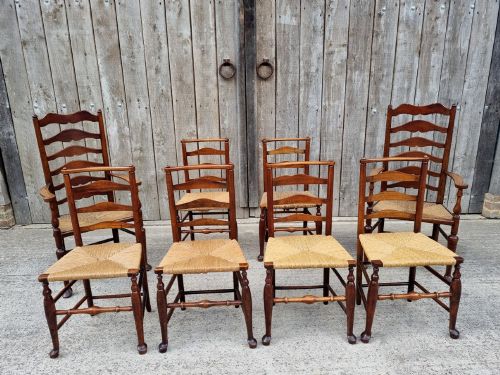
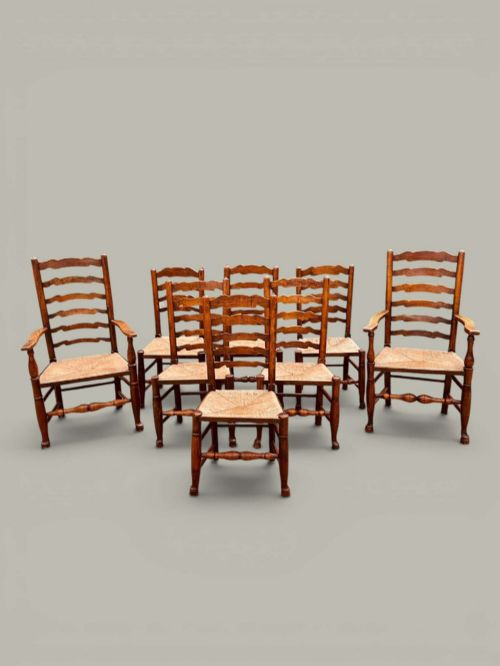

Brown Rush Chair
A brown rush chair brings tactile country texture to a room through woven natural seating and honest vernacular timber.
Brown Rush Chair
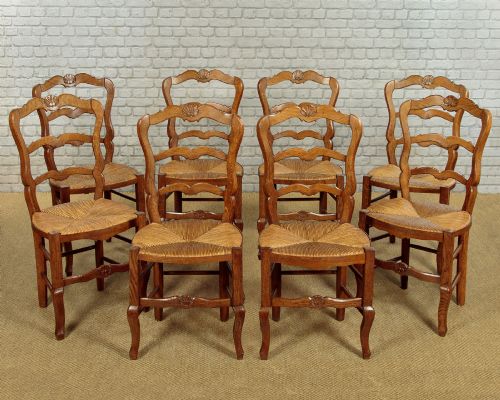
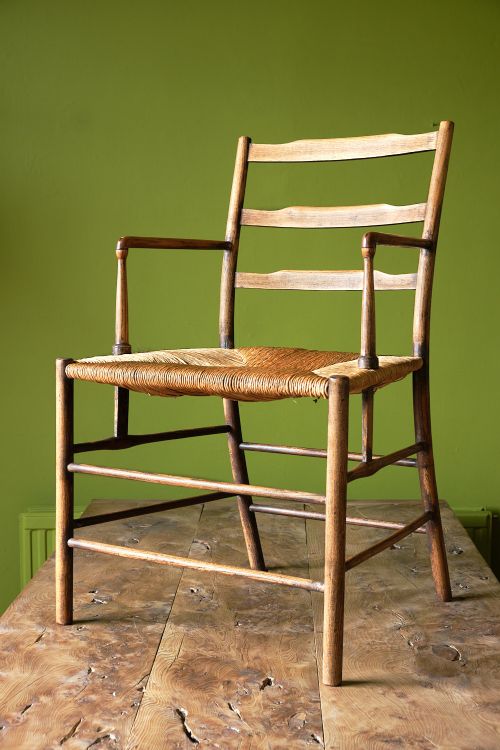
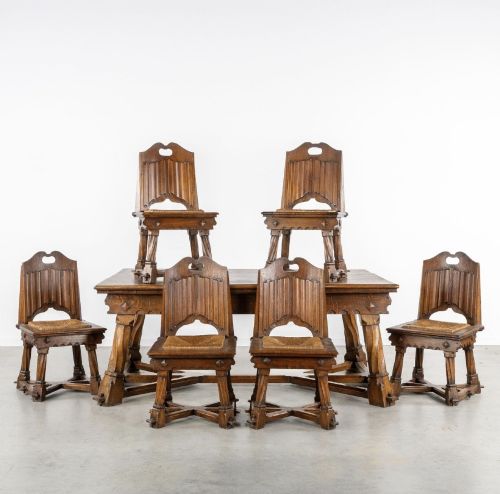
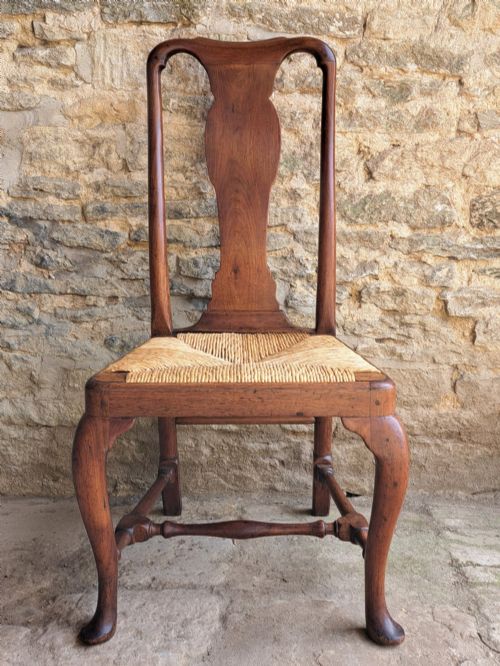
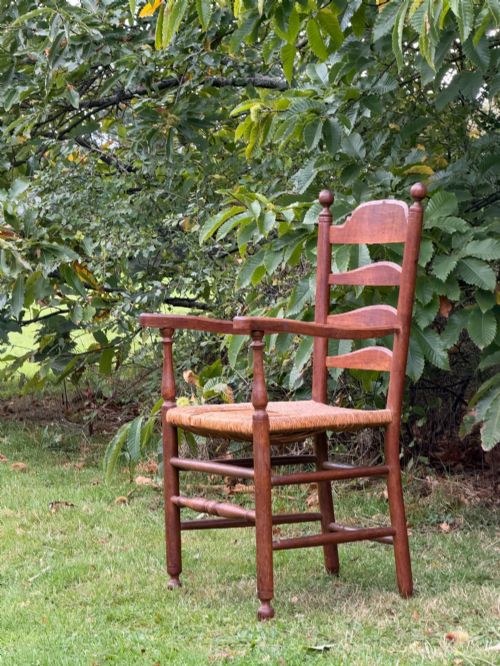
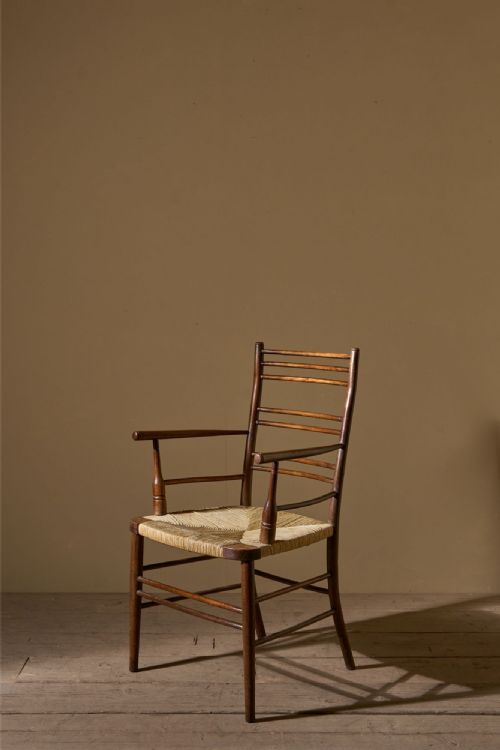
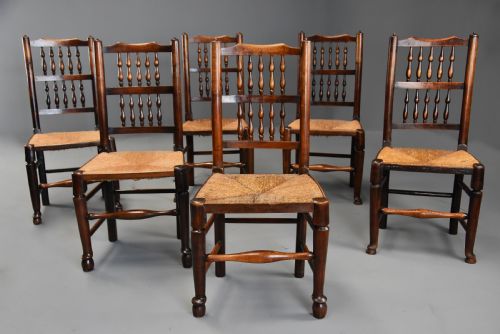
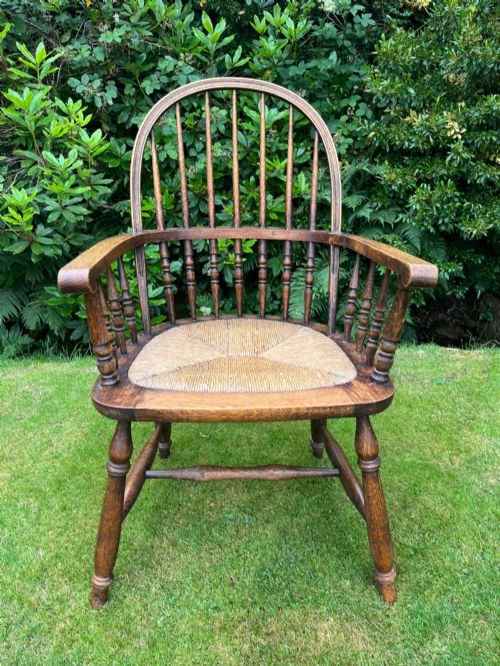
A brown rush chair encompasses simple country dining seats, sturdy armchairs, and low fireside models gathered under this search phrase. These pieces trace back across the eighteenth, nineteenth, and early twentieth centuries through regional English and French traditions.
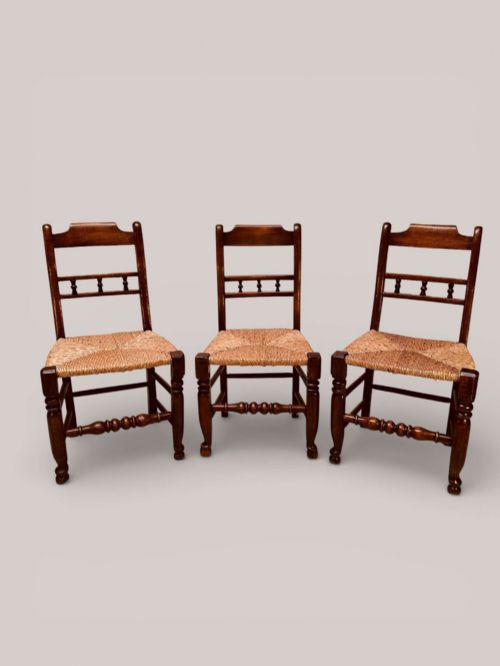
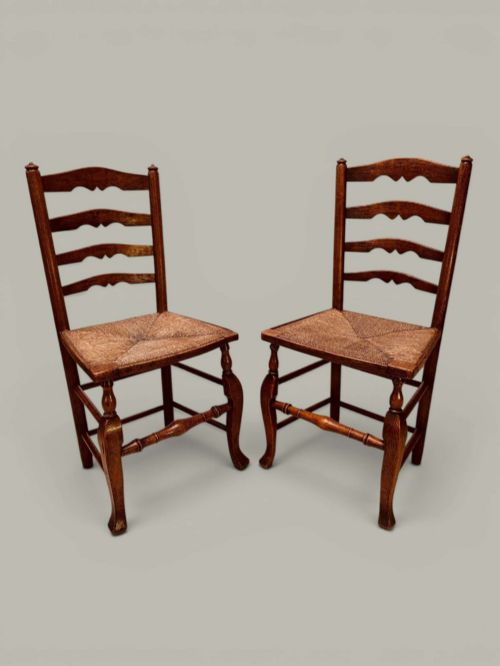
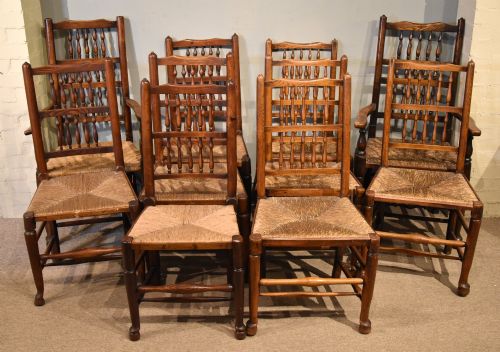
The most frequent examples found here take the form of ladder-back or spindle-back dining chairs constructed from native woods and fitted with woven seats. Buyers encounter single chairs, pairs, and large matched sets designed for everyday domestic use in farmhouses and provincial homes.
Materials and construction
Local timbers such as elm, ash, oak, and fruitwood form the structural frames, shaped by turners and joiners using traditional lathe work and mortise joints. These hard and soft woods often display original painted finishes or acquire deep patination through decades of handling.
River rushes or straw are twisted and woven tightly by hand around wooden rungs to create a supportive, resilient seating surface. This seating material yields a warm brown tone that deepens naturally with age and regular exposure to light.
Brown Rush Chair Retail Price Guide 2026
Typical asking prices for brown rush chair among the pieces listed under this phrase on Sellingantiques today, from the lower quarter to the upper quarter. They describe what is for sale here now, not the wider market.
Evaluating construction and integrity
Quality rests upon the tightness of the rush weave and the structural rigidity of the turned frame joints. Pieces retaining their original timber surfaces and unreplaced seating material command greater regard from collectors.
Heavily restored frames or loose rush seating alter the historical coherence of a chair. The finest examples balance functional survival with unblemished vernacular proportion.
Morris & Co·E W Godwin
The Brown Rush Chair Glossary
- Rush seat
- A seating surface woven from dried marsh grass twisted into cord. This traditional technique creates a flexible, durable pad across the frame.
- Ladder back
- A chair back featuring horizontal wooden slats between the rear upright posts. These slats provide ergonomic support in regional dining and farmhouse seating.
- Spindle back
- A chair design incorporating numerous thin turned wooden rods along the backrest. This construction lightens the visual weight while maintaining solid structural support.
- Vernacular furniture
- Domestic items built by local craftsmen following regional traditions rather than metropolitan styles. These pieces prioritise practical utility and local materials.
Brown Rush Chair: Frequently Asked Questions
Are these chairs comfortable for daily dining?
Vernacular seating designs offer surprising ergonomic support through curved ladder backs and springy woven pads.
Placing thin wool or cotton squabs on the seats provides extra comfort during long dinner parties.
How can I date an elm chair?
Examine the tool marks left on the underside of the wooden seat and the wear patterns on the footrests.
Hand-turned spindles and pegged joinery generally indicate nineteenth-century or earlier rural craftsmanship.
Can broken rush seating be repaired?
Skilled restorers can completely re-weave damaged rush using traditional marsh grasses and twisting techniques.
Professional re-weaving preserves the historical utility and appearance of vintage country seating.