




Brown Rural Oil Painting
A brown rural oil painting brings the quiet earth and weathered farmsteads of past centuries directly into a modern room.
Brown Rural Oil Painting
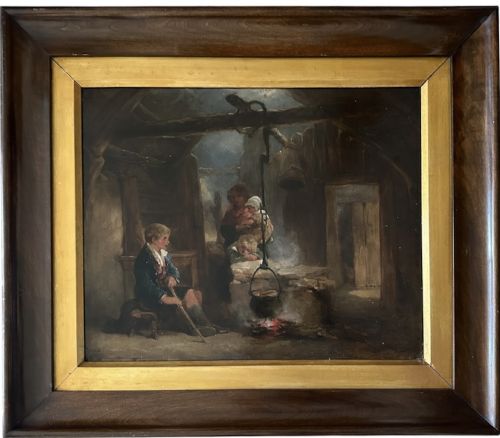
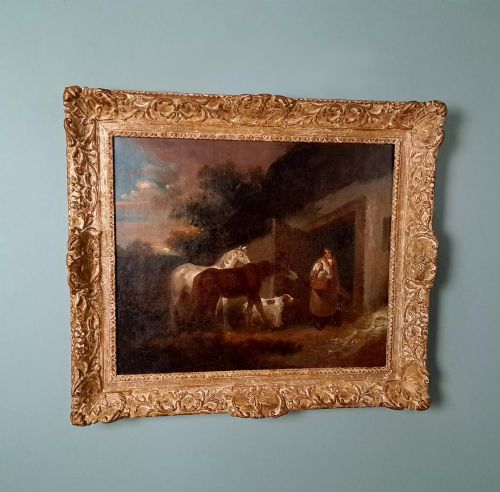
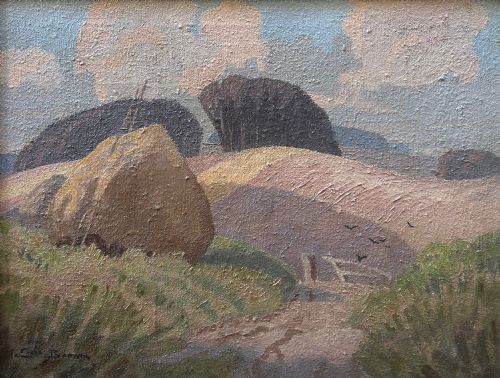
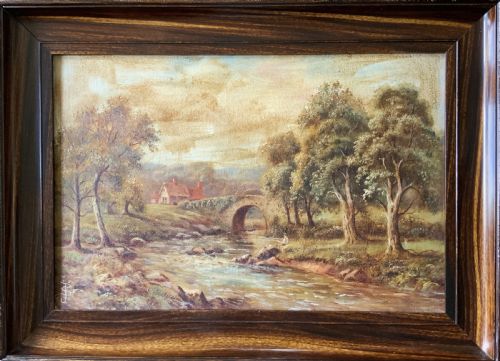
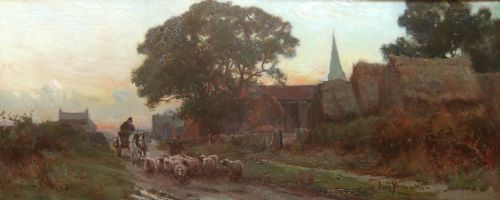
When you search for a brown rural oil painting, you encounter pastoral scenes, working farms, and quiet river valleys rendered in earthy pigments. These works capture the texture of the countryside through depictions of hayfields, cottages, and working livestock across various historical periods.
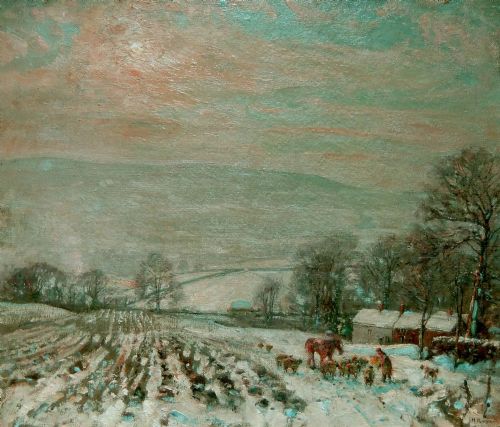
The selections available here lean heavily into British landscapes, English school compositions, and provincial French scenes. Painters focus on the muted tones of winter feeding, autumn farming, and river landscapes under overcast skies.
Represented eras span from nineteenth-century realism and Victorian pastoral studies into early twentieth-century British impressionism and mid-century interpretations. Each piece records a specific rural locality, from Wharfedale pastures to Scottish crofts.
Materials and Methods
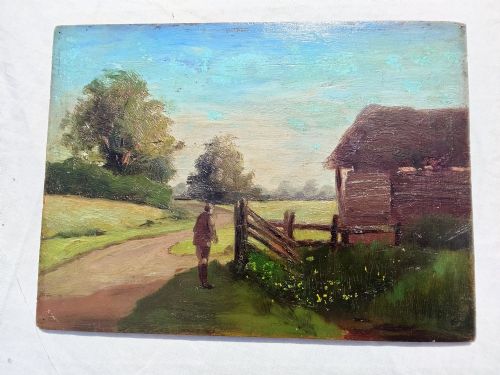
Artists relied primarily on oil paint applied to woven canvas stretched over wooden frames, or occasionally directly onto wooden boards and panels. The pigments favour deep browns, muted greens, and ochres mixed to capture natural light and shadow in rural settings.
Brushwork varies from the tight, detailed realism of the nineteenth-century English school to the looser, more energetic application found in later impressionist and post-impressionist works. Many canvases retain their original gilt or wooden frames, which complement the darker palettes of the paintings.
Listings feature works spanning the nineteenth and twentieth centuries, executed in oil on canvas and wooden board.
Distinctions in Execution
Quality rests in the handling of light and atmospheric depth, where a superior hand creates palpable distance and convincing textures in earth, foliage, and livestock. Weaker examples rely on formulaic repetition without capturing the specific mood of the landscape.
The strength of composition and the vitality of the brushwork separate casual regional studies from accomplished works by recognised names. An assured piece uses economy of line and tonal subtlety to bring warmth and weight to simple agricultural subjects.
William Joseph Shayer Senior·Herbert Royle·Sydney Yates Johnson·John Horace Hooper·Owen Bowen·Samuel Joseph Clark·John Linnell·Arthur Winter Shaw·Ralph Hedley
The Brown Rural Oil Painting Glossary
- Canvas
- A heavy woven fabric used as a surface for painting, typically stretched taut over a wooden frame. It provides a flexible and durable ground for oil pigments.
- English School
- A loose grouping of British artists working within shared stylistic traditions, particularly landscape and pastoral painting. This term encompasses generations of painters from the eighteenth century onward.
- Oil Paint
- A slow-drying paint made by combining pigment particles with a drying oil, most commonly linseed oil. It allows for rich blending, thick impasto, and deep luminous tones.
- Board
- A rigid wooden or composite support used in place of canvas for smaller or more spontaneous paintings. Artists frequently painted directly onto prepared wooden panels during outdoor excursions.
- Pastoral
- A genre of art that idealises rural life, agriculture, and pastoral scenery. These compositions celebrate shepherds, farm animals, and quiet country landscapes.
Brown Rural Oil Painting: Frequently Asked Questions
What subjects appear most often?
Landscapes dominate these works, featuring farmyards, rivers, cottages, and livestock such as cattle and working horses. Scenes often capture seasonal labour like haymaking or winter feeding.
Agricultural structures and rural paths provide the structural focus for the compositions across different British and European regions.
How should I display an antique painting?
These works suit traditional rooms as well as modern interiors seeking warmth through earthy tones and historical depth. Proper placement avoids direct sunlight to protect the oil pigments and canvas from fading.
Matching the frame to the weight of the painting helps anchor the artwork visually on the wall.
Are these paintings signed by the artists?
Many examples carry signatures, monograms, or period inscriptions identifying the creator or the specific rural location depicted. Other works remain unsigned or indistinctly signed, attributed instead to a broader regional school.
Both signed and unsigned pieces offer genuine period character rooted in nineteenth and twentieth-century traditions.
What periods do these paintings represent?
The selection spans from nineteenth-century Victorian realism through Edwardian pastoral views to mid-century British expressions. Earlier pieces often reflect meticulous detail, while twentieth-century examples embrace looser brushwork.
Each era brings distinct approaches to capturing the British and European countryside.