






Brown Rosewood Tilt Top
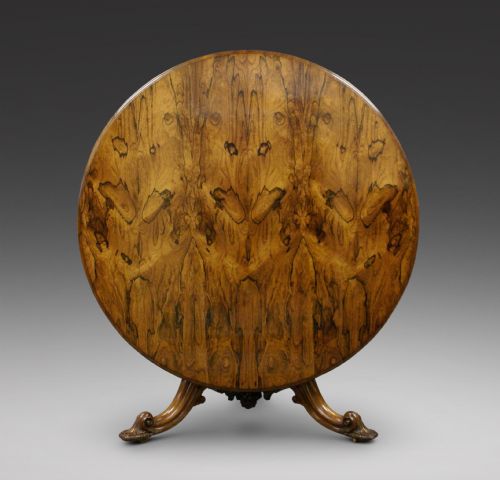
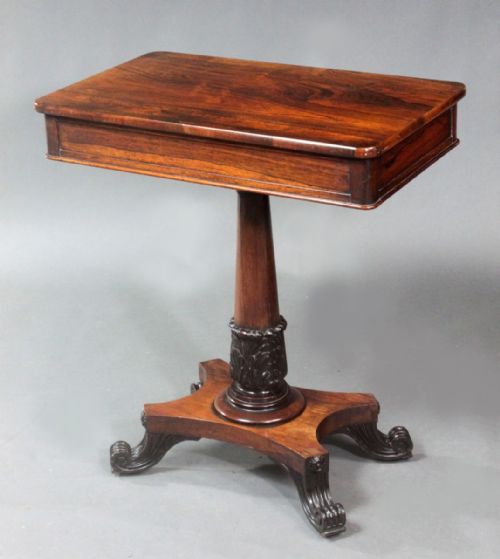
These brown rosewood tilt top tables offer rich timber grain and clever folding mechanisms, bringing compact versatility to any room.
Brown Rosewood Tilt Top
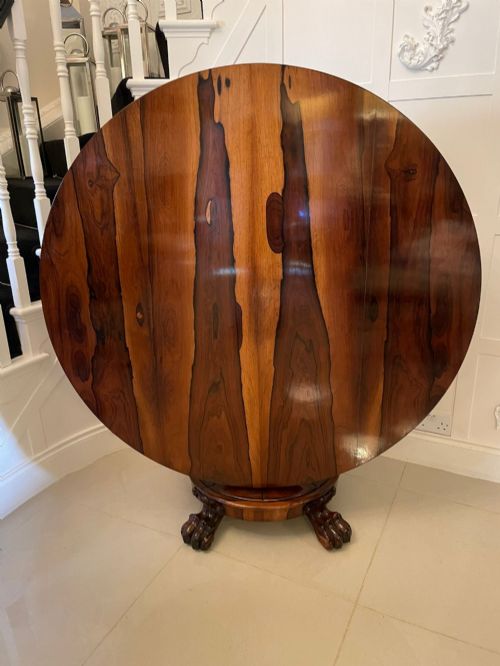
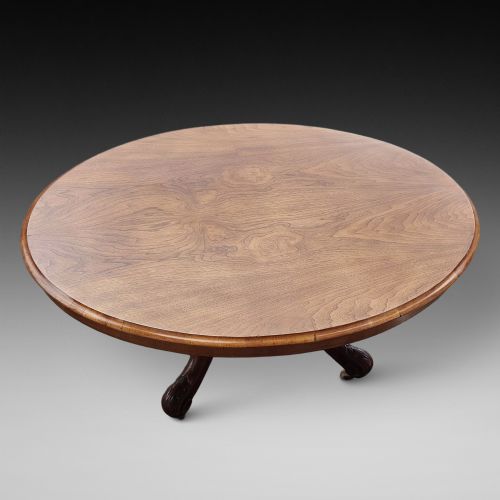
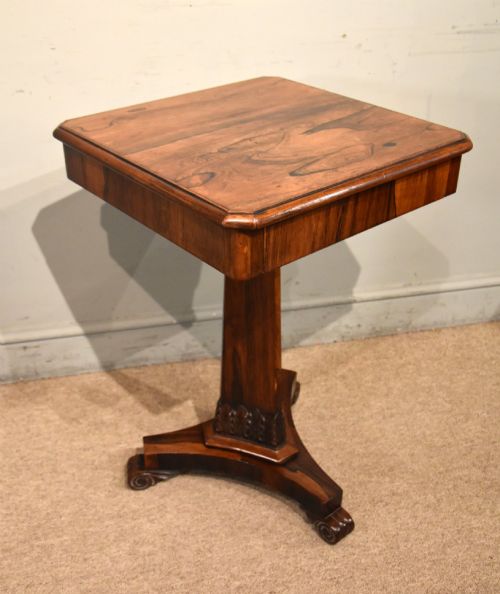
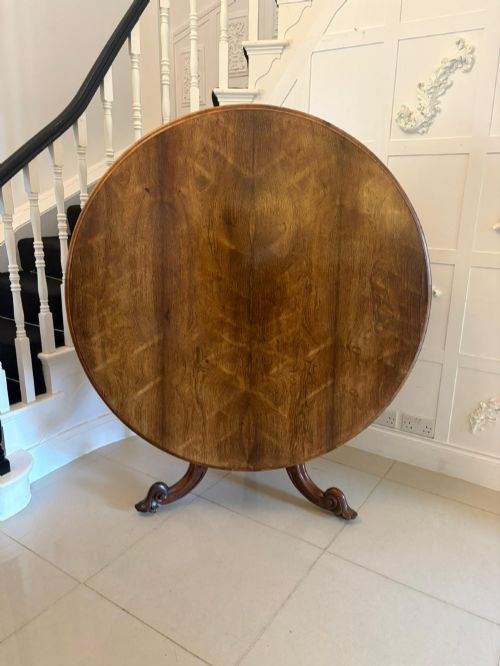
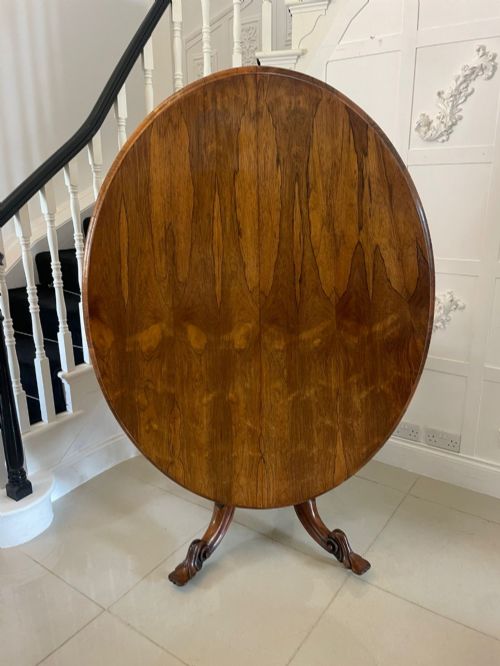
A brown rosewood tilt top table brings together dense tropical hardwoods and functional pivoting mechanisms designed to save space when not in use. Buyers seeking brown rosewood tilt top forms will encounter circular dining pieces, breakfast tables, and occasional furniture from the Georgian, Regency, and Victorian eras.
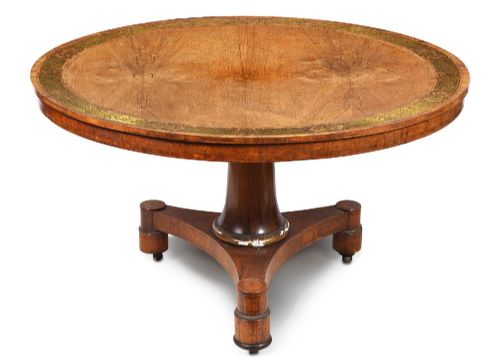
The selection ranges from small occasional pieces to substantial loo and dining tables resting on carved pedestals. These items often span styles from Grand Regency and William IV to Anglo-Indian design, reflecting diverse craftsmanship across the nineteenth century.
Materials and construction
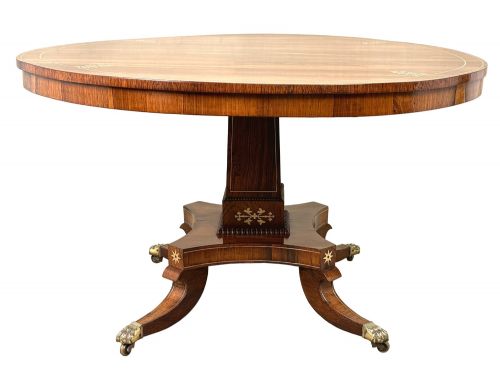
Cabinet makers utilised dense rosewood timbers, frequently paired with secondary woods like mahogany, to build stable pedestal bases and circular tops. Brass inlay, mother of pearl, and satinwood accents appear across the surfaces to create contrast and decorative detail.
The pivoting mechanism allows the tabletop to lock vertically against the pedestal or horizontally for dining, relying on robust wooden blocks and brass catches. Carved pillar supports and tripartite or quadrupartite feet distribute the weight of the heavy hardwood tops.
Brown Rosewood Tilt Top Retail Price Guide 2026
Typical asking prices for brown rosewood tilt top among the pieces listed under this phrase on Sellingantiques today, from the lower quarter to the upper quarter. They describe what is for sale here now, not the wider market.
The listings span the nineteenth century, covering Regency, William IV, and Victorian periods through forms including centre, dining, and occasional tables.
Assessing quality and execution
Superior examples display deeply figured rosewood grain and precise brass or satinwood inlay work that remains flush with the surrounding timber. The crispness of the pedestal carving and the stability of the tilting mechanism separate fine workshop production from simpler output.
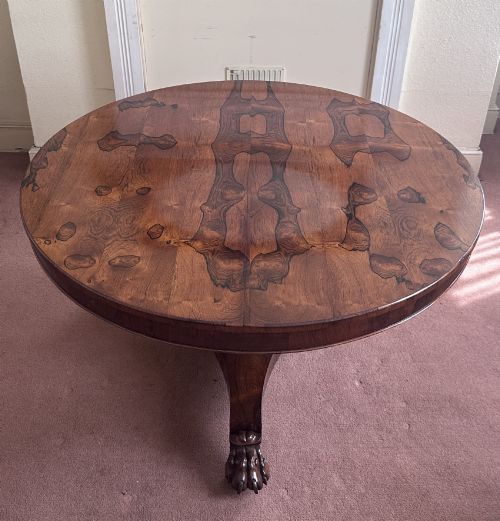
Proportion and stability dictate the standing of a piece, with high-grade tables maintaining a solid connection between the pivoting top and the central column. The integration of alternative woods like goncalo alves or mother of pearl indicates ambitious design choices by the maker.
Peters of Genoa·James Winter of Wardour Street·George Smith
The Brown Rosewood Tilt Top Glossary
- Tilt top
- A table mechanism allowing the surface to pivot upright for storage against a wall or in a corner when the room is cleared.
- Rosewood
- A dense, heavily figured dark timber favoured for nineteenth-century cabinet making due to its rich colour and polish retention.
- Pedestal table
- A freestanding furniture form supported by a single central column rising from a branched base or platform.
- Goncalo alves
- A strikingly grained exotic hardwood occasionally combined with rosewood on Regency and nineteenth-century tables.
- Loo table
- A large round nineteenth-century card and social table designed to tilt upright when the evening game concluded.
Brown Rosewood Tilt Top: Frequently Asked Questions
How do you tilt the top safely?
Most tables use a brass catch or wooden button beneath the surface to release the top from its horizontal position.
Support the edge with one hand while operating the release mechanism to guide the heavy rosewood surface smoothly into its vertical locked state.
What is a loo table?
A loo table is a large circular dining or occasional piece named after the card game lanterloo popular in the nineteenth century.
Their tilting mechanisms allowed servants to clear floor space quickly once evening card parties finished.
How do I date a rosewood table?
Dating relies on stylistic clues like carved paw feet, brass inlay patterns, and the proportions of the central pedestal column.
Pieces span the Georgian, Regency, William IV, and Victorian periods, each showing distinct shifts in decorative restraint and timber selection.
Can these tables be used daily?
The dense rosewood surfaces withstand regular use provided moisture and direct heat are managed with appropriate table protection.
The mechanical pivot joints benefit from occasional checks to ensure the securing pins remain firm and stable.