




Brown Rosewood Dining Table
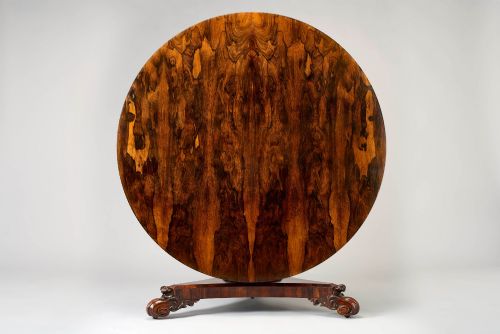
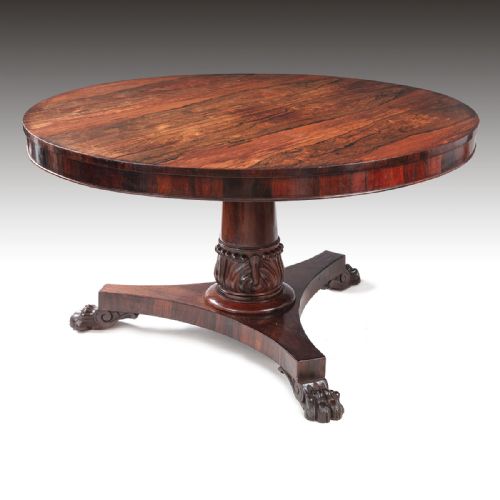
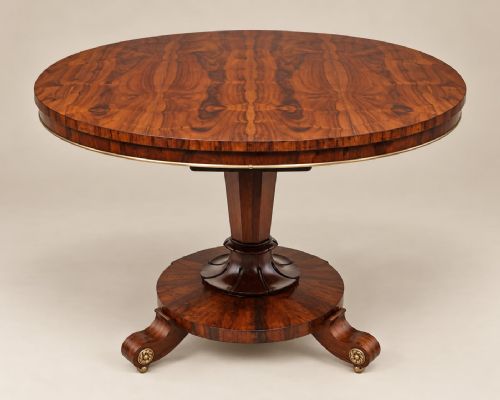
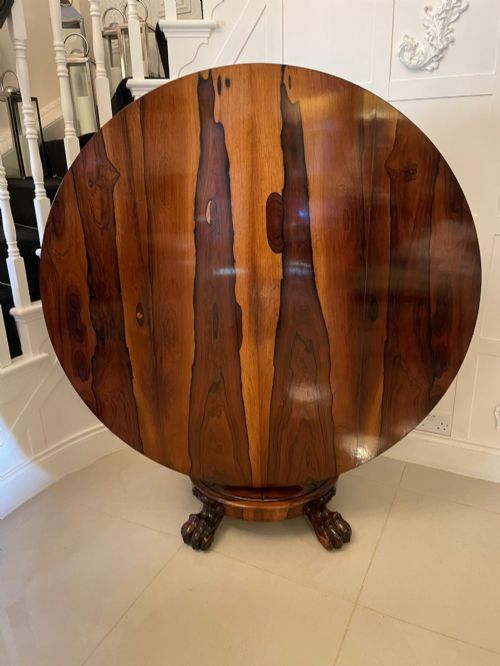
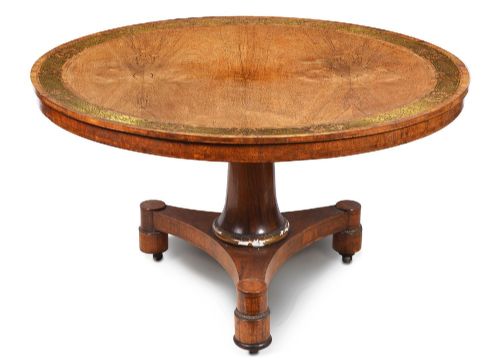
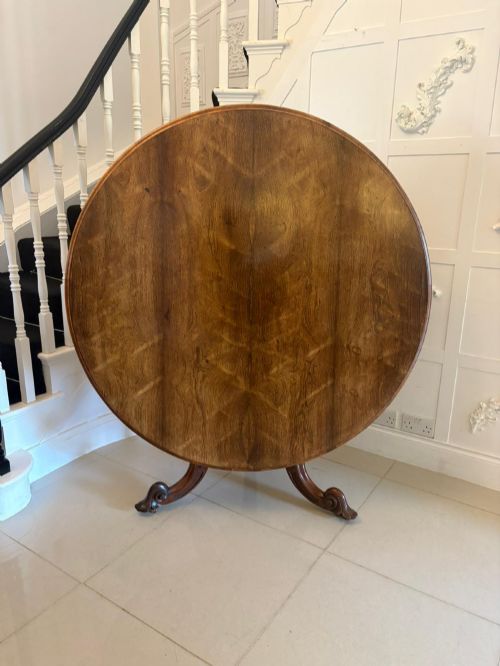
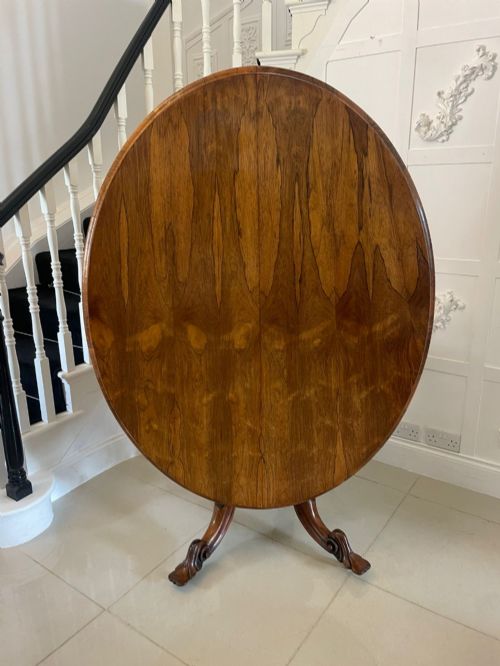
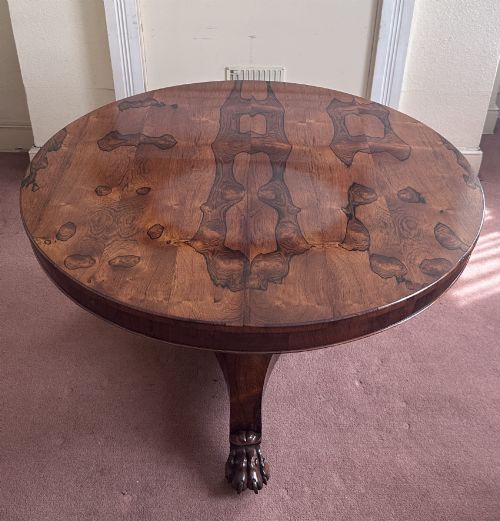
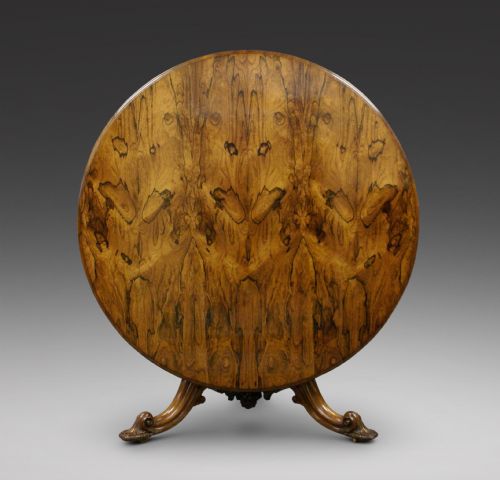
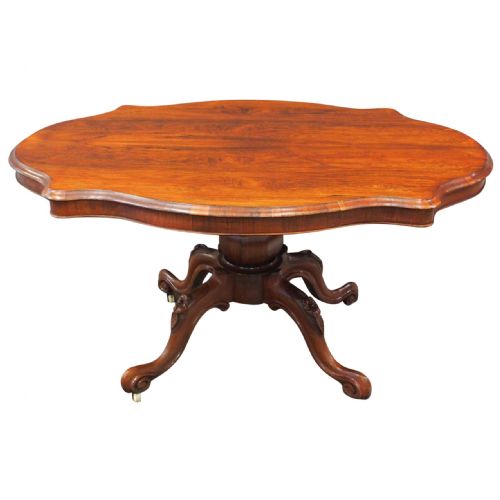
These brown rosewood dining table pieces are rich nineteenth-century and revival dining and centre tables that bring heavy timber grain and polish to a room.
Brown Rosewood Dining Table
A brown rosewood dining table covers substantial nineteenth-century circular breakfast and loo tables alongside grand pedestal dining formats and occasional centre tables. The version most commonly met on this page is the nineteenth-century pedestal centre or breakfast table, often featuring a tilt top or solid column base.
Makers and workshops from the Regency, William IV and Victorian eras produced these pieces in dense dark woods, sometimes incorporating mahogany, satinwood or goncalo alves. Styles range from strict Regency and George IV lines through to Victorian marquetry and French Art Deco extensions.
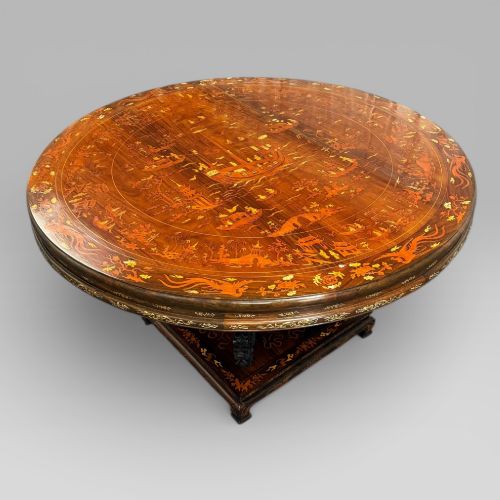
The category spans compact octagonal occasional pieces up to large multi-pedestal dining tables built for formal rooms. Buyers encounter everything from simple snap-top supper tables to elaborate marquetry inlaid specimens and Chinese export pieces.
What varies in quality
Quality rests upon the selection of timber figure, the crispness of carved details on the pedestal, and the precision of any brass or satinwood inlay. Finer examples display symmetrical grain matching across large table tops and robust, steady mechanisms for tilting or extending.
The structural integrity of the central column and the weight of the base separate standard workshop output from pieces bearing maker signatures like Edwards & Roberts or James Winter. Superior execution shows in the depth of the French polish and the retention of original brass mounts and castors.
Brown Rosewood Dining Table Retail Price Guide 2026
Typical asking prices for brown rosewood dining table among the pieces listed under this phrase on Sellingantiques today, from the lower quarter to the upper quarter. They describe what is for sale here now, not the wider market.
Object types span centre tables, breakfast tables, loo tables, and writing extending dining tables.
Edwards & Roberts·Peters of Genoa·James Winter of Wardour Street in London·George Smith
The Brown Rosewood Dining Table Glossary
- Rosewood
- A dense, dark tropical timber valued for its rich brown colour and striking grain patterns. Cabinet makers utilised it extensively for high-status nineteenth-century dining and centre tables.
- Tilt top table
- A table designed with a hinged mechanism allowing the top to pivot vertically for storage against a wall when not in use. This form is common among nineteenth-century breakfast and loo tables.
- Goncalo alves
- A distinctive exotic timber sometimes paired with rosewood in Regency and George IV furniture. It provides contrasting golden-brown tones and bold dark figuring.
- Marquetry
- Decorative patterns formed by fitting small pieces of veneer into a prepared wooden surface. Victorian examples often show elaborate floral or geometric designs in lighter woods.
- Loo table
- A large circular nineteenth-century table originally used for the popular card game loo. These pieces typically stand on a heavy pillar and tripod base with a tilt mechanism.
Brown Rosewood Dining Table: Frequently Asked Questions
How do I use a tilt top table?
The top releases via an under-table brass catch or wooden wedge, allowing the surface to pivot flat against the pillar for compact storage.
Once upright, the mechanism locks securely so the table functions as a standard dining or centre piece without wobbling.
What is a loo table used for?
These large circular tables originally served for playing the nineteenth-century card game loo in grand drawing rooms.
Today they function primarily as substantial centre tables or informal dining surfaces in larger reception spaces.
How do I tell Regency from Victorian pieces?
Regency and George IV examples tend to show cleaner classical lines, bold brass inlay, and restrained mahogany or rosewood veneers.
Victorian pieces frequently introduce heavier floral carving, elaborate marquetry inlay, and more ornate pedestal bases.
Can I use these for everyday dining?
Many of these pieces were built as breakfast or dining tables, making them sturdy enough for daily meals when paired with appropriate care.
Using heat mats and protective covers helps preserve the delicate French polished rosewood surfaces from moisture and marks.