

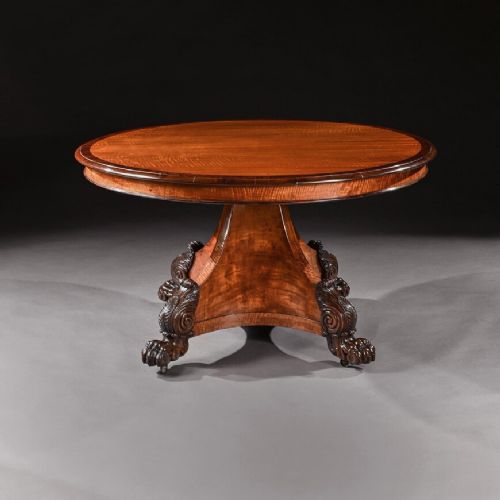
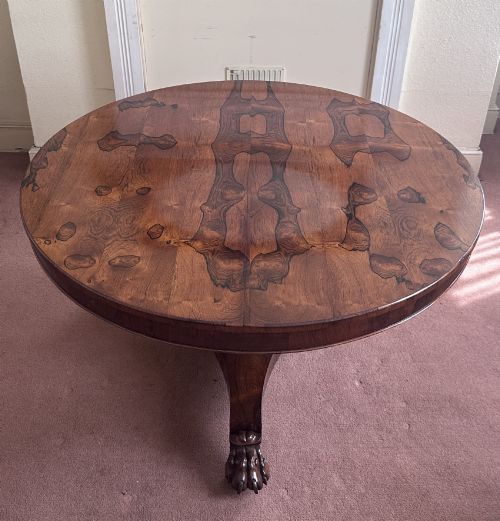
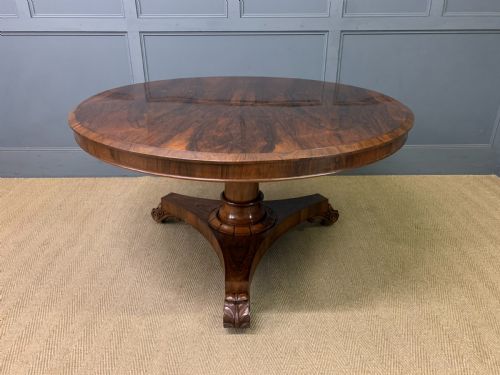
Rosewood Tilt Top Dining
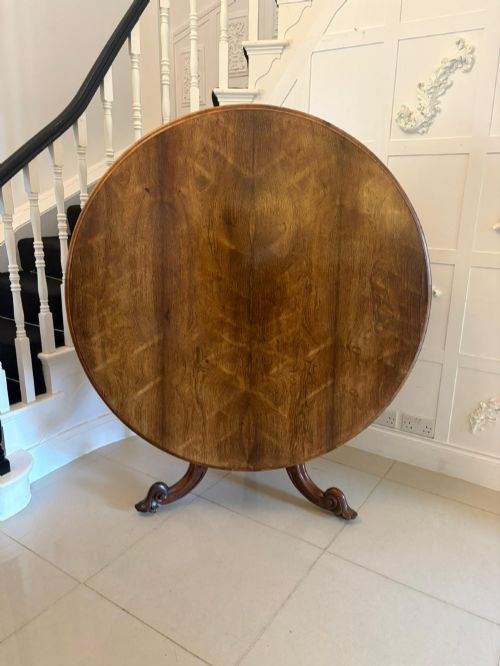
Rosewood tilt top dining tables combine heavy timber grain with a mechanism that folds the surface vertical when not in use.
Rosewood Tilt Top Dining
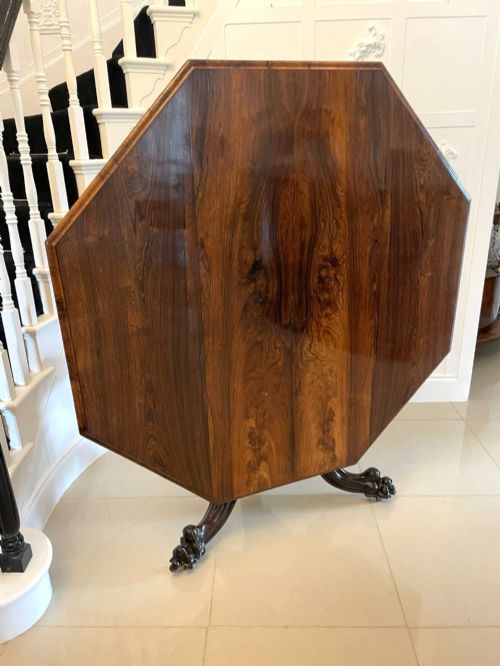
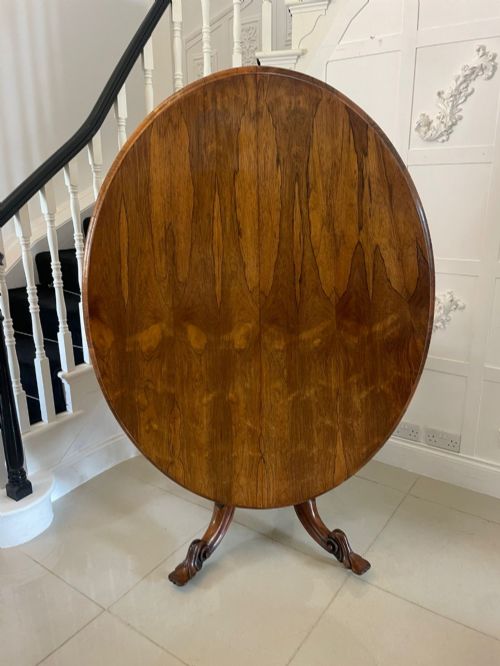
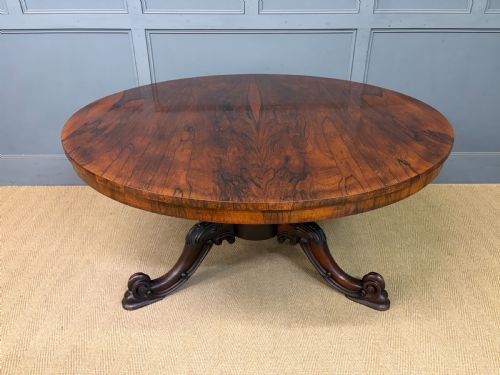
A rosewood tilt top dining table is a heavy, round or oval pedestal piece designed to serve meals in the evening and store compactly against a wall during the day. Most examples found here date from the nineteenth century, spanning the Regency, William IV, and Victorian periods.
The form often overlaps with breakfast tables and loo tables, sharing the same circular top and central column architecture. Makers from these eras constructed them to anchor principal reception rooms in large houses.
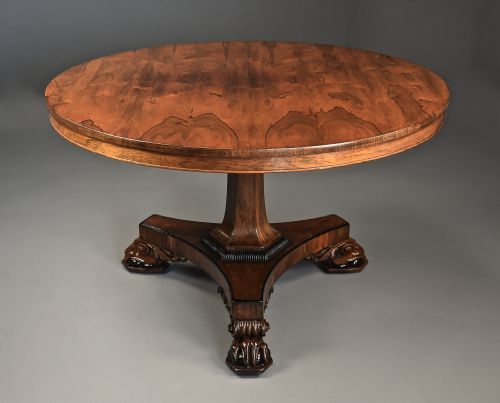
Buyers encounter everything from plain country house models to grand pieces attributed to notable workshops like Gillows. The circular top typically rests on a snap-top or tilt mechanism mounted to a carved pedestal and platform base.
Materials and construction
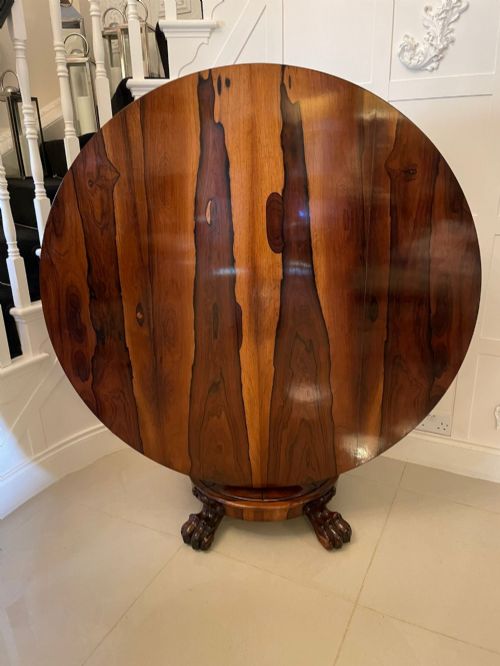
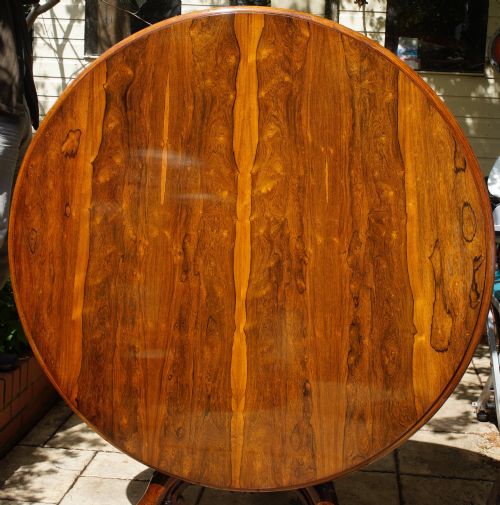
Cabinet makers utilised dense tropical rosewood, often laid as fine veneer over stable secondary timbers to display rich grain patterns across wide circular tops. Selected pieces incorporate alternative woods such as satinwood or exotic goncalo alves for contrast within the design.
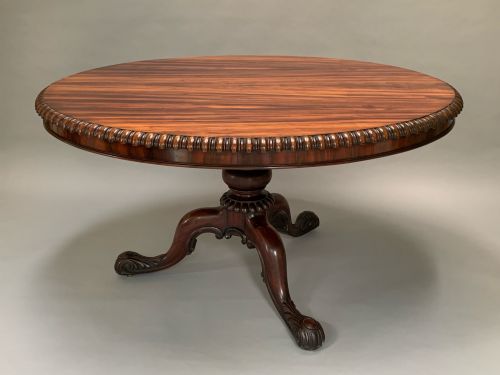
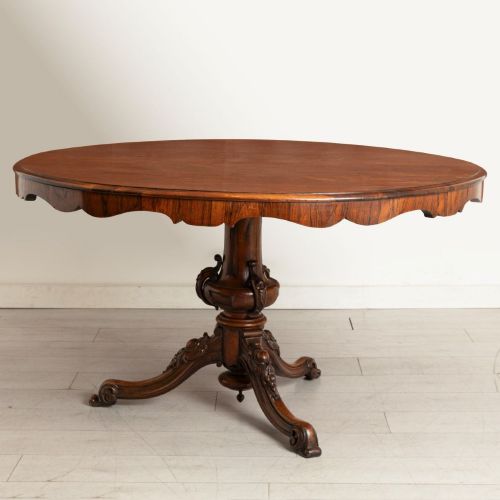
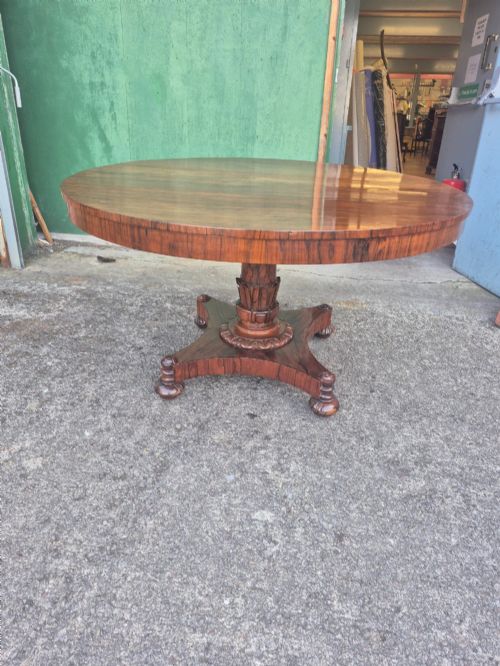
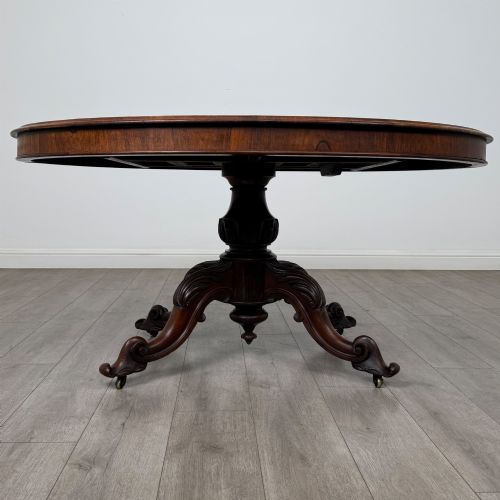
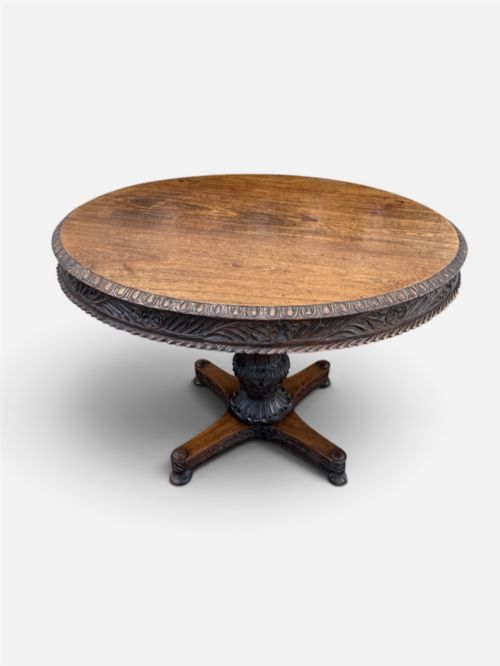
The structural core relies on a heavy central pillar, frequently turned and carved with acanthus leaf motifs, supported by tripartite or quadrupartite platform bases fitted with brass castors. Beneath the surface, iron and brass tilt mechanisms allow the tabletop to pivot and lock safely into position.
Nineteenth-century diners folded tables upright to reclaim floor space, effectively inventing the original wall-hugging furniture.
Evaluating quality
Quality rests in the selection of the timber veneer and the depth of the carving on the pedestal base. Superior examples display symmetrical grain matching across the circular top and crisp, hand-chiselled details on the central column rather than cast composite ornaments.
The integrity of the tilting mechanism and the stability of the central pillar dictate daily usability. Tables that lock firmly without lateral play in the joint separate master-carpenter output from standard workshop production.
Gillows·Peters of Genoa
The Rosewood Tilt Top Dining Glossary
- Tilt top
- A tabletop mounted on a hinged mechanism that allows the surface to pivot from horizontal to vertical. This enables the furniture to be pushed out of the way against a wall when dining finishes.
- Breakfast table
- A nineteenth-century term for a circular pedestal table used for informal morning meals. These share identical proportions and tilt mechanisms with dining tables.
- Loo table
- A round or oval nineteenth-century table originally used for the card game loo. They feature the same pedestal and tilt-top construction found on dining pieces.
- Snap top
- A spring-loaded brass catch beneath the table that locks the top automatically into the horizontal position when lowered. It prevents accidental pivoting while in use.
- Goncalo alves
- A heavily figured exotic hardwood sometimes utilised in nineteenth-century cabinet making. It provides striking dark brown and pale contrasting streaks.
Rosewood Tilt Top Dining: Frequently Asked Questions
Can I use these tables for daily dining?
These tables function well for regular meals provided you use heat mats and coasters to protect the polished surface. The central pedestal leaves ample legroom for chairs positioned around the circular top.
Keep the wood away from direct heat sources and sudden humidity changes to prevent the timber veneer from splitting.
How do I distinguish Regency from Victorian examples?
Regency and William IV pieces tend to feature cleaner architectural lines, rosewood solids, and restrained brass inlay or parcel gilt details. Victorian versions often display heavier, more elaborate carving on the pedestal base and wider proportions.
Examining the grain patterns and structural joints helps reveal the shift from early nineteenth-century cabinet making to later mass production.
What is the difference between a loo table and a dining table?
Loo tables and dining tables share the same circular tilt top form and pedestal base construction. The distinction usually lies in the historical naming convention or the specific proportions suited for card games versus meals.
Both types function interchangeably in modern rooms as central dining or display surfaces.