




Brown River Canvas Artwork
These brown river canvas artwork pieces capture the movement and light of water across centuries of painting.
Brown River Canvas Artwork
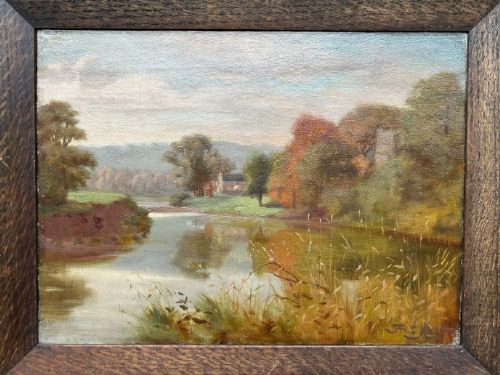
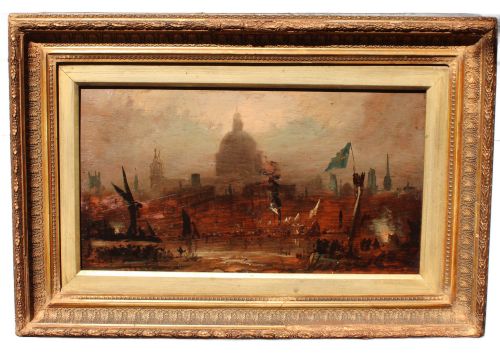
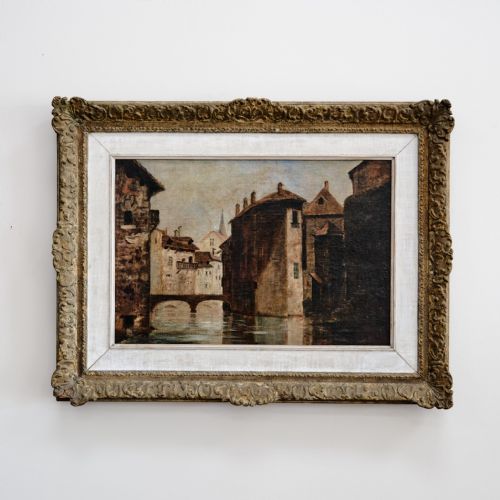
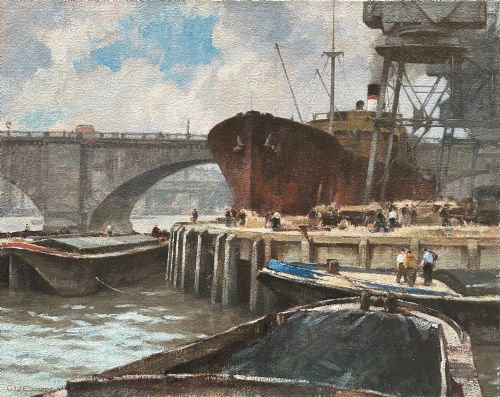
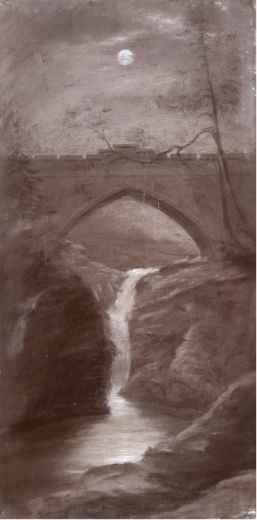
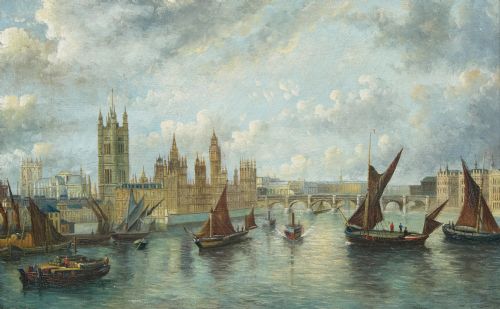
When searching for brown river canvas artwork, buyers encounter painted scenes of waterways, bridges, and riverbanks spanning the nineteenth and twentieth centuries. These works record rural rivers, city bridges, and working barges across various British and European schools.
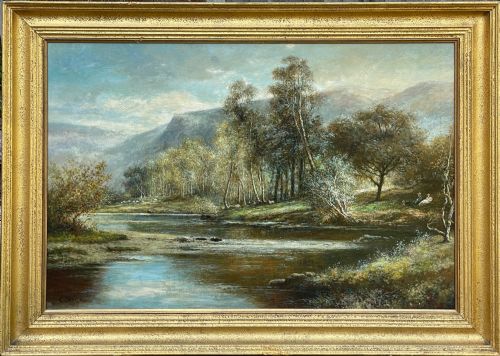
The pieces on this page appear primarily as oil paintings on canvas, alongside examples laid onto board or executed with charcoal. Subjects range from tranquil Scottish landscapes and Welsh rivers to bustling Thames scenes and Parisian riverbanks.
Originating from periods including the Victorian era, the early twentieth century, and the mid-century decades, these paintings document how artists interpreted flowing water and natural light over time.
Materials and Construction
The primary vehicle for these works is oil paint applied to woven canvas support, sometimes later laid onto rigid board for added stability. Pigments capture the deep earth tones and fluid textures associated with river and landscape subjects.
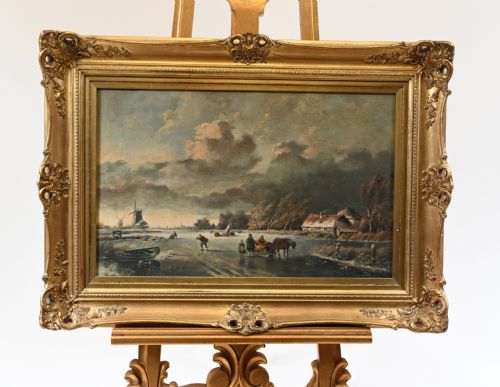
Many frames incorporate wood decorated with gesso, gilt, and gold leaf, providing a traditional border that complements the painted surface. Painters utilised oil mediums to build up rich tonalities in both atmospheric skies and reflective water.
Several canvases record quiet moments of fishermen waiting by Yorkshire rivers while horses cross distant bridges.
Assessing the Pieces
Quality in these river scenes rests upon the confidence of brushwork and the artist's ability to render light reflecting off water. Stronger examples demonstrate deft handling of tone in the depiction of riverbanks, architecture, and skies.
Condition of the canvas, the integrity of the original paint layer, and the presence of period framing contribute significantly to the standing of an individual artwork.
Kenneth Cozens·Frederick Marriott·Albert Bierstadt·John Macvicar Anderson·John Horace Hooper·John Ferneley Senior·Ron Folland·Owen Bowen·Edward Henry Eugene Fletcher·William Mellor·John Wright Oakes·Fred Stead·William Manners·William Traies·John Syer junior·Frederick Richard Lee·Ernest Higgins Rigg·Ernest Moore·Josephine Haswell Miller
The Brown River Canvas Artwork Glossary
- Canvas
- A heavy woven fabric used as a surface for oil painting. It provides the flexible support found across the majority of these listings.
- Gesso
- A plaster-like preparation applied to wood frames to create a smooth surface for gilding. This mixture supports the gold leaf often found on period framing.
- Oil Paint
- A slow-drying paint made with pigments suspended in oil. This medium allows for subtle blending and rich colour depths in landscape art.
- Stretcher
- A wooden framework that holds a painting canvas taut. In older works, inscriptions on these wooden bars frequently record titles and artist details.
Brown River Canvas Artwork: Frequently Asked Questions
What periods do these river paintings represent?
The works span from the early nineteenth century through the Victorian period and into the mid-twentieth century. Artists recorded river scenes across changing artistic movements and decades.
Examples include nineteenth-century studies, Victorian naturalism, and later mid-century interpretations of British and continental waterways.
How were these canvas artworks framed?
Many period pieces retain wooden frames finished with gesso and gold leaf. These traditional surrounds often complement the palette of the oil paintings within.
Framing styles vary according to the decade of creation, from ornate Victorian mouldings to simpler mid-century profiles.
Where do these river scenes originate?
The geographic scope covers British landscapes such as the Thames, Yorkshire rivers, and Scottish waterways alongside French canals and continental city views.
Artists painted both rural riverbanks with bridges and busy industrial ports like the Pool of London.
What mediums are used in these pieces?
Oil paint on canvas forms the predominant medium, though some listings include charcoal or paint applied to board. Artists layered oil pigments to capture the reflections and textures of water.
Support materials sometimes include canvas laid onto wooden board during later conservation work.