



Brown River Canvas Art
Brown river canvas art brings the quiet pull of nineteenth- and twentieth-century waterways directly onto the wall through rich oil painting.
Brown River Canvas Art
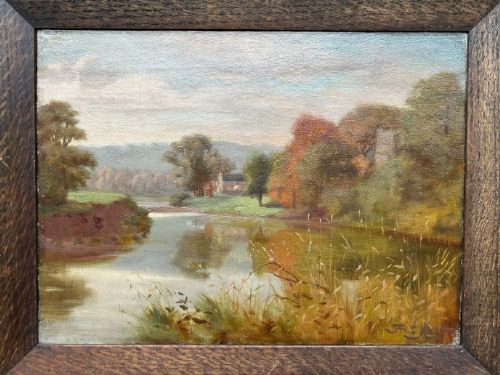
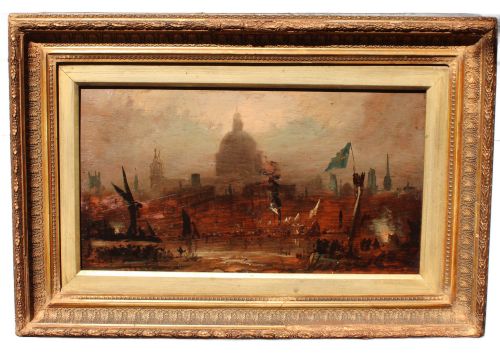
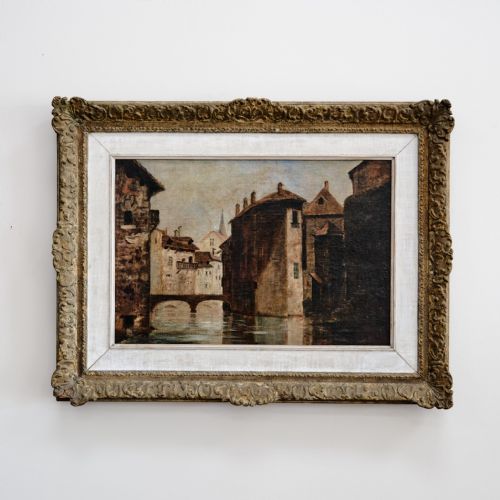
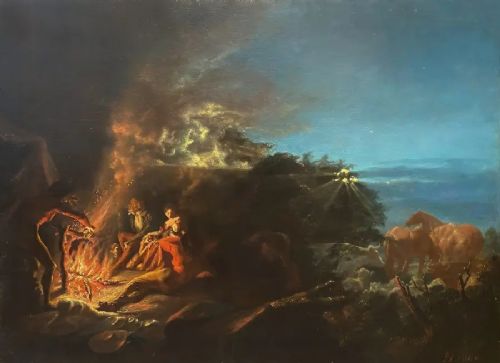
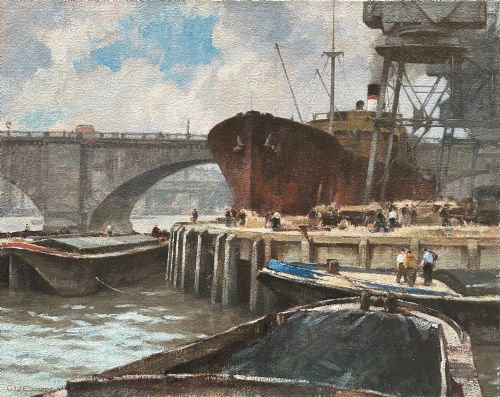
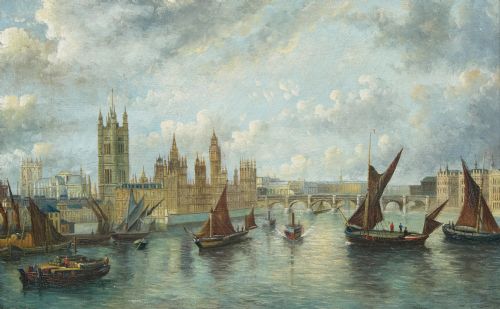
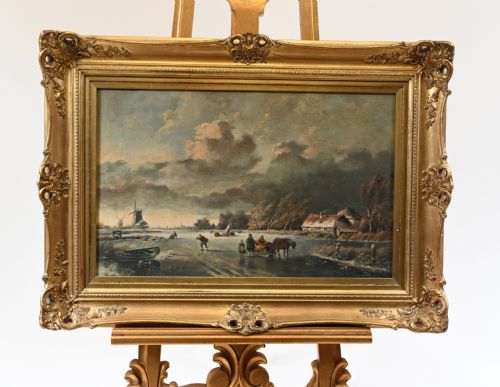
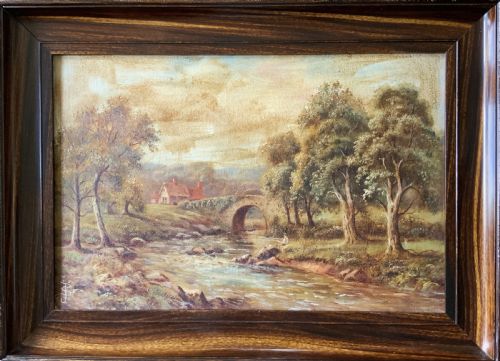
Brown river canvas art comprises antique and vintage oil paintings depicting streams, rivers, and maritime scenes rendered in deep, earthy palettes. These works capture pastoral riverbanks, bustling industrial Thames scenes, and quiet continental waterways from the nineteenth and twentieth centuries.
Buyers encounter oil paintings on canvas and board, often framed in period wood with gesso and gilt highlights. The selection spans Victorian naturalism, British impressionism, and mid-century modern interpretations of aquatic landscapes.
How they were made
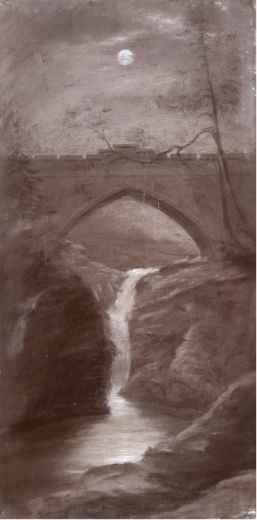
Artists applied oil paint directly onto stretched canvas or wooden board, occasionally employing charcoal for preliminary underdrawing to map out river currents and bridges. Canases were sometimes later laid onto board to ensure structural stability as the fabric aged.
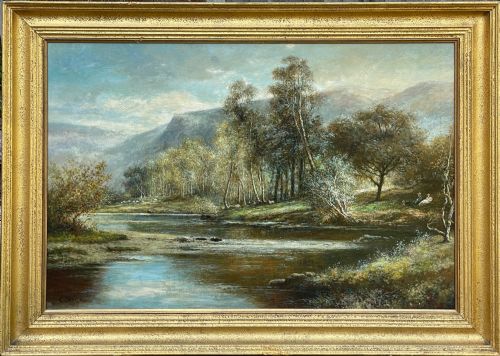
Frames incorporated carved wood finished with gesso and gold leaf to complement the painted scenes. Pigments emphasised deep earth tones, ochres, and browns to render natural river environments and evening light.
Several river scenes include remarkably small ducks bobbing near historic stone bridges, painted with a single dab of white pigment.
What varies in quality
Quality rests in the fluidity of brushwork and the artist's command of atmospheric perspective over water. Finer works capture the reflective surface of rivers and the play of light with assured, deliberate strokes rather than rigid outlines.
The integrity of the original canvas, the preservation of the paint surface, and the presence of a period gilt wood frame elevate certain pieces above standard decorative works.
Kenneth Cozens·Frederick Marriott·Albert Bierstadt·John Macvicar Anderson·John Horace Hooper·John Ferneley Senior·John Constable·Ron Folland·Owen Bowen·William Sydney Cooper·Edward Henry Eugene Fletcher·William Mellor·John Wright Oakes·Fred Stead·William Manners·H Church·William Traies·John Syer junior·Frederick Richard Lee·Ernest Higgins Rigg·Ernest Moore·Josephine Haswell Miller
The Brown River Canvas Art Glossary
- Oil paint
- A slow-drying paint made of pigment particles suspended in a drying oil, typically linseed oil. This medium allows for rich blending and textured impasto application.
- Gesso
- A plaster-like mixture applied to wood or canvas as a base for painting or gilding. It provides a smooth, stable surface for the application of gold leaf.
- Gilt
- A thin layer of gold or gold-like material applied to wooden frames and decorative objects. It adds warmth and reflects ambient light around the artwork.
- Canvas
- A heavy woven fabric used as a surface for oil paintings. It is typically stretched tightly over a wooden frame before painting begins.
Brown River Canvas Art: Frequently Asked Questions
How do I hang a heavy oil painting safely?
Ensure the wall fixing engages directly with a stud or utilise appropriate masonry plugs for solid brick walls. Heavy antique frames require sturdy picture wire and robust brass D-rings screwed securely into the wooden stretcher or frame.
Distribute the weight evenly across two wall hooks rather than a single central point to keep the canvas level and secure over time.
Should I clean the surface of an old canvas?
Surface dust can be removed gently with a very soft, dry artist's brush, taking care around any areas of craquelure or flaking paint. Avoid using water, household cleaners, or commercial solvents on the painted surface.
Professional conservation is recommended for deeper cleaning or the removal of aged varnish to restore the original tones of the river landscape.
How do I identify a Victorian river painting?
Victorian works often feature naturalistic landscapes with detailed rendering of figures, bridges, and river craft under subdued natural light. Look for historical clothing styles and pastoral settings typical of nineteenth-century rural Britain.
Examine the back of the canvas or stretcher for period inscriptions, artist signatures, or old gallery labels that provide clues to the creation date.
What lighting suits these dark landscape paintings?
Warm, indirect lighting highlights the subtle browns and ochres in these works without causing glare on the varnished canvas surface. Dedicated picture lights mounted above the frame cast an even wash across the composition.
Position the painting away from direct sunlight to prevent fading of the pigments and potential drying of the antique canvas and wooden stretcher.