

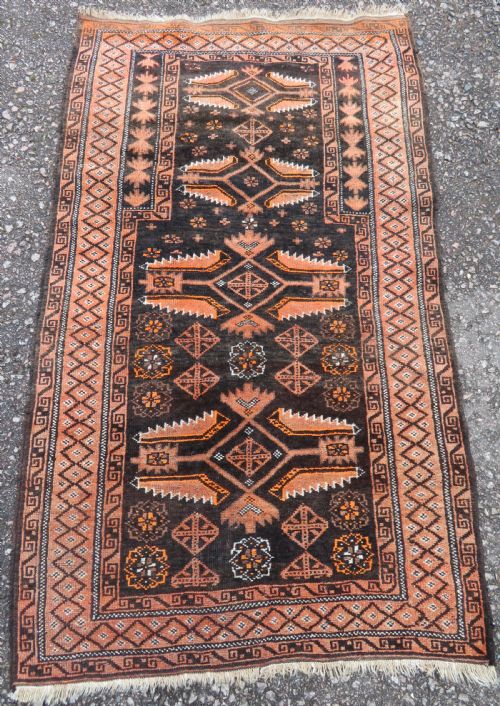
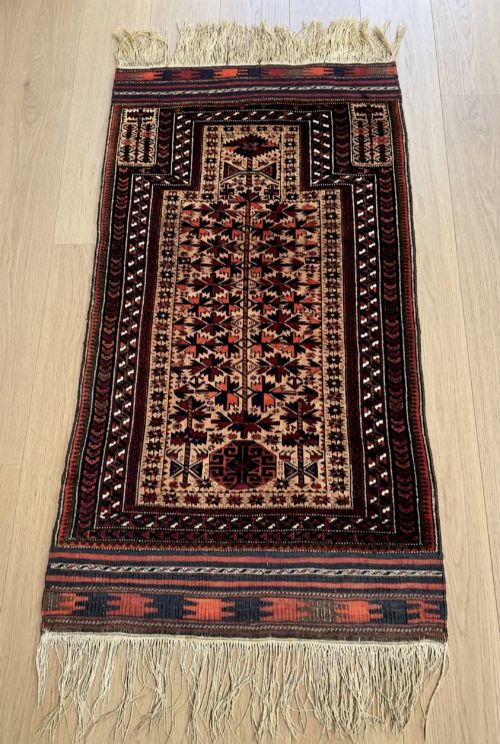


Brown Prayer Rug
A brown prayer rug brings tribal warmth and intricate niche symbolism into a room, drawn from nineteenth and early twentieth-century nomadic traditions.
Brown Prayer Rug
A brown prayer rug represents the rich weaving heritage of tribal and village communities across Central Asia, Persia, and the Caucasus, dating from the late nineteenth century into the early decades of the twentieth. These textiles typically serve a devotional function, featuring distinctive architectural arches or mihrabs designed to direct the practitioner during daily prayers.
The version most commonly encountered on this page is the Baluch or Afghan tribal rug, often created by nomadic groups such as the Taimani, Timuri, or Kizil Ayak tribes. Such pieces frequently display earthy brown grounds accented by camel wool, geometric motifs, and multiple prayer arches known as seh mihrabs.
Beyond purely devotional examples, related village weaves incorporate mosque designs, lotus leaf patterns, and long kilim ends. These items reflect the personal expression of weavers working within established regional traditions rather than commercial urban workshops.
How they were made
Weavers constructed these rugs using wool, camel hair, goat hair, and cotton foundations, often combining mixed techniques to achieve structural durability. The pile is predominantly wool, sometimes utilising soft camel wool or camel hair on the ground to create a warm, tactile surface.
Natural dyes provide the characteristic palette of earthy browns, deep reds, and dark accents seen across the pieces. These colourants interact with organic fibres over decades to develop subtle tonal shifts and depth across the field.
Brown Prayer Rug Retail Price Guide 2026
Typical asking prices for brown prayer rug among the pieces listed under this phrase on Sellingantiques today, from the lower quarter to the upper quarter. They describe what is for sale here now, not the wider market.
Some nomadic weavers included tiny protective amulets woven directly into the pile to guard against the evil eye.
What varies in quality
Quality in these tribal textiles rests upon the handle of the wool and the precision of the knotting. Finer examples utilise dense, oily wool and resilient goat hair or cotton for warps and wefts, ensuring the structure remains stable through generations of use.
Artistic execution also dictates distinction, separating standard village production from masterworks with crisp drawing, unusual mosque designs, or balanced multiple mihrabs. The clarity of the natural dyes and the preservation of original kilim ends further elevate a piece within its regional group.
The Brown Prayer Rug Glossary
- Mihrab
- The architectural arch depicted on a prayer rug, symbolising the direction of prayer towards Mecca. This niche often dominates the upper portion of the textile field.
- Seh Mihrab
- A design layout featuring three distinct arches or niches across the prayer field. This configuration is particularly characteristic of certain Baluch and Taimani tribal weaves.
- Kelim
- A flatwoven textile end or border section attached to the pile portion of a rug. Long kilim ends protect the knotted pile from fraying and display supplementary geometric patterns.
- Camel Ground
- A background field woven primarily from un-dyed camel wool or hair. This material imparts a natural warm brown hue and a characteristic soft texture to the rug.
- Ensi
- A specific type of tribal hanging or rug associated with Turkmen groups, often structured with a cruciform division of the central field.
Brown Prayer Rug: Frequently Asked Questions
How were prayer rugs used?
These textiles were laid upon the ground to provide a clean, portable space for daily devotional prayers. The arched niche design guided the user on orientation during worship.
Beyond religious practice, smaller tribal rugs served as valued household furnishings or decorative wall hangings within nomadic tents and village homes.
How do I live with a tribal rug?
Place these sturdy wool and camel hair textiles in low-to-medium traffic areas such as studies, bedrooms, or quiet hallways where their textures can be appreciated. Avoid harsh direct sunlight to protect the natural dyes from fading over time.
Routine gentle vacuuming without a rotating brush roll helps maintain the pile. Professional cleaning should be undertaken periodically by specialists familiar with antique tribal wool.
How do I tell Baluch and Afghan rugs apart?
Baluch and related Timuri or Taimani pieces often incorporate dark camel hair grounds, deep brown and aubergine tones, and tactile wool. Afghan village rugs frequently display structured Kizil Ayak or Turkmen gul motifs and geometric borders.
Many pieces reflect the overlapping borderlands of North-East Persia and Afghanistan, where nomadic groups shared specific weaving techniques and design vocabularies.