
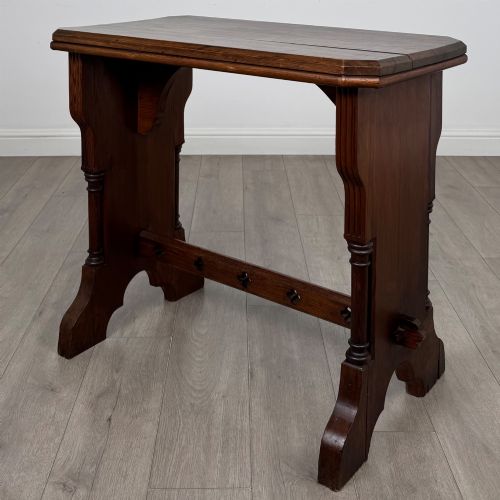


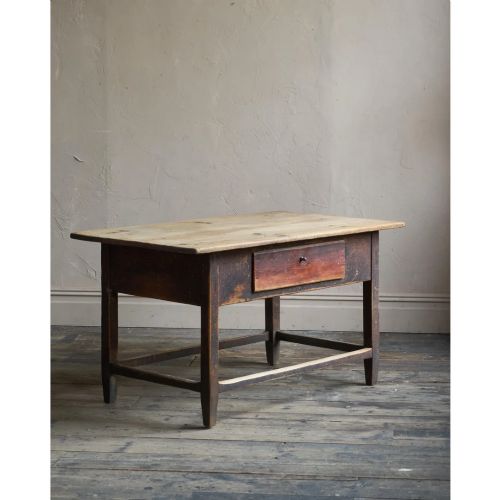
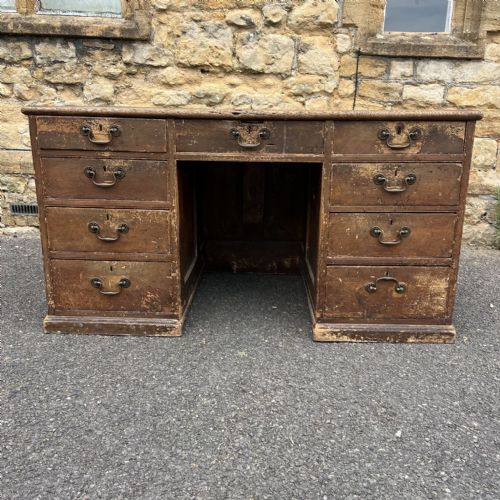
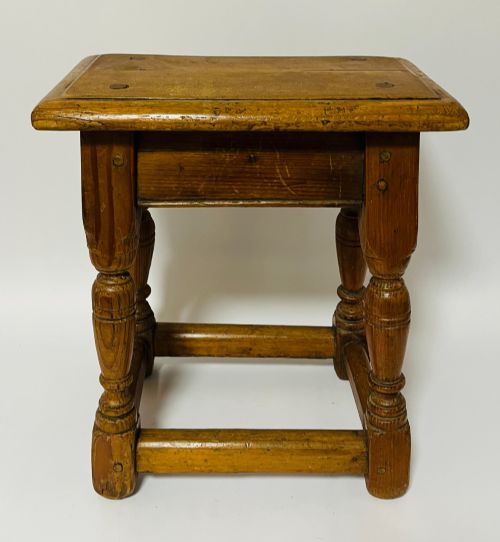
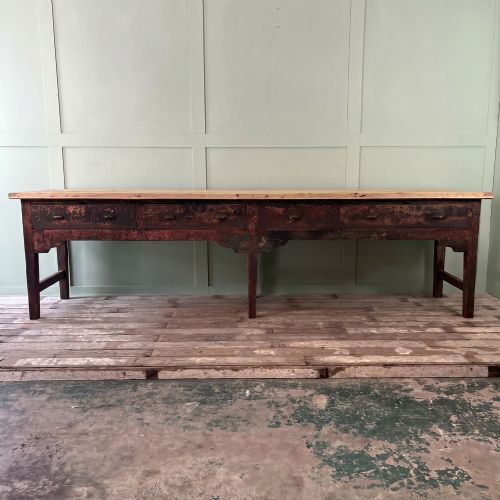
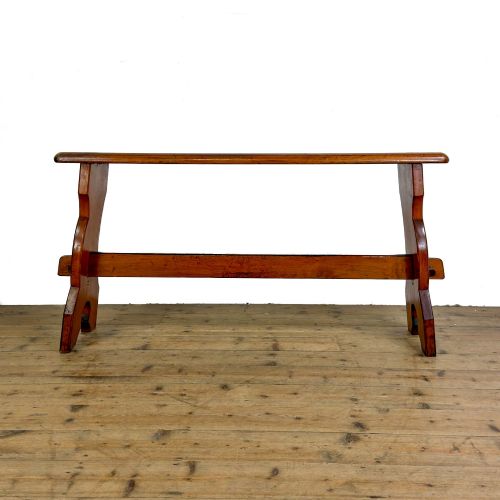
Brown Pine Table
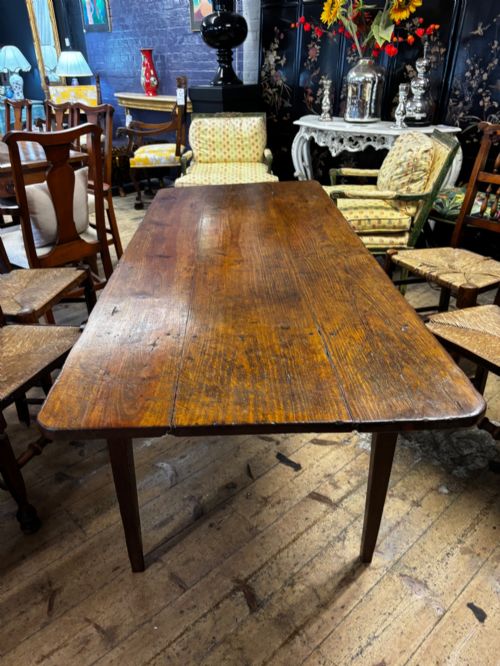
A brown pine table brings honest utility to a room, offering warm timber tones and robust construction shaped by decades of everyday use.
Brown Pine Table
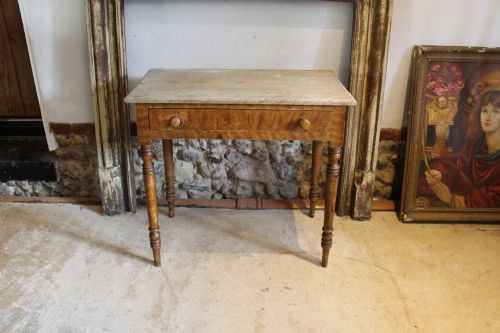
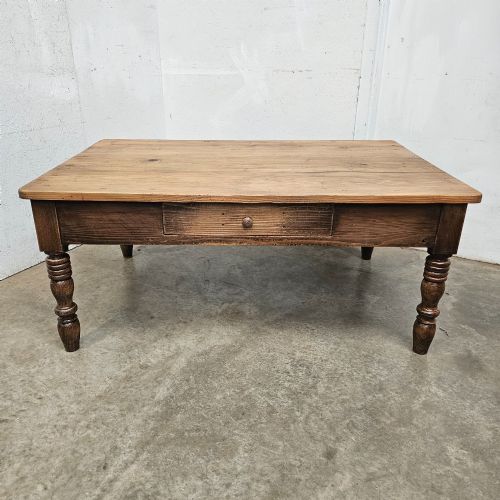
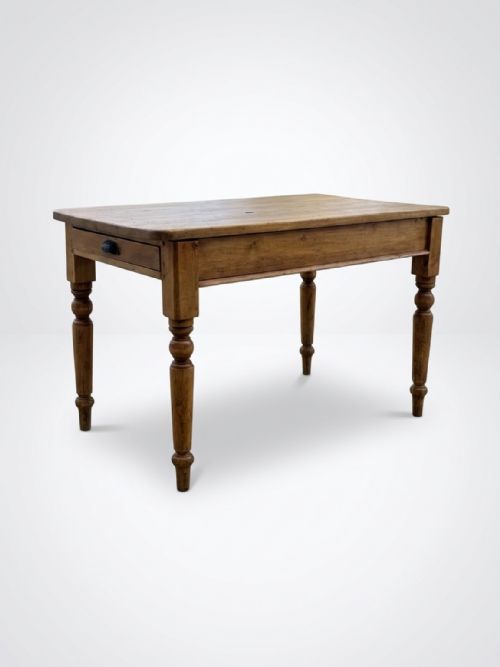
A brown pine table encompasses a diverse group of domestic furniture designed for dining, serving, and occasional use throughout the home. You will frequently encounter farmhouse tables, side tables, and washstands originating from the nineteenth century.
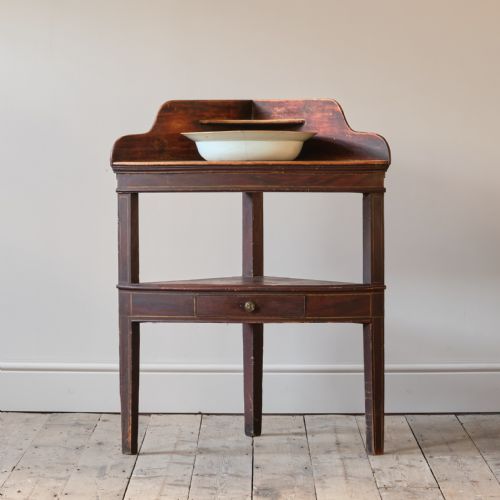
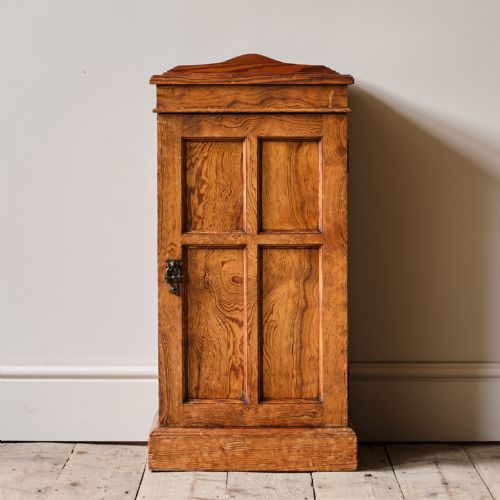
Many examples retain traces of their original painted surfaces, scumble finishes, or distinct patination acquired through long service. The timber ranges from standard pine to dense pitch pine and fruitwood additions.
Materials and construction
Makers utilised softwoods like pine and pitch pine alongside hardwoods such as oak and fruitwood for specific structural components. Plank tops sit upon turned legs, trestle supports, or box stretchers designed to withstand daily weight and movement.
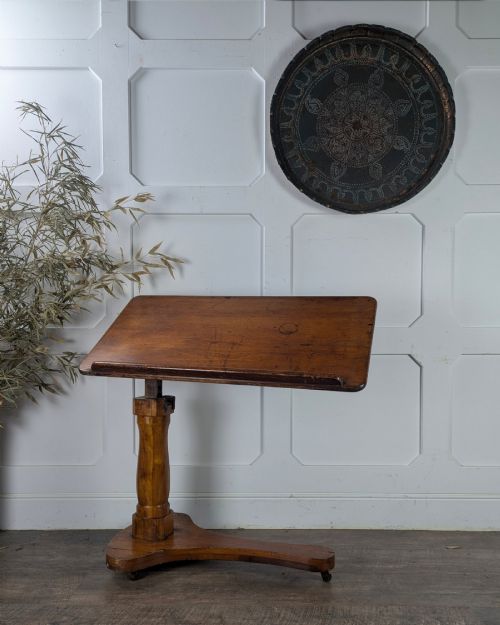
Joinery methods rely on traditional techniques including pegged joints, cleated ends, and mortise and tenon construction. Iron and brass fittings appear on functional pieces like adjustable reading tables and work benches.
Surface treatments vary from bare scrubbed timber to original paint, grain finishes, and faux marble painted tops. These finishes protect the wood while recording the decorative preferences of the Victorian and Edwardian eras.
The listings span the nineteenth century, Victorian era, and early twentieth century, incorporating pine, pitch pine, oak, fruitwood, and iron.
Distinguishing quality
The integrity of the timber and the survival of original surface finishes largely determine the character of each piece. Tables retaining their early paint, scumble, or natural waxed patination hold greater visual depth than stripped examples.
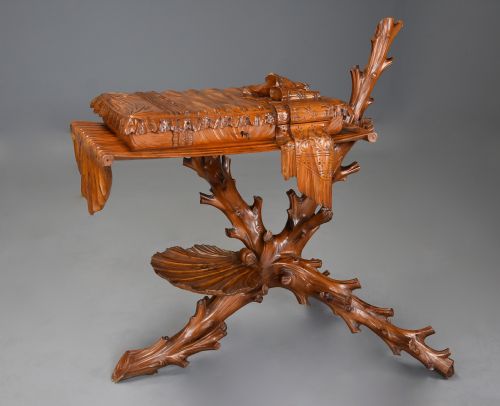
Structural proportion and purposeful design separate standard utility items from finer workshop output, such as carved grotto work tables or aesthetic movement pieces. The quality of the joinery in the underframe dictates long-term stability.
The Brown Pine Table Glossary
- Pitch pine
- A resinous pine timber prized for its durability and prominent grain pattern. It appears frequently in late nineteenth-century tables and institutional furniture.
- Cricket table
- A small three-legged round table with a deep triangular shelf underneath. The three-legged design provided stability on uneven flagstone floors.
- Scumble
- A decorative painting technique used to simulate the grain of more expensive hardwoods over a pine base. Makers applied a translucent glaze over an opaque ground coat.
- Box stretcher
- Wooden rails connecting the lower legs of a table to add structural rigidity. They often double as a low shelf for storage.
- Plank top
- A table surface constructed from solid boards joined edge to edge. Cleated ends are often added across the grain to prevent warping.
Brown Pine Table: Frequently Asked Questions
How do I clean a painted pine table?
Dust the surface regularly with a dry soft cloth to remove grit. Avoid abrasive cleaners or excess moisture which can damage aged paintwork.
Apply a traditional beeswax polish sparingly if the timber is bare, buffing gently to maintain a soft sheen without building up heavy residue.
What is a cricket table?
A cricket table is a traditional three-legged round table featuring a low shelf beneath the top. The tripod base ensured the table stood level on uneven stone cottage floors.
These pieces were commonly used beside firesides for holding drinks or small household items.
How can I date a pine table?
Examine the construction methods, tool marks on the underside, and the type of fixings used. Hand-sawn boards and pegged joinery generally indicate nineteenth-century or earlier origins.
Original paint finishes, hardware, and timber selection also offer reliable clues to the period of manufacture.
Are these tables suitable for daily dining?
Many pine farmhouse and kitchen tables were built specifically for heavy domestic use. Their sturdy frames and solid plank tops handle daily meals and family gatherings easily.
Using heat mats and tablecloths helps protect historic surfaces from water rings and hot dishes.