

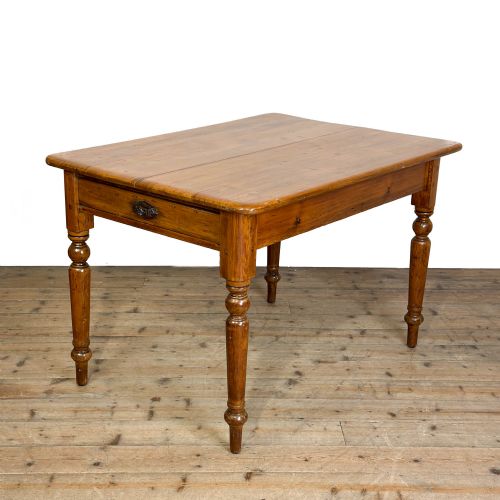
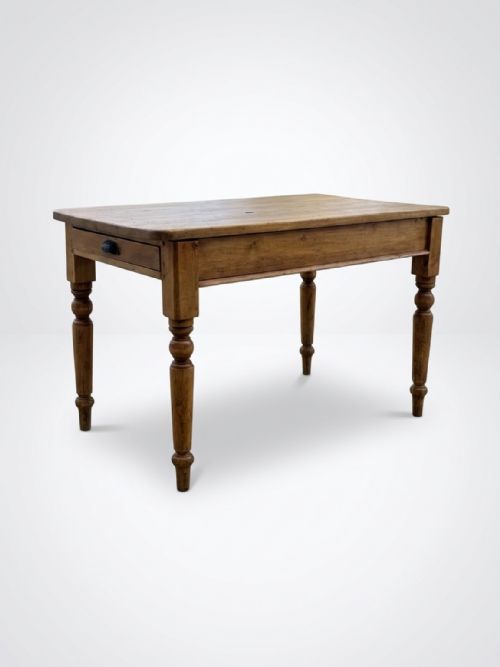
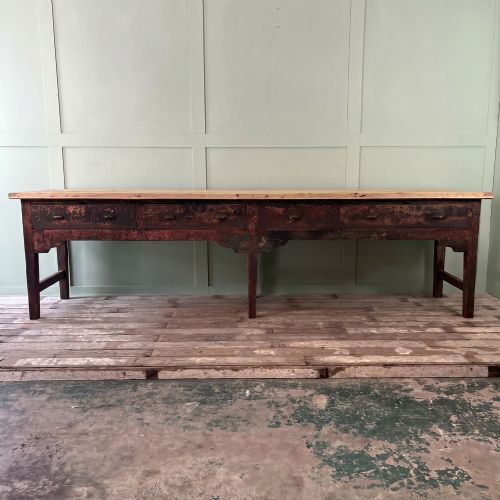
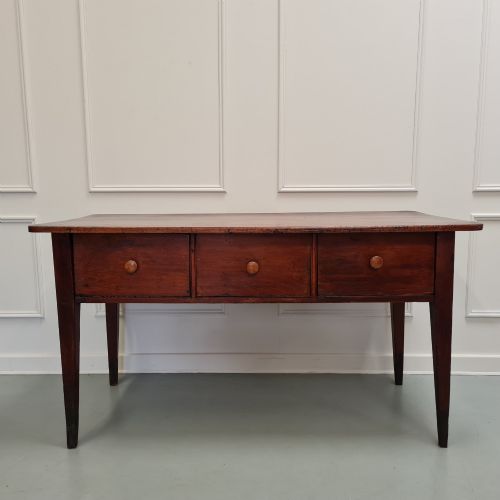


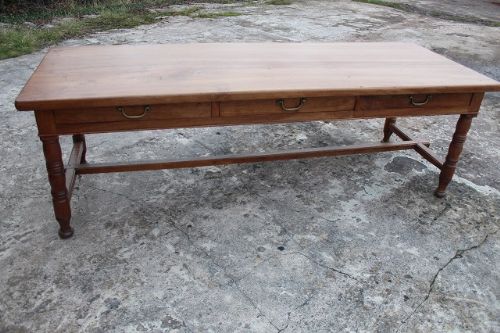
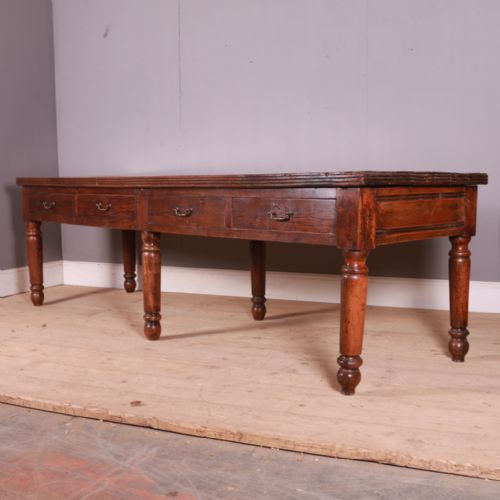


Brown Pine Prep Table
These brown pine prep table examples are sturdy working surfaces built for domestic labour, offering honest utility and simple charm.
Brown Pine Prep Table
A brown pine prep table serves as a robust utilitarian surface originally designed for heavy domestic tasks in kitchens and rural settings. These pieces carry the character of hard daily service, constructed to handle food preparation and everyday household chores without fuss.
The versions met on this page span the nineteenth century, including Victorian examples and items from around eighteen fifty to eighteen seventy. Forms range from side tables and serving pieces to large farmhouse kitchen tables and tavern tables.
Makers utilised regional styles such as Georgian country, Victorian country, rustic farmhouse, and Victorian Gothic revival. The resulting furniture blends straightforward utility with the distinct regional cabinetmaking traditions of nineteenth century Britain.
How They Were Made
Construction relies primarily on pine and pine wood, often paired with metal, iron, or brass fittings for structural support and hinges. Some examples feature painted pine surfaces or incorporate secondary timbers like oak and fruitwood.
Plank tops with cleated ends appear alongside framed structures like the X framed tavern table design. Carpenters built these tables for endurance, prioritising solid joinery and functional forms over decorative excess.
Brown Pine Prep Table Retail Price Guide 2026
Typical asking prices for brown pine prep table among the pieces listed under this phrase on Sellingantiques today, from the lower quarter to the upper quarter. They describe what is for sale here now, not the wider market.
Materials recorded across the inventory include pine, painted pine, oak, fruitwood, iron, and brass.
What Varies in Quality
Quality rests in the integrity of the timber and the honesty of the construction, distinguishing straightforward utilitarian pieces from finer regionally styled examples. The thickness of the plank top and the stability of the frame dictate the overall substance of the table.
The integration of secondary materials such as iron or brass and the survival of original painted finishes alter the character and desirability of each piece. Tables that retain their unpretentious working surfaces and solid nineteenth century proportions stand apart from heavily altered examples.
The Brown Pine Prep Table Glossary
- Pine
- A softwood commonly used throughout nineteenth century furniture for its availability and workability. It forms the primary body of these utilitarian tables.
- Cleated Ends
- Wooden strips fastened across the grain at the ends of a tabletop to prevent warping and keep the planks flat. This technique appears frequently on heavy work tables.
- Refectory Table
- A long dining or work table traditionally used for communal meals. The term describes the elongated proportions seen in some large kitchen examples.
- Gothic Revival
- An architectural and decorative style drawing on medieval forms, appearing in specific Victorian pieces through pointed arches or structural detailing.
Brown Pine Prep Table: Frequently Asked Questions
What rooms suit a brown pine prep table?
These tables fit naturally into modern or traditional kitchens, serving as central islands or food preparation counters.
Their robust timber construction also allows them to function effectively as sideboards, serving stations, or large dining desks in living spaces.
How do I clean a pine work surface?
Maintenance requires only a damp cloth and mild soap to remove everyday dust without harming the dry timber surface.
Avoid harsh chemical cleaners or excessive water, which can penetrate the grain and alter the historic patina of the wood.
Were these tables used in commercial spaces?
Many examples originated in domestic kitchens, but tavern tables and large prep surfaces also served in rural inns and public houses.
Their heavy construction was designed to withstand constant commercial handling and daily food preparation tasks.
How do I date a nineteenth century table?
Dating relies on observing construction methods, tool marks, and the specific wear patterns left by decades of physical labour.
Stylistic cues such as Victorian Gothic revival details or simpler Georgian country forms help narrow the period of origin.