



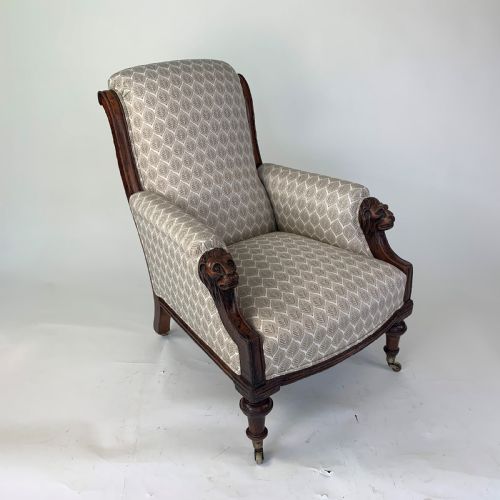


Brown Pattern Armchair
A brown pattern armchair brings warmth and texture to a room, offering deep seating wrapped in patterned fabric or tapestry.
Brown Pattern Armchair
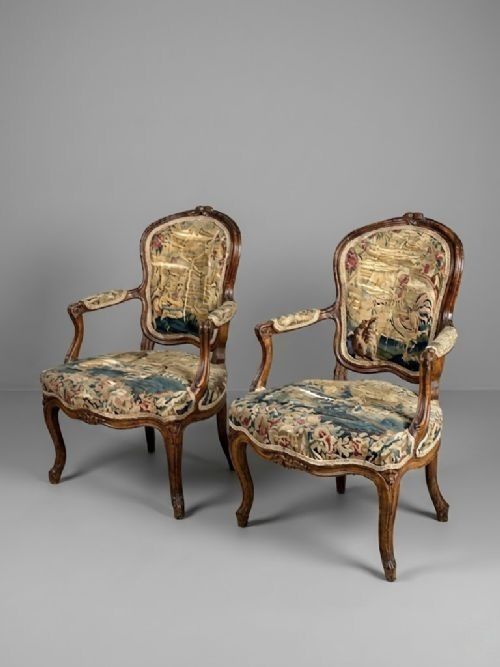
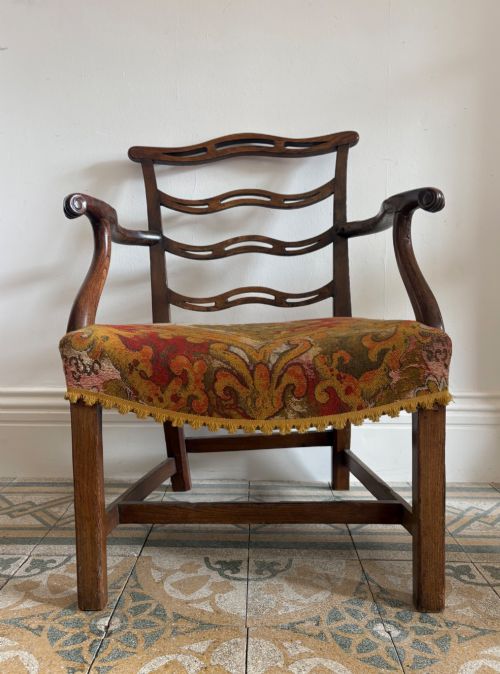
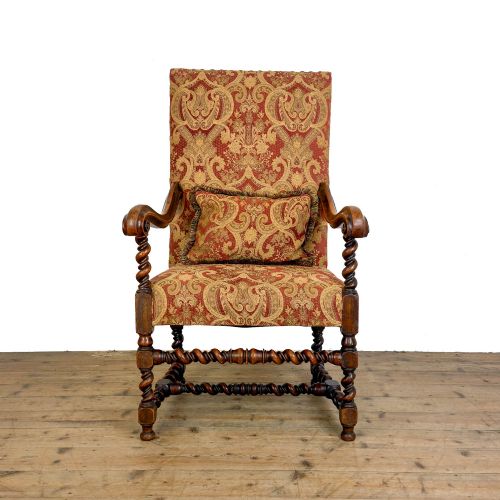
A brown pattern armchair encompasses seating forms ranging from nineteenth-century button-backed fireside chairs to early twentieth-century reclining armchairs and desk chairs. Buyers seeking a brown pattern armchair encounter timber frames of mahogany, walnut, oak, and elm paired with upholstered seats in velvet, wool tapestry, and woven textiles.
The selection on this page draws on diverse historical periods and styles, including Victorian, Edwardian, Arts and Crafts, Art Deco, and eighteenth-century revivals. Regional variations and stylistic revivals appear alongside vernacular country pieces, providing numerous interpretations of the upholstered armchair.
Materials and construction
Frames are constructed from hardwoods such as mahogany and walnut, alongside regional timbers including oak, elm, and satinwood. Joinery and carved details demonstrate period techniques, from hand-carved mahogany scroll arms to ebonised and gilt finishes.
Upholstery relies on traditional stuffing secured beneath fabric coverings, wool tapestry, and velvet, often finished with brass details. Frame structures incorporate open arm designs, high backs, and reclining mechanisms appropriate to their era of manufacture.
Brown Pattern Armchair Retail Price Guide 2026
Typical asking prices for brown pattern armchair among the pieces listed under this phrase on Sellingantiques today, from the lower quarter to the upper quarter. They describe what is for sale here now, not the wider market.
Lion's head armrests stand ready to guard your afternoon nap with stoic wooden dignity.
What determines quality
Quality rests in the precision of the timber frame's construction, the integrity of carved or turned decorative elements, and the fidelity of historical style revival. Timber selection, whether figured walnut or dense mahogany, dictates the structural dignity of the piece.
Upholstery execution and the harmony between textile patterns and frame proportions distinguish superior examples. Retaining original structural elements and authentic period materials elevates the standing of an armchair.
Giles Grendey·E W Godwin·Heals of London
The Brown Pattern Armchair Glossary
- Elbow chair
- A term frequently used for an armchair with wooden armrests, often denoting a dining or desk seat rather than a deep fireside model. These chairs typically feature open wooden arms and supportive backs.
- Tapestry
- A heavy woven textile featuring pictorial or geometric designs, often utilised for period seat covers. It adds texture and durable patterned colour to seating.
- Button back
- An upholstery technique where indentations are formed by pulling stitches through the padding and securing them with fabric-covered buttons. This method creates a padded, quilted surface.
- Gainsborough chair
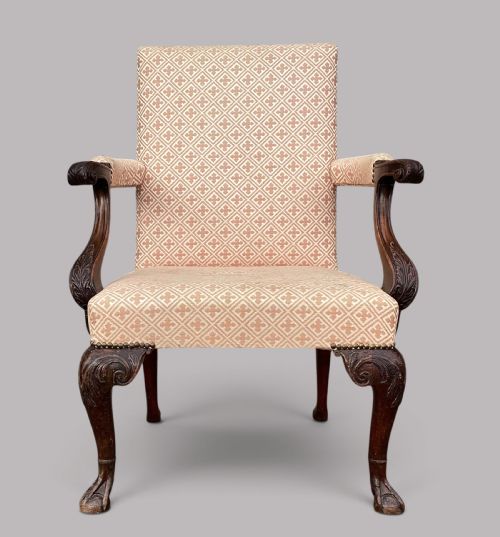
- A wide, open-armed armchair with a padded seat and back, standing on short legs, originally designed for libraries or writing desks in the eighteenth century. Versions often feature mahogany frames and upholstered arm pads.
Brown Pattern Armchair: Frequently Asked Questions
How do I date a brown pattern armchair?
Dating relies on identifying timber choices, frame shapes, and upholstery styles associated with specific periods like the Victorian era or Arts and Crafts movement. Details such as carved backs and turned legs offer clues to the decade of manufacture.
Comparing construction methods against documented examples helps narrow down the production period. Hardware, stuffing types, and stylistic revivals further clarify the age of the chair.
Where were these armchairs used?
These armchairs served various domestic functions, from fireside lounging in Victorian reception rooms to reading in studies or writing at desks. Different forms were tailored for specific domestic spaces within period homes.
Larger upholstered easy chairs suited drawing rooms, while tall back hall chairs and library chairs fulfilled formal or practical roles. Smaller elbow chairs often accompanied desks or dining tables.
How should I care for vintage upholstery?
Maintenance involves gentle vacuuming using a low suction attachment to remove dust from fabric and tapestry surfaces without damaging the weave. Direct sunlight should be avoided to prevent fading of patterned textiles and timber finishes.
Periodic professional cleaning helps preserve delicate fabrics like velvet and wool tapestry. Wooden frames benefit from occasional dusting and conditioning appropriate to the specific timber.
What is a Sussex armchair?
The Sussex armchair is a vernacular-inspired seating design characterised by slender turned wooden members and rush or upholstered seating. It reflects nineteenth-century interest in simpler, traditional craftsmanship.
Associated with the Arts and Crafts movement, these chairs prioritize functional utility and honest construction over ornate carving. Their lightweight frames made them versatile additions to domestic interiors.