
Brown Oak Tier Stand
A brown oak tier stand is a practical multi-level wooden furnishing used for display or storage, shaped by Edwardian and Arts and Crafts makers.
Brown Oak Tier Stand
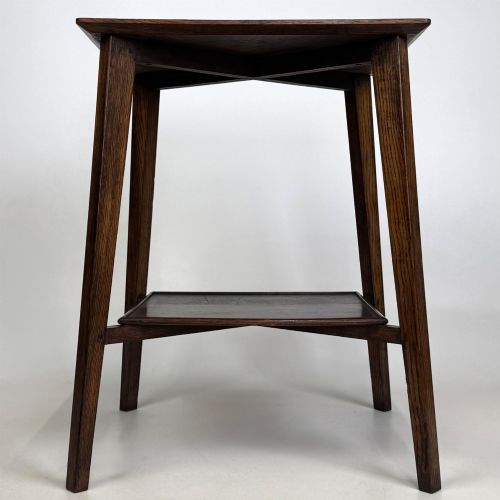
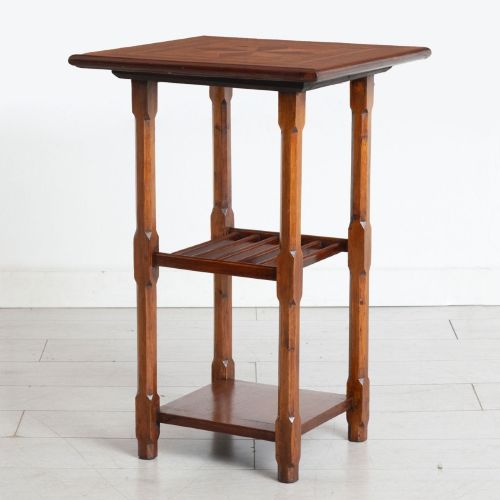
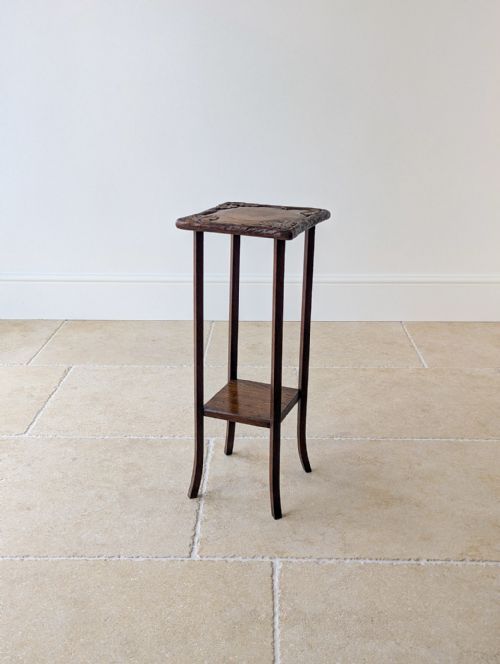
When you search for a brown oak tier stand, you encounter multi-level furnishings primarily rooted in the Edwardian period and the Arts and Crafts movement. These items function as plant stands, occasional tables, and folding cake stands constructed with multiple horizontal surfaces.
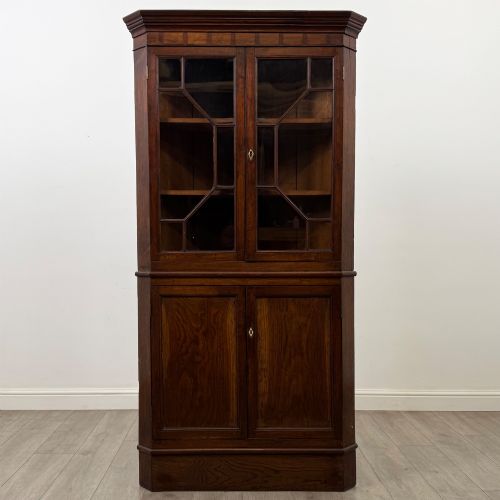
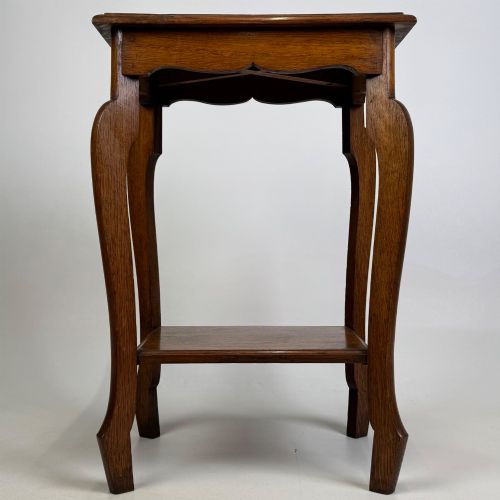
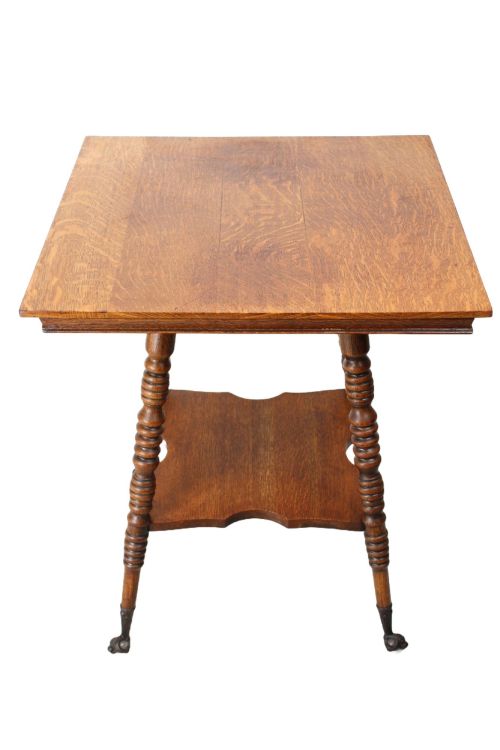
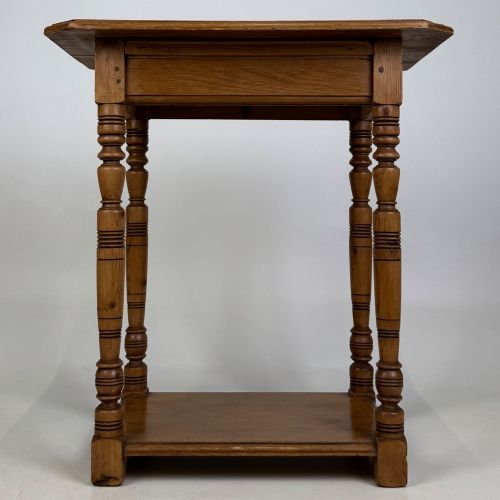
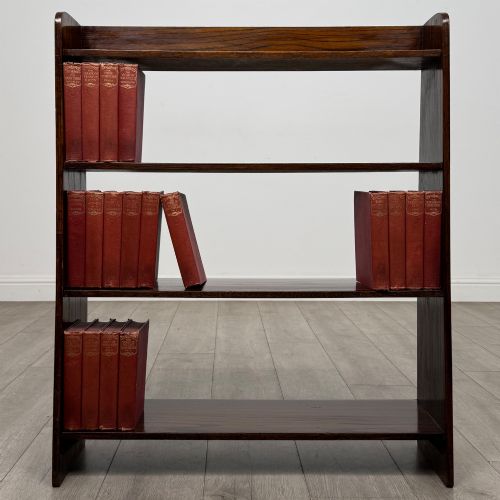
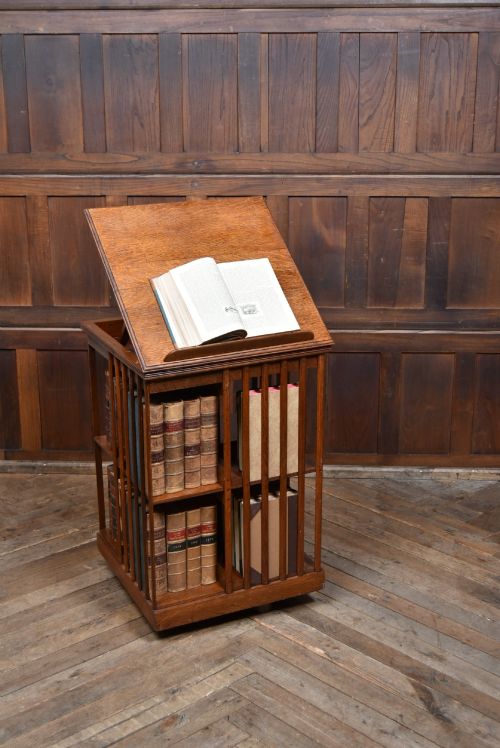
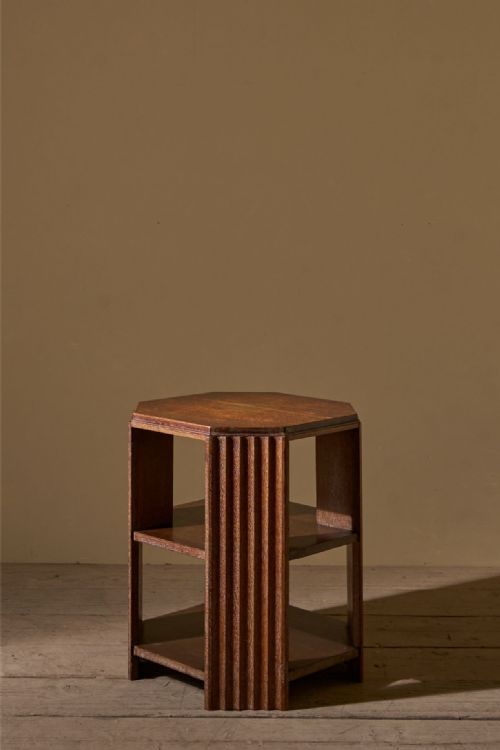
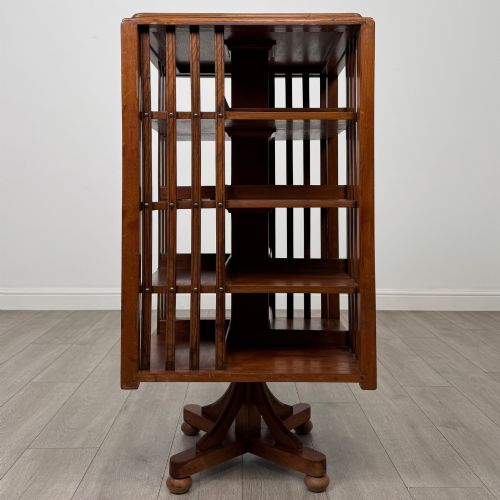
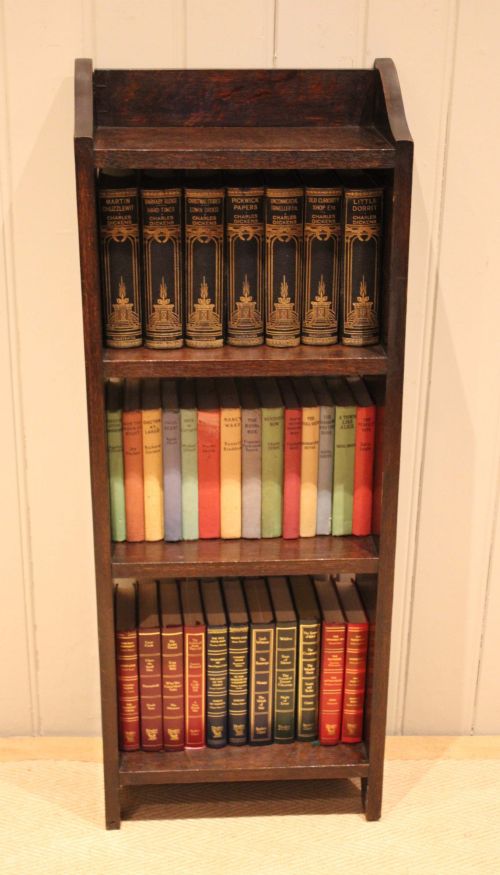
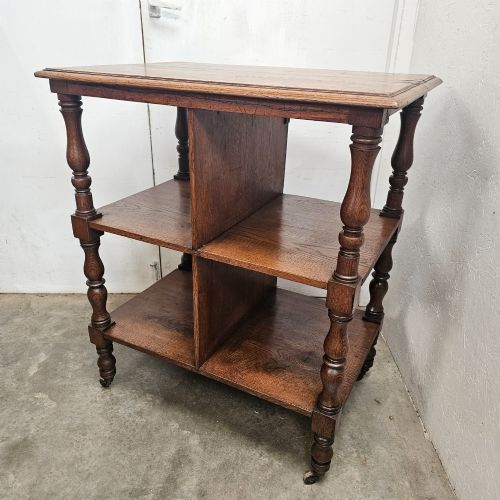
The pieces appearing on this page span from the late nineteenth century through the nineteen-thirties, showing the persistent utility of stacked wooden platforms. While the strict phrase points to tiered formats, related side tables, bookcases, and corner cabinets share the same material palette and structural focus.
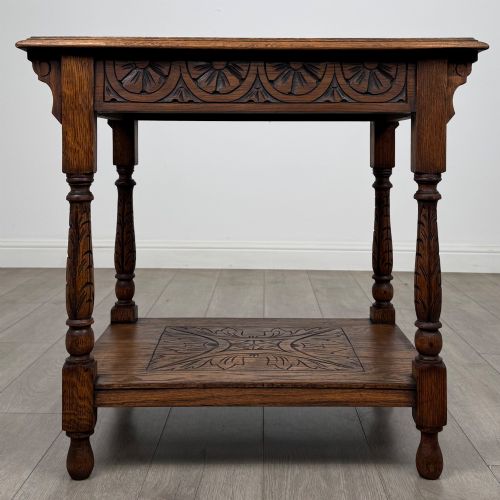
Edwardian examples and Arts and Crafts interpretations dominate the selection, often featuring carved details, fret-cut supports, or ceramic tile inserts. Buyers find these tiered layouts suited for organising smaller domestic items or displaying plants within a room.
What varies in quality
The standard of execution separates standard utility pieces from exceptional studio output, visible in the depth of carved ornamentation and the crispness of fret-cut panels. Pieces associated with specific design houses display superior timber selection and more rigorous attention to structural joinery.
Proportion and stability define the upper tier of these furnishings, ensuring that multi-level stands balance weight evenly across their tiers without loosening joints. The integration of auxiliary materials like decorative ceramic tiles or specialised brass hardware further distinguishes finer examples from plain production.
Listings feature oak predominantly, supported by occasional brass, glass, iron, and ceramic elements across various decades.
Liberty and Co·Leonard Wyburd
The Brown Oak Tier Stand Glossary
- Tier stand
- A piece of furniture featuring multiple stacked horizontal surfaces for display or storage. These stands utilise vertical supports to separate each level.
- Arts and Crafts
- A design movement emphasising handcraftsmanship, simple structural forms, and local materials. Pieces from this tradition often display honest joinery and minimal applied ornament.
- Fret-cut
- A decorative technique where patterns are pierced through thin wood using a fine saw. This method creates openwork silhouettes on brackets and shelf galleries.
- Limed oak
- A wood finishing process where a white pigment is rubbed into the open grain of oak. This treatment lightens the tone and highlights the natural grain pattern.
- Dumbwaiter
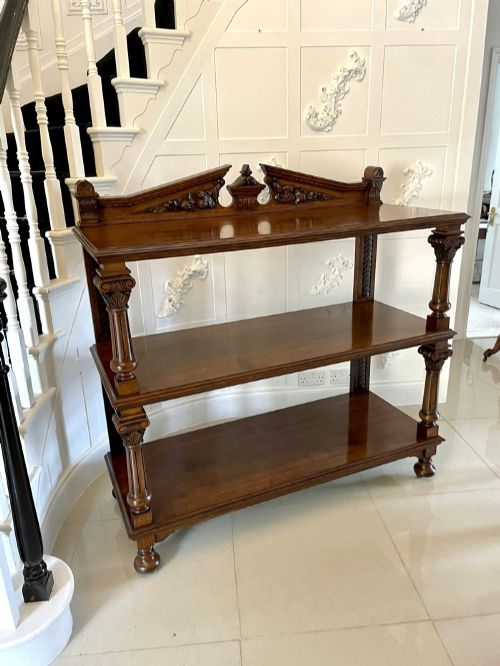
- A multi-tiered serving stand designed to hold dishes or decorative objects. These tiered structures provide accessible vertical surface area in compact footprints.
Brown Oak Tier Stand: Frequently Asked Questions
What rooms suit a tier stand?
These multi-level stands fit comfortably into corners, beside seating, or in hallways where vertical storage matters. Their compact footprint makes them useful in spaces lacking room for large sideboards.
They serve well for holding books, plants, or small display items without overwhelming the surrounding interior scheme.
How do I identify Arts and Crafts pieces?
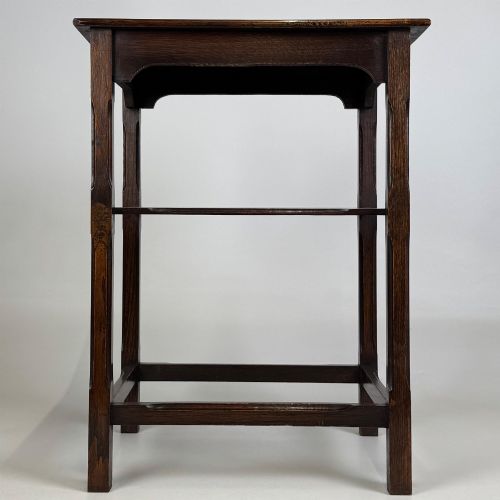
Arts and Crafts pieces emphasise visible construction methods, plain timber surfaces, and functional utility over excessive ornamentation. Look for chamfered edges, exposed tenon joints, and occasional hand-carved vegetal motifs.
Makers working in this tradition often omitted painted or highly polished finishes in favour of waxed brown oak.
Were these stands used for food?
Folding variants and specific tiered designs functioned historically as cake stands for afternoon tea service. Their multiple levels allowed hosts to present various baked goods in a limited space.
Non-folding examples more commonly acted as plant stands or general display furniture for domestic ornaments.
How do I tell Edwardian pieces apart?
Edwardian tier stands frequently incorporate lighter framing, delicate turned supports, and subtle fret-cut galleries compared to heavier Victorian precedents. They reflect a shift towards domestic convenience and brighter living spaces around nineteen hundred.
Many retain factory or retailer labels, though stylistic cues like tile inserts and simpler mouldings help date them.