



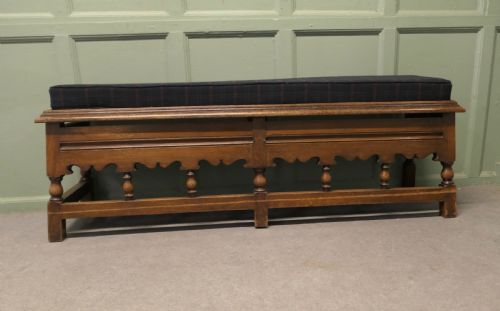

Brown Oak Storage Settle
A brown oak storage settle anchors an entrance hall with heavy timber and concealed depths.
Brown Oak Storage Settle
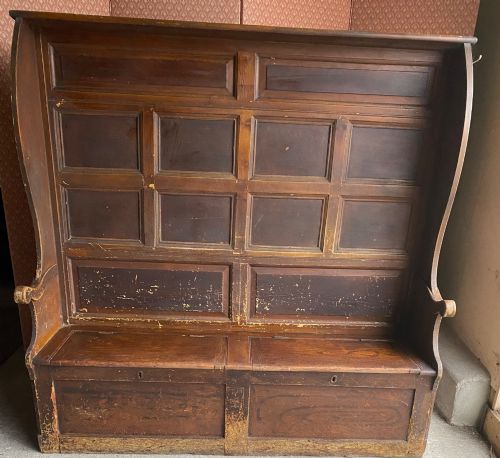
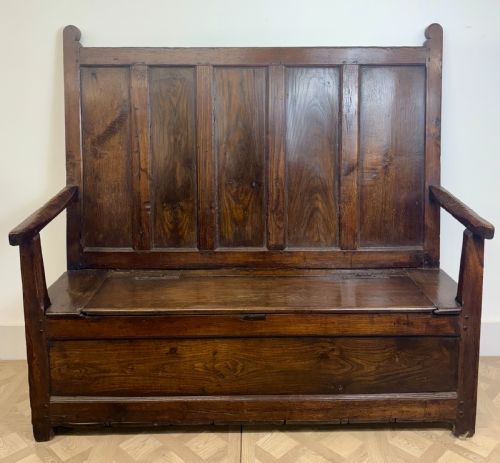
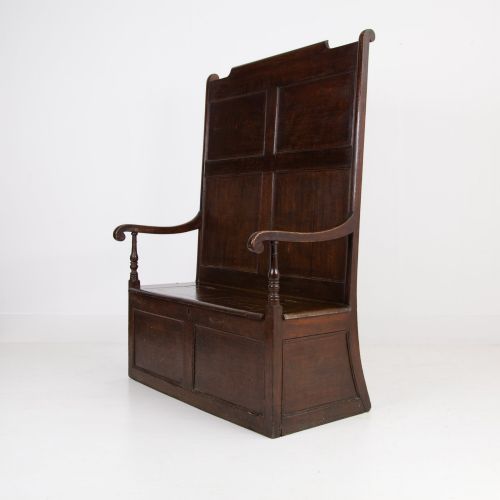
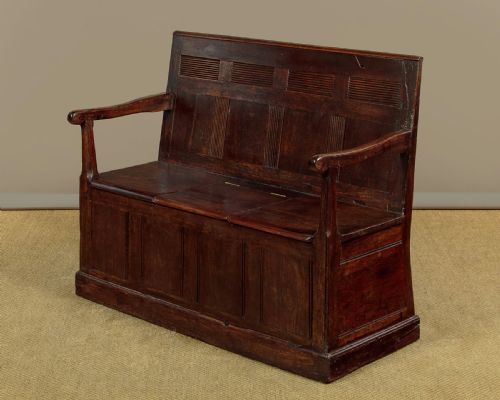
A brown oak storage settle combines a high-backed wooden bench with a compartment beneath the seat, functioning as both seating and a chest for blankets or boots. When you examine a brown oak storage settle, you encounter forms that evolved from rural domestic interiors to grander reception halls.
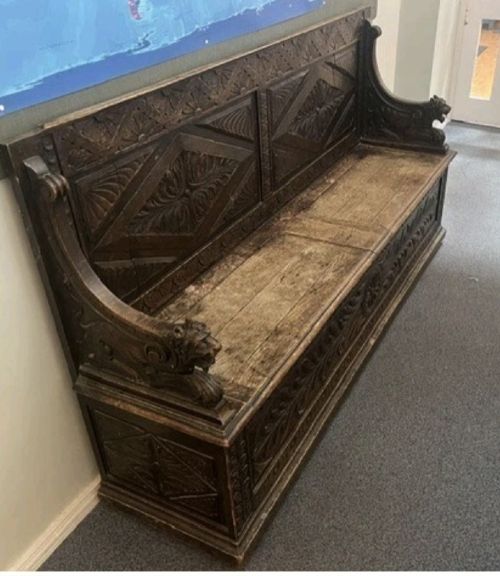
The pieces on this page span several centuries, with vernacular 18th-century box settles and heavily carved Victorian examples appearing most frequently alongside small monk's benches. Regional variations such as North Country and Welsh origins surface among the listings.
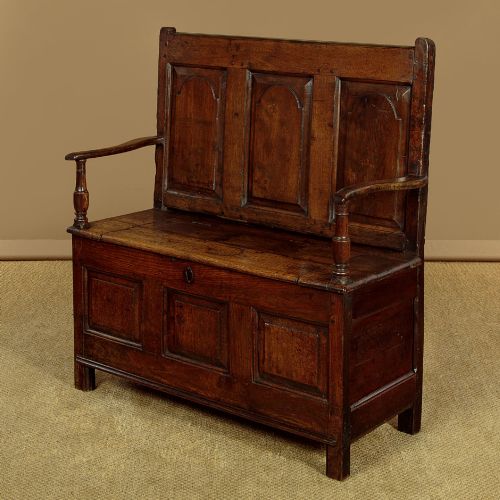
Makers utilised native hardwoods to build these sturdy seats for hallways and draughty rooms. The combination of backrests, arms, and hinged seat lids defines the basic architecture of every piece.
Materials and construction
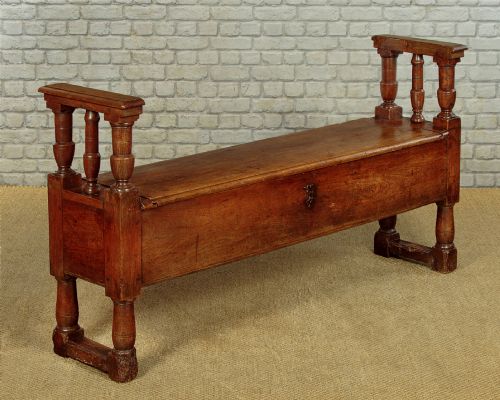
Makers relied on solid oak as the primary timber, often supplemented by elm, ash, and fruitwood for secondary framing or panels. Iron hinges and brass fittings secure the storage lids and folding desk tops found on monk's variants.
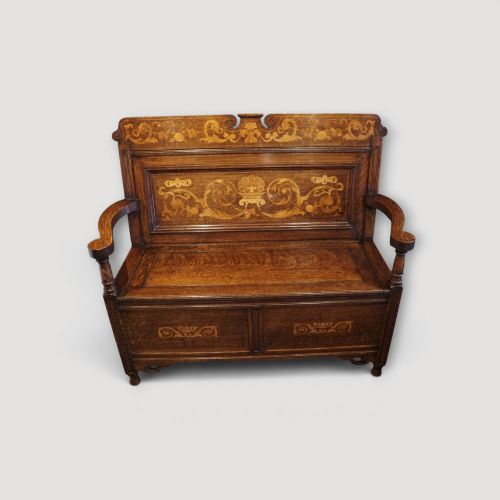
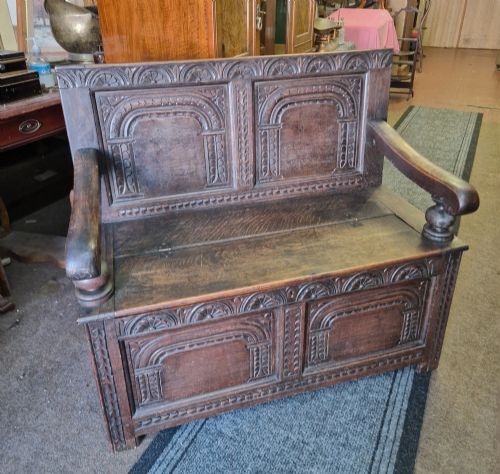
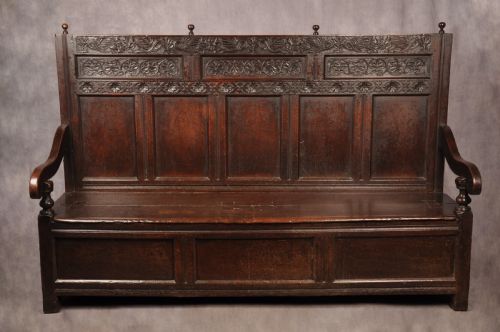
Joinery techniques rely heavily on traditional mortise and tenon frames surrounding panelled backs. Carved ornamentation, when present, emerges directly from the solid wood rather than applied mouldings.
Brown Oak Storage Settle Retail Price Guide 2026
Typical asking prices for brown oak storage settle among the pieces listed under this phrase on Sellingantiques today, from the lower quarter to the upper quarter. They describe what is for sale here now, not the wider market.
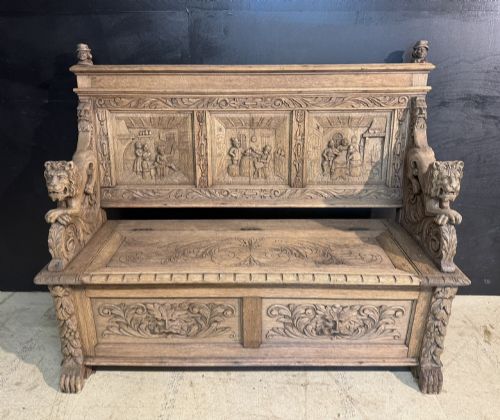
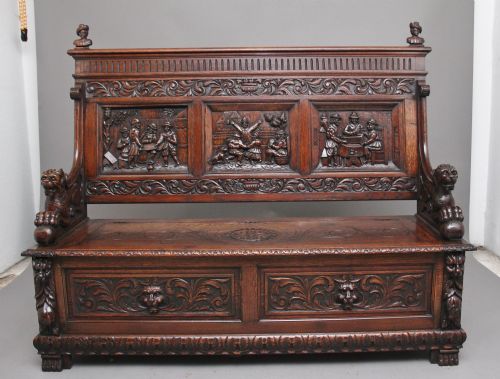
A grinning Green Man peers out from several Victorian oak panels, watching over the boots stored below.
Judging quality in settles
Proportion and timber selection dictate the distinction between vernacular utility items and ambitious cabinet work. Dense grain patterns and deep patination separate superior examples from plainer domestic furniture.
The integrity of the original storage box and the survival of early hinges indicate proper preservation. Hand-carved details range from restrained scratch-mouldings to elaborate Green Man motifs and baronial panels.
Hampton & Son's
The Brown Oak Storage Settle Glossary
- Box settle
- A wooden bench featuring an enclosed compartment beneath the seat accessed by lifting the lid. This design kept contents away from draughts and cold stone floors.
- Monk's bench
- A multi-functional form with a hinged back that folds down onto the arms to create a table. It serves as both seat and surface.
- Bacon settle
- A tall high-backed seat historically used in farmhouse kitchens for curing or storing salted meats away from pests. They feature deep panelled enclosures.
- Vernacular furniture
- Objects made by local regional joiners for everyday domestic use rather than high-style urban workshops. They reflect traditional local building methods.
- Green Man
- A sculptural architectural motif depicting a face carved from leaves and foliage. It symbolises rebirth and appears frequently on Victorian revival carvings.
Brown Oak Storage Settle: Frequently Asked Questions
How do I use a storage settle today?
Place the piece in an entrance hall or boot room where the under-seat compartment swallows shoes, umbrellas, and winter woollens. The high back acts as a natural windbreak against draughts near doors.
Ensure the floor space accommodates the depth of the box base and leaves enough clearance to lift the seat lid fully without striking wall panelling.
What is the difference between a settle and a monk's bench?
A traditional settle maintains a fixed high back and arms, prioritising comfortable seating and enclosed storage beneath. A monk's bench incorporates a pivoting mechanism that transforms the backrest into a table top.
Both pieces share common oak construction methods, but their intended domestic functions diverge between dining surface and dedicated bench seating.
How can I tell an 18th-century settle from a Victorian revival piece?
Early pieces from the 17th and 18th centuries display pegged mortise and tenon joinery, hand-planed surfaces, and simpler panel proportions dictated by available timber widths. Victorian revival examples often feature heavy machine-sawn components paired with deep, exuberant relief carving.
Examine the underside and interior boards for tool marks and timber shrinkage that indicate the true age of the structure.
Did these benches originate in specific regions?
Regional variations developed according to local wood supplies and domestic habits, such as Welsh or North Country workshops producing distinct proportions and panel styles. Vernacular pieces often utilise secondary timbers like elm or ash alongside the primary oak.
These local construction traits help identify the geographical roots of unlabelled country furniture.