

Brown Oak Storage Drawers
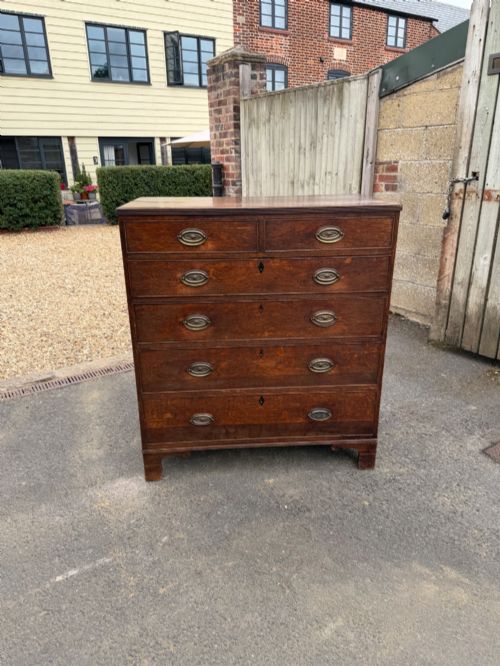
Brown oak storage drawers are functional timber chests built to hold belongings, appearing across periods from the seventeenth century through the Edwardian era.
Brown Oak Storage Drawers
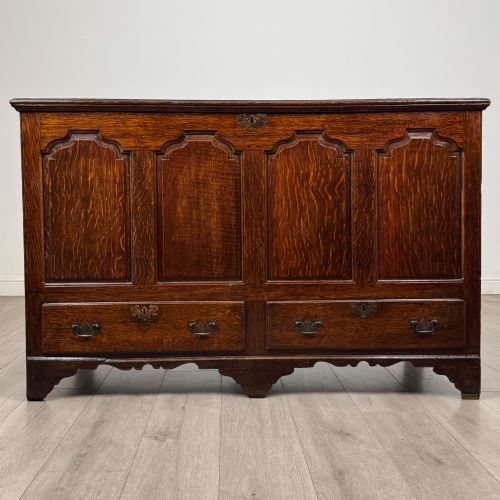
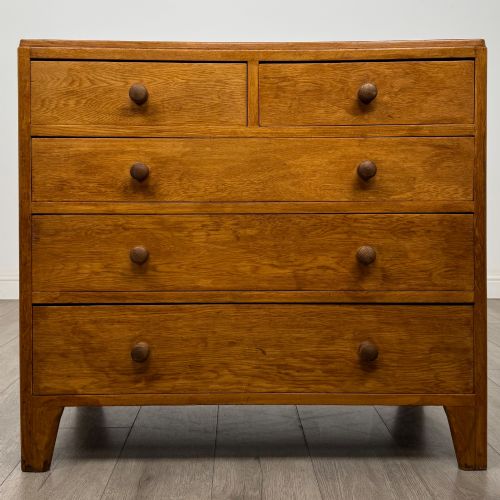
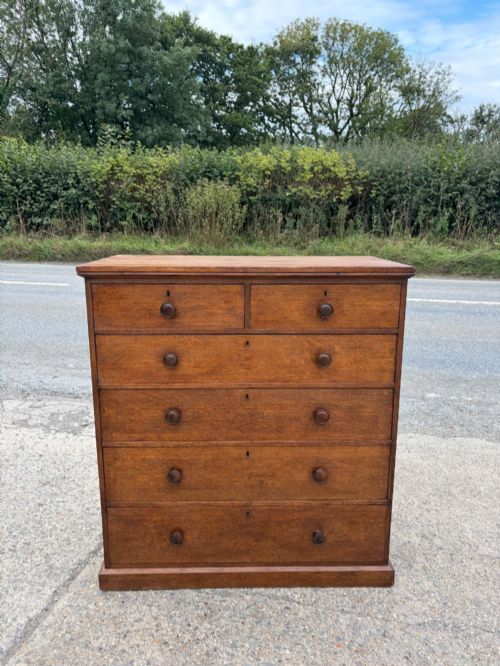
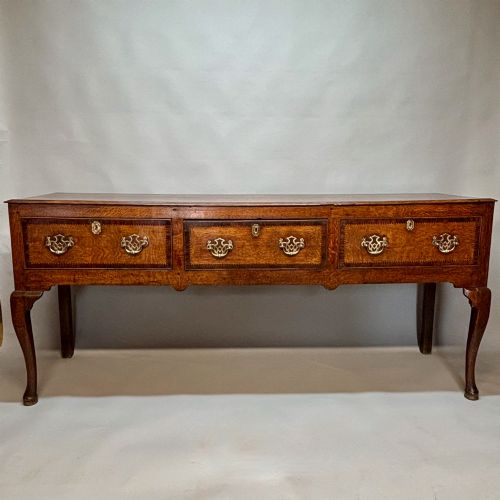
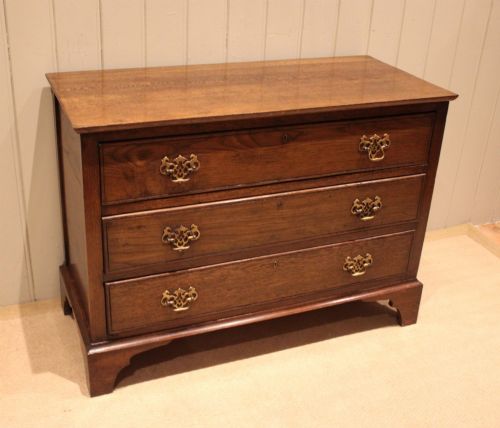
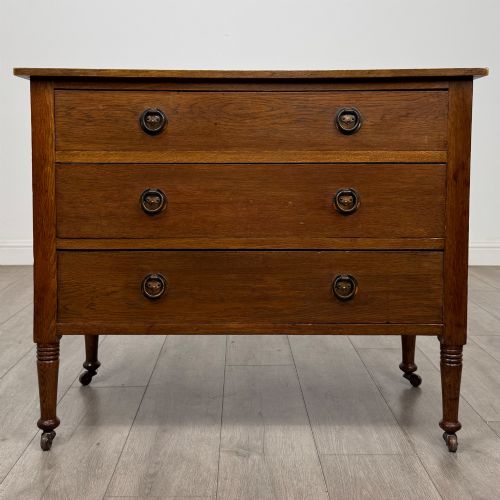
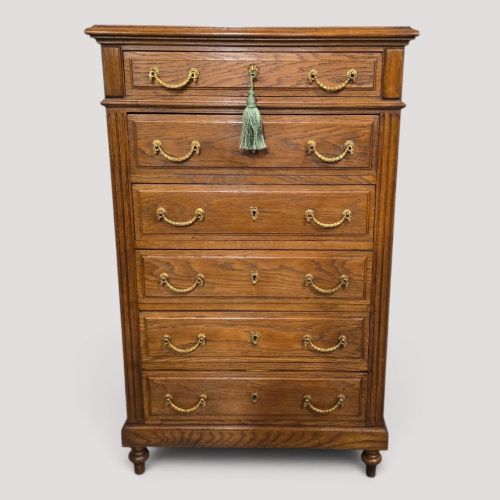
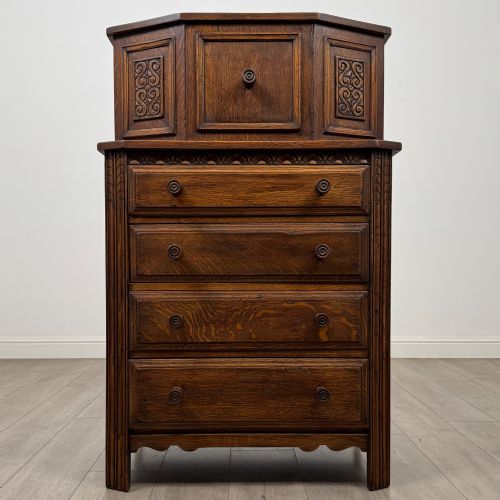
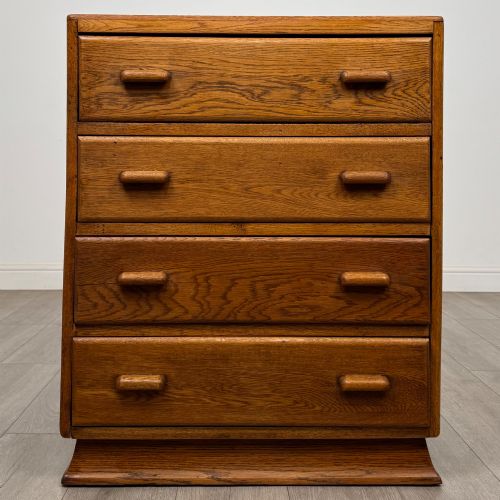
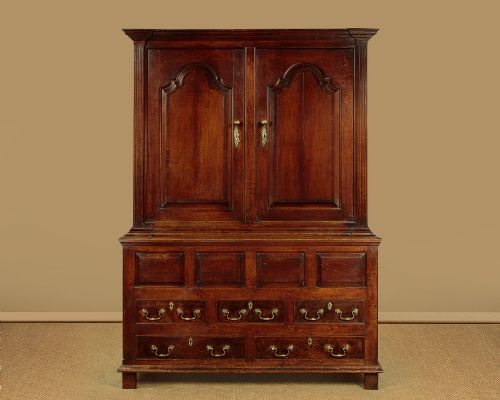
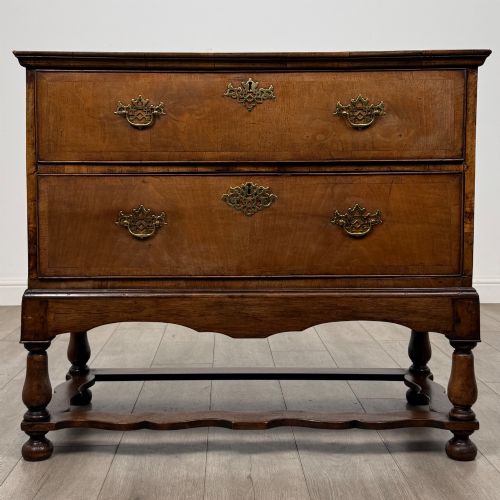
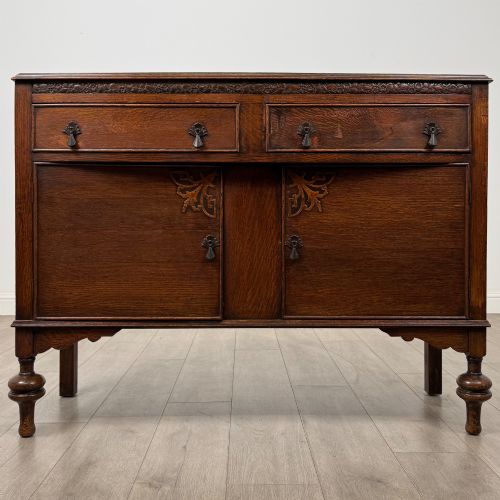
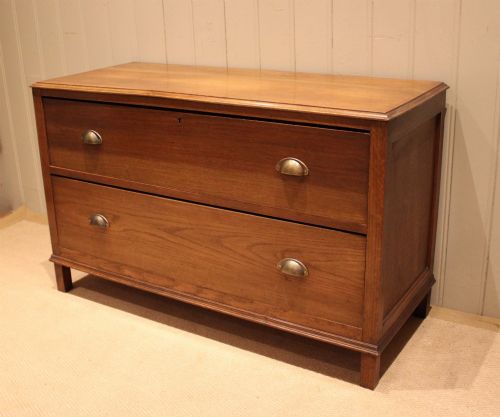
Brown oak storage drawers encompass a variety of case furniture designed for domestic storage, spanning centuries of British and international cabinet making. When exploring brown oak storage drawers, a buyer encounters forms ranging from early seventeenth-century geometric moulded chests to Edwardian cupboards and sideboards.
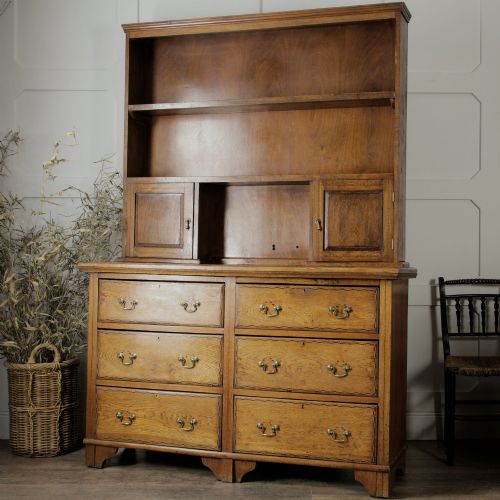
The listings demonstrate that chests of drawers form the predominant shape, alongside dresser bases, mules, and smaller cabinets. These pieces originate from distinct periods including the Georgian era, the seventeenth century, and the early twentieth century.
Regional variations and revivalist movements shape the selection, bringing together styles such as William and Mary, Jacobean, and English Country. Each piece reflects the utilitarian needs of its historical context, adapted for modern placement.
Materials and Technique
Makers utilised solid timber construction, predominantly oak, supplemented by secondary woods and decorative elements like walnut, fruitwood inlay, and wood inlay. Brass and iron hardware provide functional handles and escutcheons that secure the drawers and doors.
Surface ornamentation relies on traditional woodworking techniques such as geometric moulding, linenfold carving, and crossbanding with mahogany. Carpenters shaped these dense hardwoods using hand tools, creating durable joints designed to withstand generations of daily use.
Listings feature oak alongside contrasting materials like brass, iron, fruitwood inlay, and mahogany across multiple centuries.
The Measure of Quality
The standard of a piece rests upon the crispness of its original mouldings, the integrity of its timber panels, and the preservation of its surface finish. Early geometric mouldings and hand-carved details demand precise craftsmanship that elevates certain examples above simpler vernacular items.
Hardware preservation and timber selection dictate the integrity of the piece over time. Original brass fixtures and stable, unwarped oak boards distinguish superior furniture from heavily restored or later altered items.
The Brown Oak Storage Drawers Glossary
- Crossbanding
- A narrow strip of veneer applied to the border of a drawer front or top, running perpendicular to the grain of the central panel. This technique frames the primary timber and adds visual contrast.
- Geometric moulding
- Raised wooden mouldings applied to drawer fronts in rectilinear patterns, typical of seventeenth-century case furniture. These profiles create depth and shadow across the facade.
- Linenfold
- A style of relief carving on wooden panels that resembles folded linen fabric. It appears frequently on sixteenth and seventeenth-century cupboards and chests.
- Mule chest
- A storage chest fitted with one or more drawers at the base, bridging the evolution from simple blanket chests to modern drawer units.
- Oyster veneering
- Cutting small branches obliquely to produce circular or oval patterns resembling oyster shells. Craftsmen arrange these slices closely across the surface of fine cabinetry.
Brown Oak Storage Drawers: Frequently Asked Questions
How do I date an oak chest?
Dating relies on construction methods, timber preparation marks, and decorative details like geometric mouldings or hardware. Earlier pieces exhibit hand-riven boards and pegged joints.
Later Edwardian or twentieth-century examples display more uniform machining and standardised drawer runners.
What is brown oak?
Brown oak is a natural timber coloration caused by a fungal infection in growing trees, specifically the beefsteak fungus. This process turns the heartwood a rich, deep brown hue.
Cabinet makers prize this wood for its striking colour variations and distinct grain patterns.
Are these drawers suitable for daily use?
Most solid oak chests and cabinets are robustly built and function well for modern storage needs. Their durable timber construction withstands regular opening and closing.
Care should be taken with internal drawer depths and humidity levels to protect antique wood.
How do I maintain an antique oak cabinet?
Maintain the timber by keeping pieces away from direct heat sources and sudden temperature fluctuations. Regular dusting with a dry, soft cloth preserves the surface finish.
Application of traditional wax polish helps nourish the dry oak over time.