
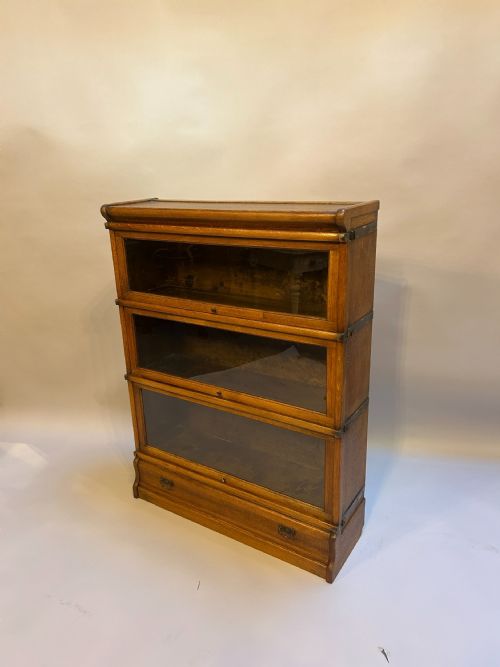
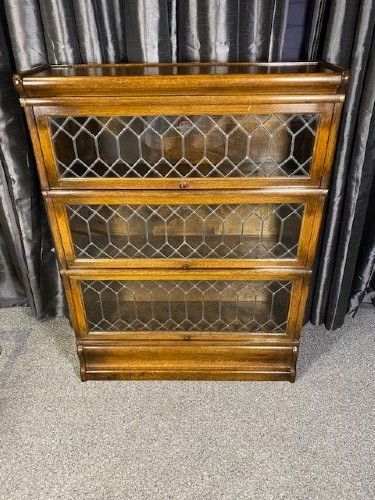
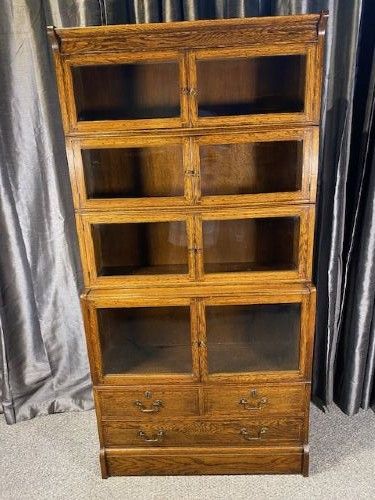
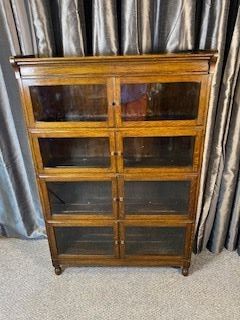
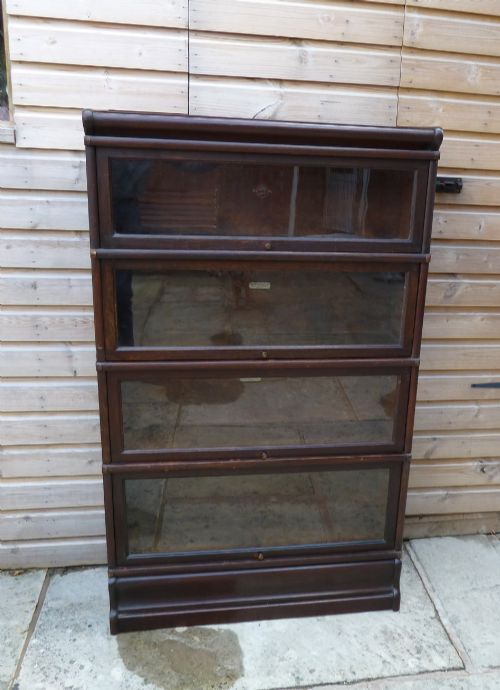
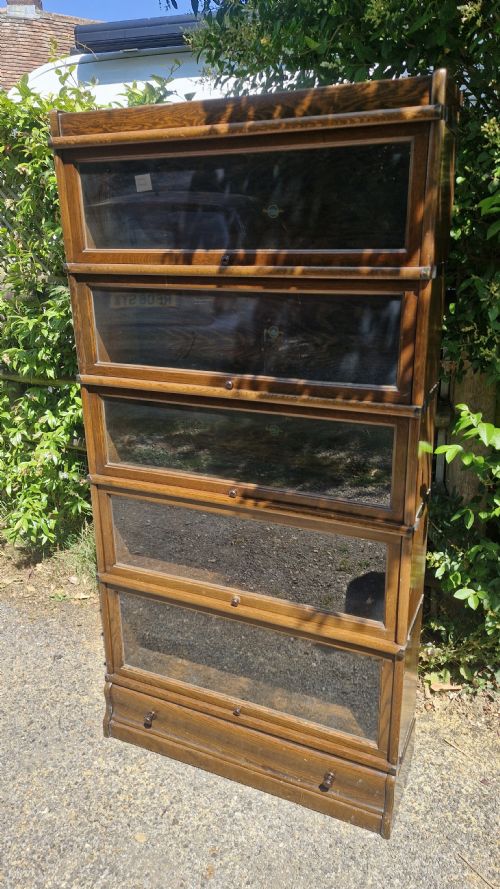
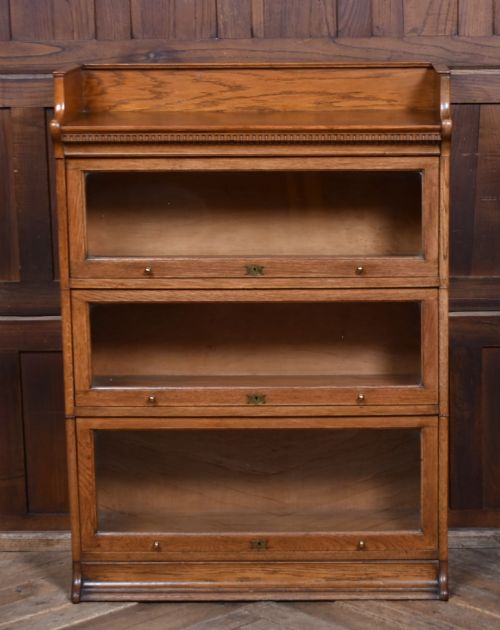

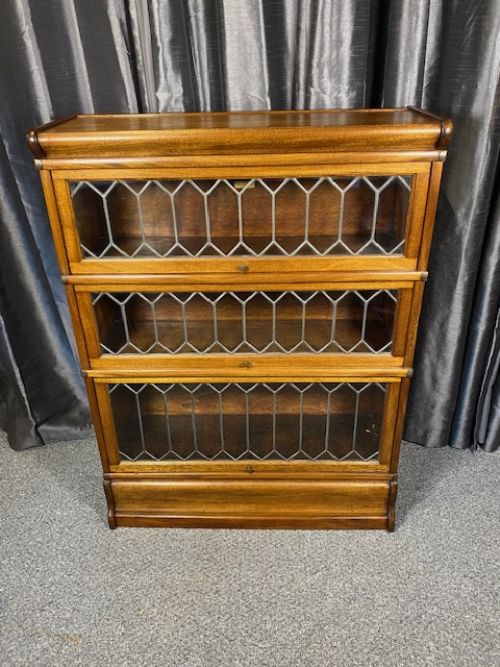


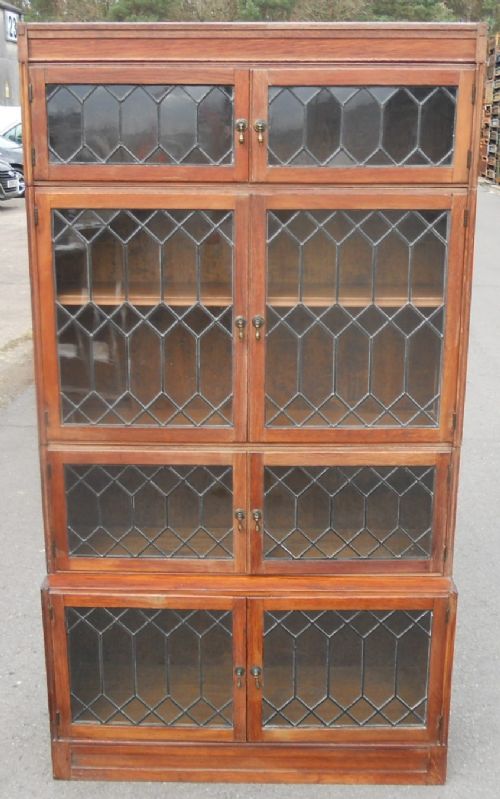

Brown Oak Stacking Bookcase
A brown oak stacking bookcase brings modular practicality and warm twentieth-century timber into a study.
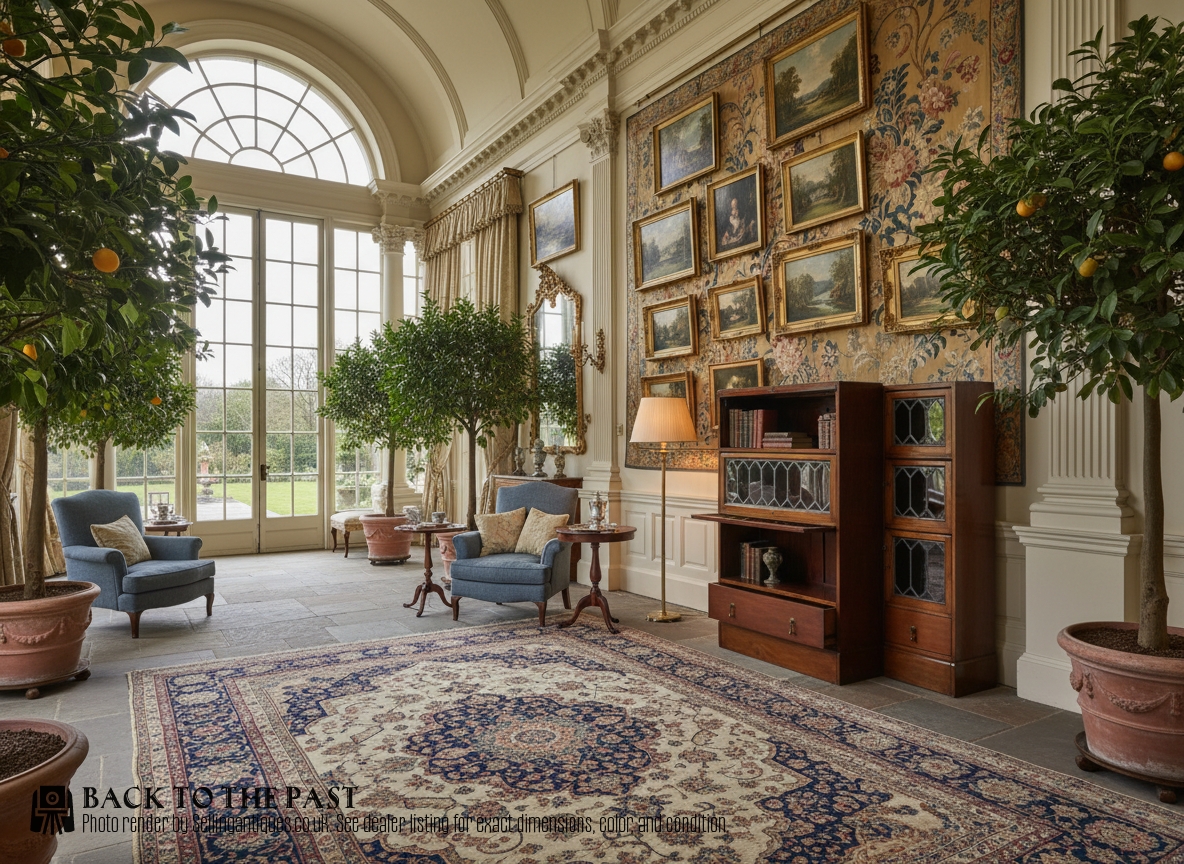
Brown Oak Stacking Bookcase
When searching for a brown oak stacking bookcase, buyers encounter sectional furniture designed to hold books while adapting to various room layouts. These pieces allow individual tiers to be stacked vertically, creating a tall cabinet from distinct modular units.
The versions most commonly met on this page date from the Edwardian era through to the nineteen thirties, spanning the nineteen hundreds, nineteen tens, nineteen twenties, and nineteen thirties. They appear in styles such as Edwardian, Arts and Crafts, and Art Deco.
Makers such as Globe Wernicke, Lebus, and Minty produced these sectional bookcases, employing forms that function as both barristers' cabinets and modular library storage. The physical evidence shows oak timber throughout, often complemented by glass doors and brass or lead fittings.
How they were made
Makers constructed these sectional bookcases primarily using solid oak and oak veneers, shaping the timber into distinct modular tiers that fit securely on top of one another. Each section incorporates glazed doors designed to lift and slide inward, protecting the volumes stored within.
Brass hardware and lead details appear on the doors and mechanisms, providing both structural function and decorative accent. Workshops utilised these durable materials to ensure the stacking units remained stable and operable when rearranged.
Many a lawyer kept law reports dust-free behind sliding glass while pretending to look impossibly busy.
What varies in quality
The standard of construction separates standard utility pieces from finer workshop productions, particularly in the precision of the stacking mechanisms and the movement of the glazed doors. Superior examples maintain smooth operation across every tier without binding or sticking.
The choice of oak timber and the neatness of the joining corners dictate the overall visual refinement of the cabinet. Finer specimens display consistent grain patterns and robust brass hardware that endure repeated stacking and unstacking.
Globe Wernicke·Lebus·Minty
The Brown Oak Stacking Bookcase Glossary
- Sectional bookcase
- A piece of furniture built from separate, stackable tiers that rest one upon another. This design allows the cabinet to be dismantled easily for transport or expanded with additional sections.
- Barrister's bookcase
- A specialised stacking bookcase traditionally used by lawyers to transport and house law books. The glazed tiers protect volumes from dust while remaining accessible in a working office.
- Lead
- A soft metal used in traditional window and door construction to hold small panes of glass together. In certain bookcases, lead cames form decorative geometric patterns across the panels.
- Edwardian
- A stylistic period spanning the reign of King Edward VII, characterised by lighter furniture designs that often adapted earlier historical motifs. Pieces from this era frequently utilise oak with simple, clean lines.
Brown Oak Stacking Bookcase: Frequently Asked Questions
How do stacking bookcases work?
Each tier operates as an independent wooden box with its own glass door, designed to sit securely on the section below it. The modular units can be separated for moving and reassembled without fixed fixings.
Metal mechanisms guide the doors as they lift and slide back into the cabinet interior above the books.
Can I add more sections later?
Adding extra tiers depends entirely on finding matching sections from the same maker and period. Variations in depth, width, and wood tone mean that units from different workshops rarely align properly.
Buyers usually acquire a complete stack or search specifically for compatible modular components.
How do I clean the glass?
Cleaning the glass requires a soft cloth and a gentle glass cleaner applied sparingly to avoid the surrounding wood frame. Care must be taken around the brass hardware and lead cames to prevent moisture accumulation.
Regular dusting keeps the sliding mechanisms free from debris that might impede smooth operation.
Where should I place it?
These bookcases suit studies, living rooms, and libraries where vertical storage maximises floor space. Their modular height accommodates rooms with standard or tall ceilings alike.
Placement away from direct heat sources protects the oak timber and prevents the wood from drying or warping over time.