




Brown Oak Nursery Chair
These brown oak nursery chair examples offer sturdy seating crafted for children across several periods.
Brown Oak Nursery Chair
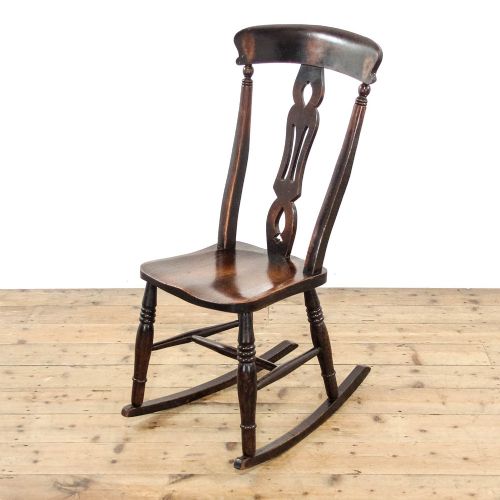
When you search for a brown oak nursery chair, you encounter a variety of small seating forms made for children, including low armchairs, rocking chairs, and high chairs. These pieces emerge from the nineteenth century up to the nineteen-thirties.
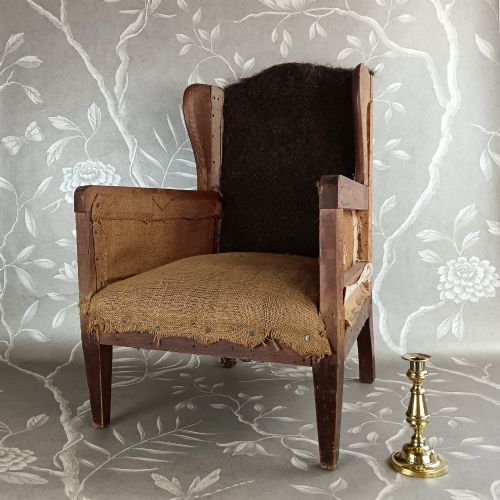
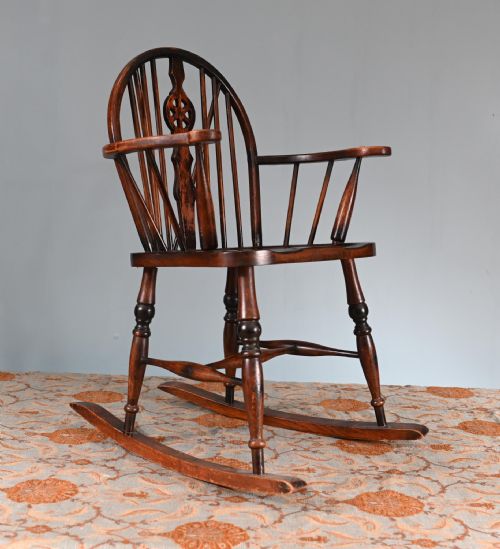
The versions most commonly met on this page span styles such as English Country, Victorian, and Arts and Crafts. Makers often scaled down adult forms like the Windsor or the wingback for young occupants.
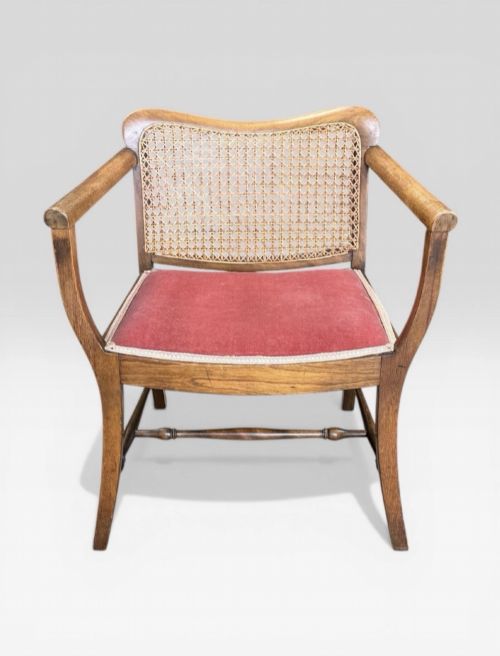
Materials extend beyond oak to include elm, beech, and ash, sometimes paired with velvet or hessian upholstery and cane work. The selection reflects domestic utility and rustic craft traditions.
How they were made
Joiners and country chairmakers built these small seats using solid native timbers like oak, elm, and beech, relying on traditional pegged joinery and turned spindles. Steam-bending shaped the hoops of Windsor backs and the arms of rocking chairs.
Some examples incorporate woven cane seats and backs, while others feature moulded panelled wooden seats or textured textiles like velvet and hessian. Metal components appear occasionally in folding mechanisms and reclining hardware.
Folding children's chairs allowed Victorian parents to tuck the nursery seating away when the floor needed to be clear for play.
What varies in quality
The distinction between standard domestic seating and finer examples lies in the choice of timber and the complexity of the turnery. Rich grain figure in the oak and well-defined spindle turnings elevate a piece.
Structural integrity also separates the output of regional workshops from basic utility items. Sound joints, intact cane work, and balanced proportions determine the success of the small chair.
James Shoolbred
The Brown Oak Nursery Chair Glossary
- Windsor
- A chair built with a solid wooden seat into which the legs and back spindles are wedged directly. This construction method provides notable sturdiness for children's seating.
- Bergere
- An upholstered armchair with an enclosed cane back and sides. The cane work lightens the visual weight of the oak frame.
- Crinoline stretcher
- A bent metal or wooden stretcher that curves outwards between the legs of a chair. It reinforces the underframe while offering a specific stylistic marker.
- Wingback
- An armchair with side panels or wings attached to the back frame. These projections originally guarded against drafts.
- Arts and Crafts
- A design movement prioritising traditional craftsmanship and visible construction. Pieces from this style often display honest joinery and solid oak forms.
Brown Oak Nursery Chair: Frequently Asked Questions
What is a brown oak nursery chair?
A brown oak nursery chair is a small-scale seat designed for children, often taking the form of a low Windsor, a rocker, or a wingback armchair. These pieces were built for everyday domestic use in nurseries and children's rooms.
They reflect the prevalent woodworking styles of their respective periods, ranging from nineteenth-century country forms to early twentieth-century Arts and Crafts designs.
How were these children's chairs used?
These chairs served practical functions in family homes, providing low seating for children at play or resting near the hearth. Rocking variants helped soothe infants and toddlers.
Over generations, many transitioned from functional nursery items to decorative pieces collected for their miniature scale and craftsmanship.
What materials are common in these chairs?
Oak is a primary timber, frequently accompanied by other domestic woods such as elm, beech, and ash. Seating surfaces often consist of solid moulded wood or woven cane.
Some examples incorporate textile elements like velvet and hessian upholstery, while others feature metal hardware for folding or reclining functions.
How do I identify the period of a chair?
Dating relies on stylistic markers, construction techniques, and the specific form of the turnery. Nineteenth-century pieces often display robust country Windsor traits or Victorian proportions.
Early twentieth-century examples frequently align with the plain lines and honest construction of the Arts and Crafts movement.