
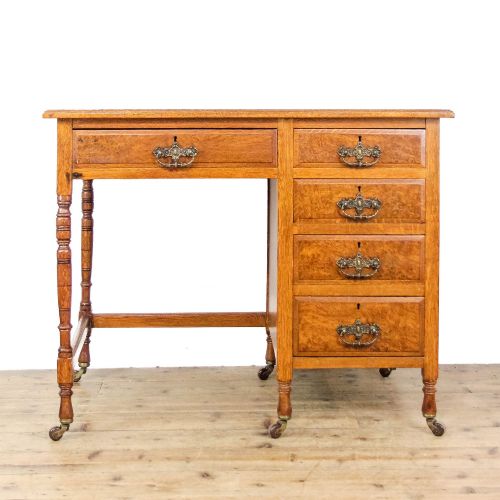


Brown Oak Kneehole Desk
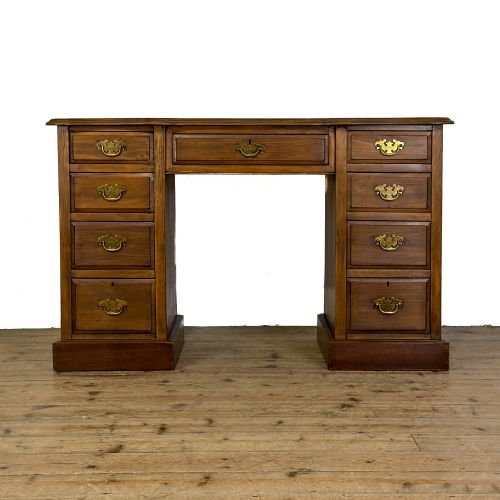
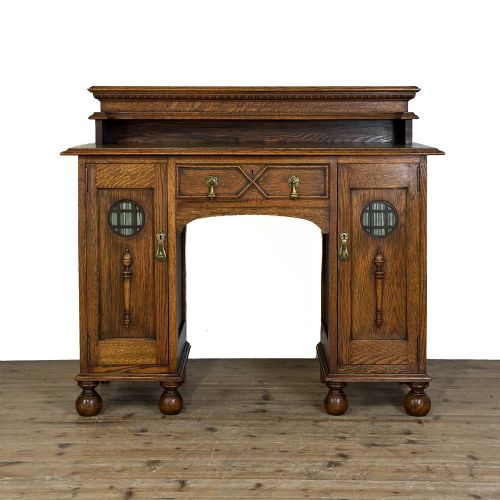
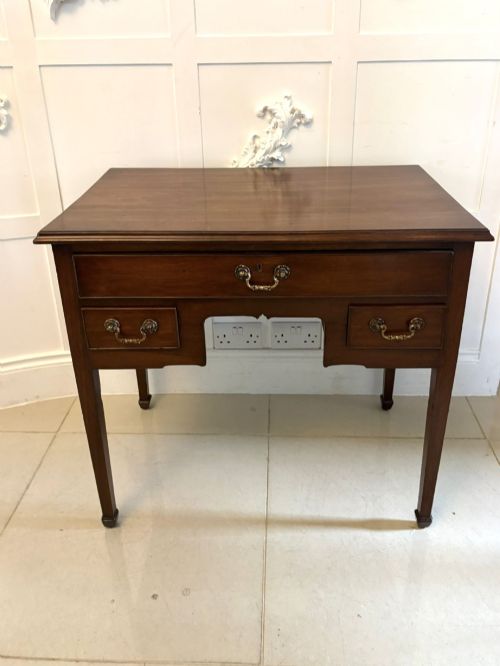
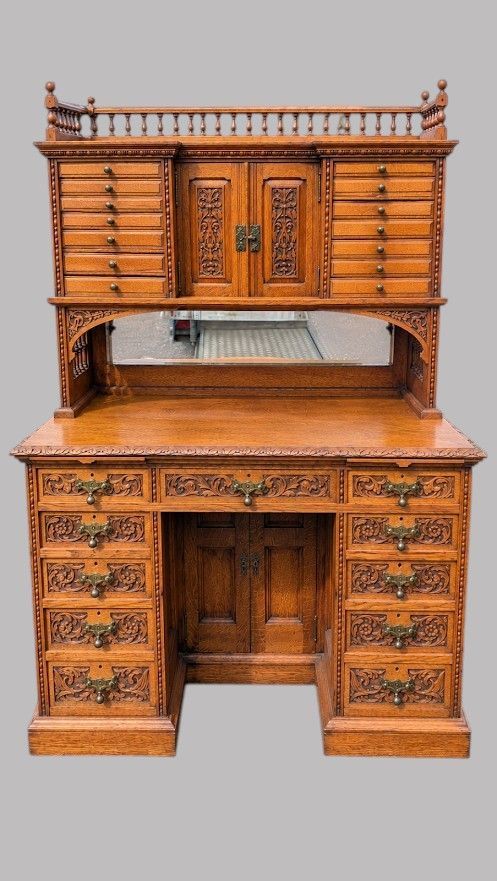
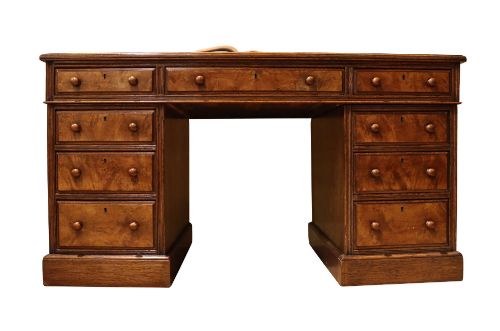
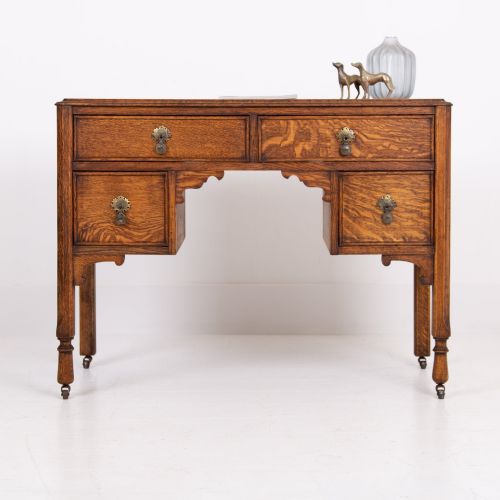
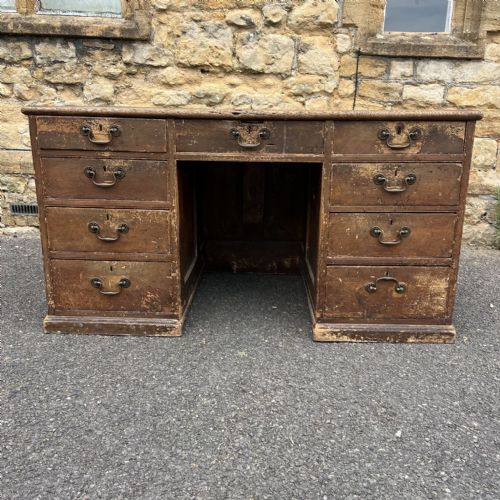
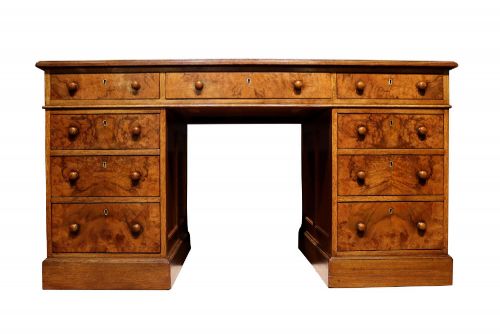
A brown oak kneehole desk offers a practical writing station built from richly figured timber, prized for its distinctive central recess and banks of drawers.
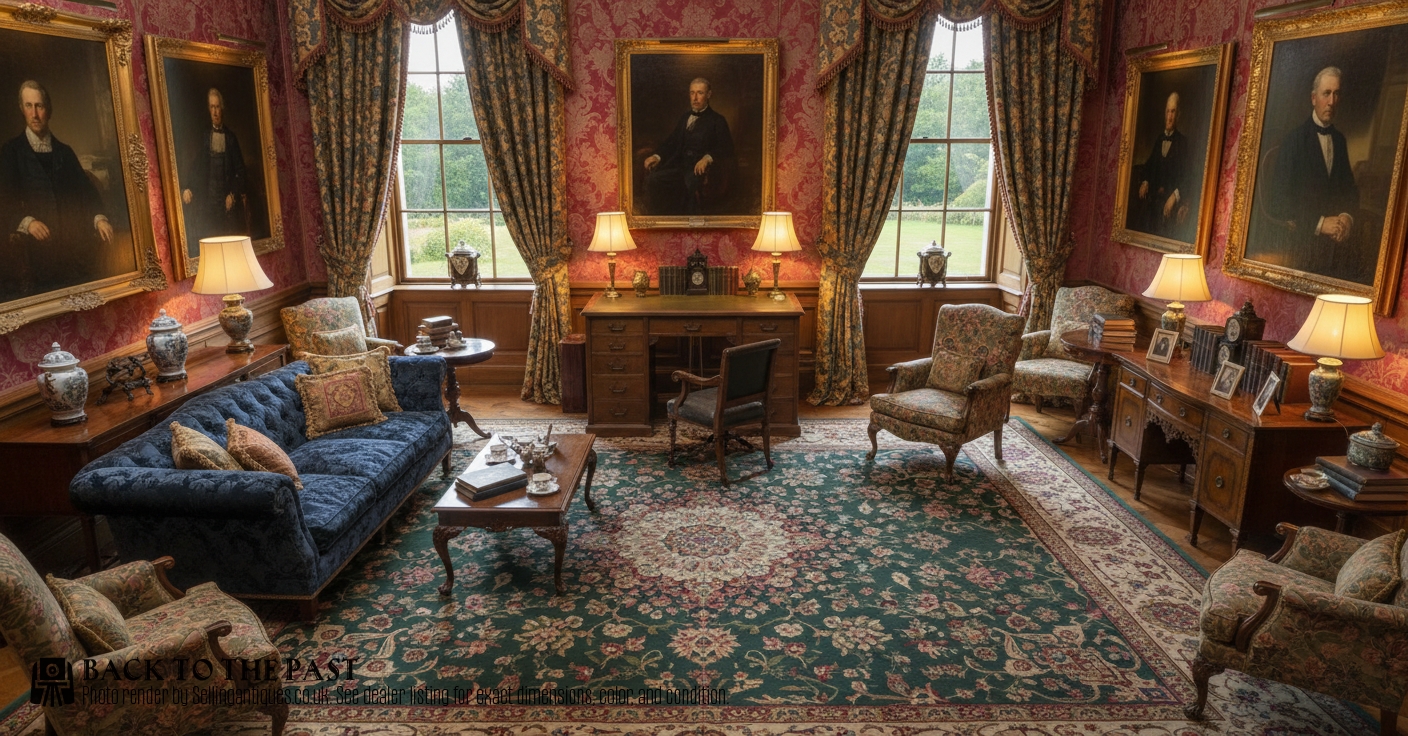
Brown Oak Kneehole Desk
A brown oak kneehole desk combines functional workspace with compact storage, featuring a central kneehole flanked by pedestals of drawers. These pieces emerge primarily from the Victorian, Edwardian, and Georgian periods, alongside examples from the early twentieth century.
The versions most commonly met on this page span Victorian pedestal formats and Edwardian writing tables, frequently constructed from solid oak or highlighted with burr walnut and mahogany secondary elements. Forms range from twin pedestal writing desks to estate managers' furniture and country house pieces.
Makers and workshops of the nineteenth and early twentieth centuries produced these items for domestic studies and estate offices, employing durable hardwoods designed for daily utility.
Distinctions in craftsmanship and condition
Quality rests in the selection of the timber figure, particularly the rich depth of brown oak and burr walnut veneers, paired with crispness in carved details such as lions' heads. Superior examples exhibit tightly fitted dovetailed drawers and original brass hardware.
The presence of maker stamps, original stencilled decoration, or accompanying keys elevates a desk's standing among collectors. Structural integrity of the central kneehole knee space and uniformity of the timber patina distinguish finer workshop output from simpler country-made items.
Estate managers kept their keys secure while overseeing vast country houses from these very oak kneeholes.
Gillow & Co·Maple & Co·Étienne Kohlmann
The Brown Oak Kneehole Desk Glossary
- Kneehole
- A recessed space beneath the central part of a desk, designed to accommodate the user's legs while seated. This arrangement separates supporting banks of drawers on either side.
- Pedestal desk
- A heavy freestanding writing table supported by two upright banks of drawers that reach down to the floor. They provide substantial storage capacity alongside a wide top.
- Burr oak
- A growth deformity in the oak tree that produces highly figured, swirling patterns in the grain. Cabinetmakers sliced this timber into veneers for decorative drawer fronts.
- Dovetail joint
- A traditional interlocking woodworking joint formed by interlocking wedge-shaped fingers. It secures drawer corners against the pull of daily use.
- Tooled leather
- Leather writing surfaces decorated with gold or blind-stamped patterns around the perimeter. These insets provided a smooth writing texture on the desktop.
Brown Oak Kneehole Desk: Frequently Asked Questions
What is a brown oak kneehole desk?
A brown oak kneehole desk is a compact writing table featuring a central recess for the legs, flanked by two pedestals of drawers.
These pieces utilise rich brown oak timber and date primarily from the eighteenth century through the Edwardian era.
How do I identify a Georgian desk?
Georgian desks display restrained proportions, fine cabinet-making techniques, and characteristic period hardware like brass drop handles.
They often incorporate high-grade oak and walnut veneers with classic bracket feet or plinth bases.
Were these desks used in offices?
Estate managers, domestic staff, and private individuals utilised these desks for correspondence, accounts, and household administration.
Their multiple drawers accommodated ledgers, stationery, and writing implements.
How do I care for leather desk tops?
Protect tooled leather insets from direct sunlight and excessive moisture to prevent cracking or fading over time.
Apply specialist leather balms sparingly to maintain the suppleness of the writing surface.