

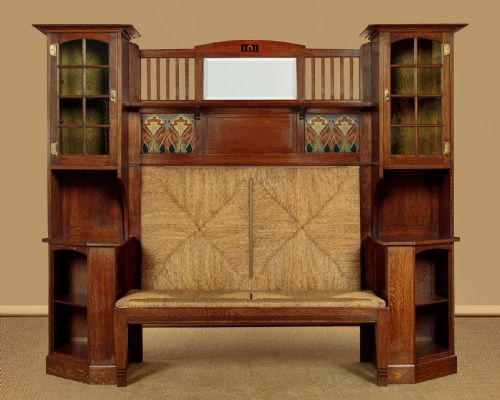


Brown Oak Hall Tree
A brown oak hall tree brings architectural presence and practical organisation to an entranceway, uniting timber framing with hooks and umbrella storage.
Brown Oak Hall Tree
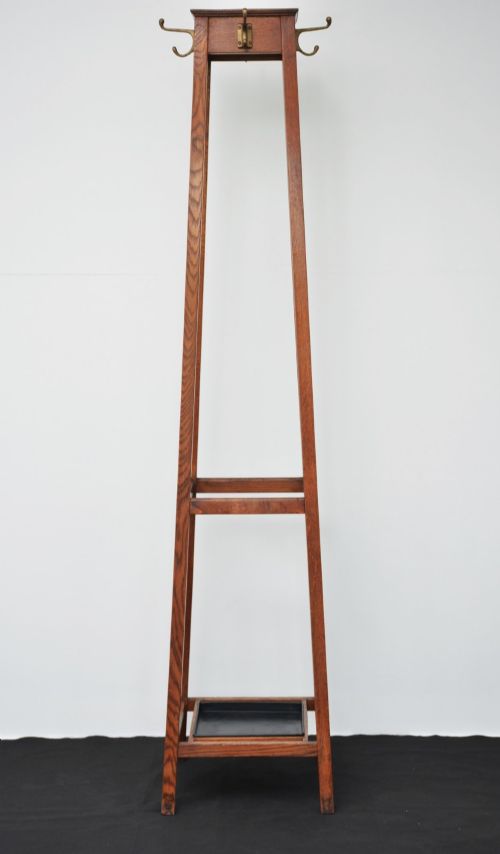
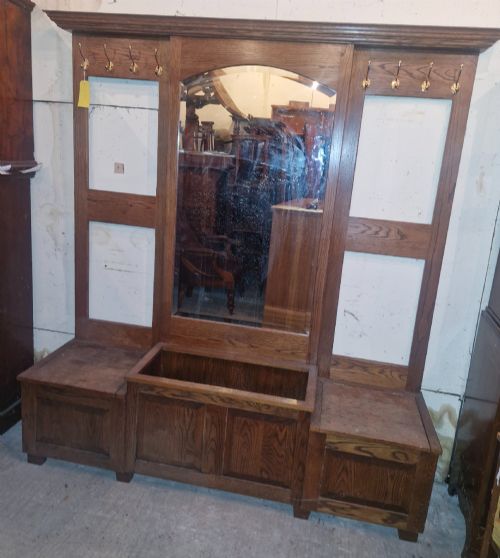
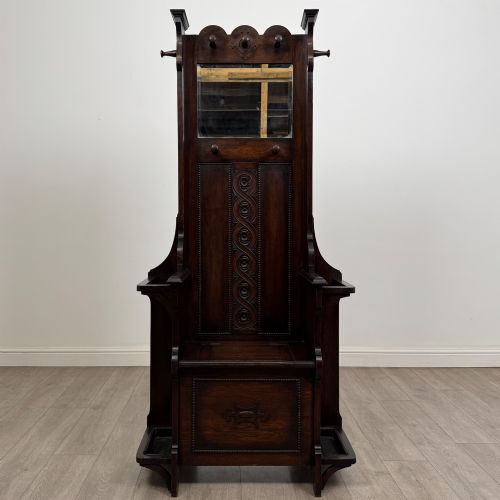
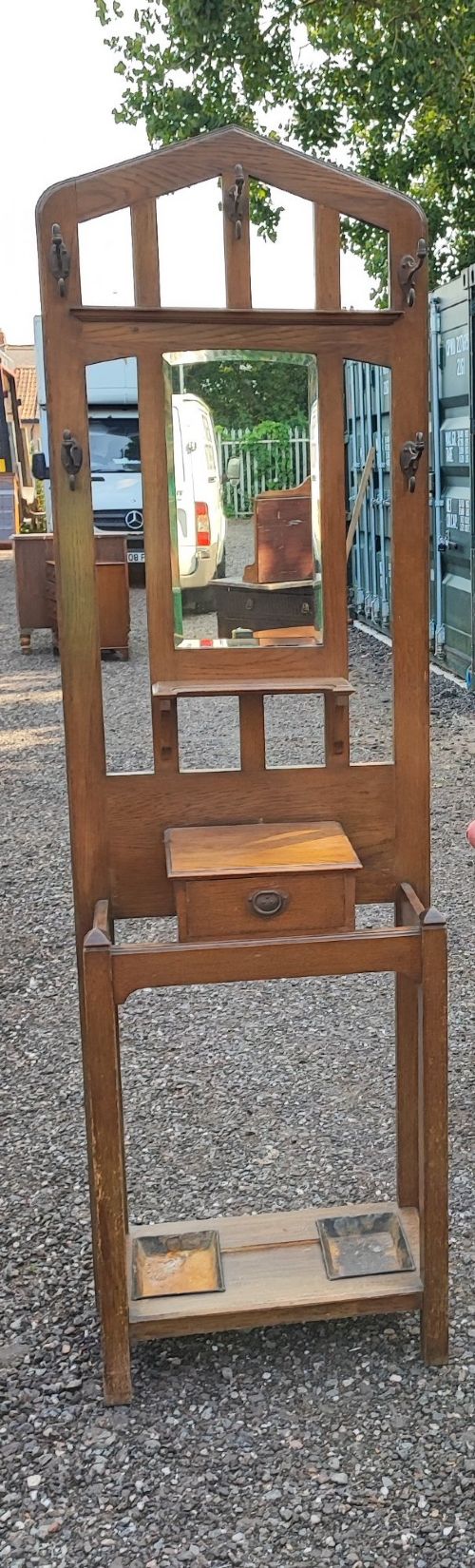
A brown oak hall tree is a substantial piece of entranceway furniture designed to hold coats, hats, and umbrellas while often providing a mirror and seating. You will most frequently encounter Victorian and Edwardian examples alongside later iterations from the mid-twentieth century.
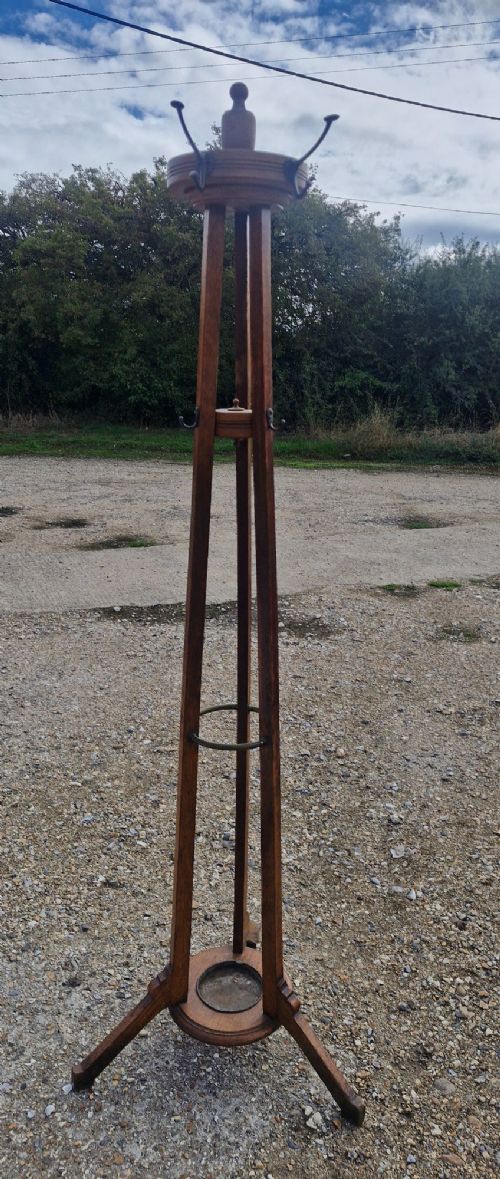
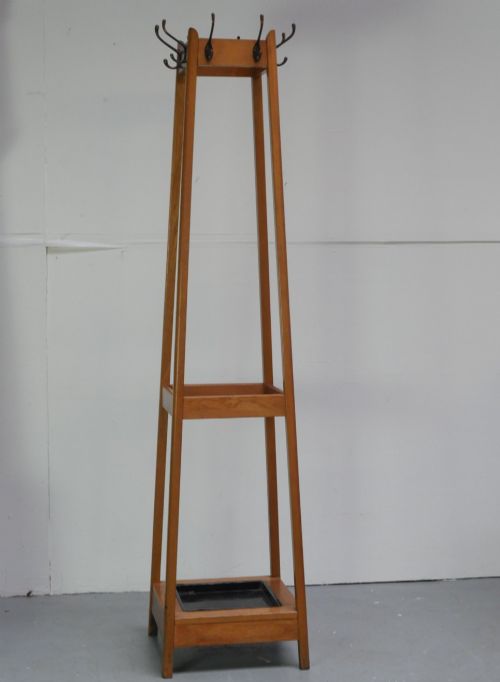
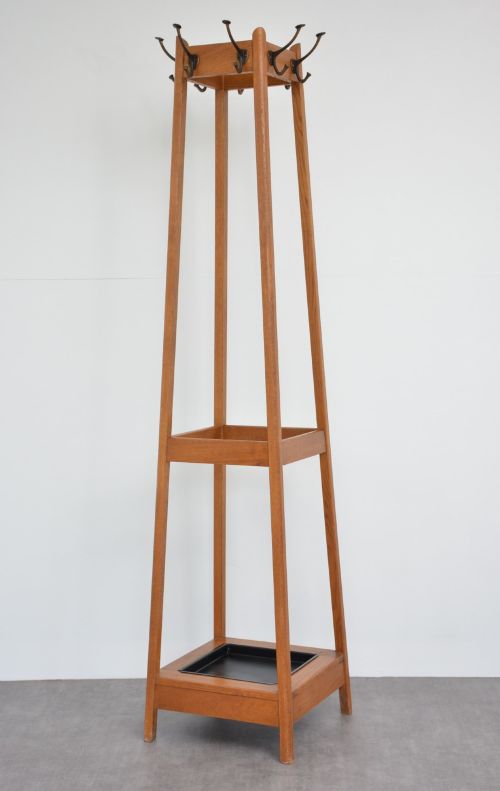
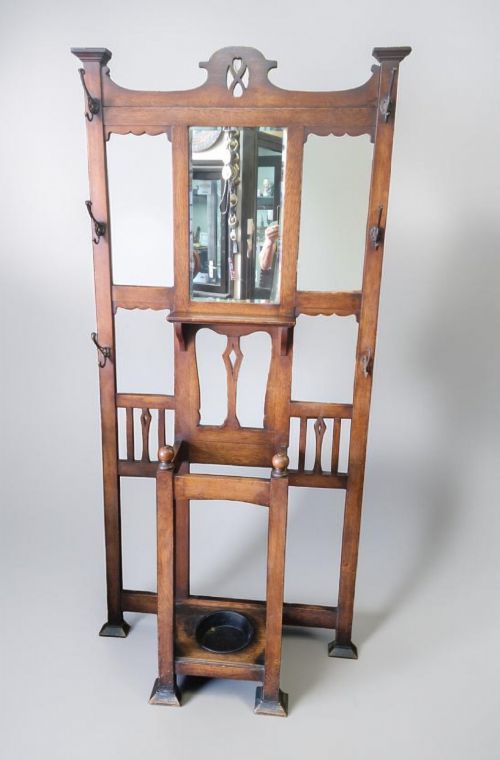
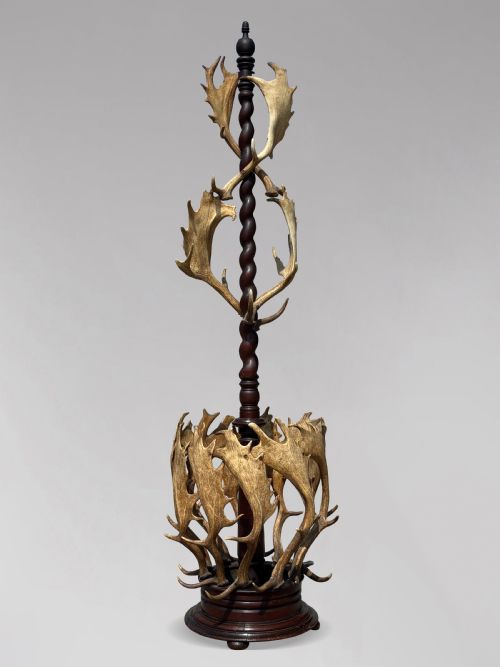
The objects span varied aesthetic movements including Arts and Crafts, Art Nouveau, and Black Forest styles. Common functional configurations range from simple revolving stands to multi-functional hall seat stands with integrated drip trays.
Judging the Workmanship
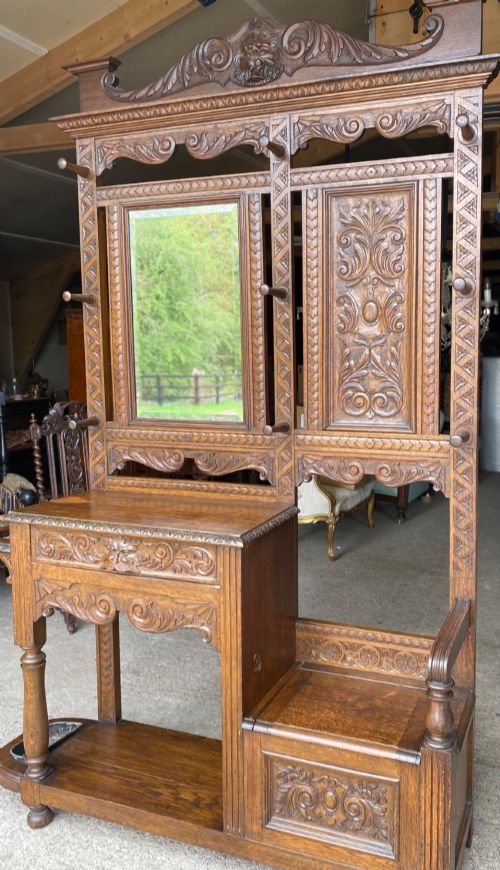
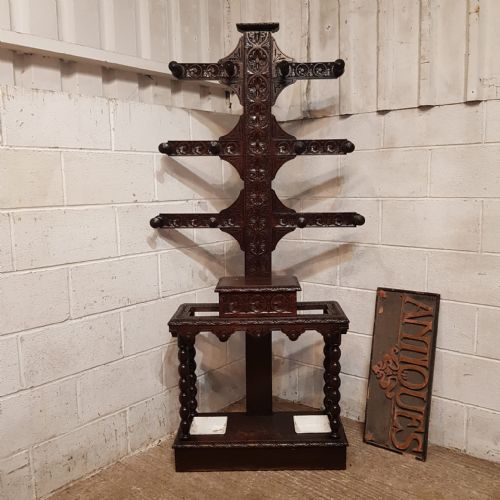
Quality in a brown oak hall tree is determined by the depth and crispness of the carved ornamentation, particularly on architectural crests and figurative panels like Greenman motifs. Heavier, multi-functional forms with integrated seats and substantial proportions generally represent more ambitious workshop production.
The integration of secondary materials, from shaped glass and bevelled mirror plates to cast metal hardware and genuine horn elements, distinguishes standard utility pieces from exhibition-grade examples.
Materials documented across the inventory include oak, brass, iron, glass mirrors, and animal horn.
J. Parker of Woodstock·Astrola
The Brown Oak Hall Tree Glossary
- Hall stand
- A piece of entrance furniture combining coat hooks, umbrella storage, and often a mirror or bench seat. It serves the same organisational purpose as a hall tree.
- Greenman
- A sculptural architectural motif depicting a human face entwined with foliage, frequently carved into Victorian oak furniture. This decorative element often appears on the crests of larger hall stands.
- Flemish hall stand
- A heavily carved piece of furniture featuring scrolling foliage, cartouches, and deep relief work characteristic of seventeenth-century revival styles. These examples are typically built in substantial proportions.
- Black Forest
- A regional style of nineteenth-century woodcarving originating in Switzerland, known for naturalistic animal and forest motifs. Pieces in this tradition often incorporate carved bears and natural timber forms.
- Drip tray
- A removable metal basin positioned at the base of a stand to catch water from wet umbrellas. These trays protect the underlying timber floor from moisture damage.
Brown Oak Hall Tree: Frequently Asked Questions
How do I maintain the oak finish?
Clean the timber periodically with a dry, soft cloth and apply a quality beeswax to nourish the grain. Avoid placing the piece in direct sunlight or near heat sources to prevent the wood from drying out.
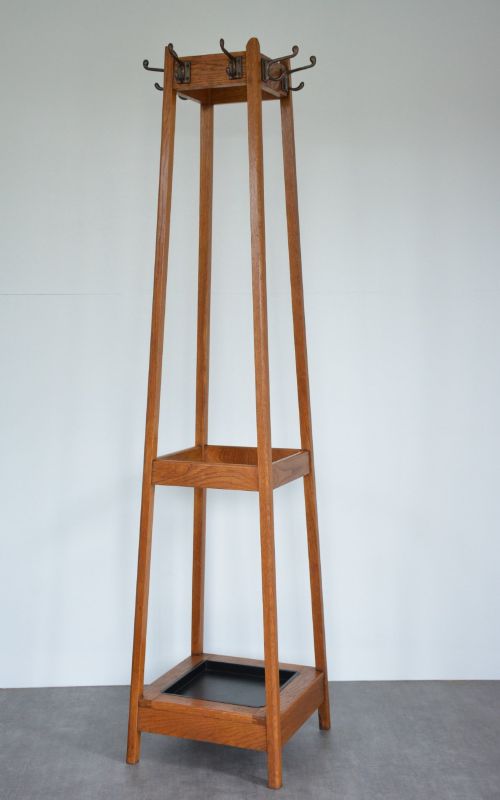
Ensure that metal drip trays are regularly emptied and dried to prevent rust transference onto the surrounding wooden base.
Were these pieces secured to the wall?
Many tall hall stands were originally designed to be anchored to a wall for stability, particularly those featuring heavy overhead cornices and projecting benches. Freestanding stability depends heavily on the weight distribution of the base and the loaded coats.
Check the upper framework for original fixing brackets if you intend to secure the piece in a modern hallway.
How do I identify a Victorian example?
Victorian pieces typically display dark oak patination, heavy relief carving, and robust structural proportions. Stylistic markers include Greenman masks, scrolling foliage, and turned wooden columns.
Later Edwardian and twentieth-century versions tend to adopt simpler geometric lines, lighter timber tones, or functional industrial forms.
What is the purpose of the built-in mirror?
The integrated mirror allowed occupants to check their appearance before leaving the house or upon arrival. It also served to bounce natural light into darker entrance halls.
These mirror plates are frequently bevelled and secured within carved wooden frames as a central focal point of the upper structure.