

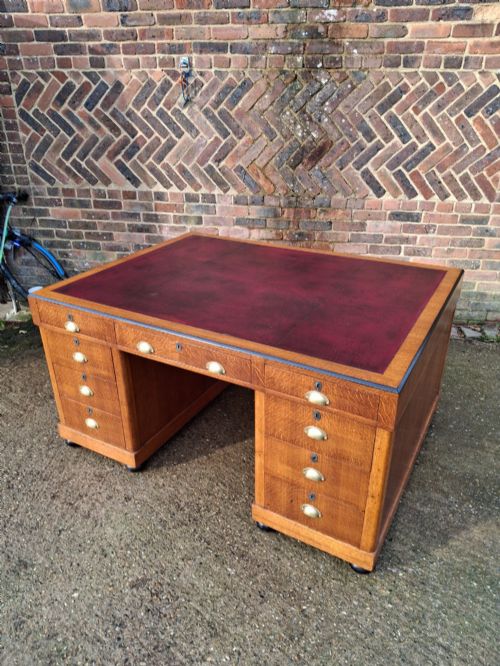
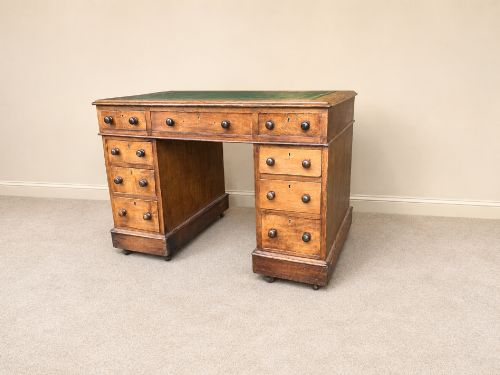
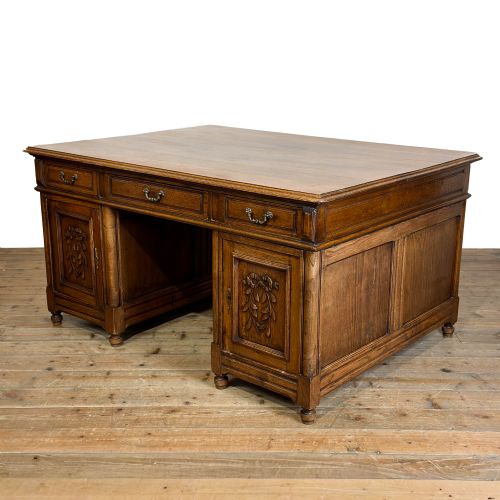
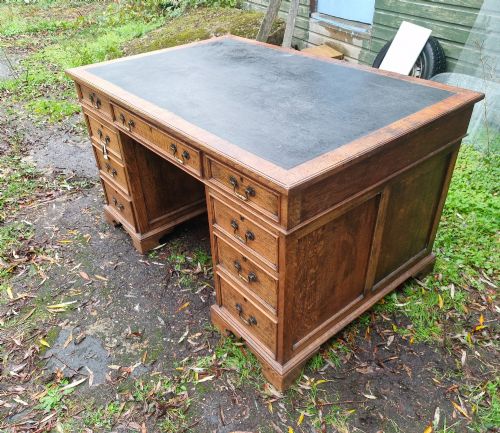
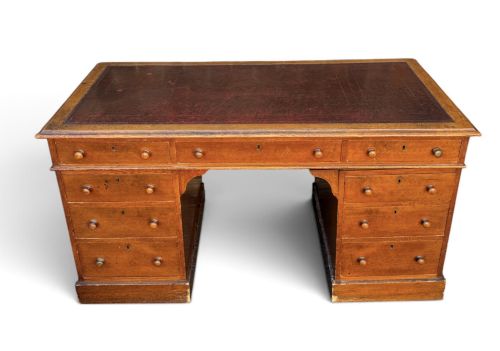
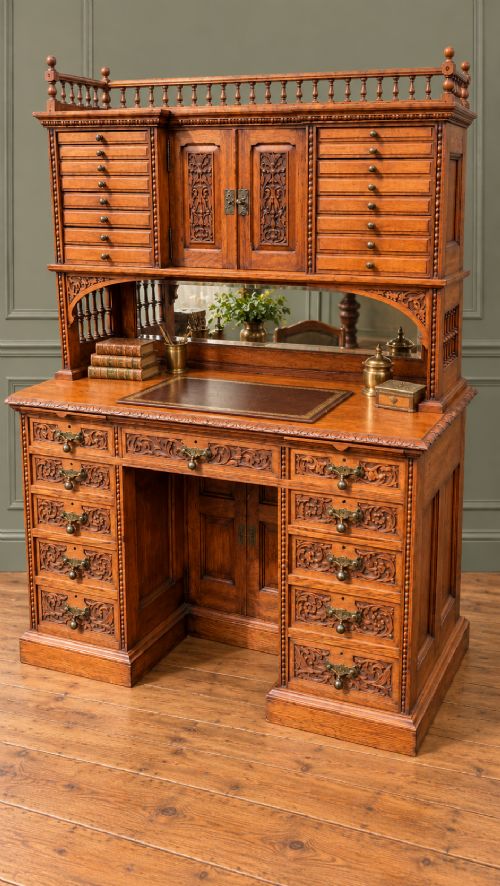
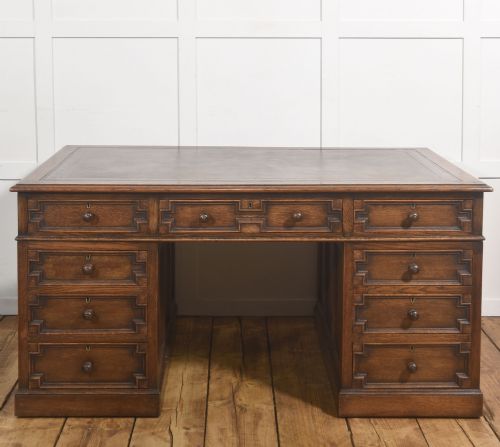
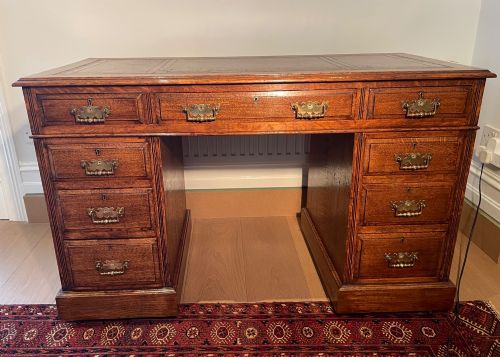
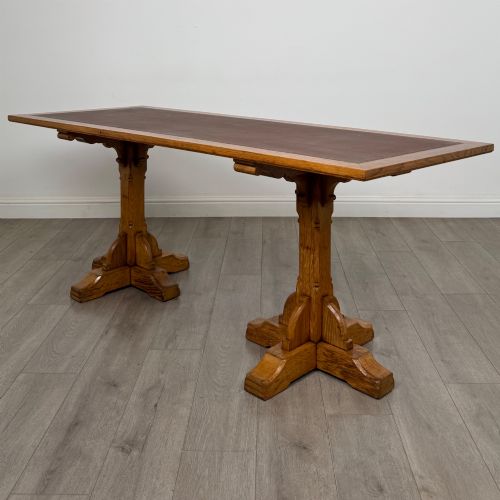
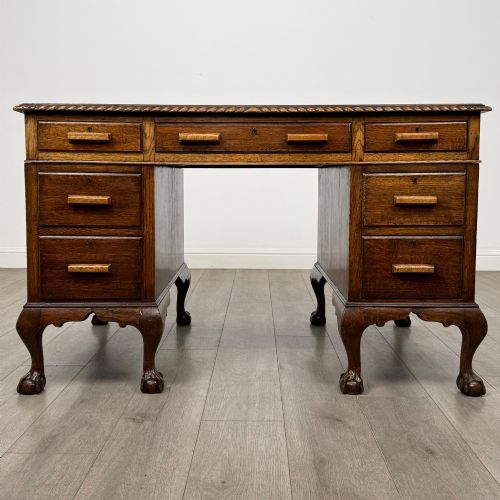
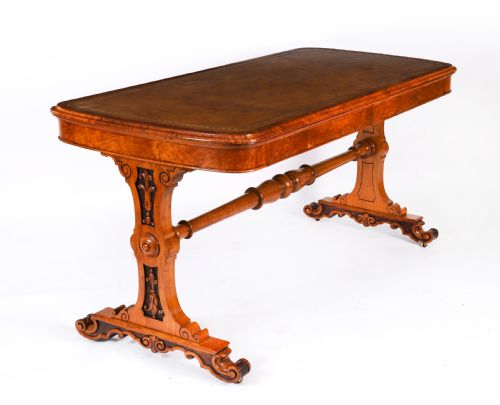
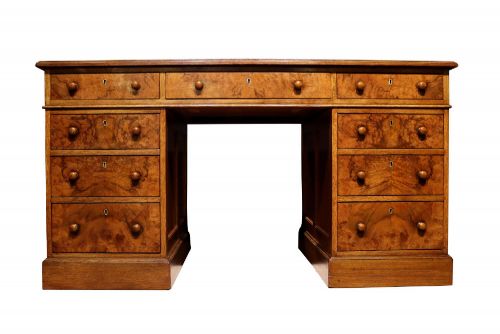
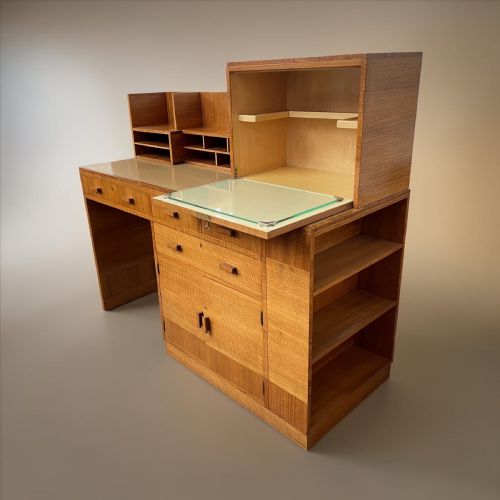
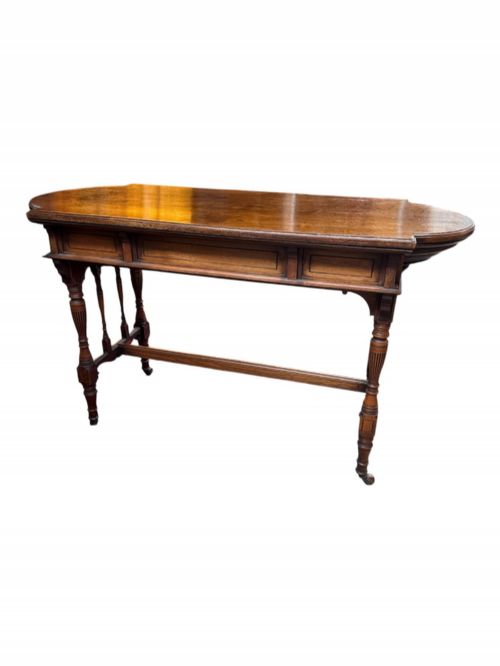
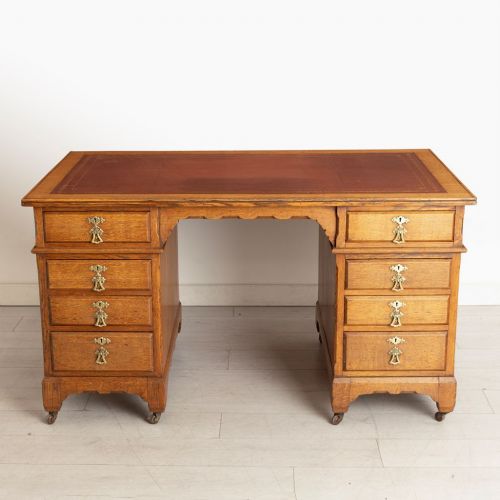

Brown Oak Executive Desk
A brown oak executive desk is a heavy workspace built for authority, combining rich grain with durable utility for a serious study.
Brown Oak Executive Desk
A brown oak executive desk is fundamentally built to command a room, appearing in forms such as partners desks, pedestal desks, and library tables. Buyers hunting for a brown oak executive desk meet sturdy pieces designed for administration, ranging from pedestal configurations to expansive partners formats.
The selections span the nineteenth century into the twentieth century, taking in Victorian, Edwardian, and Art Deco periods. These heavy workspaces originate primarily from British workshops, though French provincial and Art Deco variations also emerge in the listings.
Makers such as Gillow and Co, T Wilson, and Heal's contributed to this lineage, alongside pieces attributed to Étienne Kohlmann. Such examples reflect the shifting tastes from heavy nineteenth-century carvings to streamlined twentieth-century office furniture.
Distinguishing Quality
Quality rests upon the depth of the timber's figure and the integrity of the original construction, distinguishing standard utilitarian pieces from high-status commissions. Desks bearing makers' labels or attributed to established workshops command greater authority through documented provenance.
The sophistication of the carving and the retention of original brass handles and fitted leather tops elevate a piece far above simpler utility items. Superior examples maintain balance in their proportions, whether executed in heavy Victorian revival styles or cleaner Art Deco lines.
Brown Oak Executive Desk Retail Price Guide 2026
Typical asking prices for brown oak executive desk among the pieces listed under this phrase on Sellingantiques today, from the lower quarter to the upper quarter. They describe what is for sale here now, not the wider market.
The listings span the Victorian, Edwardian, and 1930s periods, featuring oak, pollard oak, leather, and brass materials.
Gillow & Co·T Wilson·Heal's·Étienne Kohlmann·Deighton & Dunthorne
The Brown Oak Executive Desk Glossary
- Partners Desk
- A large double-sided workspace designed for two people to sit opposite each other, featuring drawers and cupboards on both faces.
- Pedestal Desk
- A freestanding writing table comprising two separate pedestals of drawers beneath a single top, joined by a central kneehole section.
- Pollard Oak
- Timber taken from trees that have been pollarded, producing a highly figured, clustered grain pattern prized for decorative cabinet work.
- Library Table
- A large freestanding table used for reading and writing, generally finished on all sides and lacking the banks of drawers found in pedestal desks.
Brown Oak Executive Desk: Frequently Asked Questions
What is a partners desk?
A partners desk is a large, double-sided workspace built so two people can sit and work opposite each other. These pieces incorporate matching drawers and cupboards on both long sides.
Originally designed for banks, solicitors, and grand libraries, they allow dual access to storage without compromising knee space or surface area.
How do I date an oak desk?
Dating relies on observing structural characteristics, hardware, and decorative styles tied to specific periods like the Victorian or Edwardian eras. Heavy carvings and Jacobean revival motifs typically point to the nineteenth century.
Cleaner lines, simpler panel work, and documented maker labels often indicate later Edwardian or 1930s Art Deco production.
What is pollard oak?
Pollard oak is a decorative timber harvested from trees that were cut back in their youth, causing dense, swirling knots to form in the grain. Cabinet makers used this wood for surface veneers on high-status furniture.
Its distinct patterned appearance adds rich visual texture to writing tables and pedestal desks from the nineteenth century.
How should I care for the leather top?
The leather writing surface benefits from gentle cleaning using a damp cloth and regular treatment with specialist leather balms to prevent cracking. Avoiding direct sunlight preserves the original colour and supple texture of the hide.
Many antique desks retain their original gilt-tooled borders, which require careful handling around the edges during maintenance.