
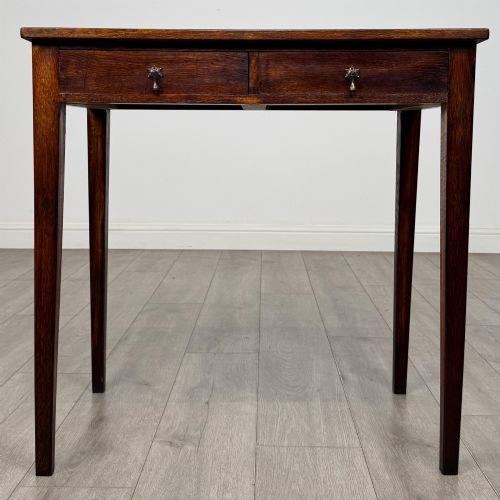
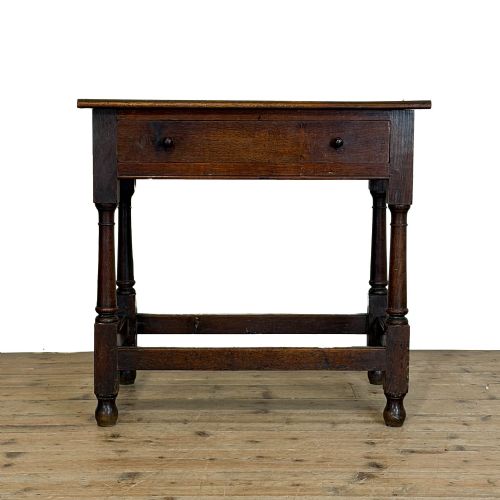
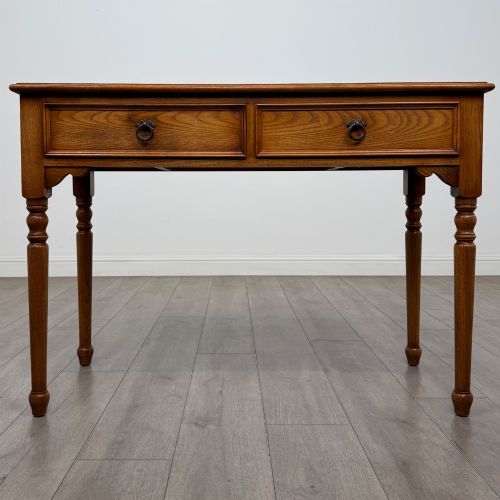
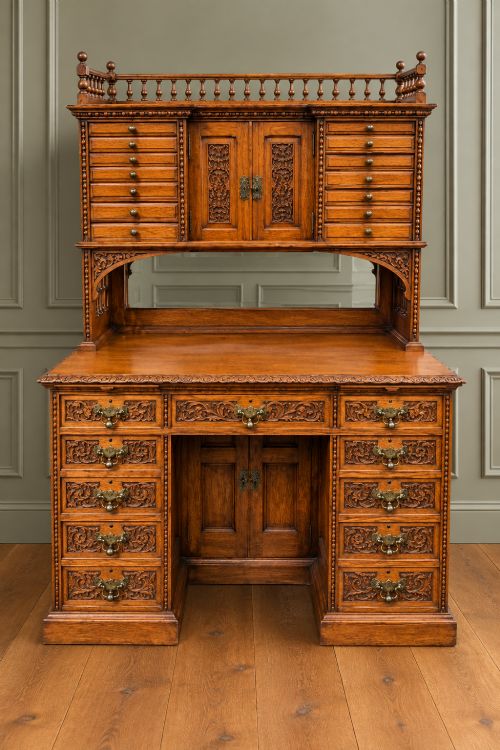
Brown Oak Desk Table
A brown oak desk table brings sturdy timber and practical drawers into a study, drawing on centuries of cabinet-making traditions from the Georgian era onwards.
Brown Oak Desk Table
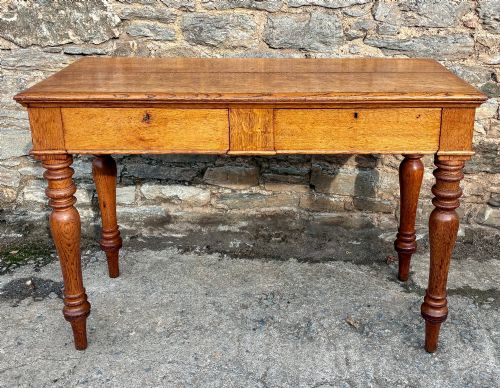
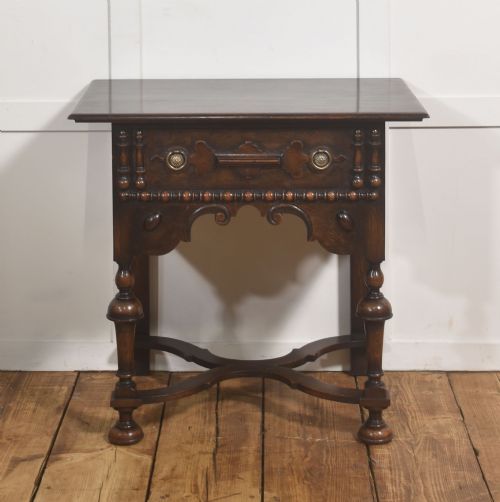
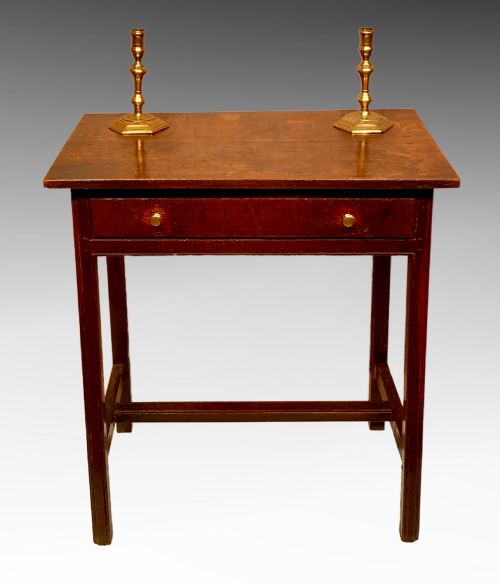
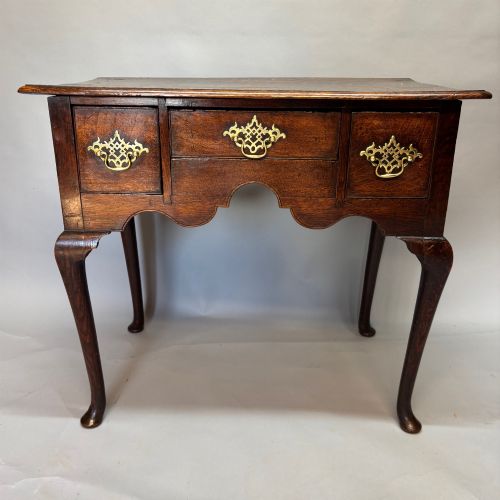
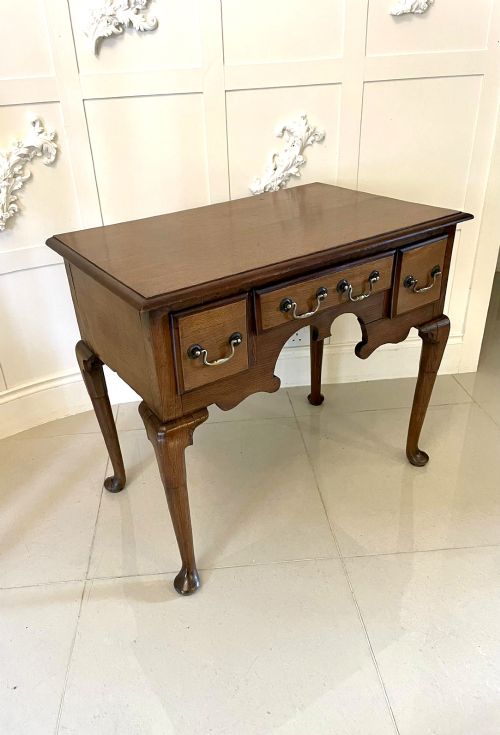
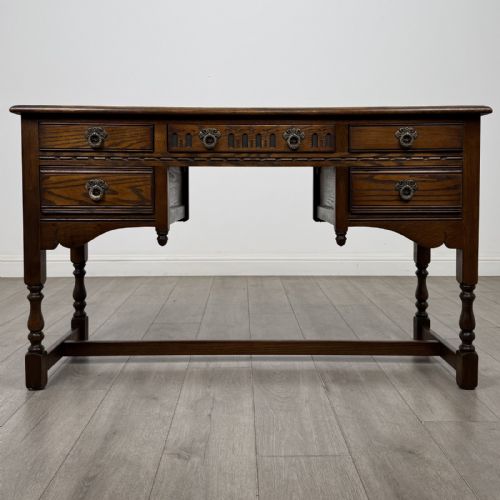
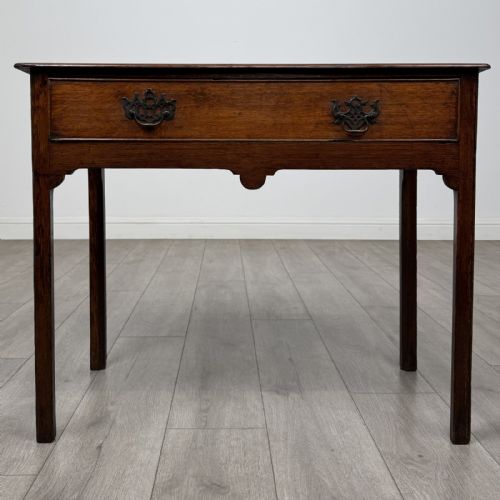
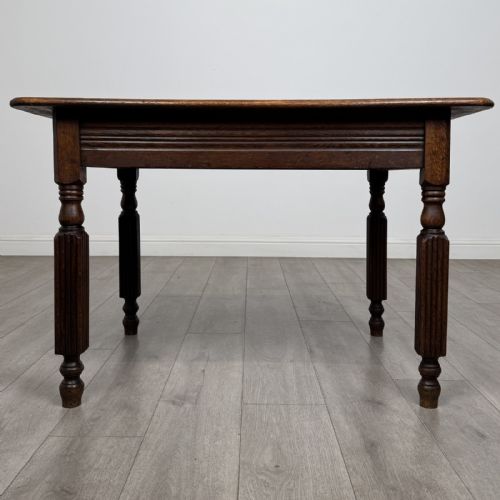
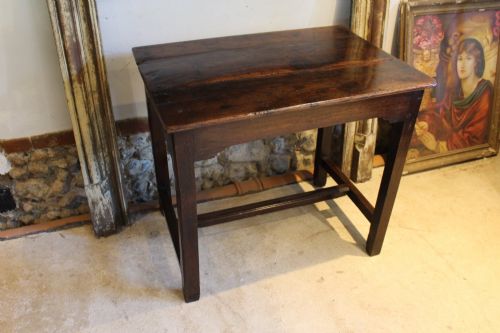
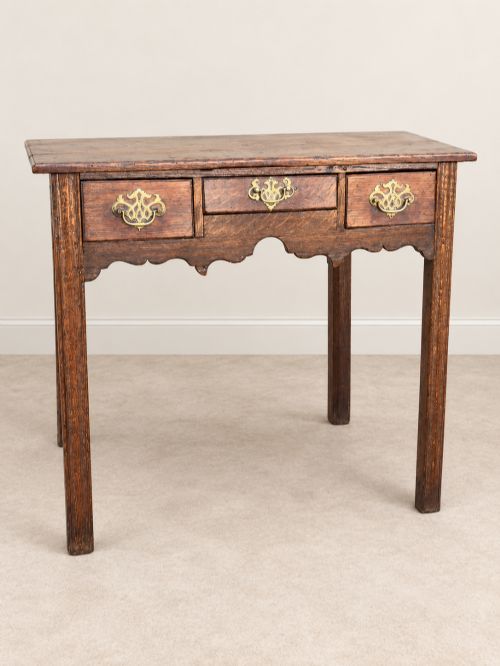
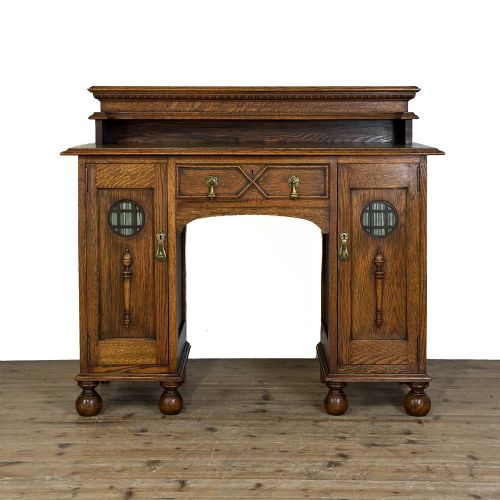
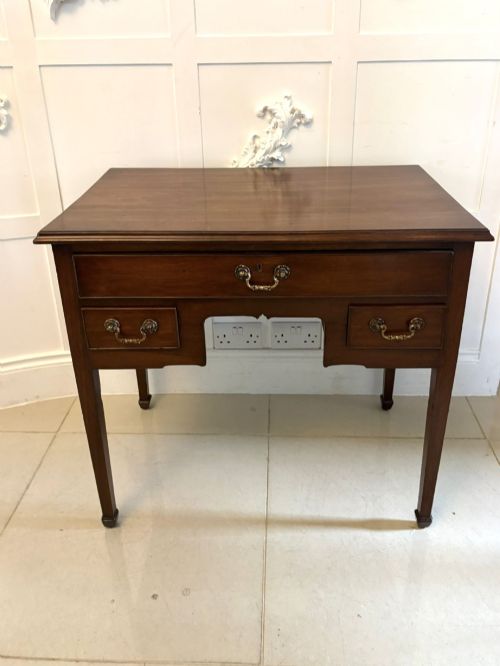
A brown oak desk table combines the practical surface of a writing table with the robust character of oak timber. These pieces span centuries of design, appearing as Georgian lowboys, Victorian kneehole desks, and Edwardian library tables.
Buyers most frequently encounter items from the Victorian and Edwardian periods, alongside earlier 18th-century Georgian lowboys and side tables adapted for writing. Forms range from simple single-drawer side tables to large pedestal desks and refectory formats.
Factors that define quality
Quality rests upon the selection of timber, the crispness of any carved ornamentation, and the integrity of the original construction. Pieces exhibiting figured oak grain and thoughtful proportions command greater attention.
The degree of original hardware, the survival of fitted interior drawers, and the retention of a rich surface patina distinguish superior examples from standard utility furniture.
Several desks manage to squeeze nine separate drawers into a compact pedestal, ensuring a hiding spot for every stray paperclip.
The Brown Oak Desk Table Glossary
- Lowboy
- A small oak table with one or more drawers, originating in the 18th century and often utilised as a dressing table or writing desk.
- Pedestal desk
- A heavy freestanding desk comprising two supporting banks of drawers beneath a wide writing surface.
- Linenfold
- A style of carved wooden panelling resembling folded vertical linen fabric, popular in traditional oak furniture.
- Kneehole desk
- A compact desk featuring a central recessed space for the legs, flanked by pedestals containing small drawers.
- Refectory table
- A long, narrow dining or working table built with solid timber legs and a central supporting stretcher.
Brown Oak Desk Table: Frequently Asked Questions
How do I date an oak desk?
Dating relies on examining construction methods, drawer dovetails, and timber characteristics. Earlier pieces from the 18th century often display hand-cut joinery and pegged frames.
Later Victorian and Edwardian examples incorporate machine-sawn elements, factory-made hardware, and standardised drawer linings.
What is the difference between a lowboy and a side table?
A lowboy is specifically a low table equipped with one or more rows of drawers, traditionally designed for domestic utility and writing tasks.
Standard side tables may lack drawers entirely or serve purely decorative and surface-holding functions in a hallway or parlour.
Can I use an antique oak table for daily work?
These tables were built from durable hardwoods designed for active daily use in studies, libraries, and offices. Solid oak provides exceptional strength for modern writing and computer tasks.
Protecting the timber with a blotter or leather pad preserves historic writing surfaces from ink stains and excessive wear.
How should I care for brown oak furniture?
Maintain the wood by applying natural beeswax sparingly and buffing with a soft cloth to nourish the historic grain. Avoid placing antique timber near direct heat sources or in fluctuating humidity.
Keep surfaces free from standing moisture to protect both the solid oak and any inset leather panels.