


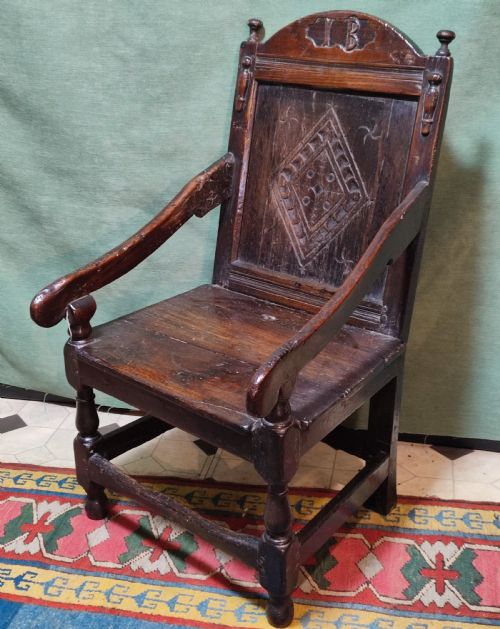


Brown Oak Child Chair
These brown oak child chair pieces are small domestic seats built for young occupants across four centuries of vernacular woodworking.
Brown Oak Child Chair
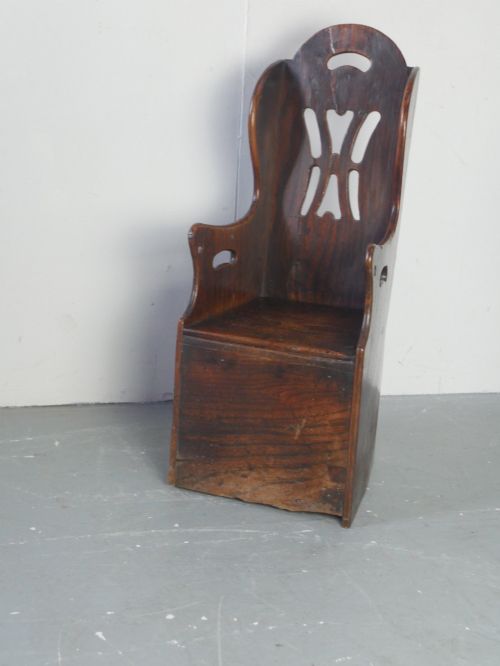
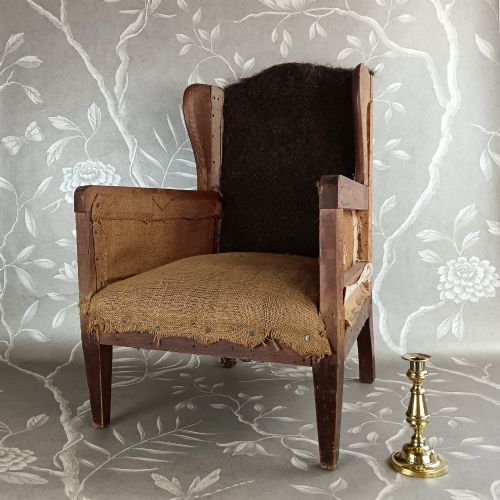
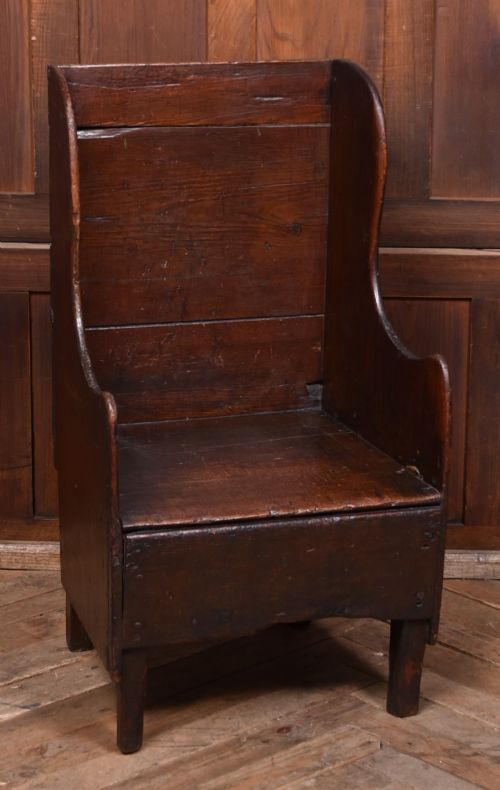
A brown oak child chair brings centuries of domestic seating down to domestic scale, ranging from early joined wainscot forms to later Windsor and ladderback designs. When searching for a brown oak child chair, buyers encounter high chairs, lambing chairs with rockers, and miniature armchairs spanning the seventeenth, eighteenth, and nineteenth centuries.
Rural makers adapted full-size vernacular forms for younger occupants, utilising elm, ash, and oak alongside rush, cane, and hessian seating. English country workshops produced sturdy seating that survived generations of nursery use without losing its structural integrity.
Materials and construction
Makers constructed these miniature seats using traditional timber framing techniques, pegging joints securely to withstand heavy domestic employment. Oak formed the primary structural frame, complemented by elements of elm and ash.
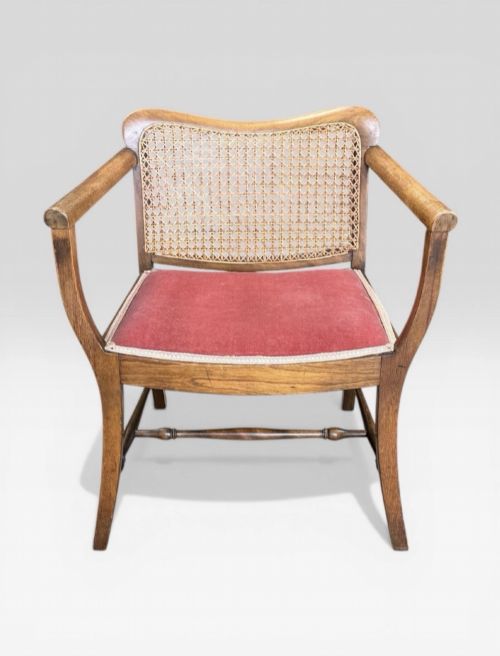
Seating surfaces utilised natural materials such as woven rush, split cane, or solid timber planks, while upholstery employed velvet and hessian where padding was required.
Listings feature oak alongside elm and ash, reflecting the common local timbers utilised by historical English country woodworkers.
Assessing quality and proportion
Quality rests in the fidelity of scale and the retention of original surfaces rather than mere diminutive size. Superior examples display crisp joinery and thoughtful proportions that reflect the aesthetic standards of their larger counterparts.
The integrity of timber colour and the minimal replacement of structural components distinguish better surviving pieces from heavily restored domestic items.
James Shoolbred
The Brown Oak Child Chair Glossary
- Wainscot
- A heavy wooden armchair constructed with panelled backboards and solid timber seats. This form dates back to the seventeenth century and denotes high status.
- Lambing chair
- An enclosed wooden armchair featuring high winged sides designed to block draughts. These pieces often include storage compartments or rockers beneath.
- Windsor
- A chair built with a solid wooden seat into which the legs and back spindles are separately socketed. The hoopback variation uses a continuous bentwood bow.
- Bergere
- An upholstered armchair featuring woven cane panels on the back and armrests. This technique appeared on refined nineteenth-century child seats.
- Ladderback
- A chair back constructed from horizontal wooden slats set between two upright posts. These frames commonly support woven rush seating.
Brown Oak Child Chair: Frequently Asked Questions
Were these miniature chairs actually used by children?
Makers built these scaled-down seats specifically for young members of the household, adapting adult forms for domestic nursery life. High chairs elevated infants to table height, while low armchairs provided sturdy seating by the hearth.
Over centuries, these objects served practical family functions rather than acting merely as decorative models. Their robust construction allowed them to withstand daily use by generations of children.
How do I date an early oak child chair?
Dating relies on examining the joinery techniques, timber patination, and stylistic markers characteristic of specific centuries. Seventeenth-century examples typically show pegged mortise and tenon joints with carved wainscot panels.
Later nineteenth and twentieth-century versions incorporate steam-bent components and machine-sawn elements. Comparing the construction methods to dated comparative pieces helps narrow the period of origin.
Are rush and cane seats original on these chairs?
Many surviving child seats retain their original seating materials, though natural cordage and cane frequently required replacement due to heavy wear. Close inspection of the seat frame reveals whether peg holes or rebate grooves match historical weaving patterns.
Professional re-weaving often employs traditional methods and matching materials to preserve the historical utility of the chair. Period repairs can also indicate the working life of the piece.
How should I care for antique oak furniture?
Maintaining antique oak involves keeping pieces away from direct heat sources and fluctuating humidity that causes timber to split. Applying occasional microcrystalline wax helps protect the surface patination without building up heavy residues.
Avoid using modern silicone polishes which penetrate the pores of the timber and alter the natural colour. Gentle dusting with a dry cloth keeps the surface clean.