

Brown Marquetry Commodes
These brown marquetry commodes bring complex timber patterns and fine period craftsmanship directly into a room, offering both storage and historical presence.
Brown Marquetry Commodes
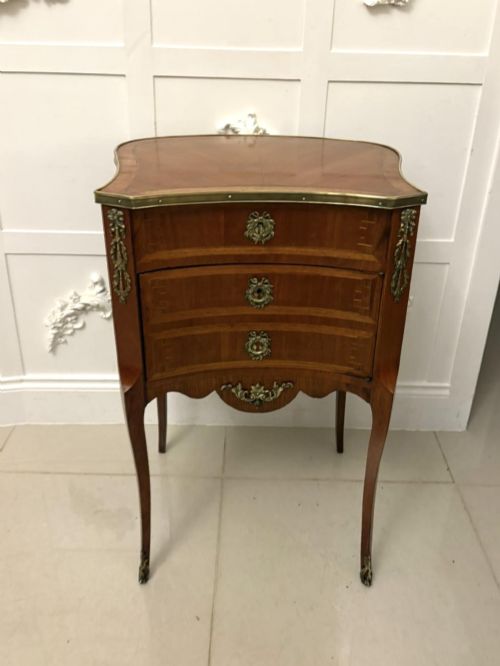
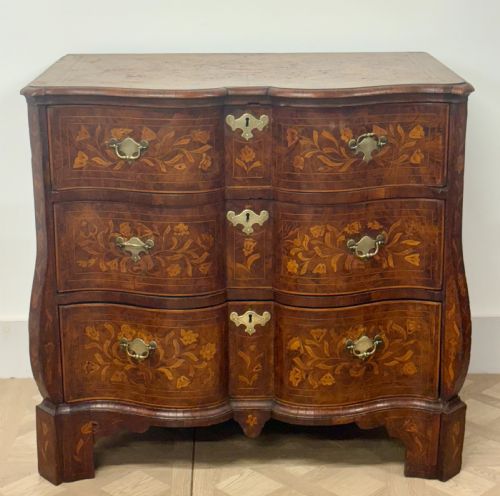
When buyers search for brown marquetry commodes, they are looking at case furniture designed with decorative wood veneers arranged in pictorial or geometric patterns. These pieces function primarily as decorative chests of drawers, side cabinets, and bedside tables.
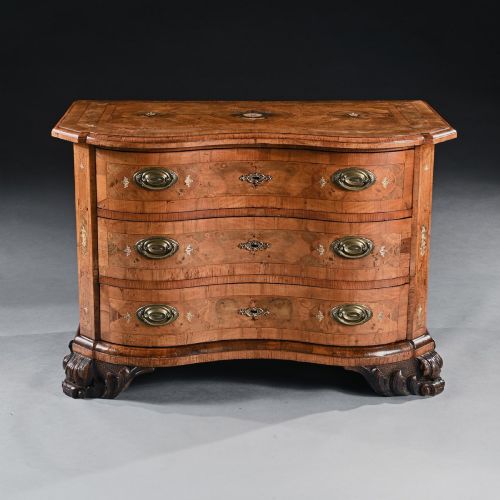
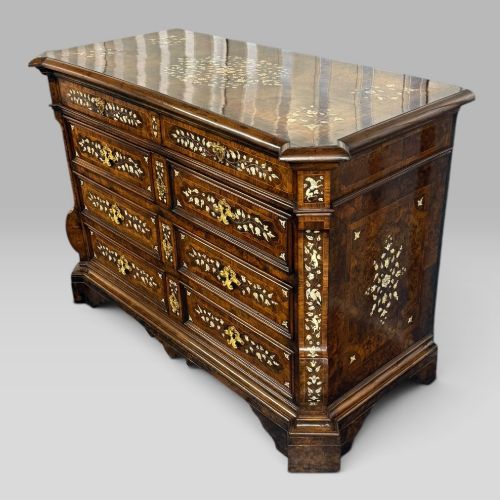
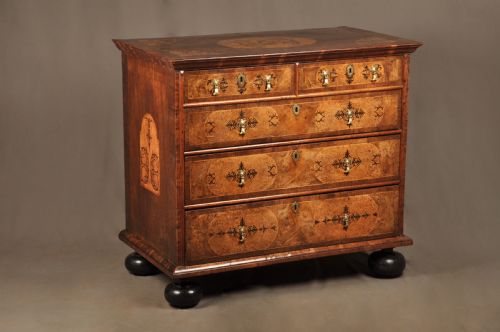
The selections available range from 17th-century walnut oyster pieces to 18th-century Dutch and Italian serpentine chests, alongside later 19th-century French revival forms. Walnut, kingwood, and oak provide the structural timber foundations for these elaborate surface designs.
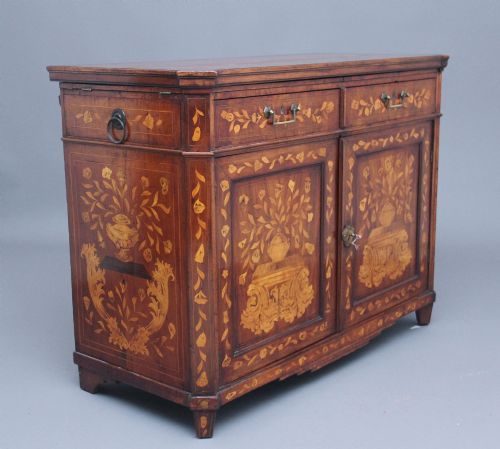
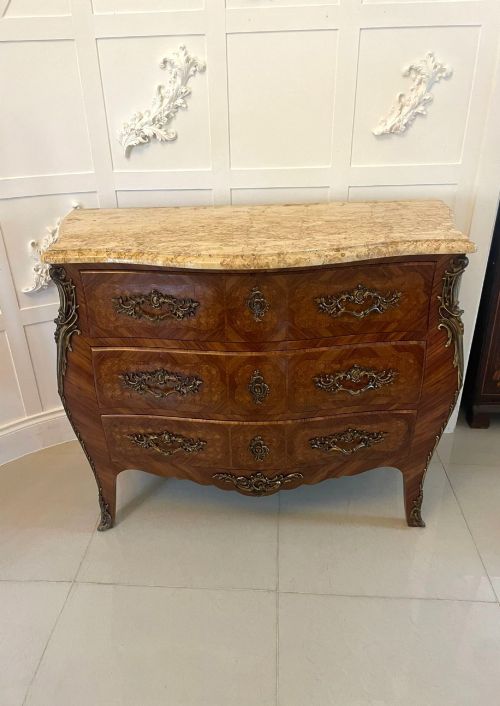
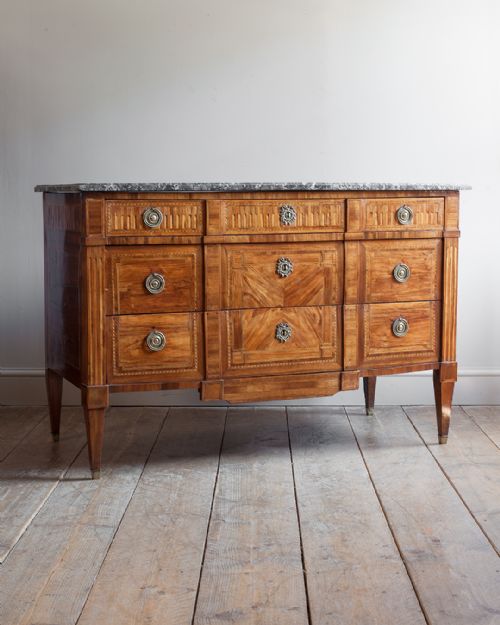
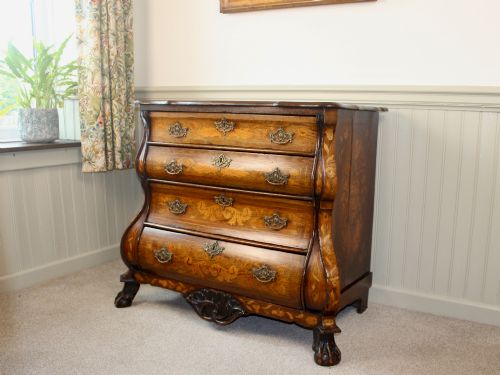
Continental European workshops dominate the origin of these items, with particular representation from French, Italian, and Dutch makers spanning multiple centuries. Buyers most frequently encounter variations featuring floral inlay, marble tops, and bombe or serpentine fronts.
How They Were Made
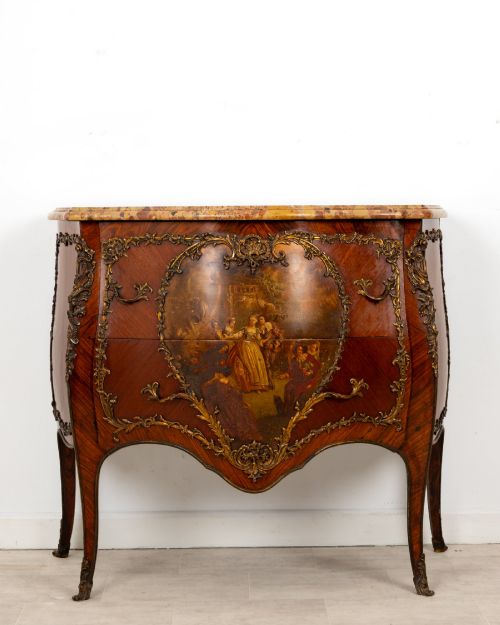
Craftsmen built these cabinets using primary structural woods like oak, walnut, or mahogany, upon which finer veneers of kingwood, fruitwood, and walnut were applied. Artisans then cut and fitted contrasting timbers, pewter, and ivory into precise pictorial or geometric marquetry motifs.
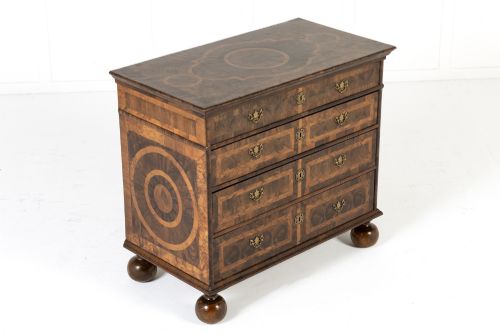
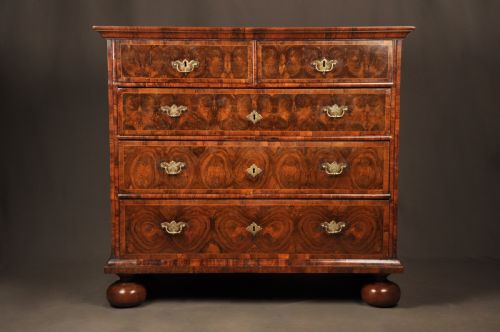
Surfaces frequently integrated ormolu and gilt-bronze mounts to accent the drawer edges and corners, while marble tops added weight and utility to French and Italian designs. Oyster veneering involved slicing cross-sections of branches to create concentric circular patterns across the drawer fronts.
Brown Marquetry Commodes Retail Price Guide 2026
Typical asking prices for brown marquetry commodes among the pieces listed under this phrase on Sellingantiques today, from the lower quarter to the upper quarter. They describe what is for sale here now, not the wider market.
Certain 17th-century chests use rootwood cut into tiny circular rounds, turning humble tree branches into glistening oyster patterns.
What Varies in Quality
The standard of a commode rests upon the precision of the veneer cutting and the complexity of the timber selection, such as the use of burr elm, burr yew, or fine floral marquetry. Finer examples display seamless alignment of the wood grain across opening drawer dividers and continuous patterns around curved serpentine or bombe corners.
The integration of secondary materials also dictates the tier of the piece, distinguishing items with heavy gilt-bronze mounts, scagliola or marble tops, and intricate pewter or ivory inclusions from simpler geometric interpretations. Maker attribution, such as work originating from established workshops like Sormani, Edwards and Roberts, or Pietro Ferrario, further elevates the stature of the furniture.
Grand Ducal Workshops·Sormani·Pietro Ferrario·Edwards and Roberts
The Brown Marquetry Commodes Glossary
- Marquetry
- The art of applying decorative pieces of veneer to a structure to form intricate designs or pictures. This technique utilises varied coloured woods, ivory, and pewter.
- Bombe
- A swollen or bulging outward curve characteristic of continental case furniture fronts and sides. This bulging profile requires skilled woodworking to maintain structural integrity.
- Serpentine
- A furniture front or top shaped with a central convex curve flanked by two concave curves. The flowing line appears frequently on 18th-century commodes.
- Oyster veneer
- Timber cut transversely across smaller branches or roots to reveal circular, ringed growth patterns resembling oysters. Craftsmen arranged these rounds closely across drawer faces during the 17th century.
- Ormolu
- Gilt-bronze decorative mounts applied to the corners, feet, and handles of furniture. These metallic additions provide contrast against dark walnut and kingwood surfaces.
- Parquetry
- Geometric mosaic woodwork formed by small pieces of veneer arranged in repeating patterns. Unlike marquetry, parquetry relies on angular shapes rather than pictorial flora.
Brown Marquetry Commodes: Frequently Asked Questions
How do I date a marquetry commode?
Dating relies on identifying the underlying structural timber, the shape of the carcase, and the style of the veneer work. Seventeenth-century pieces often display oyster veneers and oak frames, while 18th-century examples favour serpentine outlines and floral marquetry.
Later 19th-century revival pieces typically copy these earlier forms using distinct French Louis XV or Louis XVI styling cues. Examining the secondary woods inside the drawers provides further confirmation of the manufacturing period.
Where were these commodes originally made?
The recorded pieces originate predominantly from continental European workshops, with strong representation from France, Italy, the Netherlands, and Germany. Each region developed distinct characteristics, such as the bombe oak construction found in Dutch pieces or the marble-topped gilt mounts typical of Parisian workshops.
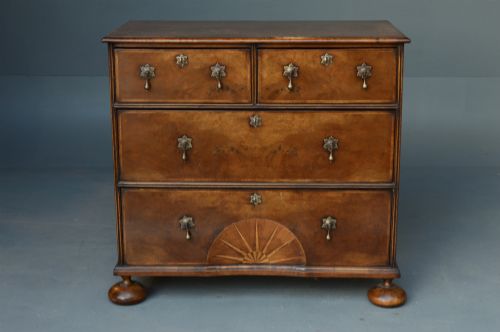
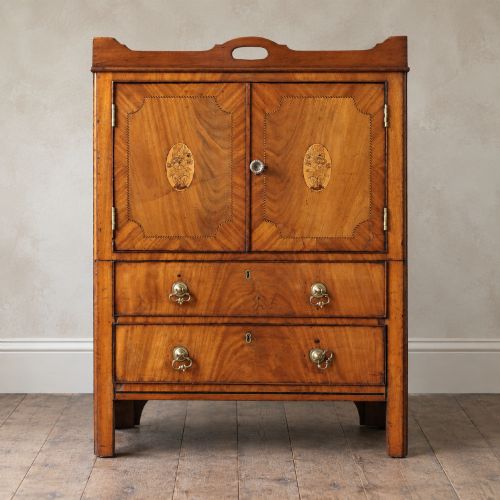
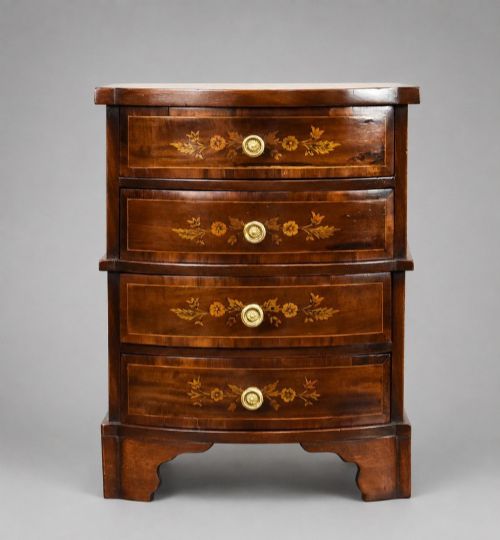
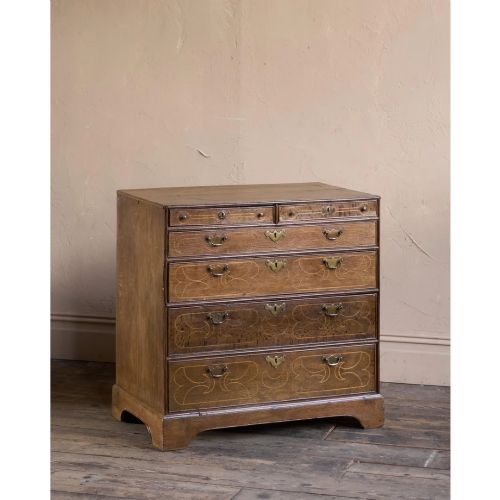
English makers also produced related chests, frequently employing walnut or mahogany with subtle inlay rather than full pictorial marquetry. Regional preferences heavily influenced the choice of timber and decorative mounts.
How should I care for timber veneer?
Maintaining these surfaces requires protecting the delicate wood and marquetry from direct sunlight and dramatic shifts in relative humidity. Consistent indoor conditions prevent the underlying glues from drying out and stopping the veneer from lifting.
Applying occasional appropriate wax preserves the sheen of walnut and kingwood without building up heavy residues. Avoid placing wet items or unpadded objects directly onto the wooden or marble surfaces.
What is the difference between a commode and a chest of drawers?
Historically, a commode refers to a low, decorative chest of drawers or cabinet developed in France during the late 17th century. They frequently feature more elaborate shaping, such as serpentine or bombe fronts, and often incorporate marble tops.
A standard chest of drawers is typically taller and possesses a more utilitarian British domestic origin. However, antique terminology often uses both terms interchangeably for continental case furniture.