



Brown Marquetry Armoire
A brown marquetry armoire brings rich timber tones and intricate inlay to a bedroom, offering substantial storage with distinct period character.
Brown Marquetry Armoire
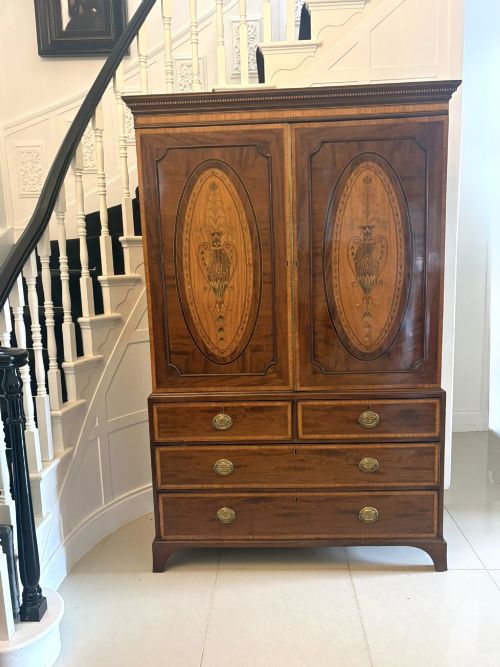
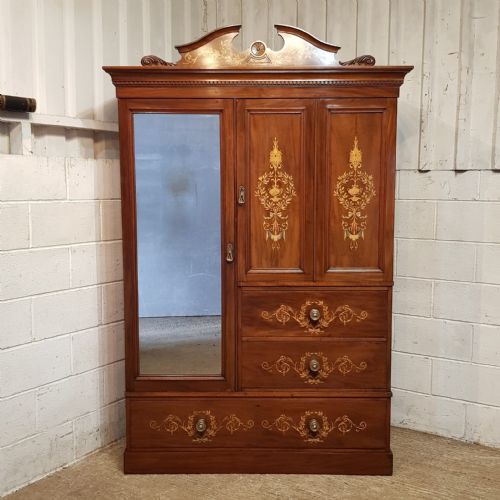
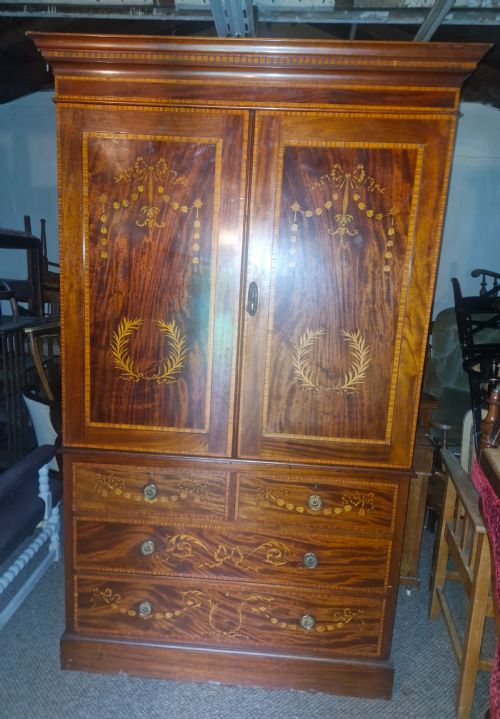
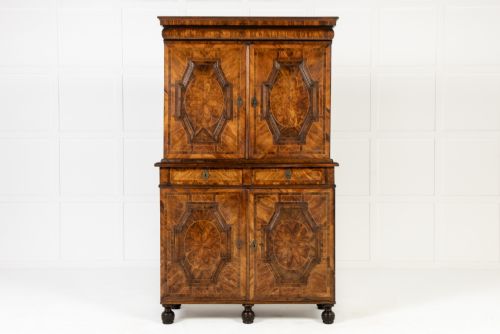
When you search for a brown marquetry armoire, you find large timber storage furniture spanning several centuries, from the seventeenth century through to the Edwardian era. The pieces vary in form from traditional wardrobes and linen presses to cabinets on stands and compactums.
The most common examples on this page are mahogany and walnut pieces featuring intricate inlay work. These range from Georgian and Edwardian wardrobe designs to Dutch Baroque and French pieces, reflecting diverse regional tastes in storage.
Makers such as Druce and Co, Edwards and Roberts, and Maples and Co appear among the larger Edwardian and Victorian examples. These pieces combine practical hanging space and linen storage with elaborate decorative surfaces.
Materials and construction
Makers built these pieces using dense primary timbers including mahogany, walnut, kingwood, and burr amboyna. These woods provided a dark, stable foundation for the exterior surfaces.
Surface decoration relies on marquetry inlay using satinwood, fruitwood, and brass details. Craftsmen cut contrasting veneers to create floral and geometric patterns across the doors and panels.
Assessing quality and execution
The standard of a piece depends on the precision of the marquetry inlay and the choice of figured timber. Finely executed floral and geometric patterns show greater skill in veneer selection and cutting.
Construction methods also distinguish finer examples, particularly in the internal fittings of compactums and linen presses. Integrated drawer boxes, fitted shelves, and robust cabinetry define the upper tier of these wardrobes.
Druce and Co·Edwards and Roberts·Maples and Co
The Brown Marquetry Armoire Glossary
- Marquetry inlay
- Decorative patterns formed by fitting together small pieces of wood veneer and other materials. This technique creates detailed pictures and geometric designs on furniture surfaces.
- Compactum
- A multi-compartment wardrobe designed to hold various types of clothing. It typically combines hanging space, sliding trays, and drawers within a single unit.
- Linen press
- A tall piece of furniture featuring upper sliding shelves for textiles and lower drawers for bulkier items. They often mirror the grand scale of armoires.
- Cabinet on chest
- A two-part storage form consisting of a display or storage cabinet resting upon a lower chest of drawers. This format elevates the storage surface for ease of access.
- Burr amboyna
- A heavily figured timber burl prized for its swirling grain patterns. It provides a highly decorative surface on luxury cabinetry.
Brown Marquetry Armoire: Frequently Asked Questions
What is a brown marquetry armoire?
A brown marquetry armoire is a large timber storage cabinet decorated with patterned wood veneer inlay. These pieces serve as wardrobes, linen presses, or general storage units.
They combine functional interior compartments with decorative exterior surfaces featuring contrasting woods like satinwood and fruitwood.
How do I date these pieces?
Dating relies on timber choices, construction techniques, and stylistic markers across different eras. Seventeenth-century examples often feature walnut and kingwood, while Edwardian pieces frequently use mahogany with detailed inlay.
Cabinet architecture and hardware styles also help distinguish Georgian and Victorian pieces from later Edwardian reproductions.
Where were they placed?
These large storage pieces traditionally stood in bedrooms, dressing rooms, and grand hallways. Their primary function was storing garments, linens, and household textiles.
Because of their substantial proportions, they served as both storage solutions and focal points in domestic interiors.
How do I care for the wood?
Maintain the timber by keeping pieces away from direct heat sources and strong sunlight, which can dry out the veneer. Regular dusting with a soft, dry cloth preserves the polished surface.
A light application of appropriate furniture wax occasionally helps nourish the wood and protect the marquetry inlay.