





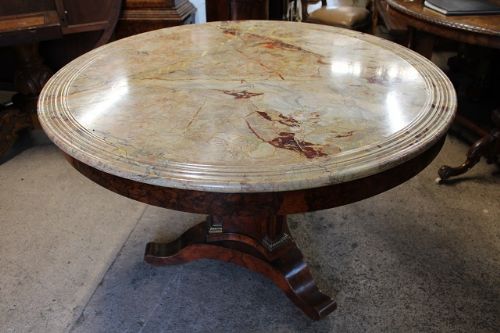
Brown Marble Foyer Table
A brown marble foyer table brings enduring presence to an entrance, combining solid timber frames with distinctive stone tops.
Brown Marble Foyer Table
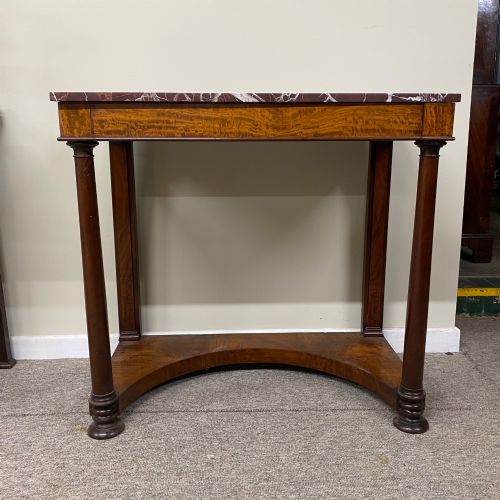
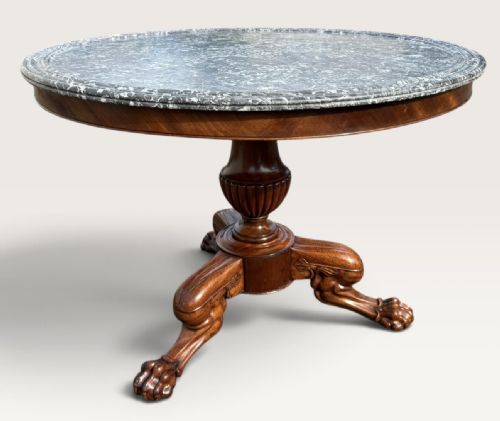
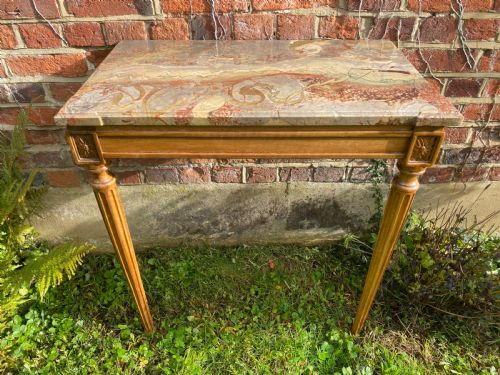
A brown marble foyer table encompasses several distinct forms designed to anchor an entrance hall or principal room. Console tables, centre tables, and side tables dominate the selection, offering versatile proportions for various interior layouts.
The available inventory spans several centuries and regional traditions, ranging from English Regency and William IV pieces to French Empire and Italian serpentine designs. This diversity ensures that both formal architectural console pieces and freestanding round centre tables appear across the selection.
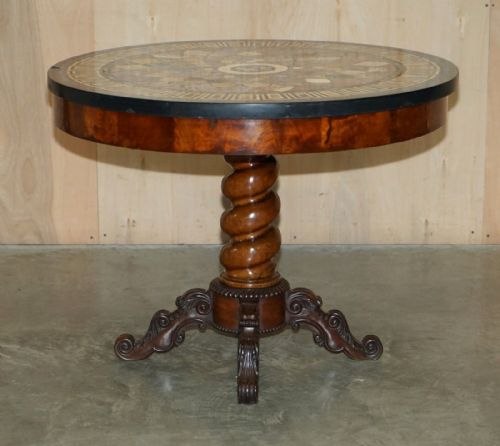
Maltese and continental examples introduce specialised stone work, including specimen marble compositions, which elevate standard functional furniture into decorative centrepieces.
Materials and construction methods
Makers utilised rich timbers such as mahogany, flame mahogany, burr elm, oak, and walnut to build the supportive bases and friezes. These woods provided structural stability while displaying pronounced grain patterns that complemented the dark stone tops.
Heavy marble slabs, often featuring natural veining, were fitted precisely to the wooden frameworks of console and centre tables. Additional detailing involved brass mounts and specialised inlay techniques such as pietra dura on select specimen tops.
Brown Marble Foyer Table Retail Price Guide 2026
Typical asking prices for brown marble foyer table among the pieces listed under this phrase on Sellingantiques today, from the lower quarter to the upper quarter. They describe what is for sale here now, not the wider market.
Some tables utilise specimen marble tops composed of so many different stone varieties that the furniture doubles as a portable geological museum.
Distinctions in craftsmanship and materials
The sophistication of the timber veneer work and the complexity of the carved wooden details distinguish finer examples from standard production. Superior pieces display carefully selected flame mahogany or burr elm grains aligned deliberately across the surface.
The quality of the marble top itself dictates the overall distinction of the table, with deeply veined slabs and intricate specimen or pietra dura work representing higher tiers of craftsmanship.
The Brown Marble Foyer Table Glossary
- Console table
- A table designed to stand against a wall, frequently secured to it with brackets for stability. These pieces often feature decorative front legs while relying on the wall for primary support.
- Centre table
- A freestanding table intended to be viewed from all sides, commonly placed in the middle of a room or grand foyer. Round versions are frequently termed guéridons.
- Guéridon
- A small French table, typically round and supported by a central column or multiple legs. These versatile pieces frequently feature inset marble tops.
- Pietra dura
- An artistic technique using cut and fitted polished coloured stones to create pictorial designs. It appears on high-status table tops within this category.
- Specimen marble
- A table top composed of numerous distinct types of marble assembled in geometric or pictorial arrangements. Such tops showcase the collector's taste for geological variety.
Brown Marble Foyer Table: Frequently Asked Questions
Where should I place a console table?
Console tables fit naturally against entrance hall walls where surface space is required without blocking pathways. Their shallow depth allows them to sit comfortably in narrow hallways.
They also serve well beneath large mirrors or artwork, creating a balanced focal point upon entry.
How do I care for a marble top?
Clean the marble surface regularly using a soft, damp cloth and mild, neutral soap. Avoid acidic cleaners or harsh chemicals that can etch the stone.
Promptly wipe away spills to prevent staining, particularly on unsealed or antique marble surfaces.
What is the difference between a console and a centre table?
Console tables are designed to stand directly against a wall and often feature flat backs or structural wall brackets. They prioritize visual impact upon entering a room.
Centre tables are freestanding objects meant to occupy the middle of a space and require finished detailing on every side.
How do I identify a Regency period table?
Regency tables typically exhibit classical proportions inspired by ancient Greece and Rome, often incorporating dark timbers like mahogany alongside bronze or brass mounts.
Look for restrained geometric lines, bold pedestals, and distinctive stone tops that reflect early nineteenth-century design ideals.