
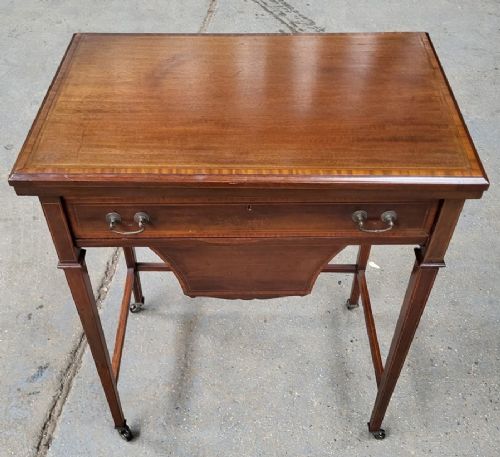
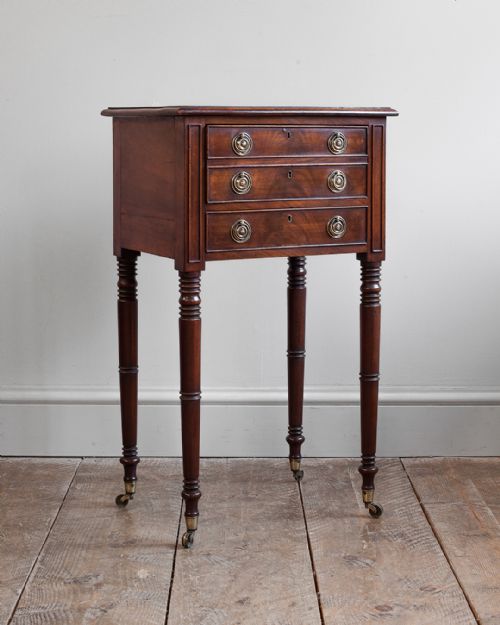
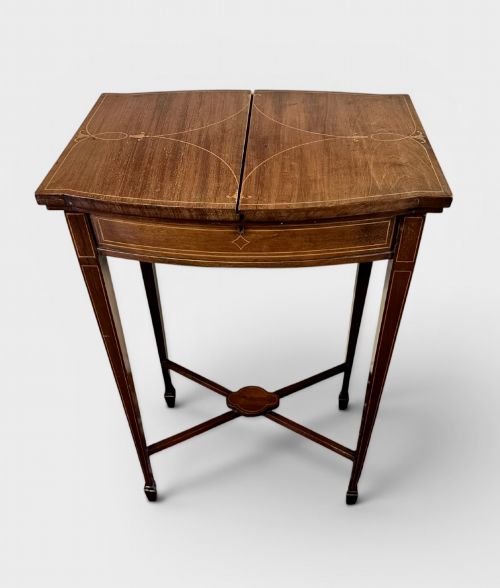
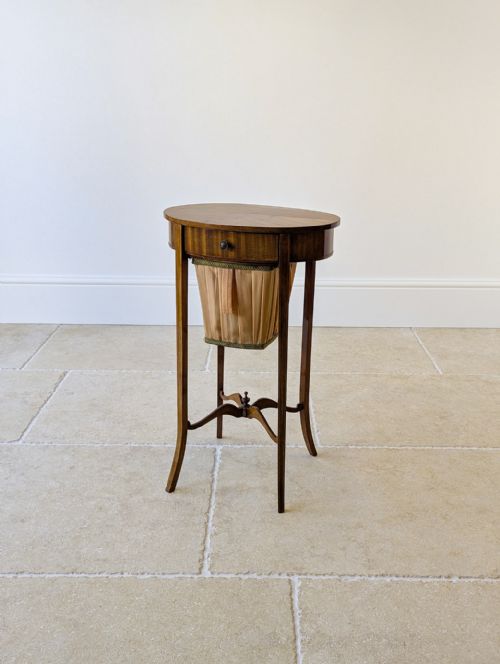


Brown Mahogany Work Box
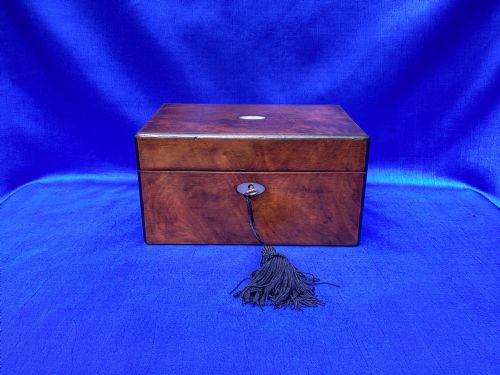
A brown mahogany work box offers a neat compartmented space for needlework and correspondence, combining practical storage with elegant timber grain.
Brown Mahogany Work Box
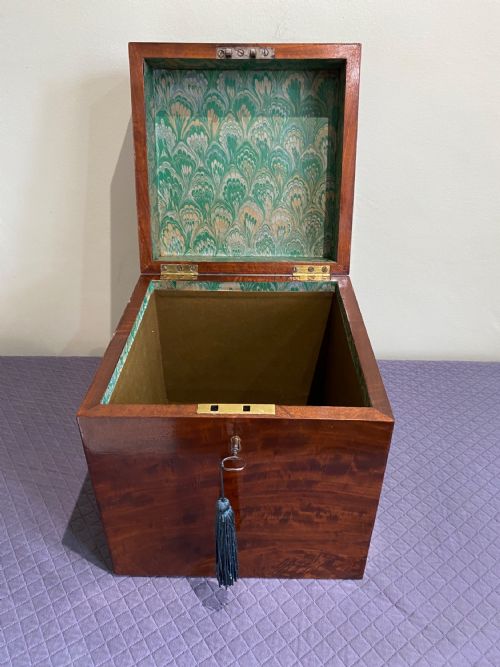
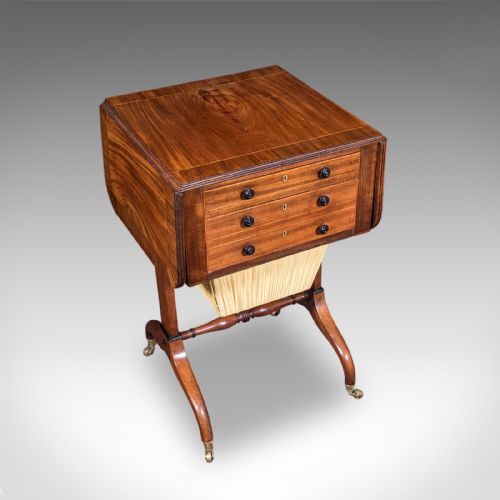
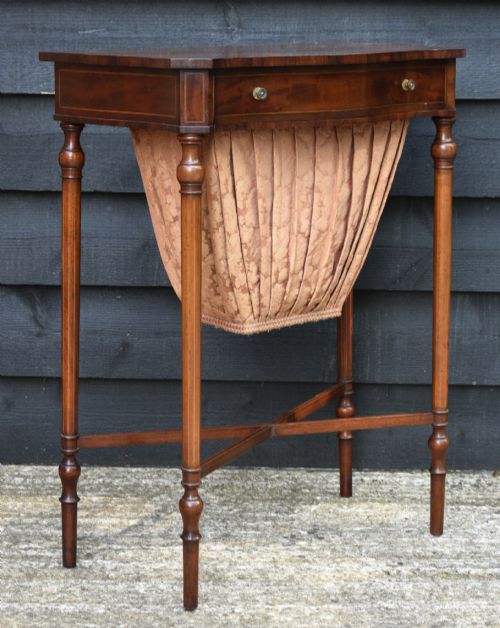
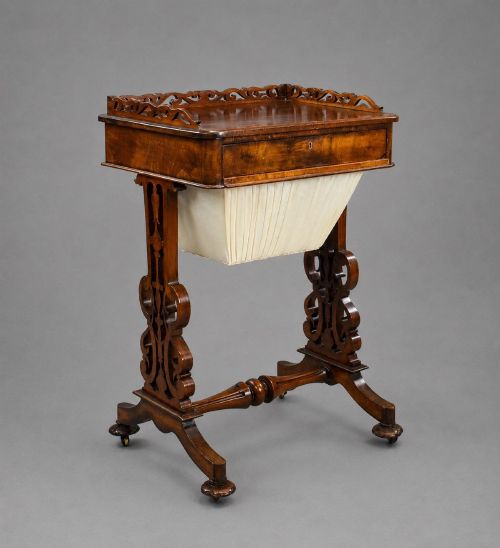
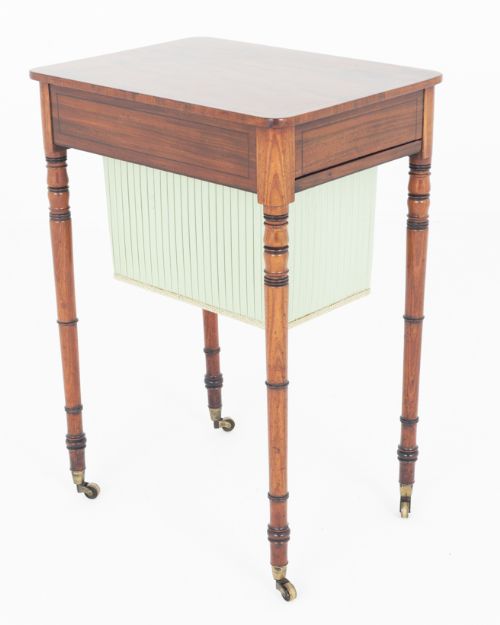
A brown mahogany work box encompasses both portable tabletop containers and larger freestanding tables fitted for sewing, needlework and writing. These pieces appear across the Georgian, Regency, Victorian and Edwardian periods, reflecting changing domestic habits in English households.
Freestanding sewing tables with drop leaves and fabric bags dominate the selection, alongside tabletop boxes and small cabinets. The construction spans simple country pieces to sophisticated examples featuring inlaid satinwood and boxwood details.
How they were made
Cabinet makers utilised solid mahogany and flame mahogany veneers applied to secondary timbers, building sturdy frames for daily use. Surfaces often received decorative stringing in boxwood or contrasting shell inlays, particularly during the Regency and Edwardian revivals.
Interiors required precise carpentry to create fitted compartments, lidded wells and miniature drawers for threads and implements. Brass hardware such as hinges, escutcheons and drop pulls secured the lids and drawers of these portable and stationary items.
One exceptional Georgian box takes the distinct shape of a shoe, holding snuff rather than sewing needles.
What varies in quality
The choice of timber sets the visual standard, with figured flame mahogany and crisp cross-banding indicating greater workshop ambition. Plain mahogany surfaces rely on clean proportions and balanced grain alignment rather than decorative embellishment.
Internal arrangement and joinery distinguish simpler utility pieces from elaborate boudoir furniture. Well-executed dovetailing on small drawers and intact fitted compartments demonstrate the original maker's skill.
The Brown Mahogany Work Box Glossary
- Flame mahogany
- A veneer cut from timber where the branch meets the trunk, producing a distinctive fire-like ripple pattern. This figured grain featured prominently on finer Regency and Victorian pieces.
- Cross-banding
- A narrow strip of veneer laid around the border of a panel with the grain running perpendicular to the centre. It provides a neat contrasting frame on tabletops and box lids.
- Drop leaf
- A hinged flap on the side of a table that folds down to save space or lifts up on a swing bracket. Many sewing tables incorporate two drop leaves to extend the working surface.
- Escutcheon
- A protective plate surrounding a keyhole, usually fashioned from brass. It prevents the timber from splitting around the lock during daily use.
- Stringing
- A thin inlay of contrasting wood such as boxwood embedded into a channel in the mahogany surface. This linear detail defines panels and edges on Sheraton Revival and Edwardian items.
Brown Mahogany Work Box: Frequently Asked Questions
What is a work box used for?
A work box served as a designated container for sewing equipment, threads, needles and small personal valuables. Ladies utilised them in parlours and bedchambers to keep domestic tasks organised.
Portable tabletop boxes allowed users to carry their needlework between rooms, while freestanding tables remained stationary furniture pieces.
How do I date a mahogany work table?
Dating relies on observing the overall silhouette, leg design and secondary decorative details like inlay. Regency and Georgian examples often feature sabre legs or pillar supports, while Edwardian pieces display lighter proportions with delicate shell motifs.
Construction methods inside the drawers, such as hand-cut dovetailing, also help establish the manufacturing period.
Are all these pieces freestanding?
The selection includes both portable tabletop boxes and substantial freestanding tables equipped with legs. Some smaller boxes were designed to sit on desks or side tables.
Freestanding versions frequently incorporate fabric work bags or miniature cabinets beneath the main top surface.
What woods are typically used?
Mahogany serves as the primary timber across all periods, appearing in both solid form and decorative veneer. Flame mahogany provided striking visual movement on prominent surfaces.
Cabinet makers often combined mahogany with contrasting light woods like boxwood and satinwood for inlay work and stringing.