




Brown Mahogany Tea Box
A brown mahogany tea box holds the leaves that built empires, offering rich grain and careful joinery in small, companionable containers.
Brown Mahogany Tea Box
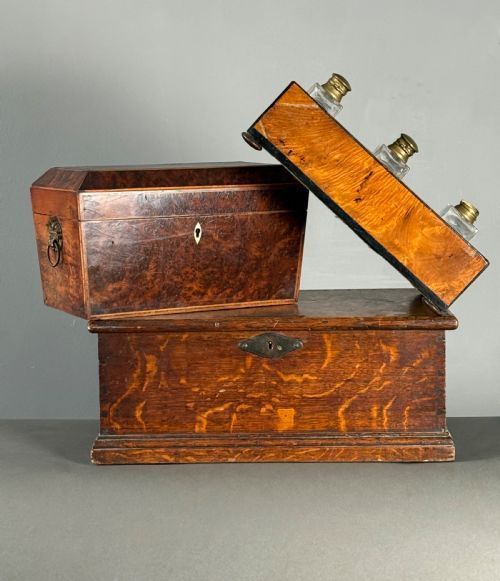
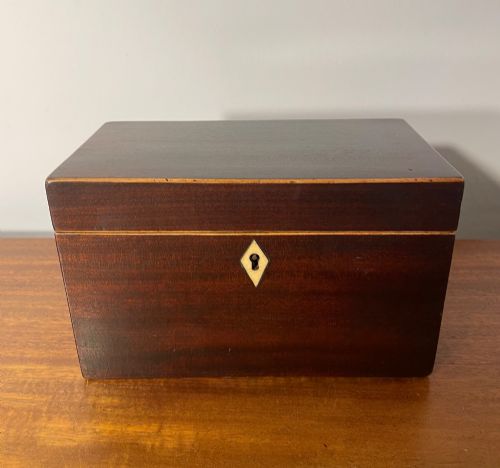
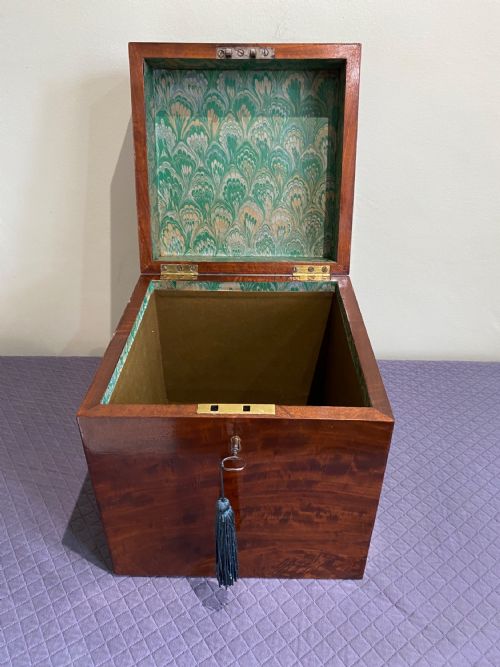
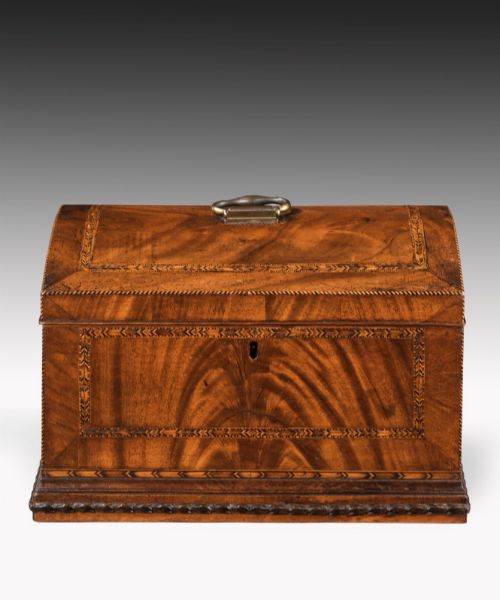
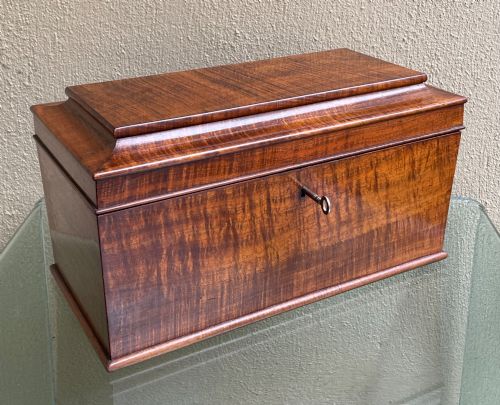
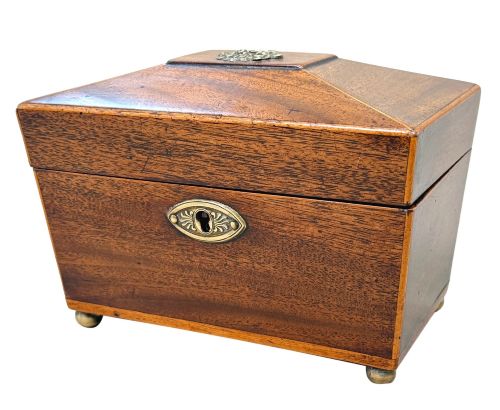
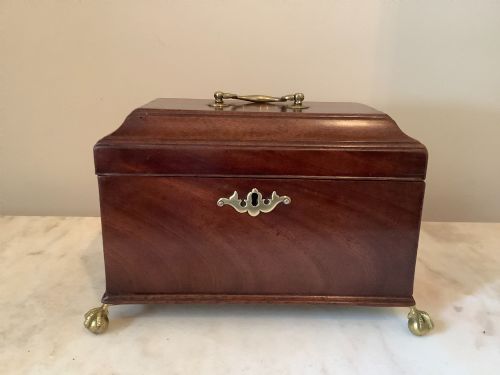
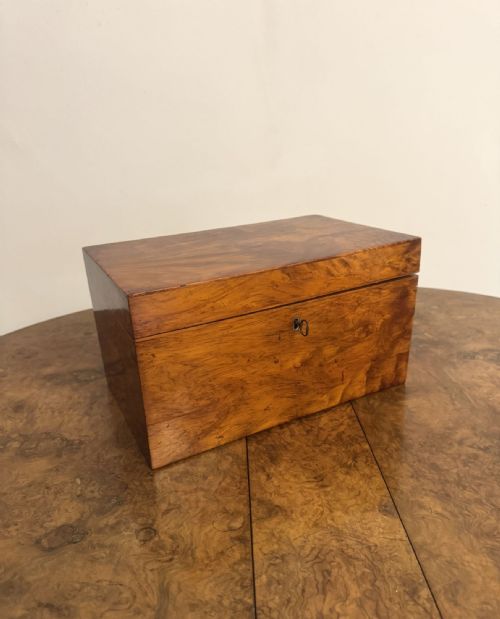
A brown mahogany tea box takes several distinct forms, from simple rectangular caddies to grand sarcophagus shapes and architectural chests on stands. These pieces date principally from the Georgian, Regency, and Victorian eras, reflecting the changing domestic rituals of tea drinking over successive centuries.
Buyers on this page are most likely to encounter compact Georgian and Regency examples rendered in rich mahogany, often fitted with interior compartments or mixing bowls. Many retain their original lids, keys, and subtle decorative accents that signal their period of origin.
Materials and construction
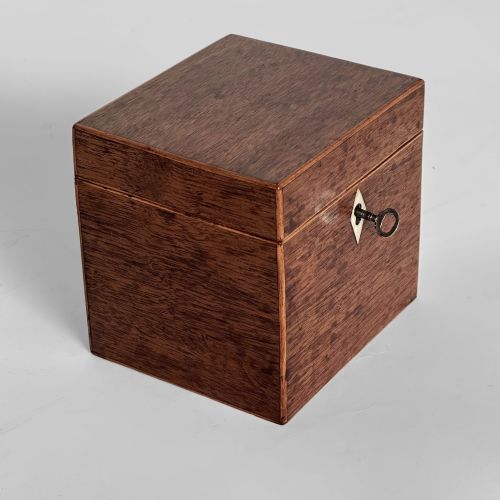
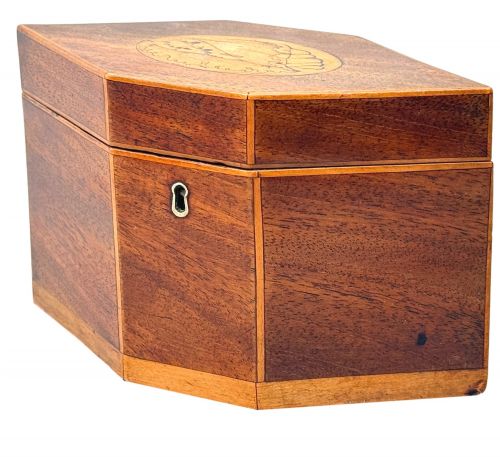
Cabinetmakers constructed these pieces primarily from solid and veneered mahogany, frequently selecting figured timber with deep grain patterns. They combined this foundational wood with contrasting stringing and inlay using materials such as boxwood, ebony, and bone.
Interiors often featured clever concealed compartments, secret drawers, and fitted spaces designed to hold loose leaf tea securely. Metal hinges, escutcheons, and glass mixing bowls completed the construction, ensuring both utility and elegance.
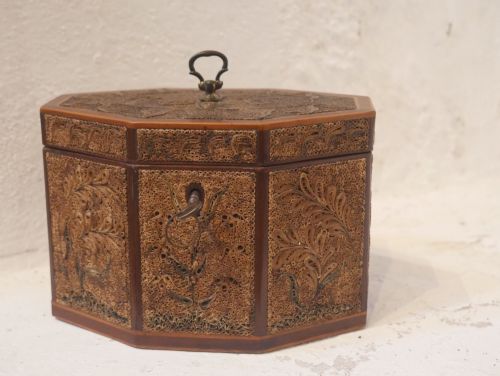
Listings feature mahogany paired with brass, bone, boxwood, glass, and paper inlay across Georgian, Regency, and Victorian periods.
Evaluating craftsmanship
Quality in a brown mahogany tea box rests upon the selection of the timber and the precision of the cabinetmaker's joinery. Finer examples display carefully matched flame or figured mahogany veneers that wrap harmoniously around the box.
The degree of refinement in secondary details dictates the standing of a piece within the range. Superior boxes feature intricate string inlay, intact interior fittings, and original hardware rather than later replacements.
The Brown Mahogany Tea Box Glossary
- Tea caddy
- A small box or chest designed to store loose tea leaves securely under lock and key. The term derives from catty, the Chinese unit of weight.
- Sarcophagus form
- A distinct box shape featuring a domed or peaked lid and a flared base, popular during the Regency period. This architectural profile mimics monumental stone tombs scaled down for domestic furniture.
- Teapoy
- A small stand or table fitted with a tea box or caddy on top, often supported on a central pillar with tripod legs. These pieces served tea in larger formal rooms.
- Stringing
- A narrow line of contrasting inlay used to outline panels or edges on wooden furniture and boxes. It highlights the geometric form of the piece.
- Mixing glass
- A small glass bowl fitted inside a tea caddy used for blending different varieties of loose tea leaves. They are frequently cut or blown.
Brown Mahogany Tea Box: Frequently Asked Questions
How were tea boxes used?
Tea was a costly commodity in the eighteenth and nineteenth centuries, kept under lock by the head of the household. The box safeguarded the leaves until the mistress of the house doled them out for brewing.
Inside, compartments separated different varieties of green and black tea. A central glass bowl often allowed the blending of leaves before infusion.
How do I date a tea box?
Dating relies on observing the overall shape, construction methods, and decorative vocabulary of the piece. Georgian examples often favor simple rectangular or oval forms with delicate inlay.
Regency boxes frequently adopt bolder architectural shapes like the sarcophagus, whilst Victorian pieces introduce heavier mouldings and different veneer combinations.
Are original keys common?
Original keys are uncommon because small items easily became lost over centuries of domestic use. Many surviving boxes retain working locks even if the original key has vanished.
Lock mechanisms themselves can help verify a period, as early handmade brass locks differ significantly from later mass-produced alternatives.
How do I care for mahogany?
Mahogany benefits from stable indoor environments away from direct sunlight and strong heat sources. Maintaining consistent humidity prevents the wood and interior veneers from warping or cracking.
Gentle dusting with a dry cloth keeps the surface clean. Occasional application of appropriate furniture wax preserves the deep sheen of the timber.