


Brown Mahogany Supper Table
A brown mahogany supper table offers the rich timber tones and versatile surfaces that made Georgian and Regency dining rooms function with ease.
Brown Mahogany Supper Table
A brown mahogany supper table is a flexible dining or occasional surface designed to serve evening meals and social gatherings before being moved or tilted aside. When you search for this phrase, you meet forms ranging from compact tripod tables to large extending dining tables and oval breakfast pieces. The pieces available here span the Georgian, Regency, and Victorian periods, with many originating in the eighteenth and nineteenth centuries.
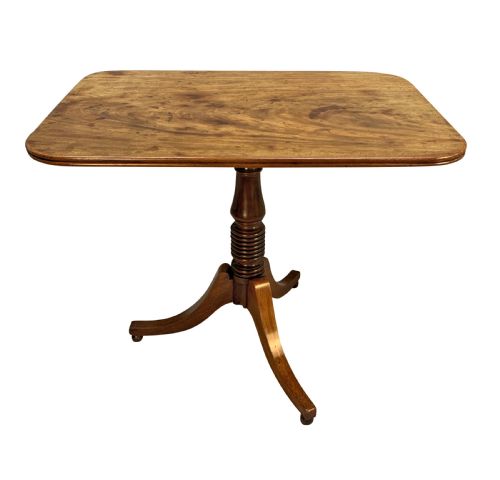
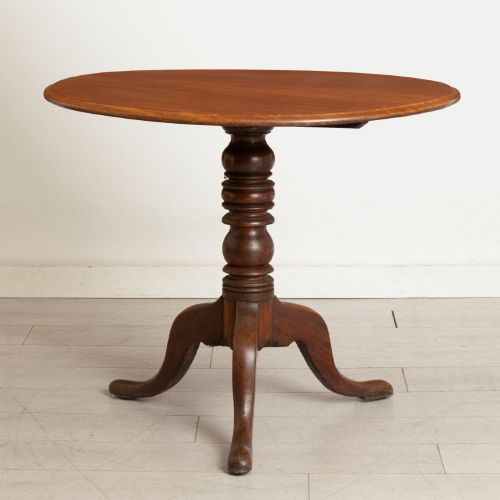
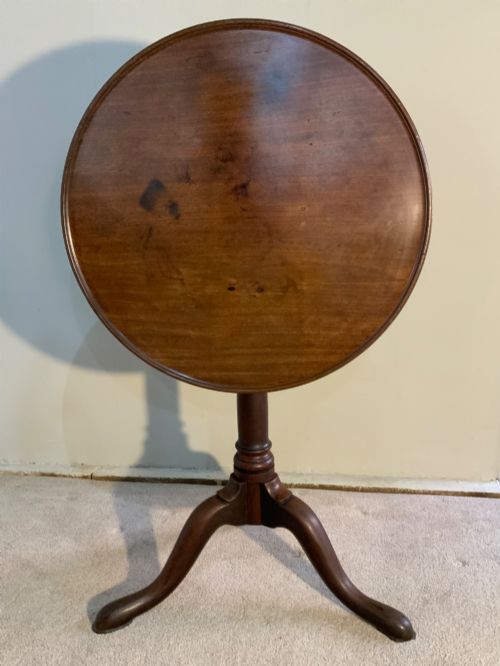
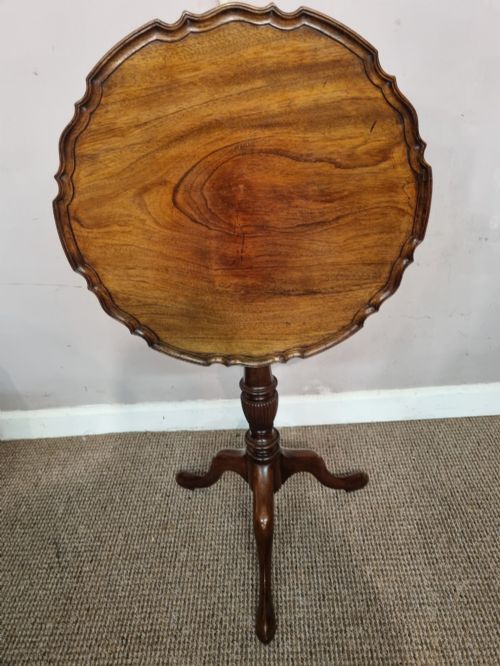
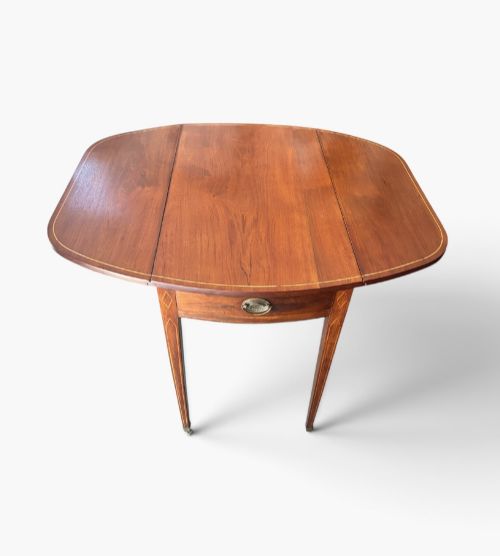
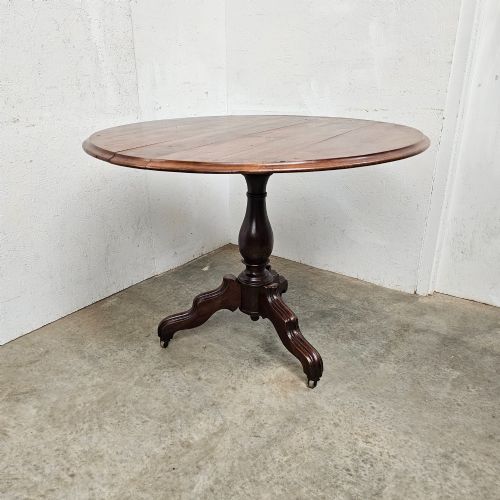
Tripod tables with tilt tops or snap tops appear frequently in these listings, alongside Pembroke tables and drop-leaf formats. Many examples feature a birdcage mechanism or a pedestalled base allowing the top to pivot vertically when not in use. These formats reflect the changing domestic arrangements of earlier centuries, where furniture needed to clear floor space quickly after a meal.
Materials and construction
Cabinet makers relied primarily on solid mahogany and figured mahogany veneers, often supplemented with secondary timbers such as walnut, satinwood, and boxwood for subtle stringing and inlay. Brass fittings and iron hardware appear on extending mechanisms and castors, adding functional strength to the joints.
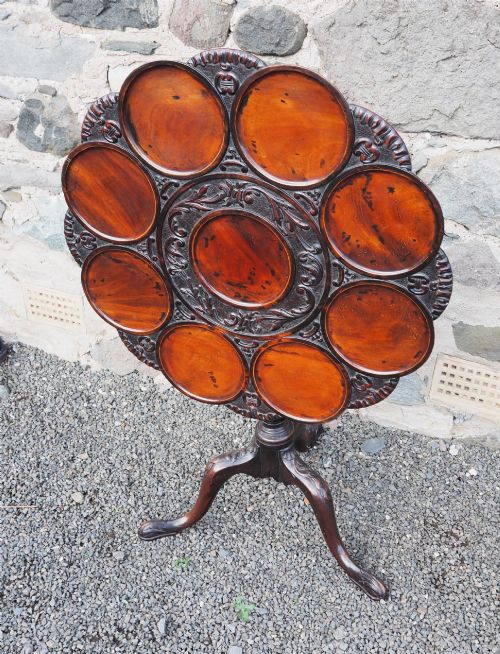
The construction typically involves stable tripod legs terminating in pad feet or claw and ball designs, supporting a turned pillar and a hinged top. Tables with pie crust edges demonstrate careful timber shaping and manual carving around the raised perimeters.
Some tilt-top tables include hidden birdcage catches that require a gentle press to stop the surface from spinning like a compass needle.
Evaluating the craftsmanship
Quality reveals itself in the choice of timber and the depth of the mahogany grain rather than surface polish alone. Tables featuring highly figured mahogany veneers or well-matched solid planks show a superior selection of materials by the original maker.
The mechanical integrity of the tilt top, birdcage action, or drop leaf hinges dictates the standard of execution. Smooth rotation, tight joints without excessive wobble, and finely turned pedestals distinguish the higher tier of these tables from simpler utilitarian pieces.
The Brown Mahogany Supper Table Glossary
- Tilt-top table
- A table with a hinged top that pivots to a vertical position for storage against a wall. This mechanism allowed rooms to be cleared quickly after evening dining.
- Pie crust edge
- A carved, raised decorative rim around the perimeter of a circular table top. The undulating edge resembles traditional pastry crusts found on ceramic or metal ware of the period.
- Tripod table
- A freestanding small table supported by three legs radiating from a central pillar. This design ensures stability on uneven historical floorboards.
- Pembroke table
- A drop-leaf table featuring two hinged flaps on opposite sides and usually one or two drawers. It was designed for multipurpose use in sitting rooms and boudoirs.
- Birdcage
- A revolving wooden framework beneath a tilt-top table that allows the top to both pivot and rotate horizontally. This adds considerable mechanical complexity to the pedestal.
Brown Mahogany Supper Table: Frequently Asked Questions
How were supper tables used historically?
These tables served flexible roles in domestic interiors, holding evening meals, drinks, or books before being cleared away.
Because many featured tilting mechanisms, servants or family members could fold the top flat and store the piece against the perimeter of the room to reclaim floor space.
What is the difference between a supper table and a breakfast table?
While the terms often overlap in older inventories, breakfast tables typically denote larger pedestal formats designed for morning meals.
Supper tables frequently encompass compact tripod designs or drop-leaf variants meant for evening hospitality and flexible placement.
How do I identify a tilt-top mechanism?
A tilt-top table uses a catch or latch beneath the surface that releases the top from its horizontal position.
Once unlocked, the table pivots on a hinge pins connected to the central pillar, allowing the surface to rest vertically.
Will these tables fit in modern dining rooms?
Many examples offer compact footprints, particularly the tripod and wine table variants that occupy minimal floor area.
Extending and larger pedestal versions provide substantial surface space while serving as a distinct historical focal point in a contemporary setting.