

Brown Mahogany Secretary
A brown mahogany secretary brings together deep timber and practical writing drawers, offering a traditional centrepiece for a study.
Brown Mahogany Secretary
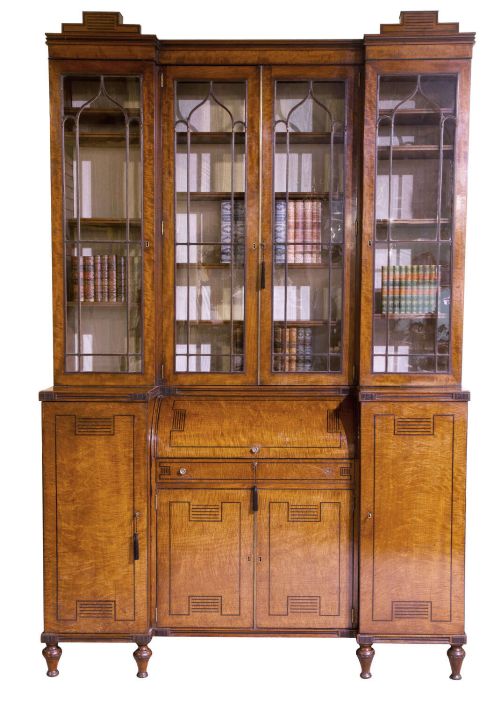
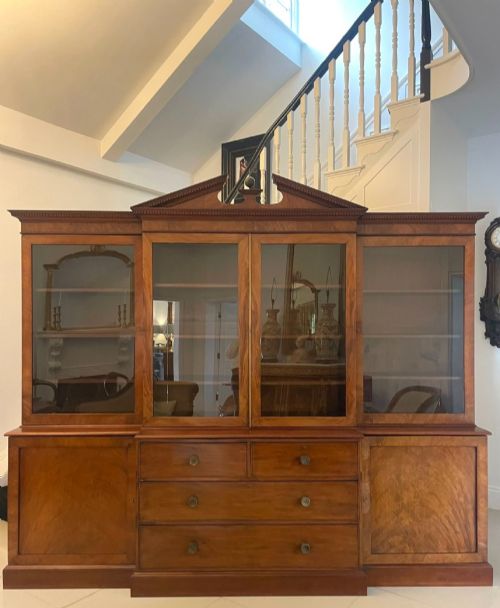
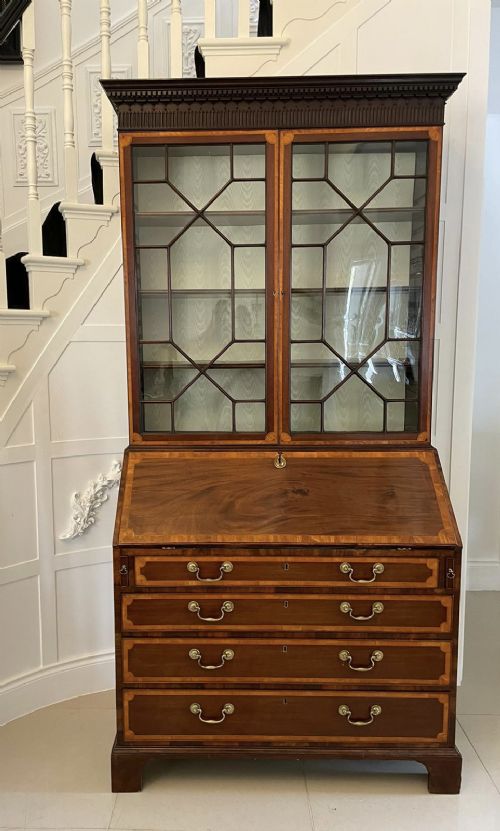
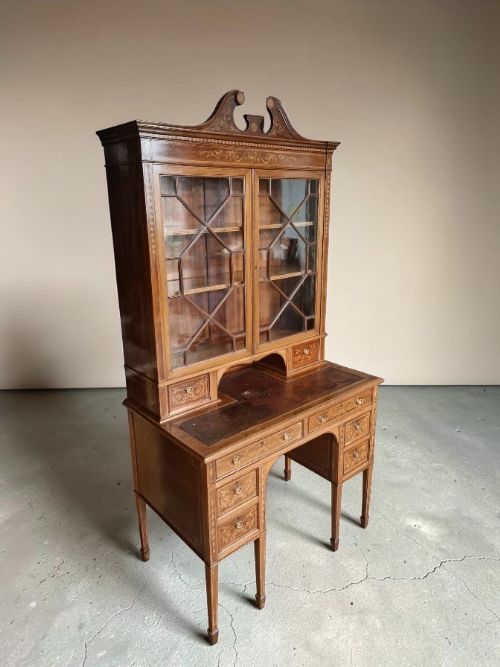
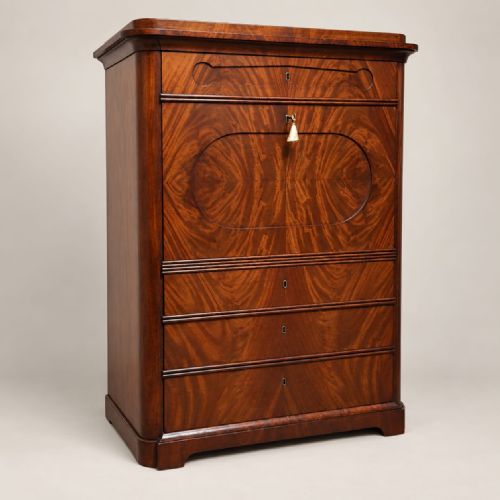
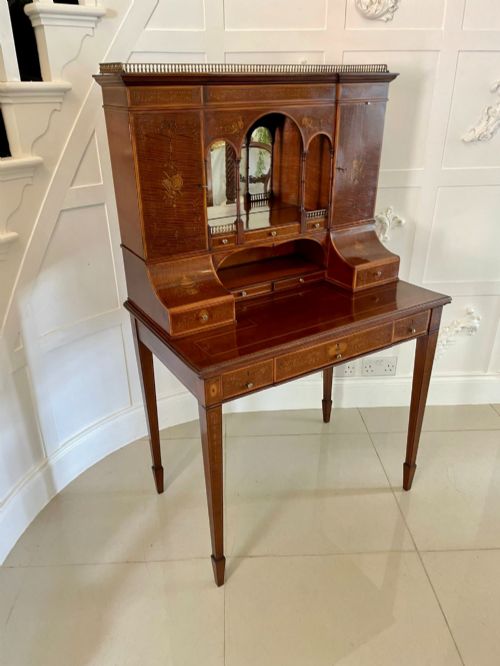
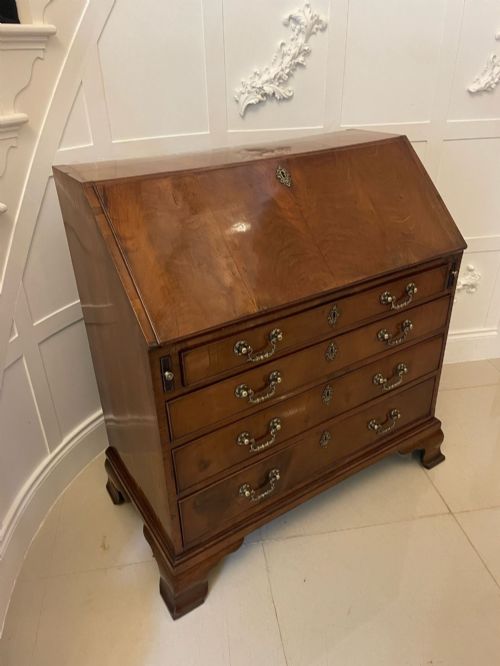
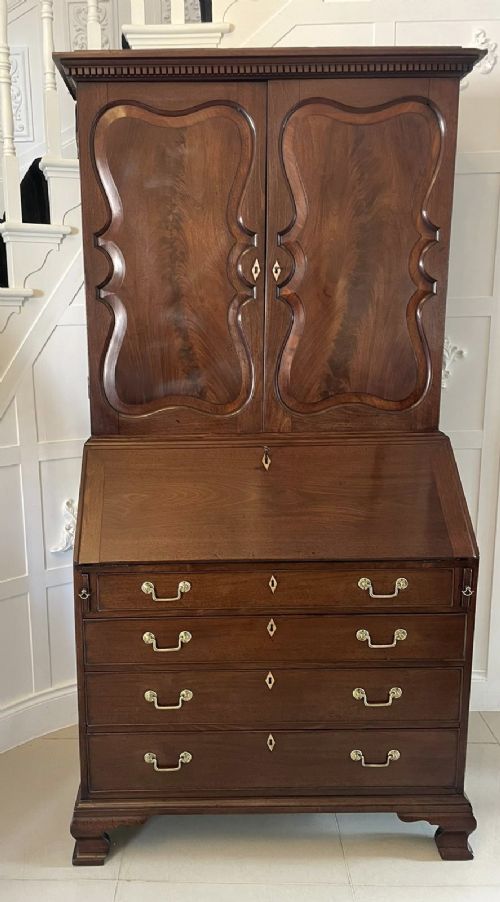
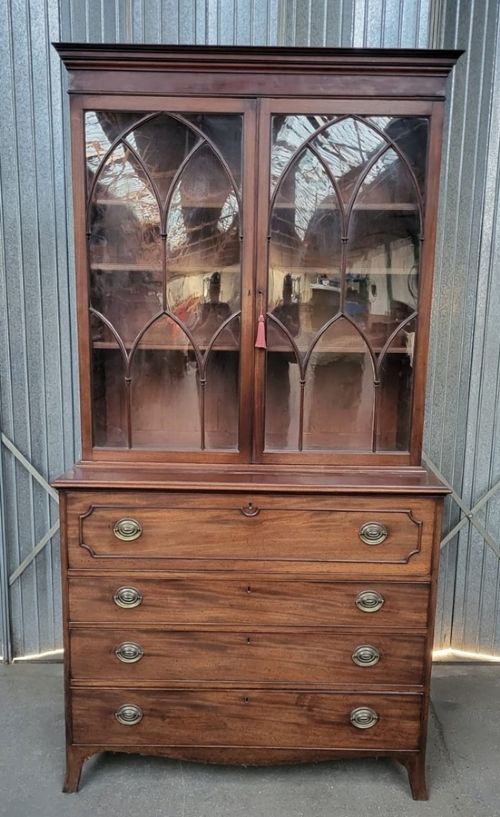
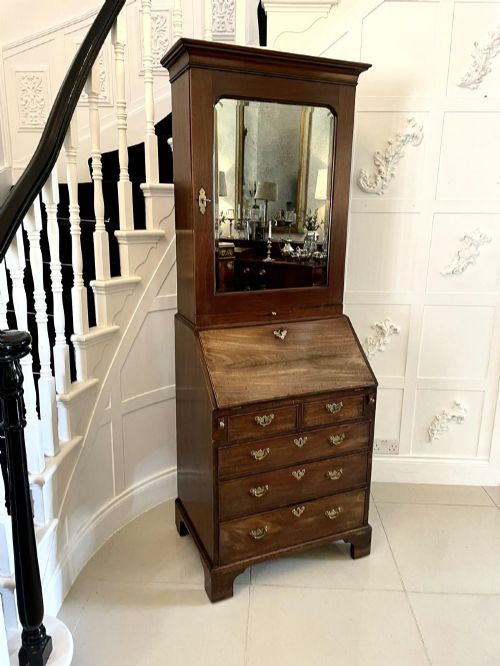
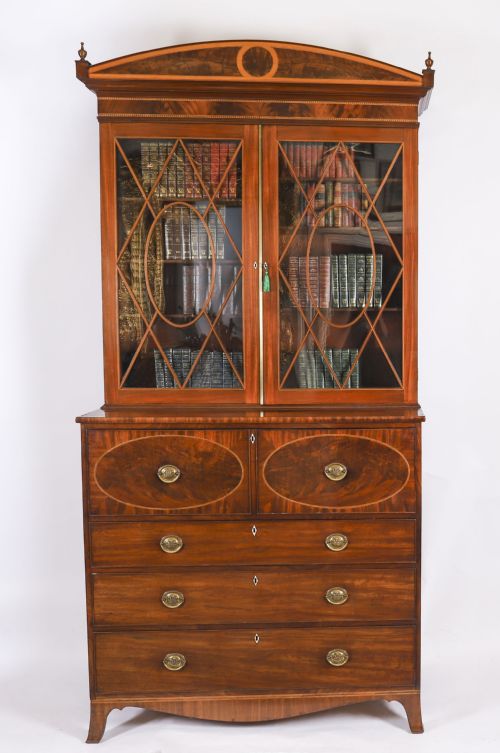
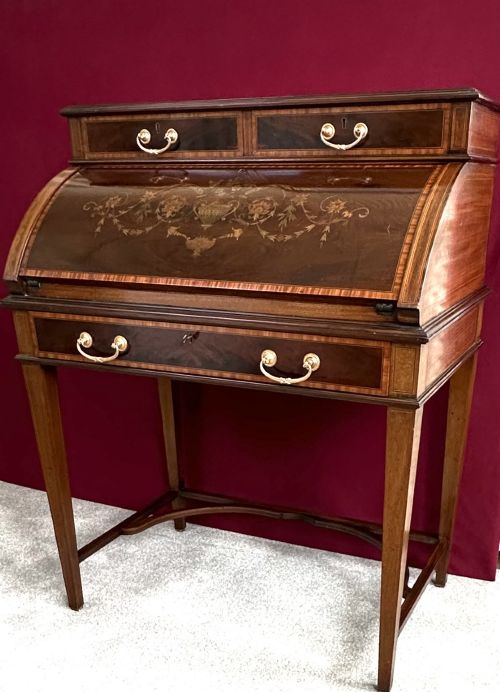
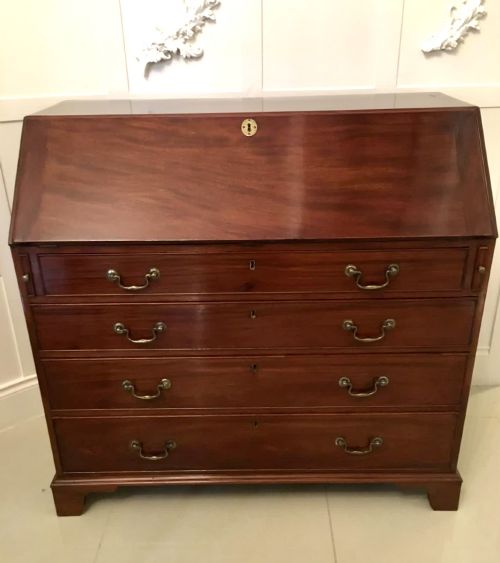
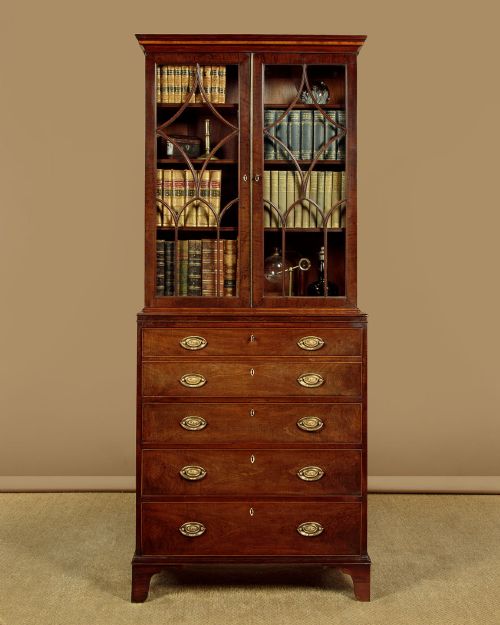
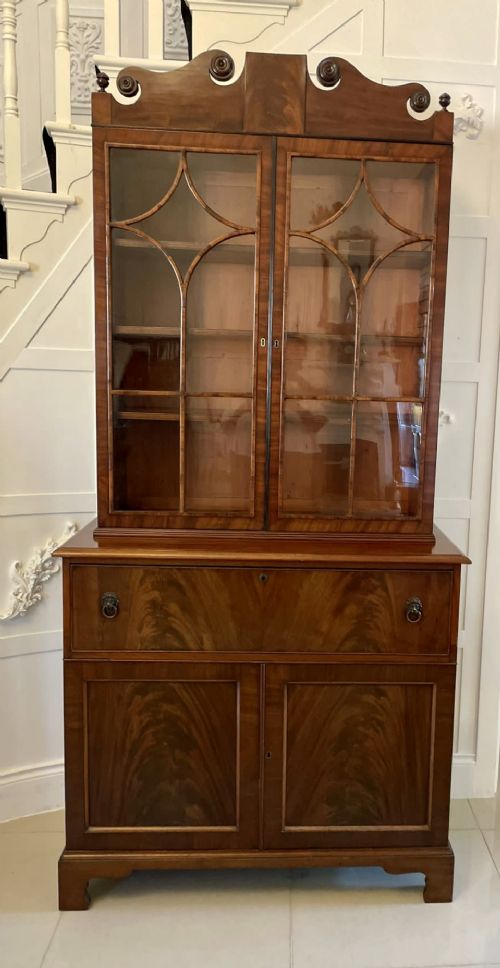
A brown mahogany secretary combines a writing desk with storage, appearing in variations such as bureau bookcases, secretaire bookcases, and freestanding desks. These pieces span multiple eras, with strong representation from the Georgian and Regency periods alongside later Victorian and Edwardian examples.
The primary forms on this page include tall breakfront bookcases with fitted drop-front writing compartments, more compact slant-front bureaux, and cylinder desks. Cabinet makers structured these items to conceal writing surfaces and pigeonholes behind panelled doors or fall-front panels.
Origins stretch from the eighteenth century through the nineteenth century and into the early twentieth century. Buyers encounter everything from large George III architectural bookcases to smaller Edwardian fall-front desks made from the same dense tropical timber.
Quality differences
The standard of a brown mahogany secretary rests on the choice of timber figure and the precision of the cabinet work. Pieces featuring book-matched flame mahogany veneers and crisp inlay display a higher level of workshop skill than plain or heavily restored surfaces.
Internal arrangement and hardware execution also distinguish finer examples. Elaborate pigeonhole layouts, working brass locks, and secret compartments indicate a piece commissioned from a skilled maker rather than standard regional production.
The selection includes regional cabinet work alongside documented workshop pieces such as those by Tudor and Burrey of Shrewsbury.
Tudor & Burrey Shrewsbury
The Brown Mahogany Secretary Glossary
- Secretaire
- A desk or a writing cabinet featuring a fall-front drawer that pulls out and drops down to form a writing surface. It often conceals a nest of small drawers and pigeonholes.
- Bureau bookcase
- A dual-purpose article of furniture comprising a lower writing desk section combined with an upper enclosed shelving unit for books. The desk portion typically uses a sloping lid or a pull-out drawer front.
- Breakfront
- A cabinet design where the central section projects forward from the flanking side sections, creating a pronounced architectural rhythm across the front elevation.
- Flame mahogany
- A veneer cut from the fork of a mahogany tree where the branches join the trunk, producing a rippling, flame-like pattern prized for principal display surfaces.
- Cylinder bureau
- A desk featuring a rolling semi-circular wooden cylinder that lifts or retracts to reveal a pull-out writing slide and internal stationery compartments.
Brown Mahogany Secretary: Frequently Asked Questions
What is a brown mahogany secretary?
A brown mahogany secretary is a dual-purpose piece of furniture that combines a writing desk with storage, frequently featuring a drop-front writing flap and upper shelving.
These items range from large architectural bookcases to compact freestanding desks, all constructed using dense tropical mahogany timber.
How do I use a secretary desk?
The drop-front panel or pull-out drawer lowers to create a horizontal writing surface, revealing internal pigeonholes and small drawers for stationery.
When writing is finished, the panel closes to conceal paper and writing instruments, maintaining a tidy appearance in a room.
How do I date a mahogany secretary?
Dating relies on architectural styles, construction methods, and timber treatments, such as Georgian bracket feet or Regency brass inlay.
Earlier eighteenth-century examples display different proportions and internal drawer construction compared to nineteenth-century and Edwardian interpretations.
Where should I place a secretary bookcase?
These tall items suit studies, libraries, or living rooms with adequate wall space and ceiling height to accommodate their vertical proportions.
Positioning them away from direct sunlight and heat sources protects the mahogany timber and prevents veneer cracking.